Connect with us

Concrete

Optimising Cement Logistics Costs

Published

on

Shares

This study explores how KPI-driven frameworks can optimise packing and logistics costs in the cement industry. It highlights cost structures and demonstrates how mathematical optimisation can reduce supply chain costs significantly.

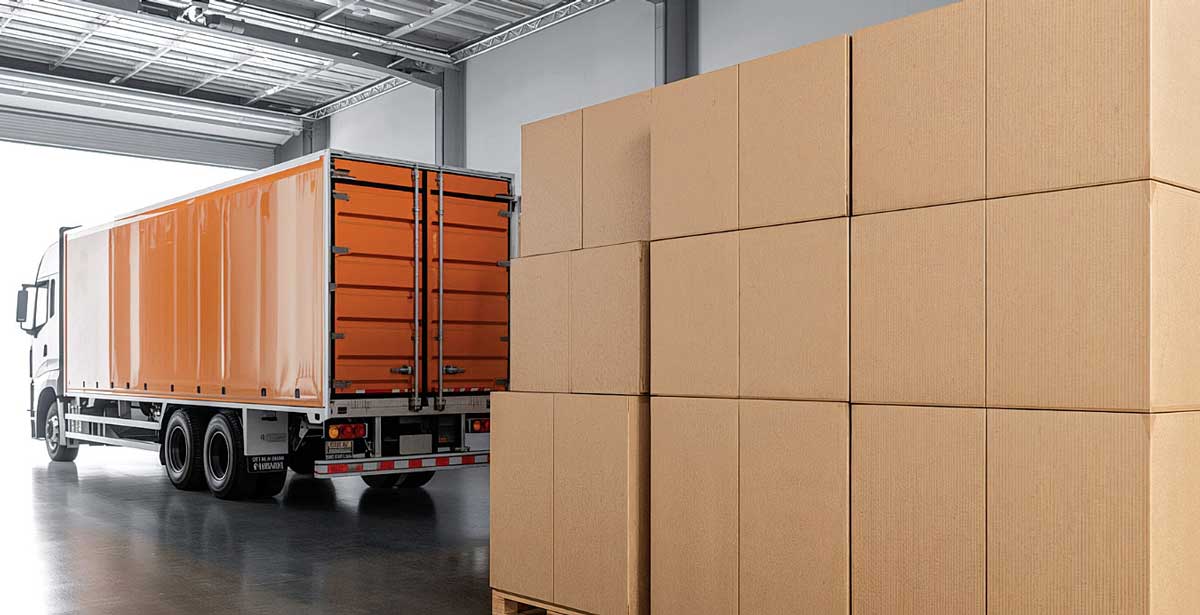
The cement industry operates in a highly competitive and cost-sensitive environment where packing and logistics expenses form a substantial portion of total operational costs. This case study examines how Key Performance Indicators (KPIs) can be used to systematically optimise logistics and packing operations. The research emphasises that logistics activities – ranging from raw material handling to final distribution—are complex and require efficient coordination across transportation, warehousing, and inventory systems to maintain profitability and competitiveness.
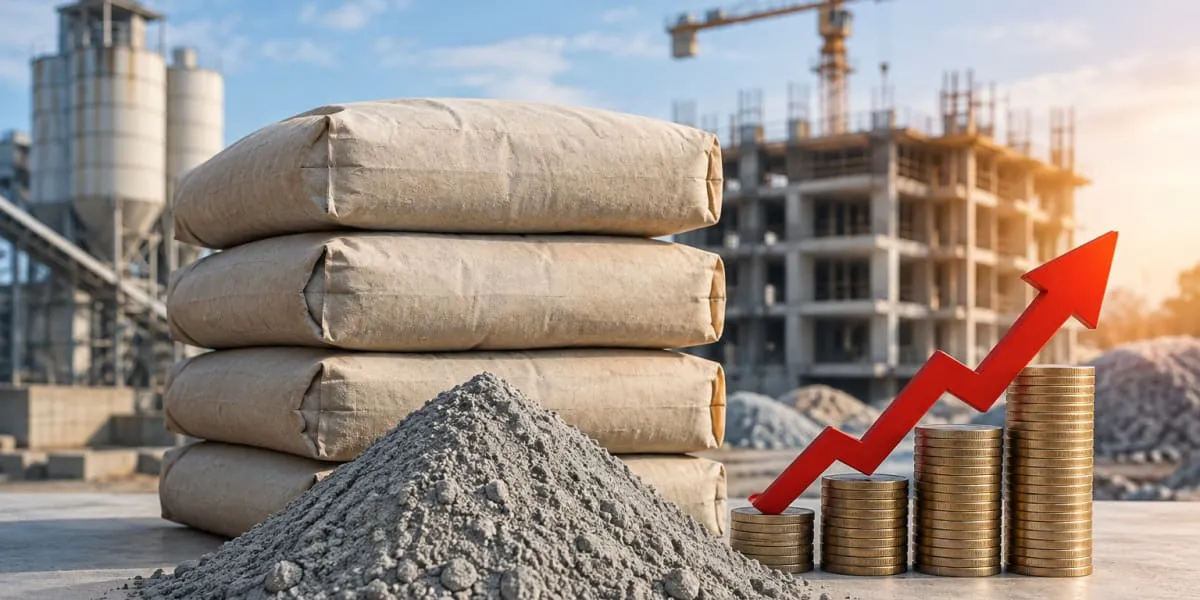
A key finding of the study is the significant share of logistics costs in overall investment. Based on empirical data from eight cement projects in Indonesia, total logistics costs account for 14.60 per cent of total investment on average, with project-level variations ranging from 13.53 per cent to 22.56 per cent. Among the cost components, foreign logistics costs (6.62 per cent) and customs clearance costs (6.52 per cent) emerge as the largest contributors, together accounting for nearly 90 per cent of total logistics expenses. In contrast, domestic logistics (0.89 per cent), domestic manufacturing delivery (0.47 per cent), and insurance (0.11 per cent) contribute relatively smaller shares.
The study further highlights how geographical and infrastructural factors influence logistics costs. For instance, projects located in Java benefit from better port infrastructure and transportation networks, resulting in lower logistics costs (as low as 13.53 per cent), whereas regions like Kalimantan experience significantly higher costs (up to 22.56 per cent) due to limited infrastructure and reliance on transshipment. This regional disparity underscores the importance of location-based decision-making in logistics planning.
To address these inefficiencies, the research applies mathematical optimisation techniques, particularly Mixed Integer Linear Programming (MILP). The findings reveal that such models can achieve overall supply chain cost reductions of around 4 per cent, with production cost improvements of 3 per cent and distribution cost reductions of 7 per cent. Notably, the highest optimisation potential lies in the plant-to-packing distribution stage, with cost reductions reaching up to 44 per cent, making it a critical focus area for cost-saving initiatives.
The study also introduces a comprehensive KPI framework covering five major dimensions: cost efficiency, operational efficiency, service quality, inventory management, and sustainability. Key metrics include total logistics cost ratio (benchmark 14.60 per cent), on-time delivery performance (target >95 per cent), order fill rate (>98 per cent), vehicle capacity utilisation (>85 per cent), and inventory turnover ratio (>12 times/year). This framework enables organisations to monitor performance holistically and identify areas for continuous improvement.
In conclusion, the research demonstrates that KPI-based monitoring combined with advanced optimisation techniques can significantly improve cost efficiency and operational performance in the cement industry. By leveraging data-driven decision-making, companies can reduce inefficiencies, enhance delivery reliability, and optimise resource utilisation. The study ultimately provides a structured roadmap for implementing logistics optimisation strategies in a complex industrial environment.

This case study by Riddhish Pandey, was published in the Journal of Informatics Education and Research (Vol 5, Issue 3, 2025).

Concrete

Shree Digvijay Cement Reports Annual And Quarterly Results

Annual revenue rises as EBITDA expands sequentially

Published

on

By

Shares


Shree Digvijay Cement Company Limited reported consolidated financial results for the quarter and year ended 31 March 2026, showing higher revenues and improved profitability. Revenue from operations for the quarter was Rs 2,084.7 mn, up from Rs 1,833.4 mn in the prior quarter, while revenue for the year was Rs 7,491.0 mn versus Rs 7,251.5 mn a year earlier. EBITDA for the quarter rose to Rs 251.0 mn from Rs 38.4 mn in the preceding quarter and reached Rs 746.1 mn for the year. Profit after tax for the year was Rs 250.0 mn.

Sales volume for the company s grinding and cement operations was zero point three six four mn t in the quarter and one point four zero three mn t for the year, while traded volumes were zero point zero three mn t in the quarter. EBITDA per tonne improved to Rs637 in the quarter and averaged Rs521 for the year. Under a brand usage, supply and distributorship agreement the company sold 29,928 t of Hi Bond cement, which generated Rs153.6 mn in revenue and Rs20.0 mn in EBITDA during the period.

The company said that it had commenced purchase and distribution of Hi Bond cement effective 19 March 2026 pursuant to the long term distributorship agreement, and that it had paid a refundable security deposit of Rs four bn under the same arrangement. Management indicated that the strategic integration with the Hi Bond network would support future growth and strengthen distribution capabilities. The board cited seasonally higher demand and improved pricing as factors behind the sequential improvement in realisations.

The board recommended a final dividend of Rs one per equity share subject to shareholder approval at the ensuing annual general meeting. The company reiterated focus on sustaining the positive momentum in revenue and margin metrics while integrating the new distributorship, and will continue to monitor market conditions and pricing trends to support further improvement in outcomes.

Continue Reading

Concrete

Cement Production Up Eight Point Six Per Cent To 491.4 mn t In FY26

Icra Sees Seven To Eight Per Cent Growth In FY27

Published

on

By

Shares


Icra reported that cement production volumes rose by eight point six per cent in the financial year 2026 to 491.4 million (mn) metric tonne (t). March output was 48.4 mn t, up four per cent year on year on a high base.

The agency projected that volumes are expected to grow by seven to eight per cent in the current financial year, supported by sustained demand from the housing and infrastructure sectors. Average cement prices were reported to have remained flat in March at Rs 340 per bag on a month on month basis, while prices for FY26 increased by two per cent to Rs 345 per bag year on year.

Among inputs, coal prices declined by 17 per cent year on year to USD 102 per t in April 2026 while petcoke prices rose sharply by 19 per cent month on month and 22 per cent year on year to around Rs 15,800 per t in April. Petcoke was higher by about five per cent year on year in FY26 and diesel prices were reported to have remained steady. Icra noted that coal, petcoke and diesel are expected to trend higher in FY27 and remain exposed to risks from the ongoing West Asia conflict.

The report emphasised that operating margins for Icra’s sample set of companies are estimated to moderate by 200 to 400 basis points (bps) in FY27 on account of a likely increase in input costs, with further downside risks should crude prices rise owing to geopolitical tensions. However, debt protection metrics are projected to remain comfortable and Icra maintained a stable outlook on the Indian cement sector.

Continue Reading

Concrete

UltraTech Cement FY26 PAT Crosses Rs 80 bn

Company reports record sales, profit and 200 MTPA capacity milestone

Published

on

By

Shares


UltraTech Cement reported record financial performance for Q4 and FY26, supported by strong volumes, higher profitability and improved cost efficiency. Consolidated net sales for Q4 FY26 rose 12 per cent year-on-year to Rs 254.67 billion, while PBIDT increased 20 per cent to Rs 56.88 billion. PAT, excluding exceptional items, grew 21 per cent to Rs 30.11 billion.

For FY26, consolidated net sales stood at Rs 873.84 billion, up 17 per cent from Rs 749.36 billion in FY25. PBIDT rose 32 per cent to Rs 175.98 billion, while PAT increased 36 per cent to Rs 83.05 billion, crossing the Rs 80 billion mark for the first time.

India grey cement volumes reached 42.41 million tonnes in Q4 FY26, up 9.3 per cent year-on-year, with capacity utilisation at 89 per cent. Full-year India grey cement volumes stood at 145 million tonnes. Energy costs declined 3 per cent, aided by a higher green power mix of 43 per cent in Q4.

The company’s domestic grey cement capacity has crossed 200 MTPA, reaching 200.1 MTPA, while global capacity stands at 205.5 MTPA. UltraTech also recommended a special dividend of Rs 2.40 billion per share value basis equivalent to Rs 240.

Continue Reading

Video Thumbnail
â–

    SIGN-UP FOR OUR GENERAL NEWSLETTER


    Trending News

    SUBSCRIBE TO THE NEWSLETTER


    Don't miss out on valuable insights and opportunities to connect with like minded professionals.


      This will close in 0 seconds