Connect with us

Concrete

Cement’s Next Fuel Shift

Published

on

Shares

Jignesh Kindaria highlights how Thermal Substitution Rate (TSR) is emerging as a critical lever for cost savings, decarbonisation and competitive advantage in the cement industry.

India is simultaneously grappling with two crises: a mounting waste emergency and an urgent need to decarbonise its most carbon-intensive industries. The cement sector, the second-largest in the world and the backbone of the nation’s infrastructure ambitions, sits at the centre of both. It consumes enormous quantities of fossil fuel, and it has the technical capacity to consume something else entirely: the waste our cities cannot get rid of.
According to CPCB and NITI Aayog projections, India generates approximately 62.4 million tonnes of municipal solid waste annually, with that figure expected to reach 165 million tonnes by 2030. Much of this waste is energy-rich and non-recyclable. At the same time, cement kilns operate at material temperatures of approximately 1,450 degrees Celsius, with gas temperatures reaching 2,000 degrees. This high-temperature environment is ideal for co-processing, ensuring the complete thermal destruction of organic compounds without generating toxic residues. The physics are in our favour. The infrastructure is not.
Pre-processing is not the support act for co-processing. It is the main event. Get the particle size wrong, get the moisture wrong, get the calorific value wrong and your kiln thermal stability will suffer the consequences.

The regulatory push is real
The Solid Waste Management (SWM) Rules 2026 mandate that cement plants progressively replace solid fossil fuels with Refuse-Derived Fuel (RDF), starting at a 5 per cent baseline and scaling to 15 per cent within six years. NITI Aayog’s 2026 Roadmap for Cement Sector Decarbonisation targets 20 to 25 per cent Thermal Substitution Rate (TSR) by 2030. Beyond compliance, every tonne of coal replaced by RDF generates measurable carbon reductions which is monetisable under India’s emerging Carbon Credit Trading Scheme (CCTS). TSR is no longer a sustainability metric. It is a financial lever.
Yet our own field assessments across multiple Indian cement plants reveal a sobering reality: the primary barrier to scaling AFR adoption is not waste availability. It is the fragmented and under-engineered pre-processing ecosystem that sits between the waste and the kiln.

Why Indian waste is a different engineering problem
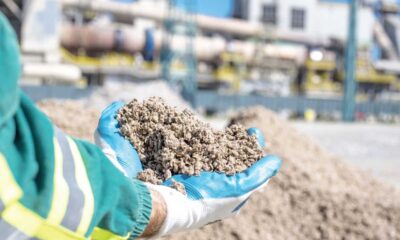
Indian municipal solid waste is not the material that imported shredding equipment was designed for. Our waste streams frequently exceed 40 per cent to 50 per cent moisture content, particularly during monsoon cycles, saturated with abrasive inerts including sand, glass, and stone. Plants relying on imported OEM equipment face months of downtime awaiting proprietary spare parts. Machines built for segregated, low-moisture waste fail quickly and disrupt the entire pre-processing operation in Indian conditions.
The two most common failures we observe are what I call the biting teeth problem and the chewing teeth problem. Plants relying solely on a primary shredder reduce bulk waste to large fractions, but the output remains too coarse for stable kiln combustion. Others attempt to use a secondary shredder as a standalone unit without a primary stage to pre-size the feed, leading to catastrophic mechanical failure. When both stages are present but mismatched in throughput capacity, the system becomes a bottleneck. Achieving the 40 to 70 tonnes per hour required for meaningful coal displacement demands a precisely coordinated two-stage process.

Engineering a made-in-India answer
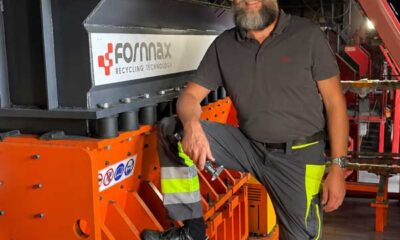
At Fornnax, our response to these challenges is grounded in one principle: Indian waste demands Indian engineering. Our systems are built around feedstock homogeneity, the holy grail of kiln stability. Consistent particle size and predictable calorific value are the foundation of stable kiln combustion. Without them, no TSR target is achievable at scale.
Our SR-MAX2500 Dual Shaft Primary Shredder (Hydraulic Drive) processes raw, baled, or loosely mixed MSW, C&I waste, bulky waste, and plastics, reducing them to approximately 150 mm fractions at throughputs of up to 40 tonnes per hour. The R-MAX 3300 Single Shaft Secondary Shredder (Hydraulic Drive), introduced in 2025, takes that primary output and produces RDF fractions in the 30 to 80 mm range at up to 30 tonnes per hour, specifically optimised for consistent kiln feeding. We have also introduced electric drive configurations under the SR-100 HD series, with capacities between 5 and 40 tonnes per hour, already operational at a leading Indian waste-processing facility.
Looking ahead, Fornnax is expanding its portfolio with the upcoming SR-MAX3600 Hydraulic Drive primary shredder at up to 70 tonnes per hour and the R-MAX2100 Hydraulic drive secondary shredder at up to 20 tonnes per hour, designed specifically for the large-scale throughput that higher TSR ambitions require.

The investment case is now
The 2070 Net-Zero target is not a distant goal for India’s cement sector. It starts today, with decisions being made on the plant floor.
The SWM Rules 2026 are already in effect, requiring cement plants to replace coal with RDF. Carbon credit markets are opening up, and coal prices are not going to get cheaper. Every tonne of coal a cement plant replaces with waste-derived fuel saves money on one side and generates carbon credit revenue on the other. Pre-processing infrastructure is no longer just a compliance requirement. It is a business investment with a measurable return.
The good news is that nothing is missing. The technology works. The waste is available in every Indian city. The government has provided the policy direction. The only thing standing between where the industry is today and where it needs to be is the commitment to build the right infrastructure.
The cement companies that move now will not just meet the regulations. They will be ahead of every competitor that waits.

About the author
Jignesh Kundaria is the Director and CEO of Fornnax Technology. Over an experience spanning more than two decades in the recycling industry, he has established himself as one of India’s foremost voices on waste-to-fuel technology and alternative fuel infrastructure.


Concrete

Cement Makers Reaffirm Commitment to Sustainable Growth

Published

on

By

Shares

World Environment Day spotlight on innovation and circularity

On World Environment Day, the Indian cement industry reiterated its commitment to supporting India’s climate ambitions through sustainable manufacturing, resource efficiency and the adoption of cleaner technologies.

The Cement Manufacturers’ Association (CMA) said the sector remains aligned with the Government of India’s Net Zero commitments and is accelerating efforts to reduce its environmental footprint while supporting the country’s infrastructure and development agenda.

Parth Jindal, President, CMA and Managing Director, JSW Cement, said the industry is increasingly adopting cleaner technologies, improving energy efficiency and expanding the use of alternative fuels and raw materials. He also highlighted the growing importance of circular economy practices, where industrial by-products and waste streams from one sector are utilised as resources in another.

“The Indian Cement Industry is aligned to the Government’s commitments on carbon mitigation and is accelerating the adoption of cleaner technologies, resource efficiency and circular economy practices while actively exploring the potential of Carbon Capture, Utilisation and Storage (CCUS) as a critical pathway for deep decarbonisation,” said Jindal.

He added that coprocessing industrial waste and by-products helps conserve natural resources, reduce disposal requirements and lower the environmental footprint across multiple sectors.

According to Jindal, sustainability is no longer limited to manufacturing processes but is increasingly influencing investment decisions, innovation strategies and long-term growth plans within the industry.

Echoing similar views, Dr Raghavpat Singhania, Vice President, CMA and Managing Director, JK Cement, said sustainable development extends beyond emissions reduction and must also focus on responsible resource utilisation and waste minimisation.

“Sustainability in the built environment cannot be measured by emissions alone. It is equally about how efficiently we use resources, how effectively we minimise waste and how responsibly we create the infrastructure that will serve future generations,” said Singhania.

He noted that the cement industry is advancing its sustainability agenda through greater resource efficiency, increased circularity, technological innovation and continuous improvements in manufacturing practices. As a key contributor to India’s infrastructure development, the sector has a critical role to play in balancing economic growth with environmental responsibility.

On the occasion of World Environment Day, industry leaders reaffirmed their commitment to supporting India’s climate goals while delivering the materials required for resilient, durable and sustainable infrastructure.


Continue Reading

Concrete

Building a Greener Future Together

Published

on

By

Shares

Environmental sustainability requires immediate action, not just long-term commitments and discussions. Recycling, circular economy practices, and technology-driven waste management can help industries reduce environmental impact while supporting sustainable growth.

Author: Jignesh Kundaria, Director and CEO, Fornnax Technology

World Environment Day serves as an important reminder that environmental sustainability can no longer remain confined to discussions, reports, or long-term commitments. The environmental challenges facing the world today demand immediate, measurable, and collective action. Across industries and communities, waste generation continues to outpace our ability to process it responsibly, placing increasing pressure on ecosystems, natural resources, public health, and the well-being of future generations.

One of the most significant shifts required today is a change in how society perceives waste. Rather than being viewed as a material to be discarded, waste must be recognised as a valuable resource that can contribute to both economic growth and environmental protection when managed through the right technologies and systems. This mindset forms the foundation of the circular economy model that countries across the world are increasingly adopting to reduce landfill dependence, recover valuable materials, and create more sustainable industrial ecosystems.

India has made meaningful progress in strengthening awareness around sustainability, recycling, and environmental responsibility over the past decade. Significant efforts are being made to formalise the recycling sector through improved infrastructure, technology adoption, policy implementation, and broader stakeholder participation. These developments are creating a stronger foundation for responsible waste management and resource recovery across the country.

However, achieving long-term environmental impact requires collaboration from all stakeholders. Industries, policymakers, technology providers, and communities must work together with greater accountability to strengthen recycling ecosystems, encourage responsible waste management practices, and create sustainable outcomes through consistent execution rather than temporary interventions.

As someone closely associated with the recycling industry, I firmly believe that technology will play a decisive role in addressing future environmental challenges. Advanced recycling systems have the potential to recover valuable resources, reduce pollution, minimise landfill burdens, and conserve energy, creating a more sustainable future for generations to come. This belief is deeply reflected in Fornnax’s motto, “Committed to Create a Green Future,” which embodies our commitment to building long-term environmental value through innovation and responsible action.

At the same time, technology alone cannot deliver meaningful change. Real progress requires intent, awareness, participation, and a shared sense of responsibility. Sustainable development can only be achieved when innovation is supported by collective action and a genuine commitment to environmental stewardship.

On this World Environment Day, let us move beyond conversations and take meaningful steps towards creating a cleaner, greener, and more sustainable planet. By embracing innovation, strengthening recycling ecosystems, and acting responsibly today, we can create lasting environmental impact and secure a better future for generations to come.

Continue Reading

Concrete

JK Lakshmi Advances LC3 Cement Expansion

Company highlights commercial production and research partnerships

Published

on

By

Shares


The meeting reviewed progress in limestone calcined clay cement (LC3) technology and its commercial adoption in India’s cement sector, focusing on low-carbon alternatives to conventional binders. JK Lakshmi Cement noted that limestone calcined clay cement can reduce carbon dioxide emissions by up to 40 per cent compared with conventional cement and said this reduction supports industry decarbonisation. The company highlighted that it was among the first two cement manufacturers in India to move LC3 into commercial production after the Bureau of Indian Standards approved the technology as a cement standard.

Vinita Singhania said the transition of LC3 from research to commercial production reflected collaboration between industry, academia and international institutions. Maya Tissafi acknowledged JK Lakshmi Cement’s role in advancing LC3 adoption in India and its contribution in taking the technology from laboratory trials to commercial implementation. Both representatives underlined the growing relevance of sustainable construction materials as India expands infrastructure and urban development.

The meeting explored continued collaboration with Swiss research institutions such as EPFL, EMPA and ETH Zurich alongside Indian academic partners and development organisations. JK Lakshmi Cement has been associated with the LC3 initiative since 2014 and worked with EPFL, IIT Delhi, IIT Madras, Development Alternatives and Technology and Action for Rural Advancement. The company conducted one of the earliest industrial trials of LC3 and recently announced commercial production of Green Pro LC3 cement from its Jaykaypuram plant in Rajasthan.

India remains the world’s second-largest cement producer and expansion of infrastructure, urbanisation and housing demand continue to support long-term sector growth, increasing interest in low-carbon technologies. The company reported an annual turnover of more than Rupees (Rs) 60 bn and current cement capacity of about 18 million (mn) tonnes (t) per annum, with a target of reaching 30 million (mn) tonnes (t) by 2030. Apart from grey cement, the company also makes ready-mix concrete, gypsum plaster, wall putty, primers, adhesives and fly ash blocks, and both sides concluded on the need for continued collaboration to develop sustainable construction solutions.

Continue Reading

Video Thumbnail

    SIGN-UP FOR OUR GENERAL NEWSLETTER


    Trending News