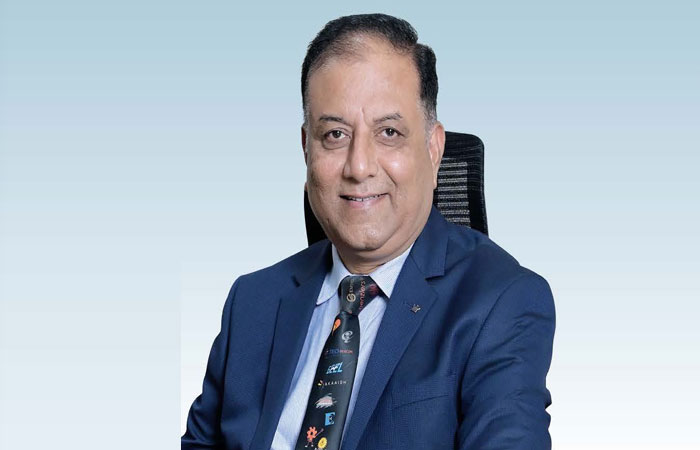
Dipak Dalwadi, CEO – Gear Division, Elecon Engineering, discusses the company’s deepening alignment with the cement industry’s demand for power transmission, which is fueling the next wave of cement capacity expansion in India.
In the cement sector, where vertical roller mills, kiln drives, and high-torque applications push power transmission equipment to its limits, gearboxes have become fundamental to plant reliability as the kilns themselves. In an exclusive interaction, Dipak Dalwadi, CEO – Gear Division, Elecon Engineering speaks to ICR about the strategic decisions that have shaped the company’s product development, and where it is headed as India adds 85 to 90 MTPA of new cement capacity in the current expansion cycle.
Elecon was founded in 1951 as a manufacturer of elevators and conveyors and has since grown into Asia’s largest industrial gearbox manufacturer. What were the most critical strategic decisions that drove that transformation, and which of them do you consider most defining for the company?
The defining decision was to build strong engineering expertise in power transmission and progressively move into high-value, application-specific industrial gear solutions. The establishment of the Gear Division in 1976, followed by international expansion initiatives and the acquisition of Benzlers-Radicon in 2010 which gave us both technological capabilities and global footprint spanning more than 120 countries. What has remained constant through this evolution is our focus on engineering innovation, manufacturing excellence, and long-term customer relationships. That combination has allowed Elecon to evolve with industry needs while staying firmly rooted in its engineering heritage.
The cement industry is one of Elecon’s most significant sectors, with clients like UltraTech Cement and Adani among your client bases. How has the relationship between Elecon and India’s cement industry evolved over the decades, and how have cement manufacturers’ demands shaped your product development?
Our relationship with the cement industry has evolved from supplying individual drive solutions to developing increasingly application-specific systems around reliability, efficiency, and lifecycle performance. Over the course of Elecon’s seven-decade journey, cement has emerged as one of our most important sectors, with 5,000+ of our gearboxes operating in cement applications worldwide. Today, cement manufacturing places very high demands on power transmission equipment, and that has pushed us to continuously strengthen our heavy-duty gearbox portfolio. Our work on VRM gearboxes for vertical roller mills, in-line planetary gearboxes for central mill drives, and high-torque mill applications is a direct outcome of this progression. The industry has consistently challenged us to deliver solutions capable of handling higher loads while improving operating efficiency. That continuous exchange of requirements and innovation has helped us refine our offerings and remain closely aligned with the needs of modern cement manufacturing.
Cement plants operate under some of the most demanding mechanical conditions in industry. How has Elecon engineered its gear and material handling solutions specifically for these conditions, and where has the biggest innovation happened?
Our approach begins with application engineering rather than a one-size-fits-all product philosophy. At Elecon, we leverage advanced design and simulation tools, including 3D modelling and finite-element analysis, to optimise gearbox performance before manufacturing. This is complemented by rigorous testing and quality systems that validate performance at every stage of development. In cement applications, this approach has enabled us to develop solutions capable of handling exceptionally high torque loads. For instance, a geared coupling developed for a cement mill drive that delivers 62.7 million Nm of torque. Having said that, innovation today is not just about handling higher loads. Increasingly, the focus is on improving efficiency, reliability, and overall lifecycle value, helping customers get more out of their equipment while ensuring consistent performance over the long term.
India’s cement sector is adding 85 to 90 MTPA of new capacity in FY26 and FY27 combined. What does that expansion mean for Elecon, and how is the company positioning itself to capture the equipment demand that comes with it?
We see the cement capacity expansion as an important part of the broader industrial capex cycle, because every new or expanded plant creates demand for reliable power-transmission solutions. Our strategy is to expand capacity ahead of demand, supported by significant capital expenditure and modern manufacturing infrastructure, including BMCE 2, Elecon’s state-of-the-art manufacturing facility. At the same time, our broad product portfolio, application engineering capability and growing aftermarket presence allow us to participate across both new installations and lifecycle requirements. The objective of Elecon is to be ready to support customers as the cycle accelerates, while maintaining the standards of execution and quality that they expect from us.
How is Elecon integrating digital capabilities — sensors, remote diagnostics, IoT connectivity – into its gear and conveying systems to meet that expectation?
Digitalisation is becoming an increasingly important part of how Elecon supports customers, particularly in areas where it can improve equipment availability and lifecycle performance. Our Condition Monitoring System (CMS) integrates multiple sensors to track parameters such as vibration and speed, while predictive analytics helps identify potential issues at an early stage and enables timely maintenance interventions. This not only helps reduce unplanned downtime but also supports better spare-parts planning and lifecycle-cost management. At Elecon, our approach is not to adopt technology for its own sake, but to apply it in ways that deliver tangible value. By combining data-driven insights with engineering expertise, we aim to make critical equipment more dependable, predictable, and efficient throughout its operating life.
As industrial technologies continue to evolve, what is your vision for Elecon’s technological future?
At Elecon, our vision is to gear industries across the globe through comprehensive solutions and sustainable technology. This vision is guided by our core values –– DRIVE
D – Delightful Customer Experience
R – Resolute Trust
I – Ingenious Entrepreneurship
V – Value Creation
E – Ethics at the Core
As we look ahead, we aim to further integrate Industry 4.0 technologies across our products and manufacturing processes to enable smarter, more connected, and efficient systems. This includes strengthening capabilities in areas such as real-time monitoring, predictive maintenance and digital engineering to deliver the next generation of industrial solutions. Elecon also envisions expanding its portfolio through continuous R&D, focusing on high-efficiency designs such as advanced planetary gear systems, flexible couplings, and application-specific innovations designed for evolving industrial requirements. With a strong commitment to quality, sustainability, and technological excellence, Elecon strives to empower industries with reliable, energy-efficient and future-ready solutions, while expanding its global footprint and reinforcing its position as a trusted engineering partner.




















 Concrete3 weeks ago
 Concrete3 weeks ago
 Concrete1 month ago
 Concrete3 weeks ago