Akhilesh Satre discusses smart vertical transport with predictive diagnostics, real-time monitoring and robust safety engineering for measurable gains in uptime and workforce protection.
Vertical transportation at any cement plant is a crucial component of daily operations, from material carrying to worker transport. With the growing industrialisation and urbanisation, cement plant production is at a high pace, leading to the high-volume use of elevators for continuous work. This sudden growth needs advanced and new digital capabilities that make safe, seamless and efficient vertical transportation, not just an elevator to transfer material from one point to another.
With Industry 4.0 adoption, India’s cement sector is shifting gears to focus not just on production capacity but also on efficiency and safety in operations. Modern cement plants are specific systems wherein each part, like conveyors and crushers, is integrated and works together. Thus, vertical movement is already more than just supporting infrastructure in such surroundings.
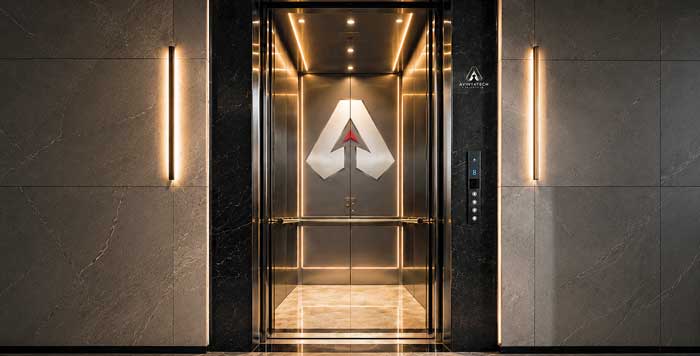
For decades, Industrial elevators used to be perceived only as elevators for goods or people moving between different floors. Nowadays, without a doubt, elevators have become intelligent systems contributing to increased productivity, efficiency, and safety, reducing downtime, and integrating with digital plant management platforms. Avinyatech Elevators believes that smart elevators are an integral part of smart manufacturing facilities.
Vertical transportation: An important link in plants
Cement production is composed of a series of processes that require passing through different
levels of production, including raw material preparation, clinker production, packaging process, and maintenance process.
Cement plants work under quite tough conditions, unlike other commercial plants, such as:
• Continuous 24×7 operations
• Vibration and corrosive atmosphere
• Heavy equipment movement
• High temperatures
• Vibrations and corrosive environments
• Frequent maintenance works
Traditional elevator systems frequently meet challenges in these tough working conditions, resulting in higher service demands and unplanned outages. For this reason, industrial elevators working in such environments are required to provide durability, dependability, and safety while allowing smooth running of the plant.
Smart elevators: More than vertical mobility
The smart elevator idea is based on much more than simply automating control or increasing speed. Smart industrial elevators are competent devices
that can interact with the building or plant control systems, monitor their performance, and provide for maintenance planning.
Modern smart elevators are equipped with technologies such as:
• Internet of things (IoT) monitoring for providing real-time information on equipment health
• Sensor diagnostics for predictive maintenance
• Remote diagnostic and alarm systems
• Smart energy management
• Access control systems
• Automatic emergency communication systems
• Data logging for maintenance planning and compliance
All these features allow plant managers to diagnose potential problems in advance, preventing unplanned stops and service costs. In the industry where every minute of downtime can affect production efficiency, predictive maintenance is one of the key benefits of intelligent elevator systems.
Designing elevators for harsh industrial environments
Elevators utilised in cement factories must be designed differently from regular elevators. Everything that has to be used should be able to work under difficult and harsh conditions.
Some of the main elements in constructing industrial elevators include:
• Dust-proof electric systems
• Strong rails and support systems
• Resistant coatings
• Reinforced cabins
• Effective ventilation systems
• High loading capacity
• Rescue equipment
• Sufficient performance despite vibrations and temperature fluctuations
Lift systems such as material lifts differ in their functions and should not be developed in accordance with any standardised solutions. Selecting the right elevator begins with understanding the plant’s workflow rather than merely calculating travel height or load capacity.
Safety: The foundation of vertical transport systems
No discussion of industrial lifts would be complete without emphasising safety. Cement plants feature heavy machinery, high platforms, tight spaces and constant movement of people and materials. Therefore, safety must be a priority in every lift installation, in design, installation, operation and maintenance.
Modern industrial lifts include several safety features such as:
• Overspeed governors monitor elevator speed
and activate a safety system if the elevator’s
speed varies.
• Automatic braking systems prevent hazardous accidents by applying the brakes in any unsafe conditions.
• Door interlocks prevent elevators from operating unless all doors are closed.
• Emergency lowering systems
• Overload protection
• Backup power support to assist in rescue operations
• Fire-retardant wiring and components
• Alarm and communication systems
Safety is not achieved through technology alone. It also requires proper installation, periodic inspection, preventive maintenance, operator awareness and strict adherence to operating procedures.
The development of smart monitoring
One of the most significant advancements in the field of industrial elevators is that it has evolved from being reactive to being predictive in its maintenance philosophy. Traditional maintenance schedules are often determined according to fixed intervals, irrespective of the usage of the appliance. In contrast, smart maintenance continuously monitors operating parameters such as motor parameters, brake wear, vibration levels, the number of times the door is opened and closed, etc. Upon detecting an abnormality in one of the above-mentioned parameters, maintenance teams are alerted before a failure occurs.
In the cement industry, this means:
• Decreased production downtimes
• Lower costs of maintenance during the whole period of an equipment’s life
• Better availability of equipment when needed
• Improvement of maintenance planning
• Better safety of the employees
Access to real-time performance of equipment allows the operators to optimise the use of the equipment and increase the efficiency of the operation process.
Indian standards and regulations
India has made tremendous progress in the safety norms of lifts in the last decade. Although lift legislation is still determined by state lift acts, industrial installations are increasingly expected to conform to recognised national and international standards.
Manufacturers and project developers must meet:
• National Building Code (NBC) of India applicable provisions for industrial buildings
• Lifts and escalators specifications of the Bureau of Indian Standards (BIS)
• Electrical safety standards
• Fire safety standards prescribed by local authorities
• Industrial workplace occupational safety standards
The plant safety management systems shall also include periodic inspections, maintenance records and testing of safety devices. Compliance is never simply a regulatory requirement. It’s an investment in operational reliability and in protecting your workforce.
Common causes of elevator accidents in industrial plants
Yet, even with all the technological advancements, accidents do happen with industrial lifts. Most investigations reveal that the root causes are not equipment failures, but operational negligence.
Contributing factors that are common are:
• Poor preventive maintenance practices
• Deferred replacement of worn-out parts
• Elevator overloading
• Unauthorised amendments
• Inadequate operator training
• Failure to conduct routine inspections
• Failure to follow warning alarms or fault indications
• Lack of emergency preparedness
• Installation by unauthorised agencies
• No yearly safety audits
There are many accidents out there that are
100 per cent preventable if organisations foster a proactive safety culture, supported by competent maintenance partners.
Key considerations for cement plants
Plant owners need to consider more than the initial procurement cost when choosing or upgrading lift systems.
Points to Consider:
• Suitability for dusty and high-temperature environments
• Required capacity and frequency of operation
• Service friendly
• Spare parts availability
• Remote monitoring ability
• Adherence to relevant standards
• Energy performance
• Features for emergency evacuation
• Life cycle operating cost
• Service network and technical service
Investing in high-quality vertical transportation systems is investing in long-term value with less downtime, safer operation and more continuity
of operation.
The road ahead
The development of smart manufacturing is transforming the future of elevator technologies as it will establish new systems that become integral parts of the industrial world. The introduction of artificial intelligence and machine learning will undoubtedly make communication and smart analysis more effective and thus improve equipment management and energy efficiency.
We understand that modern manufacturing requires modern ways of moving people and goods. The proper combination of advanced technology with innovative implementation in both compliant and safe elevator systems make them pivotal in achieving high production levels and safety in the industry.
Looking ahead, India’s cement industry will be shaped by smart technology as plants will become equipped with advanced and efficient vertical movement methods.


















 Concrete3 weeks ago
 Concrete3 weeks ago
 Concrete1 month ago
 Concrete3 weeks ago