Connect with us

Concrete

Digital Environmental Monitoring

Published

on

Shares

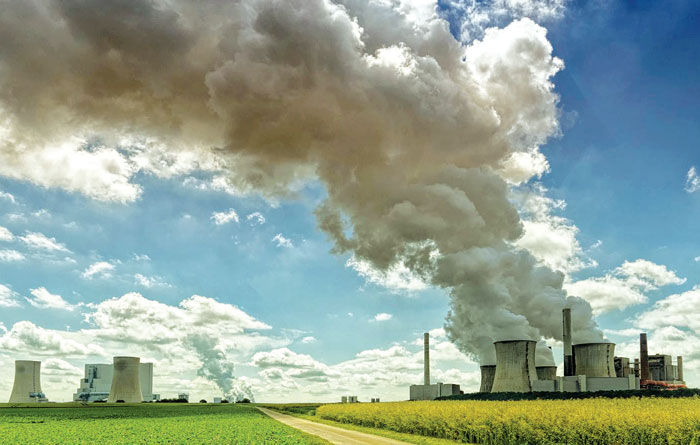
Authored by Alice Walker and published in Oxmaint on 13 March 2026, this article examines key sources of air pollution in cement plants and explains how continuous emissions monitoring, pollution control equipment monitoring and digital maintenance systems can support regulatory compliance and reduce environmental impacts.

Cement manufacturing contributes approximately 7 per cent to 8 per cent of global carbon dioxide emissions, according to the Oxmaint article. The industry also releases nitrogen oxides (NOx), sulphur dioxide (SO2), particulate matter and heavy metals. The article identifies the rotary kiln as a major emissions source, where temperatures reach approximately 1,400°C and limestone calcination releases CO2. Fuel combustion adds NOx and SO2, while crushing, grinding, clinker cooling and material handling generate dust.
The article also highlights the scale of dust emissions, stating that a single production line can generate up to 300 tonnes of cement bypass dust daily. Fine alkaline particles, measuring 1–10 microns, can travel long distances and penetrate deep into the respiratory system. These emissions make comprehensive monitoring essential across the production process, rather than limiting controls to kiln-stack emissions alone.

Continuous monitoring and digital integration
Continuous Emissions Monitoring Systems (CEMS) provide real-time measurements of pollutants and help cement plants identify deviations before they result in regulatory violations. Oxmaint describes monitoring technologies including Fourier Transform Infrared Spectroscopy (FTIR), non-dispersive infrared (NDIR) analysis and chemiluminescence analysers. FTIR systems can measure 16 or more gases simultaneously, including CO2, NOx, SO2, hydrogen chloride and ammonia.
The article further highlights the benefits of integrating emissions data with maintenance management systems. This enables automated compliance reporting, predictive maintenance scheduling and alerts when equipment performance begins to deteriorate. Oxmaint reports that plants integrating CEMS with maintenance management can achieve 15 to 20 per cent reductions in monitoring-system downtime, although the article does not identify the plants or underlying studies supporting this figure.

Pollution-control equipment and operational performance
Effective monitoring extends beyond stack emissions to the equipment responsible for controlling pollution. The article identifies baghouse differential pressure, filter condition, compressed-air supply and pulse-valve performance as important indicators of filtration efficiency. For electrostatic precipitators (ESPs), voltage, current and rapping frequency help operators assess particle collection performance. Monitoring these parameters can support timely maintenance and help prevent emissions from exceeding permitted limits.
Oxmaint also highlights the importance of maintaining pollution-control equipment throughout its operating life. It cites a decline in baghouse collection efficiency from 99.998 per cent during early operation to 95.05 per cent by year 15 without proper maintenance intervention. The article lists target collection efficiencies of 99.9 per cent for baghouse filters and 99.5 per cent for ESPs, illustrating the importance of equipment condition, maintenance and performance verification in emissions control.

Conclusion
The article discusses multiple regulatory frameworks governing cement plant emissions, including the US Environmental Protection Agency’s NESHAP Subpart LLL, the European Union’s Industrial Emissions Directive and China’s ultra-low emission standards. It reports that China achieved reductions of 38.2 per cent in particulate matter, 19.1 per cent in SO2 and 31.6 per cent in NOx between 2020 and 2023. These examples underline the role of defined emission limits, continuous monitoring and compliance reporting in strengthening industrial air quality management.
The article concludes that integrating environmental monitoring with maintenance management can help cement manufacturers improve equipment reliability, strengthen regulatory compliance and reduce the risk of emissions exceedances.

Concrete

Shree Cement Expands Bangur Concrete Network with Patna Plant

New facility takes the company’s national RMC network to 36 plants

Published

on

By

Shares


Shree Cement has inaugurated a 60 m³/hour ready-mix concrete plant in Patna, Bihar, under its Bangur Concrete brand. The facility takes the company’s ready-mix concrete (RMC) network to 36 plants across India and strengthens its presence in eastern markets.

The plant was inaugurated by Neeraj Akhoury, managing director of Shree Cement, in the presence of senior company officials and other guests. It has been established to serve demand for ready-mix concrete in Patna and neighbouring areas, where infrastructure development, urban expansion and real estate activity are supporting construction growth.

The facility is designed to supply construction projects across Patna and surrounding markets. Its installed capacity of 60 m³/hour will enable Bangur Concrete to serve customers across the region while improving distribution and supply capabilities in eastern India.

The expansion is intended to improve customer service, strengthen the company’s market presence and support development activity in Bihar. The plant incorporates modern batching technology, material handling systems and quality control processes aimed at maintaining consistency in production and improving operational efficiency.

With the addition of the Patna facility, Bangur Concrete now operates 36 RMC plants across India. The business is expanding its footprint in key construction markets to improve customer access to ready-mix concrete, which is increasingly used in infrastructure, commercial and residential projects because it supports controlled production, consistent quality and more efficient material management at construction sites.

The facility will also follow environmentally responsible operating practices, in line with Shree Cement’s focus on sustainable construction solutions. The latest addition adds capacity to the company’s RMC operations and supports its efforts to serve regional construction markets as development activity continues across Bihar.

Continue Reading

Concrete

Ambuja Plans 2.9 MTPA Godda Cement Unit

Proposed unit forms part of Ambuja Cements’ Rs. 145 bn expansion

Published

on

By

Shares


Ambuja Cements has proposed a 2.9 mn tonnes per annum (MTPA) cement grinding unit in Godda district, Jharkhand, as part of a Rs. 145 bn expansion programme. The plan is intended to lift the company’s overall cement capacity to 155 MTPA by financial year 2029-30 (FY30), from its current 113.5 MTPA.

The proposal forms part of the Adani Group company’s wider manufacturing expansion across eastern and northeastern India, according to a company statement issued on Monday. The Godda unit would add grinding capacity to Ambuja Cements’ network and is intended to help serve demand in Jharkhand and neighbouring states.

Locating production closer to these markets is expected to reduce transportation costs and delivery times, while the project could support employment in plant operations, maintenance, logistics and administration. The company also linked the facility to indirect activity in transportation, contract services, construction, warehousing and local supply chains.

The expansion plan includes a 2.9 MTPA grinding unit each in Assam and Bihar, as well as additional clinker capacity in Assam. Together, the projects are designed to distribute manufacturing capacity more widely and improve the connection between clinker production and grinding operations, Ambuja Cements’ cement-business chief executive Vinod Bahety said.

Clinker is the intermediate material produced before it is ground and blended to make cement, making the Godda proposal part of a broader materials and logistics network rather than an isolated facility. Ambuja Cements has not provided a commissioning timeline, a Godda-specific investment breakdown, land details or a detailed employment estimate in the supplied announcement.

The project’s impact will depend on implementation of the plant, associated transport links and local supply chains. The announcement sets out the capacity objective but does not specify the project’s construction schedule or operational start date.

Continue Reading

Concrete

Decarbonisation in the Indian Cement Industry

Published

on

By

Shares

Authored by Jordana Georgin, Dison S. P. Franco, Claudete Gindri Ramos and Noureddine El Messaoudi, this review, published in Sustainability (Vol. 18, 2026, Article 7383), examines cement industry impacts on air, water, soil and noise, and assesses technologies to mitigate pollution and ecological risks.

The report identifies cement manufacturing as a significant contributor to India’s greenhouse gas emissions, accounting for approximately 6 per cent to 7 per cent of the country’s total emissions. It identifies three principal sources: limestone calcination, responsible for 56 per cent of sector emissions; fuel combustion, contributing 32 per cent; and electricity consumption, accounting for the remaining 12 per cent. Despite significant improvements in energy efficiency over the past decade, the report notes that further reductions will require structural changes in production processes, material utilisation and energy sourcing.
India’s cement industry already operates among the world’s most energy-efficient sectors, with average thermal energy consumption of approximately 731 kcal/kg of clinker and electrical energy consumption of 73 kWh/tonne of cement, compared with global averages of 838 kcal/kg and 104 kWh/tonne, respectively. The report emphasises that future decarbonisation must therefore go beyond incremental efficiency improvements and focus on alternative fuels, clinker substitution, renewable electricity and carbon capture.

Strategic levers for reducing emissions
The report identifies five strategic levers for decarbonisation. Increasing the use of alternative fuels such as biomass and refuse-derived fuel (RDF) could reduce dependence on conventional fossil fuels; however, these fuels currently account for only 6 per cent of the energy used to heat cement kilns in India. The report recommends increasing the thermal substitution rate to 20 per cent by 2030, supported by reliable fuel supplies and streamlined transportation and approval systems.
Clinker substitution through supplementary cementitious materials (SCMs), including fly ash, slag and limestone calcined clay cement (LC3), offers another significant opportunity, with the potential to address 7 to 15 per cent of cement-sector emissions. The report also identifies electricity decarbonisation through renewable power, waste heat recovery and efficient grinding systems as important interventions. India’s installed waste heat recovery capacity stands at 538 MW, with potential to reach approximately 1,100 MW.

Emerging technologies and low-carbon cement
The report highlights LC3, composite cement and geopolymer cement as promising alternatives to conventional Portland cement. LC3 combines clinker, calcined clay, limestone and gypsum, with the potential to reduce CO2 emissions by up to 40 per cent compared with traditional Portland cement. Pilot projects and early commercial trials in India have demonstrated clinker reductions of 30 per cent to 40 per cent while maintaining comparable performance to ordinary Portland cement (OPC). The report also identifies Noida International Airport (Jewar) as India’s first large-scale deployment of LC3.
Carbon capture, utilisation and storage (CCUS) is identified as a long-term solution for addressing process emissions that cannot be eliminated through conventional efficiency measures. The report notes that carbon capture costs typically range from US$ 40–120 per tonne of CO2, highlighting the need for supportive policies, shared infrastructure and investment. Emerging technologies such as mineralisers, fluidised-bed calcination, low-pressure-drop cyclones and high-efficiency classifiers are also identified as opportunities to further reduce energy consumption and emissions.

Conclusion
The report recommends a phased approach to decarbonisation, beginning with the scaling of composite cement, LC3, alternative fuels, renewable electricity and waste heat recovery between 2025 and 2030. The second phase, covering 2030–2040, focuses on higher alternative-fuel substitution rates, electric logistics fleets and emerging technologies such as oxyfuel kilns. The final phase, from 2040 to 2070, prioritises the deployment of CCUS and potentially green hydrogen to address residual emissions.
The study concludes that achieving India’s net zero ambitions will require coordinated action across the cement value chain, supported by technology development, investment, evolving standards and stronger policy frameworks. It also highlights the importance of market acceptance and demand-side measures, including green public procurement and low-carbon construction practices. By combining immediate efficiency improvements with long-term technological transformation, India’s cement industry can reduce emissions while maintaining competitiveness and supporting sustainable infrastructure growth.


Continue Reading

Video Thumbnail
â–

    SIGN-UP FOR OUR GENERAL NEWSLETTER

    Trending News

    SUBSCRIBE TO THE NEWSLETTER


    Don't miss out on valuable insights and opportunities to connect with like minded professionals.


      This will close in 0 seconds