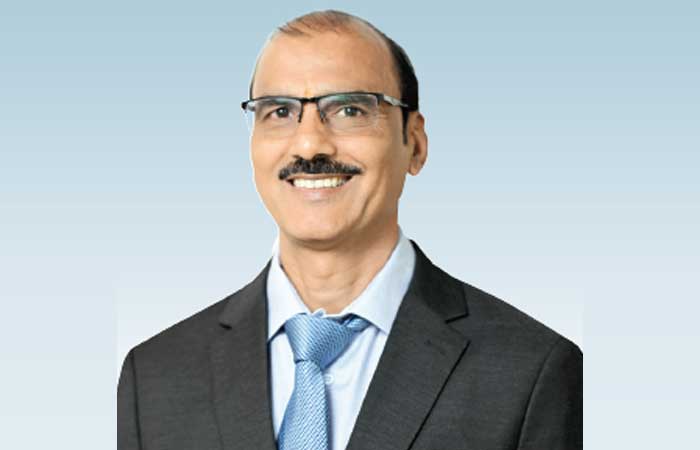
Satish Maheshwari, Chief Manufacturing Officer, Shree Cement, discusses a disciplined, phased roadmap for cement plants looking to scale thermal substitution rates without sacrificing kiln performance or clinker quality.
As decarbonisation moves from boardroom commitment to plant-floor reality, Satish Maheshwari, Chief Manufacturing Officer, Shree Cement, offers a manufacturer’s perspective on what it genuinely takes to make green cement competitive in India.
How is your organisation redefining ‘green cement’ beyond compliance to create a competitive advantage?
At Shree Cement, green cement is not a compliance exercise but a core manufacturing strategy and a clear competitive advantage. We focus on structurally reducing carbon, energy, and resource intensity across the value chain by designing highly energy-efficient plants and integrating waste heat recovery, renewable power and advanced process technologies from
the outset.
At the same time, we are accelerating the shift toward lower clinker blended cements through the optimal use of supplementary cementitious materials, ensuring lower embedded carbon without compromising strength, durability, or quality. Circularity through alternative fuels, industrial by-products and responsible water stewardship is embedded into everyday operations. Sustainability, therefore, strengthens cost efficiency, operational resilience, and asset longevity, making green cement the way we manufacture today and remain future-ready.
What mix of technologies—blended cements, clinker reduction, CCUS, or alternative binders—will drive your decarbonisation roadmap?
Our decarbonisation roadmap is driven by a pragmatic mix of mature and emerging technologies, deployed in a phased and scalable manner. In the near to medium term, blended cements and sustained clinker reduction remain the most impactful levers, supported by higher use of supplementary cementitious materials and continuous improvements in thermal and energy efficiency.
Alternative fuels and the circular use of industrial by-products are already integral to our operations, helping reduce fossil fuel dependence.
We are also actively evaluating carbon capture, utilisation and storage (CCUS) as a longer-term solution, recognising that it will be critical for deep decarbonisation beyond current limits. Alternative binders and new chemistries are also being closely tracked, with adoption depending on technical viability, scalability, and lifecycle impact.
How do you manage the trade-off between sustainability targets, cost pressures and performance expectations in green cement products?
We address this balance by ensuring sustainability and efficiency reinforce each other rather than compete. At Shree Cement, we focus on solutions such as blended cements, clinker reduction, alternative fuels, and energy efficiency, which reduce carbon intensity while also strengthening cost competitiveness.
Product performance is non-negotiable, and every green cement solution is validated for strength, durability, and application suitability before being scaled. Where newer solutions involve incremental costs, we follow a phased approach aligned with scale, learning, and long-term value creation. In
our view, the most effective green products are those where environmental gains translate into operational efficiency, economic resilience, and sustained customer confidence.
What are the biggest bottlenecks in scaling green cement adoption in India—supply chain, standards, or customer perception?
The challenge lies across all three areas. On the supply side, the consistent availability and efficient logistics of supplementary cementitious materials remain significant constraints across regions. From a standards perspective, faster acceptance and clearer recognition of newer cement formulations would support wider adoption. Customer perception also plays a crucial role, as blended and low-carbon cements are sometimes misunderstood despite their proven long-term performance. Greater awareness, stronger standardisation, and demonstrated applications across infrastructure and construction projects will help address these gaps and enable broader, sustained adoption of green cement in India.
How are evolving regulations and ESG expectations influencing your capital allocation and product innovation strategy?
Evolving regulations and ESG expectations are increasingly shaping both our capital allocation and product innovation priorities. Capital is being directed toward projects that deliver long-term efficiency, lower environmental impact, and stronger asset resilience, such as energy-efficient plants, renewable energy integration, and clinker-efficient process upgrades.
On the product side, ESG expectations are accelerating the shift toward blended and lower-carbon cement solutions that balance sustainability with consistent performance. Our focus remains on innovations that are scalable, economically viable, and aligned with long-term value creation, ensuring regulatory readiness and market competitiveness progress together.
What role do partnerships (startups, academia, waste processors) play in accelerating your green cement initiatives?
Partnerships play a critical role in accelerating green cement initiatives by expanding capability beyond traditional manufacturing boundaries. Collaboration with waste processors supports higher use of alternative fuels and stronger circular material flows. Engagements with academia and research institutions help validate new materials, processes, and performance characteristics under Indian conditions.
Startups bring agility and innovation, particularly in emerging technologies and process improvements. These partnerships enable faster learning, shared risk, and scalable implementation, allowing us to advance sustainability objectives while maintaining reliability, quality, and operational discipline.
Over the next decade, what structural shifts will determine whether green cement becomes the industry norm in India?
Green cement will become the industry norm in India, if a few structural shifts align effectively. Wider acceptance of blended and low-clinker cements as default construction materials will be a major driver. Stronger integration of circular supply chains for fuels and raw materials, along with performance-based standards that support modern cement formulations, will further accelerate progress.
Cost-efficient scale-up of low-carbon manufacturing assets and greater confidence among engineers, contractors and end users will also be critical. Ultimately, green cement will become mainstream when sustainability, performance and economics converge seamlessly across the entire construction ecosystem.
















 Concrete4 weeks ago
 Concrete3 weeks ago
 Concrete4 weeks ago
 Concrete3 weeks ago