Alternative fuels and raw materials (AFR) are emerging as a key lever for reducing costs, lowering emissions, and improving sustainability in the cement industry. Explore how rising regulatory push and technological advancements are accelerating AFR adoption, redefining energy use and competitiveness in cement manufacturing.
The cement industry stands at the centre of two converging challenges – decarbonisation and waste management. Globally, cement production accounts for nearly 7 per cent to 8 per cent of total CO2 emissions according to IEA, 2023, making it one of the most carbon-intensive industries. At the same time, countries like India generate massive volumes of waste, with 62.4 million tonnes of municipal solid waste annually, projected to reach 165 million tonnes by 2030 states CPCB; NITI Aayog, 2023. This dual challenge has created a compelling case for the adoption of Alternative Fuels and Raw Materials (AFR), enabling cement kilns to act as efficient waste-to-energy systems.
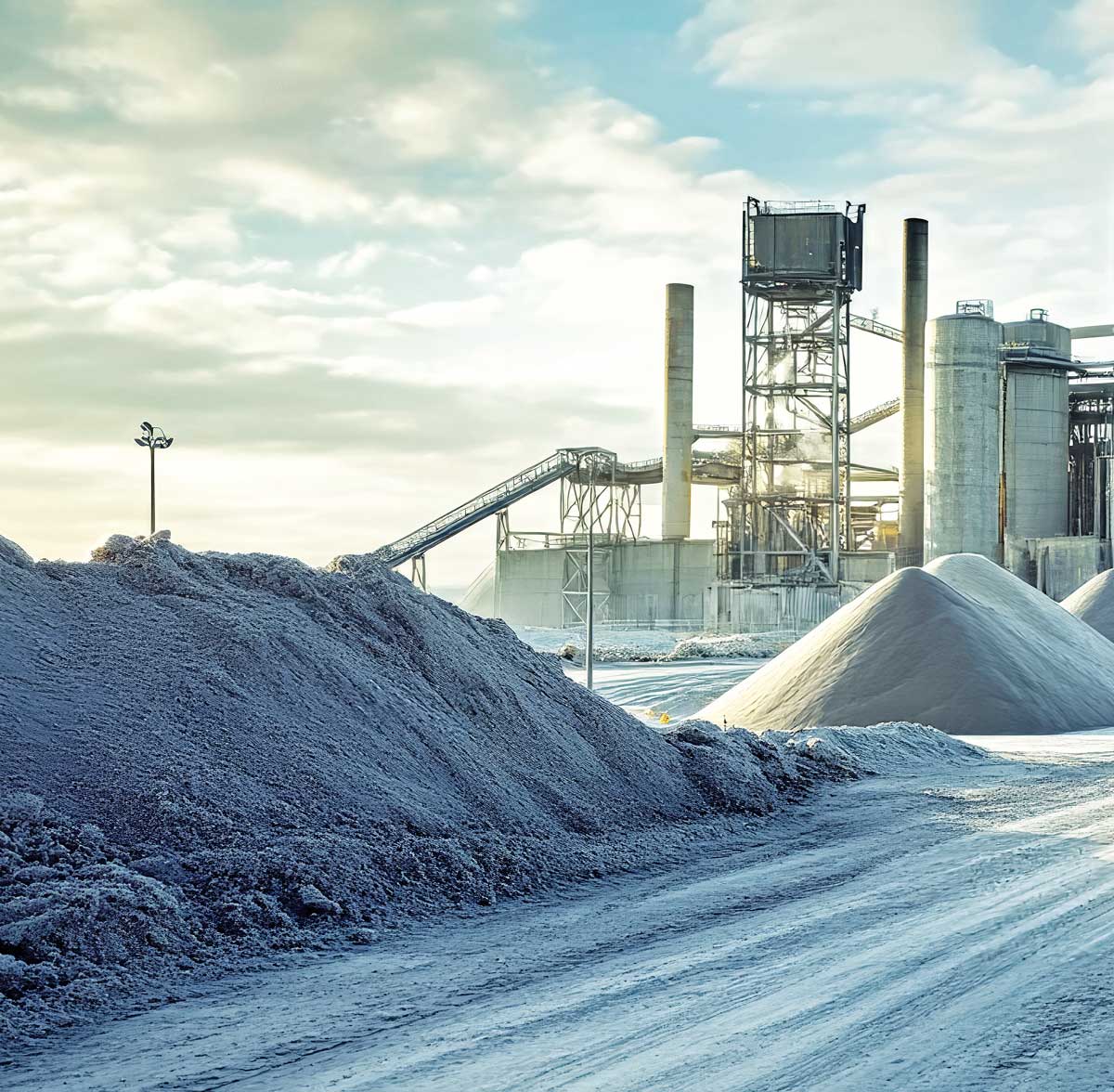
Cement kilns operate at temperatures exceeding 1,450°C, with flame temperatures reaching up to 2,000°C, making them ideal for the safe co-processing of waste without leaving harmful residues states IEA, 2023. As fuel costs rise and sustainability pressures intensify, AFR is no longer just an environmental initiative-it is becoming a strategic lever for cost optimisation, resource efficiency, and regulatory compliance. The shift towards AFR is redefining how cement companies approach both energy consumption and waste utilisation.
The growing need for alternative fuels
The traditional dependence on fossil fuels such as coal and petcoke has become increasingly unsustainable, both economically and environmentally. Fuel costs account for nearly 30 per cent to 40 per cent of cement production costs, making the industry highly sensitive to energy price fluctuations according to McKinsey, 2022. With global coal prices witnessing volatility, cement manufacturers are under pressure to diversify their fuel mix and reduce dependency on conventional sources.
Saurabh Palsania, Joint President, Shree Cement, says, “The biggest misconception about AFR in the cement industry is that it leads to inefficiencies in plant operations. In reality, when managed professionally with the right systems, controls, and process discipline, AFR enhances sustainability without compromising operational efficiency or clinker quality. The next decade of sustainable cement manufacturing in India will be defined by a strong shift towards higher renewable energy usage and TSR levels of around 30 per cent, which together will play a critical role in reducing the industry’s carbon footprint and improving long-term competitiveness.”
“If one lever had to be prioritised to scale AFR, policy intervention-particularly around source segregation-stands out as the most impactful. Effective segregation at source improves the quality of waste, reduces the need for extensive pre-processing, and enhances operational efficiency while lowering costs. This makes AFR adoption more scalable and effective across the industry, delivering far greater impact than isolated advancements in technology or supply chain alone,” he adds.
At the same time, environmental regulations and carbon reduction targets are pushing companies to lower emissions. According to the International Energy Agency, increasing the use of alternative fuels could reduce cement sector emissions by up to 15 per cent to 20 per cent in the medium term. This makes AFR not only a sustainability
solution but also a critical pathway for achieving net-zero goals.
Beyond cost and compliance, AFR adoption
is also driven by the growing availability of waste streams. Urbanisation and industrialisation are generating large volumes of non-recyclable
waste, much of which has significant calorific value. Cement plants are uniquely positioned to utilise this waste as fuel, creating a circular economy model where waste is converted into energy while reducing landfill burden.
Understanding AFR
AFR encompass a wide range of materials, including municipal solid waste (MSW), industrial waste, biomass, tyre-derived fuel (TDF), and refuse-derived fuel (RDF). These materials are processed and used as partial replacements for conventional fuels in cement kilns. According to the World Business Council for Sustainable Development (WBCSD, 2022), leading cement producers globally have achieved alternative fuel substitution rates exceeding 40 per cent to 60 per cent using such diverse fuel sources.
In addition to fuels, alternative raw materials such as fly ash, slag, and construction and demolition waste are increasingly being used to replace traditional raw inputs. This not only reduces the consumption of natural resources but also lowers the carbon footprint of cement production. The combined use of alternative fuels and raw materials enhances resource efficiency while supporting sustainable manufacturing practices.
Thermal substitution rate (TSR)
Thermal Substitution Rate (TSR) has emerged as a key metric to measure the extent to which alternative fuels replace conventional fossil fuels in cement kilns. It reflects the percentage of total thermal energy derived from alternative sources. In advanced markets such as Europe, TSR levels have reached 40 per cent to 50 per cent, demonstrating the feasibility of large-scale AFR adoption (WBCSD, 2022).
Girish Kumar, Plant Director, Riyadh Cement, says “The biggest operational mistake plants make when adopting AFR is trying to maximise TSR before stabilising process fundamentals. Using poor-quality or unsuitable AFR introduces high variability in calorific value, moisture, ash, and volatiles, leading to process instability, coating and build-up issues, reduced kiln efficiency, and compromised clinker quality. As a result, any apparent fuel cost savings are offset by production losses and higher maintenance.”
“Successful AFR integration requires consistent fuel quality, disciplined operations, and strong leadership commitment. This includes assured supply from reliable sources, strict quality control with regular analysis (CV, moisture, ash, contaminants), proper pre-processing and size control (e.g., TDF <20 mm without wires, high-combustible low-moisture RDF, clean high-calorific waste oil), stable pyro-process conditions supported by advanced digital and AI-based systems, and consistent, controlled AFR feeding in both quantity and quality,” he added.
In India, however, TSR levels remain relatively low, typically in the range of 4 per cent to 8 per cent, although efforts are underway to increase this significantly states NITI Aayog, 2023. The government has set ambitious targets to achieve 20 per cent to 25 per cent TSR by 2030, signalling a strong push towards alternative fuel adoption.
Jignesh Kundaria, Director and CEO, Fornnax Technology, states, “Indian municipal solid waste is fundamentally different from the material most imported shredding equipment is designed to handle, with moisture levels often exceeding 40 per cent to 50 per cent, especially during monsoons and high contamination from abrasive inerts like sand, glass, and stone. As a result, machines built for segregated, low-moisture waste tend to fail quickly in Indian conditions, leading to frequent disruptions and long downtimes due to dependence on imported spare parts. A common issue is improper shredder configuration: relying only on a primary shredder result in output that is too coarse for stable kiln combustion (the ‘biting teeth’ problem), while using a secondary shredder without proper pre-sizing causes severe mechanical failures (the ‘chewing teeth’ problem). Even when both stages are present, mismatched capacities can create bottlenecks, making it difficult to achieve the required throughput of 40 to 70 tonnes per hour needed for effective coal substitution—highlighting the need for a well-coordinated, two-stage shredding process tailored to Indian waste conditions.”
TSR is no longer just a sustainability metric-it is increasingly becoming a financial and operational benchmark. Higher TSR levels can lead to significant fuel cost savings, reduced carbon emissions, and improved competitiveness, making it a critical focus area for cement manufacturers.
Waste-to-energy
The concept of waste-to-energy is gaining traction as cement plants increasingly utilise municipal and industrial waste as alternative fuels. Non-recyclable waste, including plastics, textiles, and biomass, can be processed into RDF and used as a substitute for coal. According to CPCB (2023), a significant portion of India’s municipal waste is non-recyclable and suitable for energy recovery, presenting a major opportunity for the cement industry.
Girish Kumar, Plant Director, Riyadh Cement, adds “If prioritisation is required, process stability comes first, as even the best people and technology cannot compensate for an unstable kiln system. This is followed by advanced technology-robust equipment, automation, and AI-based controls-to manage AFR variability, and then people capability to ensure effective execution, monitoring, and continuous improvement. AFR can deliver both decarbonisation and cost competitiveness when treated as an engineered fuel, reducing CO2 emissions while lowering dependence on fossil fuels. Plants that succeed are those that secure long-term, consistent AFR supply, maintain strict quality control and pre-processing, and operate under stable kiln conditions with disciplined process control-making AFR a true win-win lever for sustainability, cost efficiency, and energy security.”
By co-processing waste in cement kilns, companies can reduce landfill dependency while generating energy, creating a win-win solution for both
waste management and energy efficiency. This approach not only supports environmental goals
but also provides a cost-effective alternative to traditional fuels.
Operational challenges in AFR
Despite its potential, AFR adoption comes with several operational challenges, particularly in waste pre-processing. Variability in waste composition, high moisture content, and inconsistent calorific value can affect kiln stability and performance. In India, municipal waste often contains 40 per cent to 50 per cent moisture and high levels of inert materials, making it difficult to process efficiently according to industry studies; NITI Aayog, 2023.
Raju Ramchandran, SVP & Head Manufacturing – Eastern Region, Safety and Sustainability, Nuvoco Vistas, says, “A key challenge in scaling AFR is the inherent variability of waste-based fuels. Unlike conventional fuels, AFR streams can vary in quality, composition and calorific value, which makes maintaining consistent kiln performance more complex. We have addressed this through targeted investments in pre-processing infrastructure, kiln system upgrades and stronger process controls, which help bring greater consistency to fuel quality and operations.”
“Equally important has been building strong in-house capabilities ensuring that AFR is embedded into day-to-day operations. This has helped us move from a trial-based approach to making AFR a reliable and integral part of our manufacturing process,”
he added.
Another major challenge is the lack of standardised pre-processing infrastructure. Many cement plants rely on fragmented supply chains for waste collection and processing, leading to inconsistent fuel quality. According to industry assessments, inadequate pre-processing remains one of the biggest barriers to scaling AFR adoption.
Additionally, equipment limitations and maintenance issues can hinder AFR utilisation. Imported machinery designed for different waste profiles may not perform effectively under Indian conditions, leading to downtime and operational inefficiencies. Addressing these challenges requires investment in robust, locally adapted technologies and integrated waste management systems.
Impact of AFR on kiln performance and product quality
The use of AFR can have both positive and negative impacts on kiln performance, depending on how effectively it is managed. Properly processed alternative fuels can provide stable combustion and reduce fuel costs, while poorly processed fuels can lead to operational disruptions. Maintaining consistent particle size, moisture content, and calorific value is critical for ensuring kiln stability.
Rushi Gajjar, Founder and Director, Arcler Projects, says, “The biggest misconception slowing AFR adoption in India is the belief that it is not profitable, may damage the calciner and kiln, and is dirty, smelly, and difficult to process, whereas in reality, well-managed AFR systems are efficient and safe. What will truly unlock large-scale AFR utilisation is the development of a robust, reliable, and competitive AFR supply chain infrastructure that ensures consistent quality and availability of materials. At the same time, the most critical gap in India’s waste-to-fuel ecosystem is the lack of strict policy implementation-strong enforcement with clear penalties is essential to drive accountability, improve waste management practices, and accelerate AFR adoption across the cement industry.”
Studies indicate that improper fuel quality can lead to fluctuations in kiln temperature and clinker quality, potentially affecting product performance. However, with advanced pre-processing and monitoring systems, cement plants can achieve stable operations while maximising AFR utilisation, ensuring that product quality is not compromised.
Regulatory push and policy framework
Government policies and regulations are playing a crucial role in accelerating AFR adoption. In India, the Solid Waste Management Rules (SWM), 2016 and subsequent updates mandate the utilisation of waste-derived fuels in industries such as cement. Additionally, NITI Aayog’s roadmap for cement sector decarbonisation targets 20 per cent to 25 per cent TSR by 2030, providing a clear policy direction according to NITI Aayog, 2023.
Rajat Goswami, Director, Optifuel Enviro, says “AFR adoption in India is governed by CPCB and SPCBs, presenting challenges such as lengthy approvals for hazardous waste, inter-state movement restrictions, extensive documentation, and strict emission compliance. These factors often slow down scaling efforts. To navigate this, companies should secure approvals for multiple pre-approved waste categories and promote digital manifest systems for better traceability. Implementing Continuous Emission Monitoring Systems (CEMS) ensures compliance and builds regulator confidence. Proactive engagement with authorities-focused on transparency and collaboration-can significantly accelerate
AFR adoption.”
Beyond compliance, carbon markets and sustainability incentives are further encouraging the use of AFR. The emerging Carbon Credit Trading Scheme (CCTS) in India is expected to monetise emission reductions, making AFR adoption financially attractive for cement companies.
Scaling AFR for decarbonisation and cost efficiency
The future of AFR in the cement industry lies in scaling adoption through technology, infrastructure, and policy support. Advances in waste processing technologies, digital monitoring systems, and AI-driven optimisation are expected to improve fuel quality and operational efficiency. According to International Energy Agency (IEA 2023), widespread adoption of alternative fuels could significantly reduce emissions while enhancing energy security.
As cement companies continue to invest in AFR capabilities, the focus will shift towards building integrated ecosystems that connect waste generators, processors, and end-users. This will enable consistent supply of high-quality alternative fuels, supporting both decarbonisation and cost efficiency.
Conclusion
AFR are rapidly transforming the cement industry, offering a sustainable solution to both energy consumption and waste management challenges. By reducing dependency on fossil fuels and utilising waste as a resource, AFR is enabling a shift towards more circular and efficient manufacturing practices.
As regulatory pressures increase and sustainability becomes a core business priority, the adoption of AFR will play a critical role in shaping the future of the cement industry. Companies that invest in the right technologies, infrastructure, and partnerships will be better positioned to achieve both environmental and economic success in the years ahead.


















 Concrete4 weeks ago
 Concrete3 weeks ago
 Concrete4 weeks ago
 Concrete3 weeks ago