Concrete
Impact of the Gulf crisis
Published
10 minutes agoon
By
admin
A panel of industry leaders convened on April 15 to assess the cascading impact of West Asia’s geopolitical turmoil on one of India’s most energy-intensive sectors.
The ongoing conflict in West Asia has sent shockwaves far beyond the region’s borders, landing squarely on the balance sheets of Indian cement manufacturers. Rising petcoke and coal prices, disrupted shipping lanes, and constrained raw material imports are compounding operational pressures at a time when the sector is simultaneously chasing eight per cent demand growth.
These contradictions formed the backdrop of a timely webinar titled Gulf Crisis: Building Resilience in the Cement Industry, moderated by Sudeshna Banerjee, Managing Director, PS Digitech HR India. The speakers for the panel were Ashwani Pahuja, CMD, NextCem Consulting; Dr V Ramchandra, President, Indian Concrete Institute; Kaushal Sampat, Founder, Rubix Data Sciences; and Khushbu Lakhotia, Director, India Ratings and Research.
Setting the stakes
Banerjee opened the discussion by framing the financial dimensions of the crisis with precision. “According to recent analysis by India Ratings and Research, Indian cement companies are likely to face rising input costs in Q1 FY2027, driven largely by the ongoing Gulf crisis,” she noted, adding that the industry was already absorbing “a double-digit increase in coal prices, even sharper increase in petcoke prices due to supply disruption from the Middle East, and an estimated cost increase of approximately 175 to200 per tonne.”
She identified the central challenge: “How do companies protect margins while dealing with volatile fuel costs and intense competition?”
The operational reality
Dr Ramchandra outlined the breadth of disruption with clinical detail. He flagged an often-overlooked input vulnerability — polypropylene. “PP availability in the market has come down to about 50 per cent compared to the pre-war situation,” he said, explaining that the same material competes across end-uses. “It is required for food grain packaging also. Obviously, government prioritises food grain packaging, and that adds to the problems faced by the cement industry.”
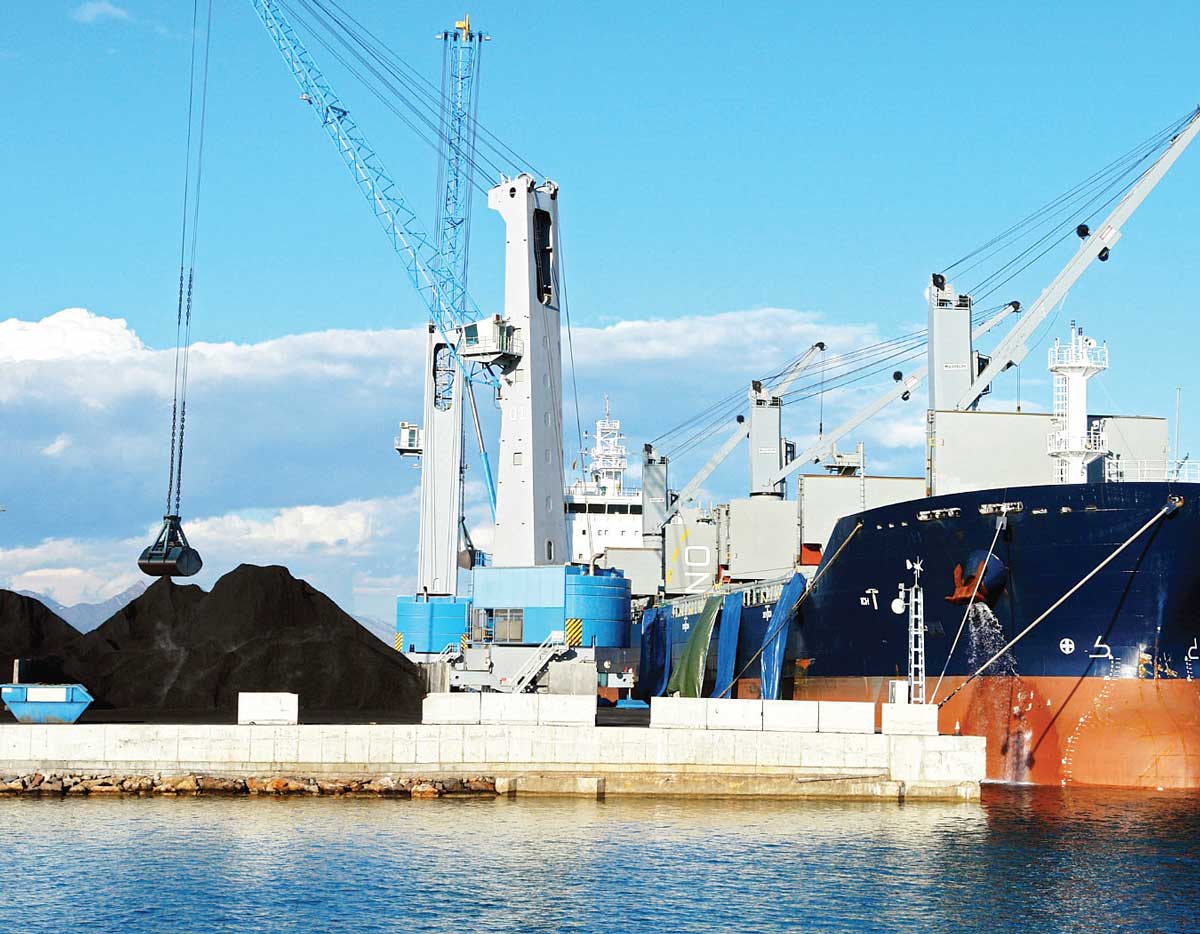
Beyond packaging, he highlighted the compounding effect on core raw materials. “Cement industry requires materials like high-grade limestone import, petcoke import, gypsum import and most of these are loaded from ports in the Gulf. That is significantly hampered and has also increased the price shocks.”
He further noted that input variability was destabilising clinker manufacturing: “When the input materials vary, that frequently changes the raw meal and impacts quality variations, increasing the operation and maintenance cost.”
Energy transition as strategic response
On energy diversification, Dr Ramchandra pointed to structural levers the industry must accelerate. “This will push the industries to develop alternative or renewable energy sources like electric and solar, and also develop less energy-intensive manufacturing processes.” He highlighted waste heat recovery systems (WHRS) as a significant existing capability, explaining the thermodynamic logic: “While making clinker, we take the heat up to 1,450 degrees and then bring it back to normal temperature that heat is absorbed and used to heat the next batch of raw materials.”
He also advocated for a shift in product mix as a demand-side energy strategy: “The more we try to make low-clinker cements instead of OPC, if we make more of PPC, composite cement
and slag cement that will also help in lowering
energy consumption.”
Fuel switching and inventory strategy
Pahuja opened with an immediate-term assurance before pivoting to structural reform. On petcoke availability, he noted that approximately 30 per cent of the petcoke consumed by Indian cement plants is typically sourced from Gulf nations, particularly Saudi Arabia. “Today there are sources available from distant places like the USA or Venezuela. It is already being sourced from these countries — the productions will not be hampered and supply shortages perhaps will not be there,” he said.
However, Pahuja was unambiguous about the need for longer-term insulation. He advocated shifting from just-in-time procurement to a just-in-case inventory model: “They have to maintain minimum 90 days of inventory for materials subject to such volatilities, including petcoke, gypsum, as well as packing materials.” He further flagged the untapped potential of alternative fuel resources (AFR), pointing to India’s 70 million tonnes of annual municipal solid waste as an underutilised energy feedstock, arguing that prolonged fossil fuel cost escalation could finally make AFR pre-processing commercially viable for the industry.
On the question of whether the disruption signals a temporary setback or a structural inflection point, Pahuja was measured: “Such shocks have already been there. Industry has been moving or switching from petcoke to coal or imported coal depending on price fluctuations — they have got plenty of experience.” Yet he added that the crisis presented a clear opportunity for long-term process diversification if companies chose to act on it.
Financial resilience and industry outlook
Lakhotia brought a credit perspective to the panel, reinforcing the near-term margin risk while contextualising the sector’s underlying strength. Her firm’s analysis, cited extensively by the moderator, pointed to Q1 FY2027 as a particularly pressure-intensive quarter as existing fuel inventories are depleted and spot procurement at elevated prices becomes unavoidable.
The data governance gap
Sampat brought a sharp analytical lens to what he described as a pre-existing organisational vulnerability. “We are living in a VUCA world — volatile, uncertain, complex, and ambiguous — and that volatility is only increasing,” he said, anchoring the conversation in a broader pattern of successive global disruptions: COVID-19, the Russia-Ukraine conflict, and now the Gulf crisis.
Sampat argued that the sector’s exposure to supply shocks is amplified by fragmented data infrastructure. “Data is very siloed. Yes, you have your ERPs, your control towers, but still data is siloed.” He cited a telling statistic: “If you look at any master database of customers or suppliers and start a deduplication effort, your starting point is between 30 and 35 per cent duplicates. Because it’s all manual.” His prescription was unambiguous: “Before we talk about data-driven insights and predictive analytics, let’s get our data in order through master data management.”
On the question of real-time intelligence adoption, he observed that larger cement companies have migrated to more integrated workflows, while mid-sized players remain behind. Cash flow, he noted, was an acutely live concern: “Logistics cycles are becoming longer — and there is real pressure on cash flow.”
EBITDA under the microscope
Lakhotia delivered the sharpest financial prognosis of the panel. With power and fuel accounting for nearly 30 per cent of total cement costs and freight a further 25–27 per cent, she described the sector’s exposure as structural: “Fuel sits at the very heart of the cost structure of cement companies.”
On the EBITDA impact of the current spike, her projections were precise: “We could see a net impact of `120–150 per tonne on the EBITDA of cement companies this year.” She noted that most players carried one to three months of fuel inventory, the buffer for which was already being drawn down. “The impact of higher fuel prices will start reflecting in profitability only from Q1 FY27 onwards.”
On pricing power, Lakhotia offered a historical reference point: during the Russia-Ukraine fuel spike in FY23, when petcoke touched $200–300 per tonne, the industry managed only a 6–7 per cent price hike — partial pass-through at best. With approximately 75 million tonnes of new capacity announced for FY27, the highest in a decade, and utilisation likely settling near 70 per cent, she cautioned against optimism: “Price hikes have been announced in April, but their sustainability remains the key question.”
Multi-fuel combustion and the AI imperative
Pahuja made a compelling case for rethinking combustion system design from first principles. He advocated for multi-channel, multi-fuel burners capable of firing petcoke, coal, lignite, liquid fuels and alternative fuels simultaneously — a flexibility that he argued eliminates dependence on any single fuel source. On chloride bypass systems, he cited direct results: “Plants are now able to use 30 to 35 per cent AFR, simply by installing one chloride bypass system.”
He added that AI-enabled combustion control was no longer optional at this scale: “We have to take the help of AI so that we can control the combustion conditions and give optimum burning conditions to maintain quality and also minimise heat consumption — such systems have been proven to reduce heat consumption by as much as 5 to 10 per cent.”
On logistics, he expounded: only 20–25 per cent of cement currently moves by rail and under five per cent by waterway, with road transport absorbing the balance. He argued for a reversal — with rail at over 50 per cent, waterways at 20–25 per cent, and road limited to last-mile delivery. He also flagged EV adoption for mining equipment and transport fleets as an essential hedge against diesel cost volatility.
The tier II fault line
Lakhotia laid out the asymmetric exposure facing smaller players with clinical precision. “Tier II cement players are clearly more vulnerable in this cost cycle — typically single-region players with relatively modest brands, essentially price takers.” She noted that FY26 EBITDA per tonne for tier II companies was likely to remain meaningfully below the five to six-year average, with balance sheet headroom and liquidity cushions already reduced.
She identified blended cement as the most immediately accessible cost lever, alongside green power sourcing via group captive or lease models that limit upfront CAPEX. On logistics, she pointed to lead distance optimisation and tighter working capital discipline as near-term stabilisers.
Sampat added a financing dimension often overlooked in operational discussions: “Innovation in financing is as important as innovation in manufacturing.” He highlighted trade finance and supply chain finance as tools to relieve immediate cash flow pressure — especially relevant as companies source petcoke from newer, geographically distant suppliers requiring advance payments. “Cement companies are national assets — please take advantage of trade finance to bring down financing costs and control margins while navigating this crisis.”
Closing prescriptions
When asked for their single most important recommendation, each panellist was direct. Sampat called for “proactive stress testing — building models that factor in varying inputs rapidly to give sensitivity analysis, as of yesterday.” Lakhotia was equally unambiguous: “Reduce external energy dependence — this has been the single biggest, consistently the biggest driver of EBITDA volatility over the last decade.” Dr Ramchandra echoed the imperative for local ecosystem development and greater analytics adoption, while Pahuja closed with a historical perspective: “Out of 120 years of cement industry’s existence, for 100 years we manufactured cement without petcoke. We can definitely live without it — the industry has the capacity.”
Banerjee drew the session to a close having navigated four distinct expert registers — operational, analytical, financial and strategic, with precision and economy, ensuring each line of enquiry yielded actionable insight without losing the thread of the broader crisis narrative.
Jignesh Kindaria highlights how Thermal Substitution Rate (TSR) is emerging as a critical lever for cost savings, decarbonisation and competitive advantage in the cement industry.
India is simultaneously grappling with two crises: a mounting waste emergency and an urgent need to decarbonise its most carbon-intensive industries. The cement sector, the second-largest in the world and the backbone of the nation’s infrastructure ambitions, sits at the centre of both. It consumes enormous quantities of fossil fuel, and it has the technical capacity to consume something else entirely: the waste our cities cannot get rid of.
According to CPCB and NITI Aayog projections, India generates approximately 62.4 million tonnes of municipal solid waste annually, with that figure expected to reach 165 million tonnes by 2030. Much of this waste is energy-rich and non-recyclable. At the same time, cement kilns operate at material temperatures of approximately 1,450 degrees Celsius, with gas temperatures reaching 2,000 degrees. This high-temperature environment is ideal for co-processing, ensuring the complete thermal destruction of organic compounds without generating toxic residues. The physics are in our favour. The infrastructure is not.
Pre-processing is not the support act for co-processing. It is the main event. Get the particle size wrong, get the moisture wrong, get the calorific value wrong and your kiln thermal stability will suffer the consequences.
The regulatory push is real
The Solid Waste Management (SWM) Rules 2026 mandate that cement plants progressively replace solid fossil fuels with Refuse-Derived Fuel (RDF), starting at a 5 per cent baseline and scaling to 15 per cent within six years. NITI Aayog’s 2026 Roadmap for Cement Sector Decarbonisation targets 20 to 25 per cent Thermal Substitution Rate (TSR) by 2030. Beyond compliance, every tonne of coal replaced by RDF generates measurable carbon reductions which is monetisable under India’s emerging Carbon Credit Trading Scheme (CCTS). TSR is no longer a sustainability metric. It is a financial lever.
Yet our own field assessments across multiple Indian cement plants reveal a sobering reality: the primary barrier to scaling AFR adoption is not waste availability. It is the fragmented and under-engineered pre-processing ecosystem that sits between the waste and the kiln.
Why Indian waste is a different engineering problem
Indian municipal solid waste is not the material that imported shredding equipment was designed for. Our waste streams frequently exceed 40 per cent to 50 per cent moisture content, particularly during monsoon cycles, saturated with abrasive inerts including sand, glass, and stone. Plants relying on imported OEM equipment face months of downtime awaiting proprietary spare parts. Machines built for segregated, low-moisture waste fail quickly and disrupt the entire pre-processing operation in Indian conditions.
The two most common failures we observe are what I call the biting teeth problem and the chewing teeth problem. Plants relying solely on a primary shredder reduce bulk waste to large fractions, but the output remains too coarse for stable kiln combustion. Others attempt to use a secondary shredder as a standalone unit without a primary stage to pre-size the feed, leading to catastrophic mechanical failure. When both stages are present but mismatched in throughput capacity, the system becomes a bottleneck. Achieving the 40 to 70 tonnes per hour required for meaningful coal displacement demands a precisely coordinated two-stage process.
Engineering a made-in-India answer
At Fornnax, our response to these challenges is grounded in one principle: Indian waste demands Indian engineering. Our systems are built around feedstock homogeneity, the holy grail of kiln stability. Consistent particle size and predictable calorific value are the foundation of stable kiln combustion. Without them, no TSR target is achievable at scale.
Our SR-MAX2500 Dual Shaft Primary Shredder (Hydraulic Drive) processes raw, baled, or loosely mixed MSW, C&I waste, bulky waste, and plastics, reducing them to approximately 150 mm fractions at throughputs of up to 40 tonnes per hour. The R-MAX 3300 Single Shaft Secondary Shredder (Hydraulic Drive), introduced in 2025, takes that primary output and produces RDF fractions in the 30 to 80 mm range at up to 30 tonnes per hour, specifically optimised for consistent kiln feeding. We have also introduced electric drive configurations under the SR-100 HD series, with capacities between 5 and 40 tonnes per hour, already operational at a leading Indian waste-processing facility.
Looking ahead, Fornnax is expanding its portfolio with the upcoming SR-MAX3600 Hydraulic Drive primary shredder at up to 70 tonnes per hour and the R-MAX2100 Hydraulic drive secondary shredder at up to 20 tonnes per hour, designed specifically for the large-scale throughput that higher TSR ambitions require.
The investment case is now
The 2070 Net-Zero target is not a distant goal for India’s cement sector. It starts today, with decisions being made on the plant floor.
The SWM Rules 2026 are already in effect, requiring cement plants to replace coal with RDF. Carbon credit markets are opening up, and coal prices are not going to get cheaper. Every tonne of coal a cement plant replaces with waste-derived fuel saves money on one side and generates carbon credit revenue on the other. Pre-processing infrastructure is no longer just a compliance requirement. It is a business investment with a measurable return.
The good news is that nothing is missing. The technology works. The waste is available in every Indian city. The government has provided the policy direction. The only thing standing between where the industry is today and where it needs to be is the commitment to build the right infrastructure.
The cement companies that move now will not just meet the regulations. They will be ahead of every competitor that waits.
About the author
Jignesh Kundaria is the Director and CEO of Fornnax Technology. Over an experience spanning more than two decades in the recycling industry, he has established himself as one of India’s foremost voices on waste-to-fuel technology and alternative fuel infrastructure.
Concrete
Dalmia Bharat Cement launches water repellent cement brand Weather 365 in Eastern India
Published
7 minutes agoon
May 15, 2026By
admin
The company has introduced water repellent cement to target rising consumer demand for weather-resilient housing solutions.
New Delhi, May 15, 2026
Dalmia Bharat Cement, one of India’s leading cement manufacturing companies, has launched Weather 365, a new super-premium water repellent cement brand aimed at addressing growing consumer demand for durable, weather-resistant construction materials in Eastern India. The product is positioned as a high-performance offering for consumers seeking long-term protection against seepage, dampness and moisture damage. The launch marks a strategic push by Dalmia Bharat Cement into the fast-growing premium cement segment, where consumer preference is increasingly shifting from price-led purchases to specialised, performance-oriented building materials.
Reinforcing its super-premium positioning, the product will be available in premium-quality water-resistant and tamper-proof BOPP packaging. ‘Weather 365’ will be introduced across its retail markets in West Bengal and Bihar.
In addition to the product rollout, the company will provide on-site technical support through its engineering and technical services teams to guide customers on best construction practices and improve long-term building performance.
Speaking on the launch, company spokesperson from Dalmia Bharat Cement said: “Weather 365 is a testament to Dalmia Bharat Cement’s relentless pursuit of innovation. Eastern India experiences prolonged monsoons, high humidity and challenging weather conditions that significantly impact the life of buildings and homes. Consumers today are actively looking for solutions that offer long-term protection and lower maintenance costs. Weather 365 is our answer to that need – a differentiated premium product that combines structural strength with advanced moisture protection that safeguards homes at every level, every season. We believe this category will see strong growth in the coming years.”
Weather 365 is a specialised cement product developed to meet the rigorous demands of modern construction in regions exposed to high humidity, heavy rainfall and extreme weather cycles. Designed for roofs, columns and foundations, it delivers end-to-end moisture protection across the entire home from the structure’s core to its visible surfaces. Its proprietary uniform water repellent technology helps reduce water penetration, minimize steel corrosion in RCC structures while preventing efflorescence and damp patches, thereby ensuring stronger concrete, improved paint life and long-lasting structural health. Positioned as a super-premium product in Dalmia Bharat Cement’s portfolio, Weather 365 targets discerning homeowners, contractors and builders who seek the best-in-class protection for their construction investments.
With a strong manufacturing and market presence across Eastern India, Dalmia Bharat Cement continues to strengthen its footprint in one of its key strategic markets. As the company advances towards its vision of becoming a pan-India cement leader, it remains focused on delivering innovative, premium construction solutions tailored to evolving consumer needs.
Dalmia Bharat Cement, a subsidiary of Dalmia Bharat Limited, is a leading player in the cement manufacturing segment and has been in existence since 1939. It is the first cement company to commit to RE100, EP100 & EV100 (first triple joiner) – showing real business leadership in the clean energy transition by taking a joined-up approach. With a growing capacity, currently pegged at 49.5 million tonne, Dalmia Bharat Cement is the fourth-largest cement manufacturing group in India by installed capacity. Spread across ten states and fifteen manufacturing units, the company is a category leader in super-specialist cement used for oil well, railway sleepers and airstrips and is the country’s largest producer of Portland Slag Cement (PSC).
Alternative fuels and raw materials (AFR) are emerging as a key lever for reducing costs, lowering emissions, and improving sustainability in the cement industry. Explore how rising regulatory push and technological advancements are accelerating AFR adoption, redefining energy use and competitiveness in cement manufacturing.
The cement industry stands at the centre of two converging challenges – decarbonisation and waste management. Globally, cement production accounts for nearly 7 per cent to 8 per cent of total CO2 emissions according to IEA, 2023, making it one of the most carbon-intensive industries. At the same time, countries like India generate massive volumes of waste, with 62.4 million tonnes of municipal solid waste annually, projected to reach 165 million tonnes by 2030 states CPCB; NITI Aayog, 2023. This dual challenge has created a compelling case for the adoption of Alternative Fuels and Raw Materials (AFR), enabling cement kilns to act as efficient waste-to-energy systems.
Cement kilns operate at temperatures exceeding 1,450°C, with flame temperatures reaching up to 2,000°C, making them ideal for the safe co-processing of waste without leaving harmful residues states IEA, 2023. As fuel costs rise and sustainability pressures intensify, AFR is no longer just an environmental initiative-it is becoming a strategic lever for cost optimisation, resource efficiency, and regulatory compliance. The shift towards AFR is redefining how cement companies approach both energy consumption and waste utilisation.
The growing need for alternative fuels
The traditional dependence on fossil fuels such as coal and petcoke has become increasingly unsustainable, both economically and environmentally. Fuel costs account for nearly 30 per cent to 40 per cent of cement production costs, making the industry highly sensitive to energy price fluctuations according to McKinsey, 2022. With global coal prices witnessing volatility, cement manufacturers are under pressure to diversify their fuel mix and reduce dependency on conventional sources.
Saurabh Palsania, Joint President, Shree Cement, says, “The biggest misconception about AFR in the cement industry is that it leads to inefficiencies in plant operations. In reality, when managed professionally with the right systems, controls, and process discipline, AFR enhances sustainability without compromising operational efficiency or clinker quality. The next decade of sustainable cement manufacturing in India will be defined by a strong shift towards higher renewable energy usage and TSR levels of around 30 per cent, which together will play a critical role in reducing the industry’s carbon footprint and improving long-term competitiveness.”
“If one lever had to be prioritised to scale AFR, policy intervention-particularly around source segregation-stands out as the most impactful. Effective segregation at source improves the quality of waste, reduces the need for extensive pre-processing, and enhances operational efficiency while lowering costs. This makes AFR adoption more scalable and effective across the industry, delivering far greater impact than isolated advancements in technology or supply chain alone,” he adds.
At the same time, environmental regulations and carbon reduction targets are pushing companies to lower emissions. According to the International Energy Agency, increasing the use of alternative fuels could reduce cement sector emissions by up to 15 per cent to 20 per cent in the medium term. This makes AFR not only a sustainability
solution but also a critical pathway for achieving net-zero goals.
Beyond cost and compliance, AFR adoption
is also driven by the growing availability of waste streams. Urbanisation and industrialisation are generating large volumes of non-recyclable
waste, much of which has significant calorific value. Cement plants are uniquely positioned to utilise this waste as fuel, creating a circular economy model where waste is converted into energy while reducing landfill burden.
Understanding AFR
AFR encompass a wide range of materials, including municipal solid waste (MSW), industrial waste, biomass, tyre-derived fuel (TDF), and refuse-derived fuel (RDF). These materials are processed and used as partial replacements for conventional fuels in cement kilns. According to the World Business Council for Sustainable Development (WBCSD, 2022), leading cement producers globally have achieved alternative fuel substitution rates exceeding 40 per cent to 60 per cent using such diverse fuel sources.
In addition to fuels, alternative raw materials such as fly ash, slag, and construction and demolition waste are increasingly being used to replace traditional raw inputs. This not only reduces the consumption of natural resources but also lowers the carbon footprint of cement production. The combined use of alternative fuels and raw materials enhances resource efficiency while supporting sustainable manufacturing practices.
Thermal substitution rate (TSR)
Thermal Substitution Rate (TSR) has emerged as a key metric to measure the extent to which alternative fuels replace conventional fossil fuels in cement kilns. It reflects the percentage of total thermal energy derived from alternative sources. In advanced markets such as Europe, TSR levels have reached 40 per cent to 50 per cent, demonstrating the feasibility of large-scale AFR adoption (WBCSD, 2022).
Girish Kumar, Plant Director, Riyadh Cement, says “The biggest operational mistake plants make when adopting AFR is trying to maximise TSR before stabilising process fundamentals. Using poor-quality or unsuitable AFR introduces high variability in calorific value, moisture, ash, and volatiles, leading to process instability, coating and build-up issues, reduced kiln efficiency, and compromised clinker quality. As a result, any apparent fuel cost savings are offset by production losses and higher maintenance.”
“Successful AFR integration requires consistent fuel quality, disciplined operations, and strong leadership commitment. This includes assured supply from reliable sources, strict quality control with regular analysis (CV, moisture, ash, contaminants), proper pre-processing and size control (e.g., TDF <20 mm without wires, high-combustible low-moisture RDF, clean high-calorific waste oil), stable pyro-process conditions supported by advanced digital and AI-based systems, and consistent, controlled AFR feeding in both quantity and quality,” he added.
In India, however, TSR levels remain relatively low, typically in the range of 4 per cent to 8 per cent, although efforts are underway to increase this significantly states NITI Aayog, 2023. The government has set ambitious targets to achieve 20 per cent to 25 per cent TSR by 2030, signalling a strong push towards alternative fuel adoption.
Jignesh Kundaria, Director and CEO, Fornnax Technology, states, “Indian municipal solid waste is fundamentally different from the material most imported shredding equipment is designed to handle, with moisture levels often exceeding 40 per cent to 50 per cent, especially during monsoons and high contamination from abrasive inerts like sand, glass, and stone. As a result, machines built for segregated, low-moisture waste tend to fail quickly in Indian conditions, leading to frequent disruptions and long downtimes due to dependence on imported spare parts. A common issue is improper shredder configuration: relying only on a primary shredder result in output that is too coarse for stable kiln combustion (the ‘biting teeth’ problem), while using a secondary shredder without proper pre-sizing causes severe mechanical failures (the ‘chewing teeth’ problem). Even when both stages are present, mismatched capacities can create bottlenecks, making it difficult to achieve the required throughput of 40 to 70 tonnes per hour needed for effective coal substitution—highlighting the need for a well-coordinated, two-stage shredding process tailored to Indian waste conditions.”
TSR is no longer just a sustainability metric-it is increasingly becoming a financial and operational benchmark. Higher TSR levels can lead to significant fuel cost savings, reduced carbon emissions, and improved competitiveness, making it a critical focus area for cement manufacturers.
Waste-to-energy
The concept of waste-to-energy is gaining traction as cement plants increasingly utilise municipal and industrial waste as alternative fuels. Non-recyclable waste, including plastics, textiles, and biomass, can be processed into RDF and used as a substitute for coal. According to CPCB (2023), a significant portion of India’s municipal waste is non-recyclable and suitable for energy recovery, presenting a major opportunity for the cement industry.
Girish Kumar, Plant Director, Riyadh Cement, adds “If prioritisation is required, process stability comes first, as even the best people and technology cannot compensate for an unstable kiln system. This is followed by advanced technology-robust equipment, automation, and AI-based controls-to manage AFR variability, and then people capability to ensure effective execution, monitoring, and continuous improvement. AFR can deliver both decarbonisation and cost competitiveness when treated as an engineered fuel, reducing CO2 emissions while lowering dependence on fossil fuels. Plants that succeed are those that secure long-term, consistent AFR supply, maintain strict quality control and pre-processing, and operate under stable kiln conditions with disciplined process control-making AFR a true win-win lever for sustainability, cost efficiency, and energy security.”
By co-processing waste in cement kilns, companies can reduce landfill dependency while generating energy, creating a win-win solution for both
waste management and energy efficiency. This approach not only supports environmental goals
but also provides a cost-effective alternative to traditional fuels.
Operational challenges in AFR
Despite its potential, AFR adoption comes with several operational challenges, particularly in waste pre-processing. Variability in waste composition, high moisture content, and inconsistent calorific value can affect kiln stability and performance. In India, municipal waste often contains 40 per cent to 50 per cent moisture and high levels of inert materials, making it difficult to process efficiently according to industry studies; NITI Aayog, 2023.
Raju Ramchandran, SVP & Head Manufacturing – Eastern Region, Safety and Sustainability, Nuvoco Vistas, says, “A key challenge in scaling AFR is the inherent variability of waste-based fuels. Unlike conventional fuels, AFR streams can vary in quality, composition and calorific value, which makes maintaining consistent kiln performance more complex. We have addressed this through targeted investments in pre-processing infrastructure, kiln system upgrades and stronger process controls, which help bring greater consistency to fuel quality and operations.”
“Equally important has been building strong in-house capabilities ensuring that AFR is embedded into day-to-day operations. This has helped us move from a trial-based approach to making AFR a reliable and integral part of our manufacturing process,”
he added.
Another major challenge is the lack of standardised pre-processing infrastructure. Many cement plants rely on fragmented supply chains for waste collection and processing, leading to inconsistent fuel quality. According to industry assessments, inadequate pre-processing remains one of the biggest barriers to scaling AFR adoption.
Additionally, equipment limitations and maintenance issues can hinder AFR utilisation. Imported machinery designed for different waste profiles may not perform effectively under Indian conditions, leading to downtime and operational inefficiencies. Addressing these challenges requires investment in robust, locally adapted technologies and integrated waste management systems.
Impact of AFR on kiln performance and product quality
The use of AFR can have both positive and negative impacts on kiln performance, depending on how effectively it is managed. Properly processed alternative fuels can provide stable combustion and reduce fuel costs, while poorly processed fuels can lead to operational disruptions. Maintaining consistent particle size, moisture content, and calorific value is critical for ensuring kiln stability.
Rushi Gajjar, Founder and Director, Arcler Projects, says, “The biggest misconception slowing AFR adoption in India is the belief that it is not profitable, may damage the calciner and kiln, and is dirty, smelly, and difficult to process, whereas in reality, well-managed AFR systems are efficient and safe. What will truly unlock large-scale AFR utilisation is the development of a robust, reliable, and competitive AFR supply chain infrastructure that ensures consistent quality and availability of materials. At the same time, the most critical gap in India’s waste-to-fuel ecosystem is the lack of strict policy implementation-strong enforcement with clear penalties is essential to drive accountability, improve waste management practices, and accelerate AFR adoption across the cement industry.”
Studies indicate that improper fuel quality can lead to fluctuations in kiln temperature and clinker quality, potentially affecting product performance. However, with advanced pre-processing and monitoring systems, cement plants can achieve stable operations while maximising AFR utilisation, ensuring that product quality is not compromised.
Regulatory push and policy framework
Government policies and regulations are playing a crucial role in accelerating AFR adoption. In India, the Solid Waste Management Rules (SWM), 2016 and subsequent updates mandate the utilisation of waste-derived fuels in industries such as cement. Additionally, NITI Aayog’s roadmap for cement sector decarbonisation targets 20 per cent to 25 per cent TSR by 2030, providing a clear policy direction according to NITI Aayog, 2023.
Rajat Goswami, Director, Optifuel Enviro, says “AFR adoption in India is governed by CPCB and SPCBs, presenting challenges such as lengthy approvals for hazardous waste, inter-state movement restrictions, extensive documentation, and strict emission compliance. These factors often slow down scaling efforts. To navigate this, companies should secure approvals for multiple pre-approved waste categories and promote digital manifest systems for better traceability. Implementing Continuous Emission Monitoring Systems (CEMS) ensures compliance and builds regulator confidence. Proactive engagement with authorities-focused on transparency and collaboration-can significantly accelerate
AFR adoption.”
Beyond compliance, carbon markets and sustainability incentives are further encouraging the use of AFR. The emerging Carbon Credit Trading Scheme (CCTS) in India is expected to monetise emission reductions, making AFR adoption financially attractive for cement companies.
Scaling AFR for decarbonisation and cost efficiency
The future of AFR in the cement industry lies in scaling adoption through technology, infrastructure, and policy support. Advances in waste processing technologies, digital monitoring systems, and AI-driven optimisation are expected to improve fuel quality and operational efficiency. According to International Energy Agency (IEA 2023), widespread adoption of alternative fuels could significantly reduce emissions while enhancing energy security.
As cement companies continue to invest in AFR capabilities, the focus will shift towards building integrated ecosystems that connect waste generators, processors, and end-users. This will enable consistent supply of high-quality alternative fuels, supporting both decarbonisation and cost efficiency.
Conclusion
AFR are rapidly transforming the cement industry, offering a sustainable solution to both energy consumption and waste management challenges. By reducing dependency on fossil fuels and utilising waste as a resource, AFR is enabling a shift towards more circular and efficient manufacturing practices.
As regulatory pressures increase and sustainability becomes a core business priority, the adoption of AFR will play a critical role in shaping the future of the cement industry. Companies that invest in the right technologies, infrastructure, and partnerships will be better positioned to achieve both environmental and economic success in the years ahead.
Cement’s Next Fuel Shift
Dalmia Bharat Cement launches water repellent cement brand Weather 365 in Eastern India
Impact of the Gulf crisis
Reshaping Cement Energy Mix
Product performance is non-negotiable.
Cement’s Next Fuel Shift
Dalmia Bharat Cement launches water repellent cement brand Weather 365 in Eastern India
Impact of the Gulf crisis
Reshaping Cement Energy Mix
Product performance is non-negotiable.
Trending News
-
Concrete4 weeks agoNuvoco FY26 Income Rises 10% as Expansion Advances
-
Concrete4 weeks agoSiyaram Recycling Secures Rs 21.03 mn Order From Anurag Impex
-
Concrete4 weeks agoCement Margins to Erode as Energy Costs Rise: CRISIL
-
Concrete4 weeks agoHaver & Boecker Niagara to showcase solutions at Hillhead