Connect with us

Concrete

Digital integration will be the unifying theme

Published

on

Shares

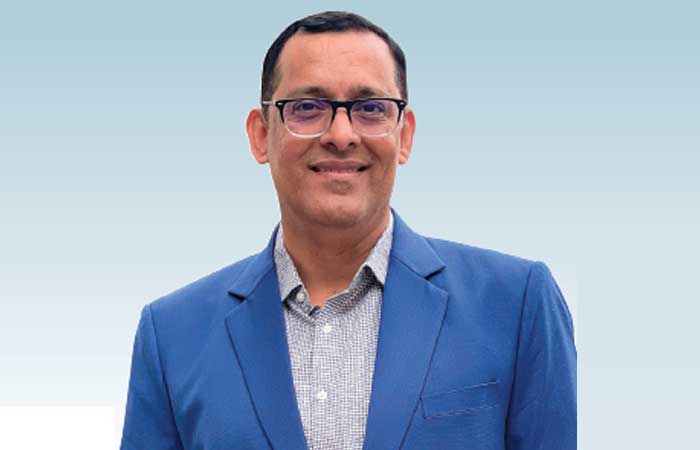
Manoj Taneja, Head – India, Fuller Technologies, makes the case that digital integration, advanced process control, and alternative fuel adoption are converging to redefine how cement plants pursue efficiency and decarbonisation.

As India’s cement industry navigates the twin pressures of rapid capacity expansion and tightening emissions standards, the conversation around plant performance is shifting from isolated equipment upgrades to integrated, data-driven strategies. Manoj Taneja, Head – India at Fuller Technologies, brings a whole-flowsheet perspective to this challenge as he outlines how producers at every stage of their sustainability journey can align operational excellence with decarbonisation goals.

How is Fuller Technologies helping cement plants improve efficiency across the entire production value chain?
Efficiency in cement manufacturing is rarely a single-lever problem. Energy losses accumulate at every stage of the process: addressing them effectively requires a view of the entire flowsheet and the expertise to act on what you see, which is where Fuller Technologies can offer a perspective that few others can. For producers investing in new capacity, the priority is getting the fundamentals right. Our core capital equipment is engineered to deliver energy efficiency and reliability: two things that are inseparable over a plant’s operating life. Meanwhile, at existing plants, targeted upgrades can deliver measurable gains in energy consumption and availability. Here in India, where producers are under pressure to improve efficiency, such upgrades matter enormously, with returns coming quickly.
Looking beyond equipment, our Online Reliability Services combine real-time monitoring with 24/7 access to our engineering expertise, providing early warning of failures and prioritised maintenance recommendations. Automation and digital solutions add a further dimension, enabling producers to extract more value from existing assets through better data and smarter decision-making. Lastly, we deliver training through the Fuller Institute, covering pyroprocess optimisation, mechanical maintenance, automation, and safety.

What are the biggest operational challenges cement manufacturers face today, and how can integrated technology solutions address them?
Rising energy costs remain a dominant financial burden. At the same time, emissions standards for NOx, SO2, particulates, and CO2 are likely to tighten further. A further challenge relates to skills. Even as plant processes become increasingly automated, skilled personnel remain essential, while new skills in areas such as data science are in growing demand across the economy.
Integrated technology solutions address these broad challenges at every level. Advanced process control is a prime example: our ECS/ProcessExpert® (PXP) software optimises key performance indicators across the plant, delivering documented reductions in energy consumption and increases in throughput. Meanwhile, our QCX® automated sampling and analysis systems close the loop between the lab and the process, cutting variability and out-of-spec production. Online condition monitoring and predictive maintenance complete the picture, shifting plants from costly reactive stoppages to planned interventions.

How are pyroprocessing and grinding innovations improving productivity and energy efficiency?
Persistent sources of unplanned downtime and energy loss in the pyroprocess have driven some of our most important equipment developments. Take the Cross-Bar® Cooler as an example, designed to deliver efficient heat recuperation with high uptime, or the ABC™ Cooler Inlet, which we developed specifically to eliminate snowman formation in clinker coolers, a problem that has caused stoppages for decades.
In grinding, wear management has become an increasingly important consideration, particularly when grinding harder materials such as slag, which is the rationale behind both our OK Pro+ ceramic wear segments and our TRIBOMAX® wear surfaces for hydraulic roller presses. Meanwhile, thinking across grinding and pyroprocessing can unlock further
savings: at Cemento PANAM, we designed a system to transfer excess heat 350 metres from the clinker cooler to the finish mills, eliminating the need for a separate hot-gas generator.

How are digitalisation and Industry 4.0 transforming plant performance, and in what ways can automation and advanced control systems help optimise quality, consistency and throughput?
At its heart, Industry 4.0 is the opportunity to create intelligent, connected systems that turn data into actionable insights, enabling real-time decision-making and continuous improvement that maximises productivity and profitability. This means ensuring the right information reaches the right people at the right time. Operators make better decisions, engineers spend less time gathering data and more time
acting on it, and management gains a clear picture of plant performance, accessible via mobile solutions from anywhere.
Advanced process control, such as PXP, takes this further by continuously monitoring process conditions, making fine adjustments, and flagging situations that require human intervention. The performance gains are well documented: we have measured reductions in specific heat consumption of 2 per cent to 5 per cent and kiln throughput improvements of 3 per cent to 8 per cent, alongside meaningful reductions in process variability.

What role do predictive maintenance and condition monitoring systems play in reducing downtime and improving asset life?
Unplanned failures are costly events. Take the kiln, for instance. A typical kiln is designed to run continuously for at least a year before a scheduled maintenance shutdown. Any unplanned stoppage during this period can lead to significant production losses and costly restart expenses.
Our Online Condition Monitoring Services (OCMS) aim to prevent such events. Multiple sensors transmit real-time data to our 24/7 Global Remote Service Centre, where specialists analyse the information using the latest digital tools and decades of experience, monitoring key indicators of equipment health.
The service delivers specific maintenance recommendations grounded in OEM understanding of the equipment, rather than generic alerts. Continuous infrared thermal imaging via our ECS/CemScanner™ kiln shell monitoring system adds another layer, tracking refractory conditions and cooling fan performance in real time. Across all monitored assets, the outcome is maintenance planned on actual conditions rather than fixed intervals, reducing OPEX, extending asset life, and eliminating unplanned stoppages.

How is the industry approaching sustainability, and what technologies are enabling lower emissions and alternative fuel adoption?
Our approach starts with optimisation. For example, the fuel and energy savings delivered by advanced process control compared to manual operation translate directly into lower specific CO2 emissions per tonne of clinker, making digitalisation as much a sustainability tool as a productivity one.
Alternative fuel substitution then offers an immediately actionable route to reducing fossil fuel dependency. The journey looks different for every producer. Some are taking their first steps with entry-level feeding and dosing solutions from Pfister®. Others are pushing high thermal substitution rates in the calciner using technologies such as our HOTDISC® Reactor and FUELFLEX® Pyrolyzer, or focusing on achieving elevated substitution levels in the kiln.
Our portfolio is designed to support producers at every stage, including technologies that address NOx emissions alongside fuel substitution. For supplementary cementitious materials, calcined clay represents one of the most significant near-term opportunities. Fuller now has two full commercial-scale installations in operation – at Vicat in France and at CBI in Ghana – demonstrating that this technology can deliver in real-world conditions.
The common thread is that decarbonisation and operational performance are not in conflict. The most energy-efficient plant is also, in most cases, the lowest-emitting one.

Fuller has made some significant investments in India recently. Can you tell us about your recent activities?
India is not just the home of many important customers but also of many of our team members. In January, we inaugurated our new office at Pacifica Tech Park in Chennai, celebrating the occasion with around 25 customers representing 15 cement groups. Our CEO, Dennis Cassidy, along with Chief Human Resources Officer Pam Turay and Brendan Hart from our new owners, Pacific Avenue Capital Partners, also joined us.
What strikes me is that cement plants want a partner who is present, invested and building for the long term, which is exactly what we intend to be. This commitment is reflected in the launch of a major training programme between the Fuller Institute and Adani Cement, covering 450 graduate and diploma engineers. The first mechanical maintenance course at ACC Wadi drew positive feedback from leadership and participating engineers.

What key technological trends will shape the future of cement manufacturing over the next decade?
AI and soft-sensor technology will close the data gaps that have historically constrained advanced process control. Our partnership with Imubit is already demonstrating this: AI-based soft sensors generate real-time predictions of hard-to-measure parameters, which feed directly into PXP, enabling precision optimisation that was previously impossible.
The adoption of alternative fuels and supplementary cementitious materials will continue to accelerate, and ultimately, carbon capture, utilisation, and storage technologies, tailored to plant conditions and needs, will enter commercial deployment to address the residual emissions that process and fuel improvements alone cannot eliminate.
Through it all, digital integration will be the unifying theme. The plants that thrive will be those that invest not just in point technologies but also in the data foundations and human capabilities needed to use them effectively. For producers here in India, navigating both rapid capacity expansion and increasing pressure to decarbonise, the ability to pursue productivity and sustainability simultaneously will be the defining competitive advantage of the next decade.


  • Kanika Mathur

Concrete

“Waste is heterogeneous and highly unpredictable.”

Published

on

By

Shares

Rushi Gajjar, Founder and Director, Arcler Projects, draws on deep technical expertise to examine the challenges in using AFR in India.

India’s waste is not a uniform resource. It is a seasonal, city-specific, moisture-laden variable that defies industrial standardisation. Rushi Gajjar, Founder and Director of Arcler Projects, has spent years navigating this reality on the ground. In this conversation, he looks at the technical gaps in RDF processing, the policy frameworks needed to unlock full potential of alternative fuel and raw materials (AFR), and why automation is no longer optional for a viable waste-to-fuel future.

How do you see the evolution of waste—from a disposal challenge to a reliable alternative fuel and raw material (AFR)—for the cement industry?
Currently, India generates 65 MTPA municipal solid waste annually, which is growing with the increase of population. The current per capita solid waste generation is 190 gm per day is growing with change of lifestyle. Indian government is prioritising systematic collection, segregation, transportation and scientific disposal by enacting Solid Waste Management Rule 2026 and Plastic Waste Management Rule 2026. The efficient segregation, resource recovery and recycling is the focus area.
The cement industry is best suited for non-recyclable combustible fraction as the cement kilns are ideal for high temperature disposal of waste derived fuels and destruction of organic pollutants. The alkaline atmosphere within the kiln is excellent for neutralising acidic gases produced during combustion of some alternative fuels, reducing the need for costly external emission controls. The ash produced from alternative fuels does not need to be landfilled, instead it becomes a chemically integrated valuable raw materials substituting the natural raw materials in the clinker matrix. The alkaline environment and clinker ash integration make it a sustainable process that lower the cost, fossil fuel dependency and minimise harmful emissions.
This unique feature of cement kiln makes it more advantages compared to the specially constructed Waste to Energy Power Plant for waste disposal whereas WtE power plants required specially designed costly boiler, SNCR, Flue gas cleaning system. The bottom ash and fly ash disposal is still a challenge with WtE power plants. So, it is great value proposition for cement industry to contribute towards decarbonisation commitment by utilising alternative fuels.

What are the biggest technical and operational gaps in converting heterogeneous waste into consistent, kiln-ready AFR?
The Indian waste composition, contamination, quality varies from city to city, season to season.
The waste is not consistent. It majorly consists of paper, plastic, textile, rubber, leather, diapers, napkins, organic waste, sand, stone, metal and inert contamination with moisture ranges from 30 per cent to 60 per cent. The quality of waste deteriorates further during monsoon season.
The biggest technical gap is selection of correct process flow and deployment of reliable technology based on input waste composition and output quality requirement. The waste recycling machineries must be robust in design and construction to process this heterogeneous highly contaminated waste. There is multiple shredding, screening, sorting, drying technology options available to choose based on quantitative and qualitative objectives. The biggest operational gap is availability of trained and qualified manpower who are ready to work in this challenging environment. The plant operators are facing the challenge to recruit, motivate and retain the qualified manpower.

How can cement companies improve confidence in AFR quality and
reliability when sourcing from fragmented waste streams?

The confidence and reliability of quantitative and qualitative AFR supply can be ensured by deep cooperation and collaboration between cement companies and waste management contractors / AFR suppliers. This starts from conscious selection of suppliers, enabling them, educate them, train them, help them in selection of technology and process, support them in building right infrastructure. The continuous nurturing and hand holding is essence of success.

From your experience, what are the key bottlenecks in scaling RDF and AFR adoption across India?
The first is consistent and reliable supply chain infrastructure. This needs to be developed through the implementation of strict policies and guidelines, in collaboration with key stakeholders such as CPCB, state pollution control boards, ULBs, municipal corporations, waste management contractors, RDF plant operators, and logistics partners.
The second is the quality of RDF / AFR. Companies can achieve desired quality of RDF / AFR through deployment of right process and technology but one must be ready to pay for quality.
The third is the speed of implementation of robust and reliable AFR pre-processing and co-processing infrastructure, chlorine bypass system and other necessary changes within plant across the cement industry. The few cement companies are showing great commitment towards higher thermal substitution rate and implementing necessary plant and machineries as part of their decarbonisation commitment. But some cement companies are showing reluctance to use AFR due to techno-economic infeasibility.
The fourth is economic nonviability compared to fossil fuel. This point needs to be evaluated holistically considering various points like environmental impact of non-disposal of waste, CO2 emissions from cement companies, rule of polluter pays principles and organisation own’s decarbonisation sustainability commitment etc.

How important is pre-processing infrastructure in achieving higher thermal substitution rates (TSR) in cement plants?
The inconsistent, highly contaminated RDF with higher moisture content causes significant operational disruptions and detrimental effects on kiln performance, fluctuating thermal values, changing combustion characteristics and volatile chemical compositions. This results in lower TSR and lower annual availability. The uniform and consistent AFR quality helps in achieving higher TSR. And this can be achieved through removal of inert contamination, uniform size reduction and moisture removal drying infrastructure using waste heat from clinker cooler. The consistent RDF having size < 25mm and moisture <10 per cent can be utilised for main burner application which will help to improve the overall TSR further.

What role do policy, segregation at source, and municipal systems play in unlocking the full potential of AFR?
The Solid Waste Management Rule 2026 and Plastic Waste Management Rule 2026 has already been rolled out. The various government departments, including the Ministry of Housing and Urban Affairs (MoHUA), Ministry of Environment, Forest and Climate Change (MoEFandCC), Swachh Bharat Mission (Urban), CPCB, ULBs, and other industry stakeholders, must ensure strict implementation of the enacted policies to unlock the full potential of AFR.

How will technology and automation redefine waste-to-fuel ecosystems for cement manufacturing?
The waste is heterogeneous and highly unpredictable. It has challenging operational environment due to odour, leachate, insects, inert etc. And hence the manual feeding, manual sorting, manual operation must be avoided looking at the hygiene and safety concern. The fully automatic completely integrated IoT enabled with feedback feedforward-controlled shredding, screening, sorting, drying, storage and retrieval infrastructure can deliver unmatched productivity with higher efficiency and safety.

  • Kanika Mathur

Continue Reading

Concrete

We are optimising our power and fuel mix

Published

on

By

Shares

Raju Ramchandran, SVP & Head Manufacturing – Eastern Region, Safety and Sustainability, Nuvoco Vistas, outlines how the company is systematically embedding alternative fuels and raw materials into its manufacturing process.

For Nuvoco Vistas, the shift toward alternative fuels and raw materials (AFR) is woven into the fabric of how the company operates, innovates, and plans for the long term. Nuvoco is approaching AFR as both an environmental imperative and a business advantage. In this interview, Raju Ramchandran, SVP & Head Manufacturing – Eastern Region, Safety and Sustainability, Nuvoco Vistas, discusses the operational complexities of scaling AFR, the evolving role of policy in enabling adoption, and how digitalisation is shifting kiln management from reactive to predictive.

How does AFR fit into your company’s long-term decarbonisation and cost optimisation strategy?
AFR has been a key focus area as we work towards reducing emissions while improving cost efficiency. At Nuvoco, sustainability is embedded in the company’s vision, with a strong focus on advancing circular economy principles across our operations. Over the years, we have steadily adopted practices around reuse, recycling and resource optimisation across our value chain — from raw materials and energy to water, waste and packaging. This has helped us reduce dependence on virgin resources while improving overall operational efficiency.
From a fuel perspective, we are optimising our power and fuel mix by replacing conventional fossil fuels with alternative fuels. Our kilns are designed to safely utilise a wide range of waste streams, including biomass, RDF from municipal solid waste, industrial solid waste and liquid solvents. We are also placing a strong emphasis on biomass and other lower-carbon fuels to further reduce our carbon footprint. Beyond sustainability, AFR also supports cost optimisation by reducing reliance on imported fossil fuels and improving fuel flexibility in our operations.
Our focus is on scaling up AFR usage in a structured and sustainable manner, supported by stronger sourcing ecosystems and process optimisation. This will not only help us lower emissions but also build more resilient and cost-efficient operations over the long term. With rising raw material cost the company is focusing on using alternate raw materials while keeping the quality of product intact. Here the R&D wing of the company CDIC is playing a crucial role in testing various alternative raw materials (ARM) in its state-of-the-art laboratory at Mumbai and bring out tailor made recipes to optimise usage of ARM.

What operational or technological challenges have you faced in scaling AFR usage across plants?
A key challenge in scaling AFR is the inherent variability of waste-based fuels. Unlike conventional fuels, AFR streams can vary in quality, composition and calorific value, which makes maintaining consistent kiln performance more complex. We have addressed this through targeted investments in pre-processing infrastructure, kiln system upgrades and stronger process controls, which help bring greater consistency to fuel quality and operations. Equally important has been building strong in-house capabilities ensuring that AFR is embedded into day-to-day operations. This has helped us move from a trial-based approach to making AFR a reliable and integral part of our manufacturing process.

How do you balance clinker quality, kiln stability, and emission norms while increasing AFR substitution rates?
At Nuvoco, higher AFR usage is never pursued at the cost of product quality or environmental compliance. Every alternative fuel goes through a rigorous pre-qualification and testing process before it is introduced into the system. Once in operation, we rely on real-time monitoring of critical parameters including kiln performance, emissions and clinker quality to ensure stable and consistent operations.
A lot of focus also goes into process optimisation and control systems, which allow our teams to manage variations in fuel characteristics without impacting kiln stability. This is supported by well-defined governance frameworks and trained plant teams, ensuring that AFR integration is handled in a structured and controlled manner. In our experience, when managed effectively, higher AFR substitution does not create trade-offs. Instead, it enables us to run more sustainable operations while maintaining product quality and full compliance with emission norms.

What roles do policy frameworks and regulatory support in India play in accelerating AFR adoption?
Policy frameworks have played a critical role in advancing AFR adoption in India. As highlighted in NITI Aayog’s cement sector decarbonisation roadmap, the use of alternative fuels such as RDF is a key lever for reducing emissions and improving energy efficiency in the industry. This is further reinforced by the GCCA India-TERI (2025), Decarbonisation Roadmap for the Indian Cement Sector: Net Zero CO2 by 2070, which also emphasises scaling AFR as a key pathway for decarbonisation in the cement sector. Regulatory support through CPCB’s co-processing guidelines and the Hazardous Waste Rules has enabled cement plants to safely utilise waste as an alternative fuel, creating a structured pathway for adoption.
More recently, policy direction has become even stronger. The government’s notification in January 2026 outlines a clear roadmap to increase fuel substitution rates from current levels to around 15 per cent over the next few years, along with measures to improve waste processing infrastructure. This provides both clarity and momentum for the industry to scale up AFR usage. At the same time, the opportunity lies in execution. Improving waste segregation at source, ensuring consistent availability of quality RDF, and strengthening coordination across municipalities, waste processors and industry will be critical to fully realise this potential.

How are you building supply chain ecosystems for consistent and quality AFR sourcing in a fragmented waste market?
Building a reliable AFR supply chain requires strong partnerships and a lot of on-ground coordination. Given how fragmented the waste ecosystem is, we work closely with municipalities, authorised waste processors and logistics partners to create stable, long-term sourcing networks. A big focus for us has been on bringing consistency into the system whether it is standardising fuel specifications or investing in pre-processing infrastructure to ensure the material we receive is usable and efficient for our kilns. We are moving towards more structured, long-term partnerships, which help ensure both quality and continuity of supply. Over time, this ecosystem approach gives us greater reliability at the plant level and helps scale AFR usage in a sustainable way.

Can digitalisation and process optimisation unlock higher thermal substitution rates (TSR)?
Digitalisation is becoming a big lever in improving TSR. Earlier, a lot of decisions around fuel mix and kiln optimisation were based on experience and manual adjustments. At Nuvoco, we are leveraging advanced analytics and AI to bring greater precision and consistency to kiln operations. We are working on an AI-enabled dashboard that gives us real-time visibility into kiln operations and waste heat recovery, helping teams take quicker and better decisions on the ground.
Alongside this, we are developing an AI model that recommends the most efficient fuel mix, factoring in variables like moisture, cost, and operating conditions. The real shift is from being reactive to becoming predictive anticipating what works best rather than adjusting after the fact. This not only helps improve TSR but also drives efficiency and cost optimisation.

  • Kanika Mathur

Continue Reading

Concrete

AFR supports circular resource use

Published

on

By

Shares

Saurabh Palsania, Joint President, Shree Cement, discusses pragmatic pathways to decarbonisation using AFR, and the pressing challenge of India’s fragmented waste ecosystem.

For Shree Cement, alternative fuels and raw materials (AFR) is a strategic lever that sits at the intersection of operational efficiency, regulatory compliance, and long-term cost resilience. In this conversation, Saurabh Palsania, Joint President, Shree Cement, speaks candidly about supply chain challenges of scaling AFR across plants, the role of government policies, and what it will realistically take for the Indian cement industry to push Thermal Substitution Rates (TSR) toward the 30 per cent mark over the next decade.

How does AFR fit into your company’s long-term decarbonisation and cost optimisation strategy?
Alternative fuels and raw materials (AFR) are non-fossil substitutes that replace conventional fuels such as coal and pet coke in cement production. By utilising waste from industries, municipal bodies, and agricultural sources, AFR helps reduce dependence on fossil fuels and supports circular resource use. This approach contributes directly to lowering carbon emissions while also improving long-term cost efficiency by reducing reliance on conventional energy sources. As a result, AFR forms a key pillar of both decarbonisation and sustainable cost optimisation strategies.

What operational or technological challenges have you faced in scaling AFR usage across plants, and how have you addressed them?
One of the biggest challenges in India’s waste management ecosystem is the lack of segregation at source, which affects the quality and consistency of waste streams. Even after procurement, significant pre-processing is often required before the material can be effectively used. Operationally, fluctuations in calorific value and the absence of precise measurement systems for waste quality and quantity can create instability in kiln feeding and impact production efficiency. In addition, high ash and chloride content in certain waste streams limits usability.
These challenges are being addressed through stronger pre-processing practices, better quality control, and optimisation of AFR blends with conventional fuels to maintain consistent kiln performance and product quality.

How do you balance clinker quality, kiln stability, and emission norms while increasing AFR substitution rates?
Clinker quality remains stable when AFR usage is supported by robust monitoring and process control systems. Regular sampling of ash and chloride levels helps optimise AFR consumption while maintaining raw mix balance and kiln stability. Modern cement plants are equipped with Electrostatic Precipitators (ESPs), which enable efficient recirculation of unburnt particles into the production process. With kiln temperatures exceeding 1300°C, most harmful compounds are effectively neutralised, ensuring compliance with emission norms, including the control of dioxins and furans. This allows higher AFR substitution without compromising product quality or environmental compliance.

What role do policy frameworks and regulatory support in India play in accelerating AFR adoption, and where are the gaps?
Government policies, particularly from the Ministry of Environment and Forests, have played an important role in supporting AFR adoption through frameworks such as the ‘polluter pays’ principle and Extended Producer Responsibility (EPR). However, implementation challenges remain, especially around cost structures, enforcement, and consistent access to quality waste streams. The development of centralised digital platforms for tracking EPR credits is a positive step, but stronger policy support for waste segregation at source, both industrial and municipal, is still essential. Improved enforcement and better waste management systems will be critical to accelerating AFR adoption at scale.

How are you building supply chain ecosystems for consistent and quality AFR sourcing in a fragmented waste market?
Ensuring reliable AFR sourcing requires strong partnerships with waste generators, including municipal corporations and industries. Participation in waste auctions, along with direct collaborations, helps secure a steady supply of usable material. At the same time, tie-ups with pre-processors are essential to improve waste quality and prepare materials for efficient co-processing. This combination of direct sourcing and pre-processing partnerships helps build a more reliable, scalable and quality-driven AFR supply chain.

Can digitalisation and process optimisation unlock higher TSR, and what innovations are you investing in?
Digitalisation and process optimisation are critical to improving TSR. Advanced control systems in Central Control Rooms (CCR) help monitor equipment performance, operational parameters, and AFR feed rates in real time, enabling better operational control. Investments are also being made in intelligent systems that improve AFR feeding precision and optimise clinker production. These innovations support faster decision-making, better operator control, and improved process efficiency, all of which are essential for scaling TSR sustainably.

What is your realistic TSR target for the next 5–10 years, and what will it take for the industry to get there?
Currently, TSR levels across the industry range from five to 30 per cent. Over the next five years, this is expected to increase to 15 to 40 per cent, with an average target of around 30 per cent over the next decade. Achieving this will require sustained investments in training, process adaptation, and stronger collaboration between waste generators and co-processors. Improvements in waste segregation, pre-processing technologies, and fuel quality enhancement will also play a major role in enabling higher and more consistent TSR adoption across the industry.

  • Kanika Mathur

Continue Reading

Video Thumbnail

    SIGN-UP FOR OUR GENERAL NEWSLETTER


    Trending News