Connect with us

Concrete

Cement’s Next Fuel Shift

Published

on

Shares

Jignesh Kindaria highlights how Thermal Substitution Rate (TSR) is emerging as a critical lever for cost savings, decarbonisation and competitive advantage in the cement industry.

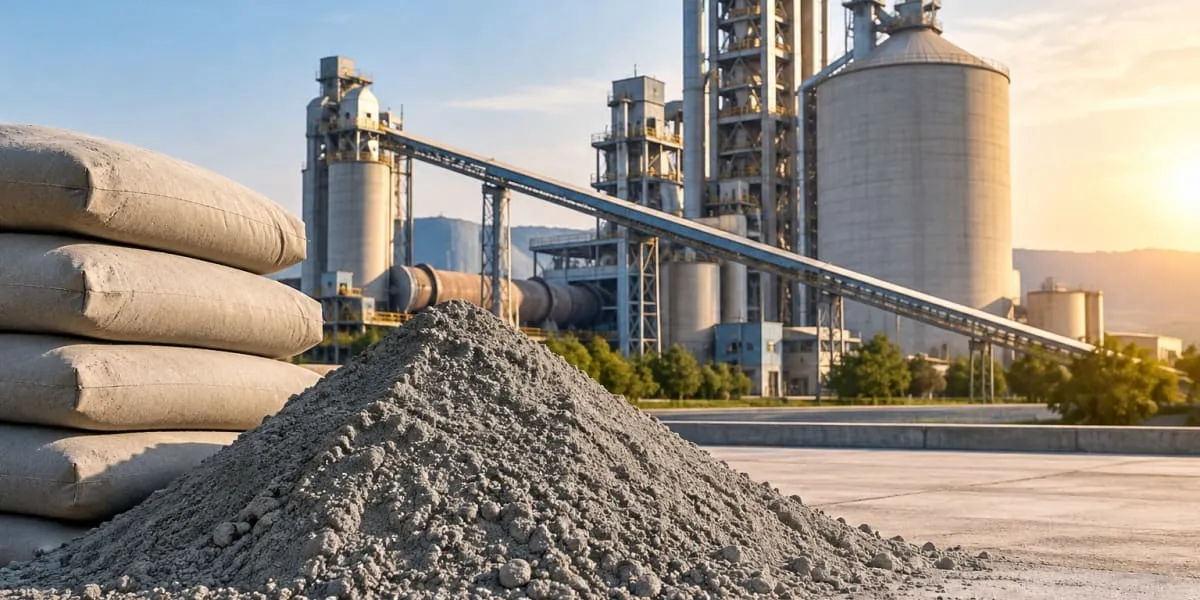
India is simultaneously grappling with two crises: a mounting waste emergency and an urgent need to decarbonise its most carbon-intensive industries. The cement sector, the second-largest in the world and the backbone of the nation’s infrastructure ambitions, sits at the centre of both. It consumes enormous quantities of fossil fuel, and it has the technical capacity to consume something else entirely: the waste our cities cannot get rid of.
According to CPCB and NITI Aayog projections, India generates approximately 62.4 million tonnes of municipal solid waste annually, with that figure expected to reach 165 million tonnes by 2030. Much of this waste is energy-rich and non-recyclable. At the same time, cement kilns operate at material temperatures of approximately 1,450 degrees Celsius, with gas temperatures reaching 2,000 degrees. This high-temperature environment is ideal for co-processing, ensuring the complete thermal destruction of organic compounds without generating toxic residues. The physics are in our favour. The infrastructure is not.
Pre-processing is not the support act for co-processing. It is the main event. Get the particle size wrong, get the moisture wrong, get the calorific value wrong and your kiln thermal stability will suffer the consequences.

The regulatory push is real
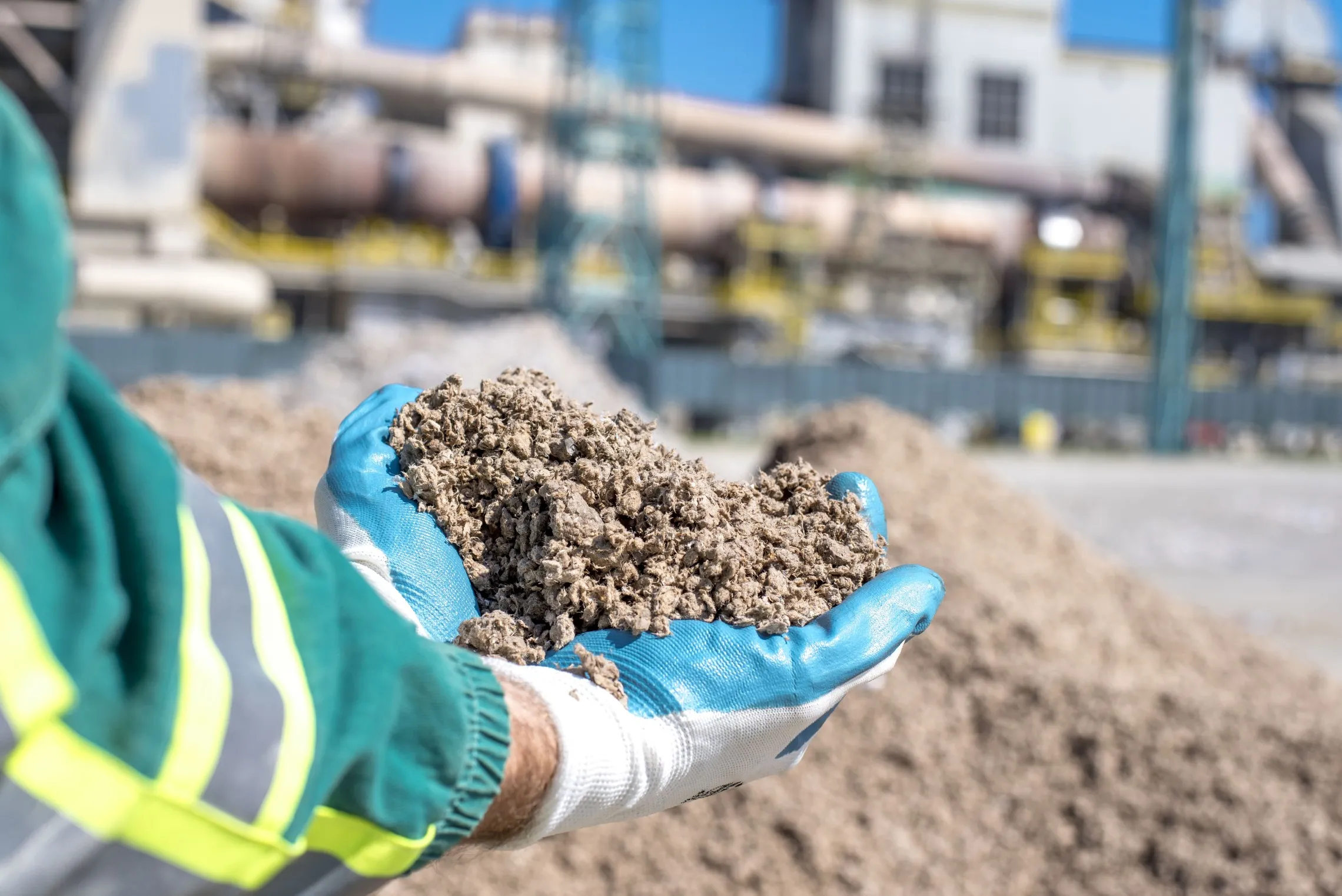
The Solid Waste Management (SWM) Rules 2026 mandate that cement plants progressively replace solid fossil fuels with Refuse-Derived Fuel (RDF), starting at a 5 per cent baseline and scaling to 15 per cent within six years. NITI Aayog’s 2026 Roadmap for Cement Sector Decarbonisation targets 20 to 25 per cent Thermal Substitution Rate (TSR) by 2030. Beyond compliance, every tonne of coal replaced by RDF generates measurable carbon reductions which is monetisable under India’s emerging Carbon Credit Trading Scheme (CCTS). TSR is no longer a sustainability metric. It is a financial lever.
Yet our own field assessments across multiple Indian cement plants reveal a sobering reality: the primary barrier to scaling AFR adoption is not waste availability. It is the fragmented and under-engineered pre-processing ecosystem that sits between the waste and the kiln.

Why Indian waste is a different engineering problem
Indian municipal solid waste is not the material that imported shredding equipment was designed for. Our waste streams frequently exceed 40 per cent to 50 per cent moisture content, particularly during monsoon cycles, saturated with abrasive inerts including sand, glass, and stone. Plants relying on imported OEM equipment face months of downtime awaiting proprietary spare parts. Machines built for segregated, low-moisture waste fail quickly and disrupt the entire pre-processing operation in Indian conditions.
The two most common failures we observe are what I call the biting teeth problem and the chewing teeth problem. Plants relying solely on a primary shredder reduce bulk waste to large fractions, but the output remains too coarse for stable kiln combustion. Others attempt to use a secondary shredder as a standalone unit without a primary stage to pre-size the feed, leading to catastrophic mechanical failure. When both stages are present but mismatched in throughput capacity, the system becomes a bottleneck. Achieving the 40 to 70 tonnes per hour required for meaningful coal displacement demands a precisely coordinated two-stage process.

Engineering a made-in-India answer
At Fornnax, our response to these challenges is grounded in one principle: Indian waste demands Indian engineering. Our systems are built around feedstock homogeneity, the holy grail of kiln stability. Consistent particle size and predictable calorific value are the foundation of stable kiln combustion. Without them, no TSR target is achievable at scale.
Our SR-MAX2500 Dual Shaft Primary Shredder (Hydraulic Drive) processes raw, baled, or loosely mixed MSW, C&I waste, bulky waste, and plastics, reducing them to approximately 150 mm fractions at throughputs of up to 40 tonnes per hour. The R-MAX 3300 Single Shaft Secondary Shredder (Hydraulic Drive), introduced in 2025, takes that primary output and produces RDF fractions in the 30 to 80 mm range at up to 30 tonnes per hour, specifically optimised for consistent kiln feeding. We have also introduced electric drive configurations under the SR-100 HD series, with capacities between 5 and 40 tonnes per hour, already operational at a leading Indian waste-processing facility.
Looking ahead, Fornnax is expanding its portfolio with the upcoming SR-MAX3600 Hydraulic Drive primary shredder at up to 70 tonnes per hour and the R-MAX2100 Hydraulic drive secondary shredder at up to 20 tonnes per hour, designed specifically for the large-scale throughput that higher TSR ambitions require.

The investment case is now
The 2070 Net-Zero target is not a distant goal for India’s cement sector. It starts today, with decisions being made on the plant floor.
The SWM Rules 2026 are already in effect, requiring cement plants to replace coal with RDF. Carbon credit markets are opening up, and coal prices are not going to get cheaper. Every tonne of coal a cement plant replaces with waste-derived fuel saves money on one side and generates carbon credit revenue on the other. Pre-processing infrastructure is no longer just a compliance requirement. It is a business investment with a measurable return.
The good news is that nothing is missing. The technology works. The waste is available in every Indian city. The government has provided the policy direction. The only thing standing between where the industry is today and where it needs to be is the commitment to build the right infrastructure.
The cement companies that move now will not just meet the regulations. They will be ahead of every competitor that waits.

About the author:
Jignesh Kundaria is the Director and CEO of Fornnax Technology. Over an experience spanning more than two decades in the recycling industry, he has established himself as one of India’s foremost voices on waste-to-fuel technology and alternative fuel infrastructure.

Concrete

Star Cement Named Preferred Bidder For Boro Lakhindong Block

Preferred bidder for limestone mining lease in Assam

Published

on

By

Shares


Star Cement has been declared the preferred bidder for the mining lease for Boro Lakhindong West Block following e-auctions conducted by the Government of Assam. The block is located in Boro Lakhindong Village, Umrangso Tehsil, Dima Hasao District, Assam, and extends over an area of 123 hectares. The estimated limestone resource is 207.822 million (mn) tonnes (t), a quantity that will supply raw material for cement production and support the company’s manufacturing operations in the region.

The company is engaged in the manufacturing and selling of cement clinker and cement and distributes products across the north-eastern and eastern states of India. Star Cement operates plants and logistics networks that procure and process limestone to produce clinker for cement, and the addition of Boro Lakhindong is presented as a strategic enhancement of feedstock availability. The preferred bidder status secures rights to the specified lease area under the terms of the auction process.

Financial results for the company in the fourth quarter of fiscal year 2026 showed a consolidated net profit rise of 20.24 per cent to Rs 1,481.0 mn on an 11.54 per cent increase in revenue to Rs 11,735.5 mn compared with the corresponding quarter of the previous year. Those results reflected higher sales volumes and revenue growth in the company’s primary markets and are cited in company disclosures accompanying the lease announcement. The reported performance provides context to the company’s ability to pursue and finance new mining lease opportunities.

Market reaction to the declaration was modest, with the scrip rising zero point thirty six per cent to trade at Rs 212 on the BSE. The award of the Boro Lakhindong lease concludes the e-auction process for the west block and assigns operational rights to Star Cement as the preferred bidder, subject to completion of statutory and contractual formalities.

Continue Reading

Concrete

KERC Proposal To Cut Rooftop Solar Export Tariff Raises Concern

Consumers and advocates urge regulator to reconsider change

Published

on

By

Shares


The Karnataka Electricity Regulatory Commission (KERC) has proposed a reduction in the tariff paid for surplus electricity that rooftop solar installations export to the grid, prompting concern among consumers, renewable energy advocates and industry specialists. The proposal arrives while the Central government and state governments are promoting clean energy adoption and offering subsidy schemes to encourage rooftop solar deployment. Thousands of households in Karnataka, particularly in Bengaluru, have invested substantial sums in rooftop systems to reduce reliance on conventional power and support state renewable targets.

Stakeholders have raised questions about the implications of a lower export tariff for the financial attractiveness of rooftop solar investments and the pace of the state transition to renewables. Industry analysts warned that a reduction in compensation for excess generation could discourage new installations and extend payback periods for existing systems. Current messaging from authorities, which simultaneously promotes adoption while proposing lower export rates, has been described by user groups as creating contradictory signals for consumers.

Experts argued that policy measures should focus on grid modernisation rather than reducing consumer benefits, with investments in transmission and distribution networks needed to manage higher volumes of distributed solar generation. Consumer groups and renewable advocates are preparing written submissions to the regulator and are urging retention of incentives that support household adoption of rooftop systems. KERC has invited public objections and suggestions as part of a consultation process that will determine the final tariff framework.

The outcome of the consultation is expected to influence the future growth of rooftop solar across the state and shape investor confidence in small-scale renewable projects. Residents who have already installed rooftop panels are monitoring developments closely because changes to compensation mechanisms may affect household finances and the speed of return on investment. Observers noted that coherent policy, aligned incentives and grid upgrades would be essential to sustain momentum in the rooftop solar sector.

Continue Reading

Concrete

Indian Railways Plans Green Fly Ash Transport Network

Published

on

By

Shares

Specialised rail logistics will move fly ash from power plants to infrastructure industries.

New Delhi

Indian Railways is planning a large-scale green logistics initiative to transport fly ash from thermal power plants to industries where it can be reused in infrastructure and construction activities.

The initiative was discussed during a review meeting chaired by Union Minister for Railways Ashwini Vaishnaw. Union Ministers of State for Railways V Somanna and Ravneet Singh Bittu were also present.

India generates nearly 340 million tonnes of fly ash every year from thermal power plants. The proposed initiative aims to create an efficient rail-based transport system using specialised containers and dedicated logistics arrangements to move fly ash safely from power plants to end-use industries.

Fly ash is widely used in road construction, cement manufacturing, brick production, concrete, blocks and boards. By improving its movement through the railway network, the initiative is expected to support better utilisation of this industrial by-product while reducing environmental concerns linked to storage and disposal.

The move also aligns with India’s circular economy goals by converting waste from thermal power generation into a useful raw material for the construction and infrastructure sectors. Wider availability of fly ash can help reduce material costs in areas such as bricks and cement, supporting more affordable infrastructure and housing development.

Through this initiative, Indian Railways aims to provide a cleaner, safer and more organised transport solution for fly ash, turning an environmental challenge into an infrastructure resource.

Continue Reading

Video Thumbnail

    SIGN-UP FOR OUR GENERAL NEWSLETTER


    Trending News

    SUBSCRIBE TO THE NEWSLETTER


    Don't miss out on valuable insights and opportunities to connect with like minded professionals.


      This will close in 0 seconds