Connect with us

Concrete

“Waste is heterogeneous and highly unpredictable.”

Published

on

Shares

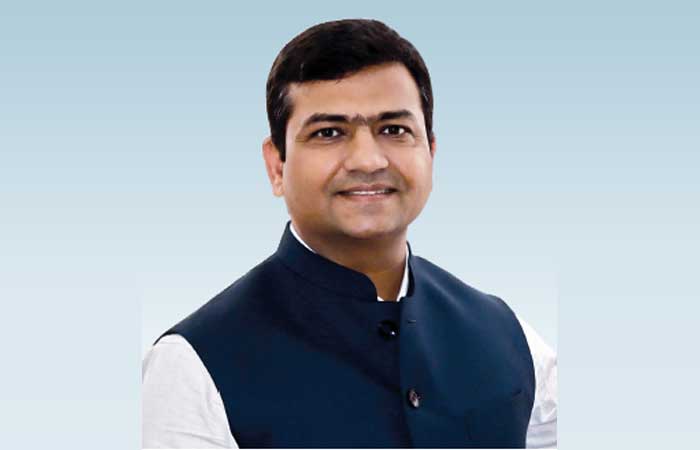
Rushi Gajjar, Founder and Director, Arcler Projects, draws on deep technical expertise to examine the challenges in using AFR in India.

India’s waste is not a uniform resource. It is a seasonal, city-specific, moisture-laden variable that defies industrial standardisation. Rushi Gajjar, Founder and Director of Arcler Projects, has spent years navigating this reality on the ground. In this conversation, he looks at the technical gaps in RDF processing, the policy frameworks needed to unlock full potential of alternative fuel and raw materials (AFR), and why automation is no longer optional for a viable waste-to-fuel future.

How do you see the evolution of waste—from a disposal challenge to a reliable alternative fuel and raw material (AFR)—for the cement industry?
Currently, India generates 65 MTPA municipal solid waste annually, which is growing with the increase of population. The current per capita solid waste generation is 190 gm per day is growing with change of lifestyle. Indian government is prioritising systematic collection, segregation, transportation and scientific disposal by enacting Solid Waste Management Rule 2026 and Plastic Waste Management Rule 2026. The efficient segregation, resource recovery and recycling is the focus area.
The cement industry is best suited for non-recyclable combustible fraction as the cement kilns are ideal for high temperature disposal of waste derived fuels and destruction of organic pollutants. The alkaline atmosphere within the kiln is excellent for neutralising acidic gases produced during combustion of some alternative fuels, reducing the need for costly external emission controls. The ash produced from alternative fuels does not need to be landfilled, instead it becomes a chemically integrated valuable raw materials substituting the natural raw materials in the clinker matrix. The alkaline environment and clinker ash integration make it a sustainable process that lower the cost, fossil fuel dependency and minimise harmful emissions.
This unique feature of cement kiln makes it more advantages compared to the specially constructed Waste to Energy Power Plant for waste disposal whereas WtE power plants required specially designed costly boiler, SNCR, Flue gas cleaning system. The bottom ash and fly ash disposal is still a challenge with WtE power plants. So, it is great value proposition for cement industry to contribute towards decarbonisation commitment by utilising alternative fuels.

What are the biggest technical and operational gaps in converting heterogeneous waste into consistent, kiln-ready AFR?
The Indian waste composition, contamination, quality varies from city to city, season to season.
The waste is not consistent. It majorly consists of paper, plastic, textile, rubber, leather, diapers, napkins, organic waste, sand, stone, metal and inert contamination with moisture ranges from 30 per cent to 60 per cent. The quality of waste deteriorates further during monsoon season.
The biggest technical gap is selection of correct process flow and deployment of reliable technology based on input waste composition and output quality requirement. The waste recycling machineries must be robust in design and construction to process this heterogeneous highly contaminated waste. There is multiple shredding, screening, sorting, drying technology options available to choose based on quantitative and qualitative objectives. The biggest operational gap is availability of trained and qualified manpower who are ready to work in this challenging environment. The plant operators are facing the challenge to recruit, motivate and retain the qualified manpower.

How can cement companies improve confidence in AFR quality and
reliability when sourcing from fragmented waste streams?

The confidence and reliability of quantitative and qualitative AFR supply can be ensured by deep cooperation and collaboration between cement companies and waste management contractors / AFR suppliers. This starts from conscious selection of suppliers, enabling them, educate them, train them, help them in selection of technology and process, support them in building right infrastructure. The continuous nurturing and hand holding is essence of success.

From your experience, what are the key bottlenecks in scaling RDF and AFR adoption across India?
The first is consistent and reliable supply chain infrastructure. This needs to be developed through the implementation of strict policies and guidelines, in collaboration with key stakeholders such as CPCB, state pollution control boards, ULBs, municipal corporations, waste management contractors, RDF plant operators, and logistics partners.
The second is the quality of RDF / AFR. Companies can achieve desired quality of RDF / AFR through deployment of right process and technology but one must be ready to pay for quality.
The third is the speed of implementation of robust and reliable AFR pre-processing and co-processing infrastructure, chlorine bypass system and other necessary changes within plant across the cement industry. The few cement companies are showing great commitment towards higher thermal substitution rate and implementing necessary plant and machineries as part of their decarbonisation commitment. But some cement companies are showing reluctance to use AFR due to techno-economic infeasibility.
The fourth is economic nonviability compared to fossil fuel. This point needs to be evaluated holistically considering various points like environmental impact of non-disposal of waste, CO2 emissions from cement companies, rule of polluter pays principles and organisation own’s decarbonisation sustainability commitment etc.

How important is pre-processing infrastructure in achieving higher thermal substitution rates (TSR) in cement plants?
The inconsistent, highly contaminated RDF with higher moisture content causes significant operational disruptions and detrimental effects on kiln performance, fluctuating thermal values, changing combustion characteristics and volatile chemical compositions. This results in lower TSR and lower annual availability. The uniform and consistent AFR quality helps in achieving higher TSR. And this can be achieved through removal of inert contamination, uniform size reduction and moisture removal drying infrastructure using waste heat from clinker cooler. The consistent RDF having size < 25mm and moisture <10 per cent can be utilised for main burner application which will help to improve the overall TSR further.

What role do policy, segregation at source, and municipal systems play in unlocking the full potential of AFR?
The Solid Waste Management Rule 2026 and Plastic Waste Management Rule 2026 has already been rolled out. The various government departments, including the Ministry of Housing and Urban Affairs (MoHUA), Ministry of Environment, Forest and Climate Change (MoEFandCC), Swachh Bharat Mission (Urban), CPCB, ULBs, and other industry stakeholders, must ensure strict implementation of the enacted policies to unlock the full potential of AFR.

How will technology and automation redefine waste-to-fuel ecosystems for cement manufacturing?
The waste is heterogeneous and highly unpredictable. It has challenging operational environment due to odour, leachate, insects, inert etc. And hence the manual feeding, manual sorting, manual operation must be avoided looking at the hygiene and safety concern. The fully automatic completely integrated IoT enabled with feedback feedforward-controlled shredding, screening, sorting, drying, storage and retrieval infrastructure can deliver unmatched productivity with higher efficiency and safety.


  • Kanika Mathur

Concrete

Cement Makers Reaffirm Commitment to Sustainable Growth

Published

on

By

Shares

World Environment Day spotlight on innovation and circularity

On World Environment Day, the Indian cement industry reiterated its commitment to supporting India’s climate ambitions through sustainable manufacturing, resource efficiency and the adoption of cleaner technologies.

The Cement Manufacturers’ Association (CMA) said the sector remains aligned with the Government of India’s Net Zero commitments and is accelerating efforts to reduce its environmental footprint while supporting the country’s infrastructure and development agenda.

Parth Jindal, President, CMA and Managing Director, JSW Cement, said the industry is increasingly adopting cleaner technologies, improving energy efficiency and expanding the use of alternative fuels and raw materials. He also highlighted the growing importance of circular economy practices, where industrial by-products and waste streams from one sector are utilised as resources in another.

“The Indian Cement Industry is aligned to the Government’s commitments on carbon mitigation and is accelerating the adoption of cleaner technologies, resource efficiency and circular economy practices while actively exploring the potential of Carbon Capture, Utilisation and Storage (CCUS) as a critical pathway for deep decarbonisation,” said Jindal.

He added that coprocessing industrial waste and by-products helps conserve natural resources, reduce disposal requirements and lower the environmental footprint across multiple sectors.

According to Jindal, sustainability is no longer limited to manufacturing processes but is increasingly influencing investment decisions, innovation strategies and long-term growth plans within the industry.

Echoing similar views, Dr Raghavpat Singhania, Vice President, CMA and Managing Director, JK Cement, said sustainable development extends beyond emissions reduction and must also focus on responsible resource utilisation and waste minimisation.

“Sustainability in the built environment cannot be measured by emissions alone. It is equally about how efficiently we use resources, how effectively we minimise waste and how responsibly we create the infrastructure that will serve future generations,” said Singhania.

He noted that the cement industry is advancing its sustainability agenda through greater resource efficiency, increased circularity, technological innovation and continuous improvements in manufacturing practices. As a key contributor to India’s infrastructure development, the sector has a critical role to play in balancing economic growth with environmental responsibility.

On the occasion of World Environment Day, industry leaders reaffirmed their commitment to supporting India’s climate goals while delivering the materials required for resilient, durable and sustainable infrastructure.


Continue Reading

Concrete

Building a Greener Future Together

Published

on

By

Shares

Environmental sustainability requires immediate action, not just long-term commitments and discussions. Recycling, circular economy practices, and technology-driven waste management can help industries reduce environmental impact while supporting sustainable growth.

Author: Jignesh Kundaria, Director and CEO, Fornnax Technology

World Environment Day serves as an important reminder that environmental sustainability can no longer remain confined to discussions, reports, or long-term commitments. The environmental challenges facing the world today demand immediate, measurable, and collective action. Across industries and communities, waste generation continues to outpace our ability to process it responsibly, placing increasing pressure on ecosystems, natural resources, public health, and the well-being of future generations.

One of the most significant shifts required today is a change in how society perceives waste. Rather than being viewed as a material to be discarded, waste must be recognised as a valuable resource that can contribute to both economic growth and environmental protection when managed through the right technologies and systems. This mindset forms the foundation of the circular economy model that countries across the world are increasingly adopting to reduce landfill dependence, recover valuable materials, and create more sustainable industrial ecosystems.

India has made meaningful progress in strengthening awareness around sustainability, recycling, and environmental responsibility over the past decade. Significant efforts are being made to formalise the recycling sector through improved infrastructure, technology adoption, policy implementation, and broader stakeholder participation. These developments are creating a stronger foundation for responsible waste management and resource recovery across the country.

However, achieving long-term environmental impact requires collaboration from all stakeholders. Industries, policymakers, technology providers, and communities must work together with greater accountability to strengthen recycling ecosystems, encourage responsible waste management practices, and create sustainable outcomes through consistent execution rather than temporary interventions.

As someone closely associated with the recycling industry, I firmly believe that technology will play a decisive role in addressing future environmental challenges. Advanced recycling systems have the potential to recover valuable resources, reduce pollution, minimise landfill burdens, and conserve energy, creating a more sustainable future for generations to come. This belief is deeply reflected in Fornnax’s motto, “Committed to Create a Green Future,” which embodies our commitment to building long-term environmental value through innovation and responsible action.

At the same time, technology alone cannot deliver meaningful change. Real progress requires intent, awareness, participation, and a shared sense of responsibility. Sustainable development can only be achieved when innovation is supported by collective action and a genuine commitment to environmental stewardship.

On this World Environment Day, let us move beyond conversations and take meaningful steps towards creating a cleaner, greener, and more sustainable planet. By embracing innovation, strengthening recycling ecosystems, and acting responsibly today, we can create lasting environmental impact and secure a better future for generations to come.

Continue Reading

Concrete

JK Lakshmi Advances LC3 Cement Expansion

Company highlights commercial production and research partnerships

Published

on

By

Shares


The meeting reviewed progress in limestone calcined clay cement (LC3) technology and its commercial adoption in India’s cement sector, focusing on low-carbon alternatives to conventional binders. JK Lakshmi Cement noted that limestone calcined clay cement can reduce carbon dioxide emissions by up to 40 per cent compared with conventional cement and said this reduction supports industry decarbonisation. The company highlighted that it was among the first two cement manufacturers in India to move LC3 into commercial production after the Bureau of Indian Standards approved the technology as a cement standard.

Vinita Singhania said the transition of LC3 from research to commercial production reflected collaboration between industry, academia and international institutions. Maya Tissafi acknowledged JK Lakshmi Cement’s role in advancing LC3 adoption in India and its contribution in taking the technology from laboratory trials to commercial implementation. Both representatives underlined the growing relevance of sustainable construction materials as India expands infrastructure and urban development.

The meeting explored continued collaboration with Swiss research institutions such as EPFL, EMPA and ETH Zurich alongside Indian academic partners and development organisations. JK Lakshmi Cement has been associated with the LC3 initiative since 2014 and worked with EPFL, IIT Delhi, IIT Madras, Development Alternatives and Technology and Action for Rural Advancement. The company conducted one of the earliest industrial trials of LC3 and recently announced commercial production of Green Pro LC3 cement from its Jaykaypuram plant in Rajasthan.

India remains the world’s second-largest cement producer and expansion of infrastructure, urbanisation and housing demand continue to support long-term sector growth, increasing interest in low-carbon technologies. The company reported an annual turnover of more than Rupees (Rs) 60 bn and current cement capacity of about 18 million (mn) tonnes (t) per annum, with a target of reaching 30 million (mn) tonnes (t) by 2030. Apart from grey cement, the company also makes ready-mix concrete, gypsum plaster, wall putty, primers, adhesives and fly ash blocks, and both sides concluded on the need for continued collaboration to develop sustainable construction solutions.

Continue Reading

Video Thumbnail

    SIGN-UP FOR OUR GENERAL NEWSLETTER


    Trending News