Concrete
Digitalisation is transforming asset management
Published
4 weeks agoon
By
admin
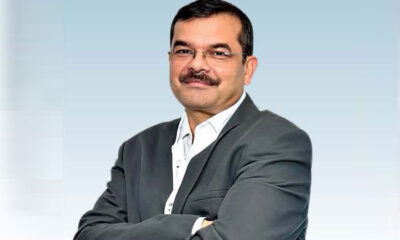
Satish Maheshwari, Chief Manufacturing Officer, Shree Cement, explains how intelligent drive systems, predictive maintenance, and digitalisation are transforming gears, drives, and motors from mechanical assets into strategic enablers of reliability, efficiency, and plant performance.
In a cement industry where a single gearbox, motor, or drive system failure can disrupt production, asset reliability has become a critical business priority. Satish Maheshwari discusses how advancements in gear design, energy-efficient motors, variable frequency drives, and Industry 4.0 technologies are helping manufacturers improve uptime, optimise energy consumption, and extend equipment life.
He highlights the growing importance of predictive maintenance, condition monitoring, and lifecycle management in building resilient, future-ready cement operations.
How are modern gear, drive, and motor technologies improving efficiency and reliability in cement manufacturing operations?
Modern gear, drive, and motor technologies are improving efficiency and reliability through compact, high power-density designs and optimised system integration. Advanced gear systems are designed to maintain low Hertzian contact stress and ensure positive torque transmission, which helps reduce transmission losses.
The use of case-hardened gears, profile modifications, and improved surface finishing minimises friction and micro-pitting. These improvements reduce thermal loading and wear rates, thereby extending equipment service life.
In addition, high-efficiency motors and drives improve power factor, load matching, and overall energy utilisation. Collectively, these advancements contribute to higher uptime, reduced maintenance requirements, and improved process reliability.
What are the biggest operational challenges cement plants face today in maintaining critical drive systems and heavy-duty motors?
Cement plants face several challenges in maintaining critical drive systems and heavy-duty motors due to extreme duty cycles and highly abrasive operating environments. Large heavy-duty gearboxes with high torque ratings are often difficult to access and maintain, making reliability and maintainability important considerations.
Achieving the right balance between AGMA design standards, service factor, and factor of
safety is critical for ensuring long-term durability. Severe operating conditions, including dust ingress, thermal variation, and shock loads, further accelerate equipment degradation.
Additionally, issues such as shaft misalignment, lubrication contamination, and vibration resonance can lead to equipment failures. Addressing these challenges requires effective condition monitoring, root cause analysis (RCA), and predictive maintenance strategies.
How is digitalisation transforming the monitoring and predictive maintenance of gears, drives, and motors in cement plants?
Digitalisation is fundamentally transforming asset management in cement plants by enabling real-time monitoring, advanced diagnostics, and predictive maintenance. Industry 4.0 technologies, coupled with IIoT-enabled sensors and cloud-based platforms, provide continuous visibility into the health and performance of critical equipment.
Key operating parameters such as vibration acceleration (g), velocity (mm/s), displacement are continuously monitored. Advanced diagnostic techniques, including FFT spectrum analysis, help identify issues such as gear defects, imbalance, misalignment, and bearing faults at an early stage.
Cloud-based systems facilitate remote monitoring, trend analysis, and AI-driven insights, allowing maintenance teams to make informed decisions based on actual equipment conditions rather than fixed schedules. Prognostics and Health Management (PHM) models further support residual life estimation, while tools such as bearing L10 life calculations and lubrication monitoring enhance lifecycle planning.
These capabilities help shift maintenance strategies from reactive to predictive, reducing downtime, improving asset availability, and optimising maintenance costs.
What role do energy-efficient motors and variable frequency drives play in reducing power consumption and operational costs?
Energy-efficient motors and Variable Frequency Drives (VFDs) have become essential tools for reducing energy consumption and improving operational efficiency in cement manufacturing.
Modern high-efficiency motors are designed to minimise electrical losses, including I²R losses, core losses, and stray load losses. This results in better thermal performance, longer insulation life, and improved overall reliability.
VFDs further enhance efficiency by enabling precise speed and torque control based on process requirements. Instead of operating continuously at full speed, equipment can run at optimal RPM levels, significantly reducing energy consumption across various applications such as fans, conveyors, and grinding systems.
Additionally, VFDs help minimise inrush currents during start-up, reduce mechanical stress on equipment, and lower peak power demand. Together, energy-efficient motors and VFDs contribute to substantial energy savings, lower operating expenditure, and improved process control throughout the plant.
How are evolving production demands influencing the design and selection of gearboxes and drive systems for cement plants?
Increasing production and throughput demands are driving the need for high torque-capacity, compact gearbox designs that can operate reliably under continuous-duty conditions. The design focus is increasingly centered on achieving high reliability factors and optimised service factors to support sustained plant operations.
Modern gearboxes are also being engineered with modular designs that facilitate ease of maintenance during short shutdown periods. In addition to performance requirements, selection criteria now include maintainability, Mean Time to Repair (MTTR), and the availability of maintenance resources.
The use of advanced materials and coatings further enhances fatigue strength and improves resistance to wear and corrosion. Overall, the industry approach is moving towards robust, efficient, and maintenance-optimised gearbox and drive systems.
In what ways can automation and smart drive technologies contribute to improved plant productivity and process optimisation?
Automation plays a critical role in ensuring closed-loop process control and real-time optimisation of plant operations. Advanced DCS and PLC platforms help enhance grinding efficiency and improve throughput by enabling better control of key process parameters.
Smart drives contribute by providing adaptive speed and torque control based on real-time process feedback. Their integration with SCADA systems allows centralised monitoring and control of operations across the plant.
In addition, condition-based monitoring enables early fault detection and helps reduce unplanned downtime. By reducing human intervention, process variability, and operational risk, automation and smart drive technologies contribute to higher productivity, optimised energy use, and more stable process performance
How important is lifecycle management and aftermarket support in ensuring long-term performance of gears, drives, and motors?
Lifecycle management is essential for ensuring the long-term reliability, availability, and maintainability (RAM) of gears, drives, and motors. Regular inspections, lubrication audits, and timely upgrades help extend Mean Time Between Failures (MTBF) and support sustained equipment performance.
OEM support is equally important, providing access to genuine spare parts, technical diagnostics, and refurbishment expertise. Planned shutdowns, combined with predictive maintenance practices, help reduce the likelihood of catastrophic failures and minimise downtime.
Additionally, aftermarket solutions such as retrofitting, digital upgrades, and performance optimisation initiatives help improve equipment effectiveness over time. Together, these measures contribute to a lower Total Cost of Ownership (TCO) and improved asset lifecycle performance.
- –Kanika Mathur
Concrete
Cement Sector Faces Sluggish Growth in First Half of FY27
April Price Hikes Unlikely To Offset Margin Decline
Published
35 minutes agoon
July 13, 2026By
admin
Nuvama Institutional Equities has warned that India’s cement industry is expected to record subdued volume growth in the first half of fiscal year 2026-27 before a recovery in the second half. The brokerage assessed that price increases implemented in April 2026 will be insufficient to offset an overall decline in sector profitability. It attributed the outlook to weak demand and fresh capacity additions scheduled during fiscal years 2026-27 and 2027-28 that are likely to keep prices under pressure.
The report noted that demand was sluggish in April and May 2026 owing to global uncertainty, labour shortages, heatwaves, constraints in raw materials and unseasonal rainfall. Producers raised prices across regions in April to mitigate rising petcoke costs and higher packaging expenses, but the increases proved short lived. Nuvama reported that standard petcoke prices rose to USD153/t, around USD41/t higher than in the third quarter of fiscal year 2025-26.
Price correction followed weaker demand, limiting the net increase to about Rs 10-12 per bag by the end of the quarter. Imported petcoke prices have since fallen to USD132/t from a recent peak of USD168/t, although they remained roughly USD20/t higher quarter on quarter. The brokerage expected the higher input cost impact to begin reflecting from late quarter one of FY27 and to continue into early quarter two.
Nuvama also estimated that crude linked increases were likely to raise packaging costs by about Rs 120-150/t and to exert upward pressure on freight. It warned that soft demand combined with significant new supply coming on stream in FY27-28 would keep pricing under strain and constrain near term margin recovery. The report concluded that volume growth was likely to be sluggish in the first half of FY27 before recovering in the second half.
Concrete
Nuvoco Vistas launches Limla cement plant, expands Gujarat footprint
Published
6 hours agoon
July 13, 2026By
admin
Nuvoco Vistas opens a 2 MMTPA grinding unit at Limla, entering Gujarat and advancing its target of 35 MMTPA capacity by FY 2028.
Surat (Gujarat)
Nuvoco Vistas Corporation Ltd, a part of Nirma Group and one of India’s leading building materials company, has inaugurated the Limla Cement Plant in Surat (Gujarat), one of Vadraj Cement Limited’s (VCL) principal manufacturing facilities. The commissioning represents a key milestone in Nuvoco’s acquisition and restoration of VCL, while supporting the company’s expansion across the Western Indian cement market.
Vadraj Cement Limited is a subsidiary of Nuvoco Vistas Corporation Limited and has installed cement capacity of 6 MMTPA across its assets. The Limla inauguration therefore represents the first operational step in the acquired platform’s wider revival, while the Kutch facilities provide clinker supply, mineral security and coastal logistics support for the western business.
Nuvoco completed its acquisition of Vadraj Cement Limited, then under the Corporate Insolvency Resolution Process, after paying a consideration of Rs 1,800 crore in June 2025. VCL’s asset portfolio comprises a clinker unit at Kutch and a grinding unit at Limla in Surat. It also includes high-quality captive limestone reserves and a captive jetty at Kutch, supporting more efficient logistics. Following the takeover, Nuvoco began an extensive programme of restoration, refurbishment and expansion at both locations, leading to the commissioning of the Limla plant.
The Limla Cement Plant is expected to support a phased increase in sales volumes across Gujarat. It will also help Nuvoco supply neighbouring markets in Western Maharashtra and release cement capacity from its northern plants, which can consequently be redirected towards markets in North India. The plant will manufacture a full portfolio comprising Ordinary Portland Cement, Portland Slag Cement, Portland Pozzolana Cement and Portland Composite Cement. It will additionally produce the complete Nuvoco Duraguard range, including the premium Nuvoco Duraguard Microfibre product. The acquisition is also expected to generate operational synergies with Nuvoco’s existing plants at Nimbol and Chittorgarh in Rajasthan, improving logistics optimisation and market reach across important regional markets.
The grinding unit at the Limla Cement Plant was completed ahead of schedule, with 2 MMTPA of capacity now inaugurated to expand Nuvoco’s operating scale and customer reach. After Vadraj Cement’s assets become fully operational, plants in North and West India are expected to account for nearly 40 per cent of Nuvoco’s total cement capacity. This will broaden the company’s manufacturing network, strengthen access to high-growth markets and support its plan to increase consolidated cement capacity to 35 MMTPA by FY 2028, reinforcing its longer-term growth strategy.
Commenting on the development, Jayakumar Krishnaswamy, Managing Director, Nuvoco Vistas Corp Ltd, said: “The inauguration of the Limla Grinding Unit in Surat is an important milestone in Nuvoco’s growth journey and demonstrates our commitment to disciplined, value-accretive expansion. Gujarat is strategically significant for Nuvoco, with substantial opportunities arising from infrastructure investment, industrial growth, rapid urbanisation and continuing demand from the housing and construction sectors. The facility strengthens our regional footprint, improves operational flexibility and increases our ability to serve customers across northern and western markets with greater reliability and efficiency.”
He added: “Through the Vadraj acquisition, we have refurbished and restarted a strategically important asset, returning it to operations in record time through strong execution and collaboration between teams. The achievement demonstrates our ability to create value from acquired assets, fulfil our commitments and retain the confidence of stakeholders. It also highlights the strength of our project delivery capabilities and our continued focus on building sustainable, profitable growth over the long term.”
Nuvoco Vistas Corporation Limited is a building materials company whose vision is to build a safer, smarter and more sustainable world. It is among the leading players in East India and has a significant presence across North and West India. Nuvoco began operations in 2014 with a greenfield cement plant at Nimbol, Rajasthan. It later acquired Lafarge India Limited, which had entered India in 1999, followed by Emami Cement Limited in 2020 and Vadraj Cement Limited in April 2025. The company has also announced an expansion in eastern India through a new grinding mill at the Arasmeta Cement Plant, supported by several debottlenecking programmes involving equipment upgrades, process improvements and internal capacity initiatives. These developments place Nuvoco on track to achieve total cement capacity of approximately 35 MMTPA. The company reported total income of Rs 11,362 crore in FY 2025-26, reflecting its continuing growth trajectory.
Nuvoco operates a diversified portfolio across three segments: Cement, Ready-Mix Concrete and Modern Building Materials. Its cement portfolio includes Concreto, Duraguard, Double Bull, PSC, Nirmax and Infracem, covering Ordinary Portland Cement, Portland Slag Cement, Portland Pozzolana Cement and Portland Composite Cement. Its pan-India RMX business provides value-added products under Concreto for performance concrete, Artiste for decorative concrete, InstaMix for ready-to-use bagged concrete, X-Con covering M20 to M60 grades, and Ecodure for specialised green concrete. Nuvoco has supplied materials to projects including the Mumbai-Ahmedabad Bullet Train, Birsa Munda Hockey Stadium in Rourkela, Aquatic Gallery at Science City in Ahmedabad, and metro railway projects in Delhi, Jaipur, Noida and Mumbai.
Concrete
Cement Prices To Hold Steady Amid Monsoon Slump
Centrum report says demand weakness will limit hikes
Published
1 week agoon
July 6, 2026By
admin
Centrum, a financial services firm, has reported that cement prices are likely to remain largely unchanged in July as weak demand during the monsoon season constrains pricing power. The report noted that construction activity remained subdued in the first quarter of fiscal year 2027 owing to labour shortages and slower execution of government projects. While June showed some volume recovery driven by delayed monsoons and quarter end sales, dealers are cautious about sustaining any price increases.
The analysis suggested that seasonal slowdown related to monsoon will prolong demand and pricing challenges through the second quarter. Dealers saw most recent attempts at price hikes as protective measures rather than genuine shifts in market fundamentals. They signalled that pockets of demand in select regions could prompt isolated adjustments but that broad based increases were unlikely while construction activity remained weak. Market participants therefore expected a cautious stance on pricing.
The report highlighted that despite intermittent recovery in shipments during June, the underlying demand trajectory remained muted as monsoon hampered site level activity and logistics. Commercial builders and retail dealers both reported constrained order books and slower payment cycles, which in turn reduced room for margin expansion among manufacturers. Analysts noted that unless government project execution accelerates markedly, demand improvement would be gradual. Price setters were thus likely to focus on protecting market shares rather than pursuing aggressive increases.
Market watchers said the near term outlook would be shaped by monsoon progress and fiscal spending patterns, with any acceleration in public works offering the most tangible support. Traders expected that regional variations would persist and that trade flows between surplus and deficit centres would determine local price movements. The report concluded that stakeholders should prepare for a period of subdued pricing until demand signals strengthen.
Cement Sector Faces Sluggish Growth in First Half of FY27
Nuvoco Vistas launches Limla cement plant, expands Gujarat footprint
Cement Prices To Hold Steady Amid Monsoon Slump
Cement Prices Set To Stay Under Pressure In July
TARIL Secures Ultra Mega Transformer Order From PGCIL
Cement Sector Faces Sluggish Growth in First Half of FY27
Nuvoco Vistas launches Limla cement plant, expands Gujarat footprint
Cement Prices To Hold Steady Amid Monsoon Slump
Cement Prices Set To Stay Under Pressure In July