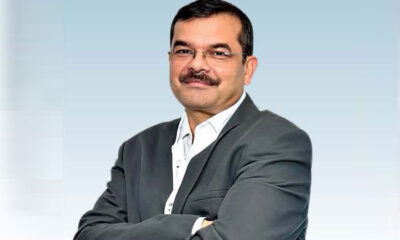
Girish Hanchate, Director – Industrial Market, India, SKF India (Industrial), explains how intelligent bearings, predictive maintenance, and digital technologies are helping cement manufacturers unlock higher reliability, lower maintenance costs, and improved sustainability.
As India’s cement industry gears up for significant capacity expansion, the reliability of rotating equipment has become a critical determinant of plant performance. Girish Hanchate, discusses how advanced bearing technologies, automated lubrication systems, condition monitoring, and Industry 4.0 enabled predictive maintenance are transforming asset management. He highlights how innovations that extend equipment life, reduce grease consumption by up to 99 per cent, and improve energy efficiency are helping cement plants enhance uptime, lower operating costs, and support long-term sustainability goals.
How are advanced bearing and drive technologies improving the reliability and efficiency of cement plant operations?
India’s cement sector is undergoing unprecedented expansion, with production jumping 9.4 per cent year on year in April 2026. This massive surge, fuelled by national infrastructure initiatives, places immense pressure on plants to maintain continuous, high volume output. In this environment, advanced bearing and drive technologies are no longer just mechanical components—they are core drivers of industrial efficiency. Modern innovations, such as our newly engineered sealed spherical roller bearings for High Pressure Grinding Rolls (HPGRs), are custom built to survive intense radial loads. By integrating smart geometry and heavy duty sealing, these technologies drastically reduce friction and lower operational temperatures. When integrated with SKF Insight, these bearings provide continuous visibility into critical operating parameters, including load, speed, vibration, and temperature. This real time intelligence enables maintenance teams to move from reactive interventions to predictive maintenance, helping improve equipment reliability, extend service intervals, and minimise unplanned downtime across cement operations.
Practically, this delivers double the traditional asset lifespan and reduces grease consumption by up to 99 per cent. For an industry operating under tight timelines, cutting down grease waste and extending service intervals means moving away from constant manual maintenance toward highly reliable, self sustaining machinery. Ultimately, this allows Indian cement manufacturers to scale up production and protect their margins without compromising their strict sustainability goals.
What are the biggest challenges faced by rotating equipment in the harsh operating conditions of cement manufacturing?
Cement manufacturing is famously brutal on machinery. Rotating equipment must constantly endure what we at SKF refer to as the big three industry challenges: abrasive dust contamination, heavy vibrating loads, and extreme thermal spikes. As Indian cement makers aggressively add an estimated 160 to 170 million tonnes of capacity between 2026 and 2028, equipment is being pushed harder than ever before. When fine clinker dust penetrates a traditional bearing housing, it acts like sandpaper, causing rapid premature wear and lubrication starvation.
Furthermore, the rising adoption of Variable Frequency Drives (VFDs) to control motor speeds has introduced a hidden, modern threat: stray electrical currents that cause devastating electrical erosion inside motor bearings. At SKF India Industrial, we tackle these harsh realities head on. By engineering specialised solutions like our VA9A1 series, which features increased internal space for higher grease retention, CeraDrive bearings with ceramic elements that eliminate 99 per cent of electrical erosion, locally engineered VA029 series for Crushers and Gear Boxes, we help plants defend their vital machinery against these aggressive elements and prevent catastrophic failures.
How is predictive maintenance reshaping the management of gears, drives, and motors in modern cement plants?
Historically, cement plants operated on a rigid, time based schedule, routinely shutting down machinery and replacing components whether they genuinely needed it or not. Today, with India’s domestic capacity utilisation holding at a high 70 per cent to meet aggressive infrastructure demands, unplanned downtime is an expensive financial risk that industry leaders must actively eliminate. Predictive maintenance (PdM) is completely rewriting this traditional playbook by replacing manual guesswork with real time, data backed strategy. Instead of waiting for a critical kiln drive, motor, or heavy duty gearbox to fail catastrophically, we utilise advanced AI driven remote diagnostics to monitor microscopic changes in vibration, temperature, and mechanical stress.
A vital pillar of this modern transformation is integrating SKF Automatic Lubrication Systems directly into the plant’s overall predictive framework. Manual, periodic regreasing often introduces human error, leading to dangerous over lubrication or premature wear from under lubrication. Our automated systems remove this risk by delivering the precise quantity of clean, uncontaminated lubricant to critical bearings at the exact right operational interval. This seamless combination of continuous health tracking and automated machinery care shifts the factory floor from crisis management to strategic preservation. Ultimately, it empowers engineering teams to synchronise component maintenance perfectly with planned plant turnarounds, turning maintenance into a predictable driver of profitability.
In what ways can intelligent condition monitoring help reduce downtime and extend equipment life?
Intelligent condition monitoring acts as a continuous digital health check for critical machinery operating across the entire cement value chain. By deploying a connected network of wireless sensors, analytical software, and cloud based platforms, we gather real time data from deep within rotating machinery. This constant stream of information helps us catch microscopic defects, such as a hairline flaw in a bearing raceway—weeks before it can trigger an operational shutdown. In heavy exposure applications like conveyor systems, combining this digital insight with targeted physical innovations, such as the SKF Three barrier solution, delivers remarkable results.
This specialised solution provides a triple layer of physical defence: an outer housing equipped with heavy duty taconite mechanical seals, a grease filled housing cavity that traps incoming particles, and an inner sealed SKF Explorer bearing as the final line of defence. This unified approach allows operators to monitor the inner workings of the equipment via smart sensors while the physical barriers aggressively prevent abrasive clinker dust ingress. Consequently, manual regreasing intervals can be safely reduced from once a week to just twice a year, saving up to 90 per cent of maintenance time and grease costs. Addressing mechanical and thermal stress early stops minor flaws from compounding into catastrophic failures that damage adjacent
gears and shafts. Ultimately, intelligent monitoring eliminates unexpected shutdowns, maximises asset
lifecycle, and enables operators to sync maintenance windows perfectly with planned plant turnarounds, ensuring a highly predictable, high performance production environment.
How important is energy efficient drive technology in supporting the cement industry’s sustainability goals?
Energy efficient drive technology has become a critical enabler in helping the cement industry achieve its sustainability and decarbonisation objectives. Cement manufacturing is highly energy intensive, with motors and drives accounting for a significant share of total power consumption across operations such as grinding, crushing, conveying, and kiln systems.
Advanced drive technologies, including variable frequency drives (VFDs) and high efficiency motors, enable plants to optimise energy usage by matching motor speed and torque to actual process requirements. This not only reduces electricity consumption but also lowers carbon emissions and operational costs. Alongside these systems, SKF’s AEM31 energy efficient bearings are engineered to reduce bearing friction by up to 25 per cent, helping improve the power efficiency of rotating equipment such as motors and pumps.
In addition, energy efficient drives improve equipment reliability, minimise mechanical stress, and extend machinery life, contributing to overall plant productivity and reduced maintenance interventions. As the industry moves towards greener manufacturing practices, integrating intelligent and efficient drive systems will be essential for achieving both environmental compliance and long term operational resilience.
What role do lubrication, alignment, and vibration control play in optimising the performance of critical cement plant machinery?
Lubrication, alignment, and vibration control are fundamental pillars of reliable rotating equipment performance in cement plants. Given the harsh operating conditions, including high temperatures, heavy loads, and dust contamination, maintaining machinery health is essential to ensuring uninterrupted production.
Proper lubrication reduces friction and wear, protects bearings and critical components, and significantly enhances equipment lifespan. Equally important is precision alignment, which minimises unnecessary stress on shafts, couplings, and
bearings, thereby improving efficiency and reducing energy losses.
Vibration control and condition monitoring provide early insights into potential equipment issues such as imbalance, misalignment, looseness, or bearing failures. By identifying these problems before they escalate, plants can move from reactive maintenance to predictive maintenance strategies, reducing unplanned downtime and improving
asset availability.
Together, these practices help cement manufacturers improve operational efficiency, lower maintenance costs, enhance safety, and maximise overall equipment effectiveness (OEE).
How do you see digitalisation and Industry 4.0 influencing the future of rotating equipment management in the cement sector?
Digitalisation and Industry 4.0 are transforming the way cement plants manage rotating equipment by enabling smarter, data driven decision making. The integration of intelligent sensors, real time monitoring systems, predictive analytics, and AI powered diagnostics is helping manufacturers shift from time based maintenance to condition based and predictive maintenance models.
Connected technologies allow operators to continuously monitor parameters such as vibration, temperature, lubrication condition, and energy consumption across critical assets. This real time visibility helps identify performance deviations early, optimise maintenance schedules, and prevent costly equipment failures.
In the future, we expect digital twins, remote diagnostics, and cloud enabled asset management platforms to play an even larger role in improving reliability, efficiency, and sustainability. Industry 4.0 will not only enhance plant uptime and operational agility but also support the cement industry’s broader goals of energy optimisation, resource efficiency, and reduced environmental impact.
At SKF India Industrial, we believe the future of rotating equipment management lies in combining domain expertise with intelligent technologies to create more resilient, efficient, and sustainable industrial operations.





















 Concrete4 weeks ago
 Concrete4 weeks ago
 Concrete4 weeks ago
 Concrete4 weeks ago