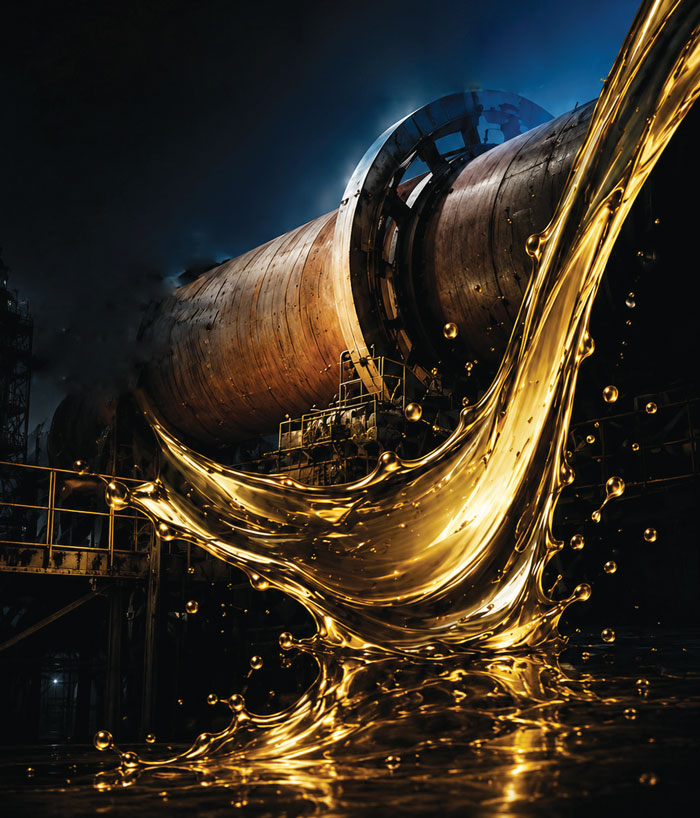
Lubrication has evolved from a routine maintenance activity into a critical driver of reliability, energy efficiency, and sustainability in cement manufacturing. ICR explores how advanced lubricants, predictive maintenance, and Total Lubrication Management are helping cement plants reduce downtime, optimise performance, and achieve long-term operational excellence.
In the cement industry, discussions around operational excellence often focus on kiln efficiency, alternative fuels, digitalisation, and process optimisation. Yet one of the most influential factors affecting equipment reliability, energy consumption, maintenance costs, and sustainability often receives far less strategic attention: lubrication. From vertical roller mills and kiln drives to crushers, conveyors, clinker coolers, and large industrial gearboxes, every critical asset depends on effective lubrication to minimise friction, reduce wear, and ensure uninterrupted operation.
The importance of lubrication extends far beyond routine maintenance. According to tribology research, nearly 23 per cent of global energy consumption is associated with overcoming friction and replacing worn components. Researchers have estimated that implementing advanced tribological practices could reduce global energy consumption by as much as 8.7 per cent in the long term. For cement manufacturers operating in highly demanding environments characterised by abrasive dust, heavy loads, high temperatures, vibration, and continuous operations exceeding 8,000 hours annually, lubrication has evolved from a maintenance function into a strategic lever for reliability, sustainability, and profitability.
The significance of this opportunity becomes even clearer when viewed against the backdrop of the cement industry’s environmental challenges. According to the International Energy Agency (IEA), cement manufacturing accounts for approximately 7–8 per cent of global CO2 emissions and consumes nearly 5 per cent of industrial energy worldwide. While much attention is rightly directed toward alternative fuels, clinker factor reduction, and carbon capture technologies, maintenance practices such as lubrication remain one of the most practical and immediately deployable avenues for improving efficiency and reducing emissions.
Why lubrication is critical to cement plant reliability
Cement manufacturing relies on some of the most heavily loaded rotating equipment found in industrial production. Kiln support rollers, girth gears, vertical roller mills, crushers, conveyors, ID fans, and large gearboxes operate under extreme conditions where temperatures, loads, and contamination levels routinely challenge equipment integrity. Under such circumstances, lubricants serve not merely as friction-reducing agents but as essential protective barriers that prevent metal-to-metal contact, dissipate heat, minimise wear, and extend component life.
A modern integrated cement plant may contain thousands of lubrication points distributed across critical and auxiliary equipment. Even a minor lubrication-related issue can escalate rapidly when equipment operates continuously around the clock. Unlike batch manufacturing operations, cement plants often have limited opportunities for shutdowns, making asset reliability a key business priority. Effective lubrication directly contributes to machine availability, process stability, and production continuity.
Industry studies consistently demonstrate the relationship between lubrication and reliability. Research published by SKF indicates that approximately 36 per cent of premature bearing failures are caused by poor lubrication practices, while bearing damage accounts for nearly 50 per cent of rotating equipment failures globally. Similarly, studies by Machinery Lubrication have found that improper lubrication contributes to roughly 43 per cent of mechanical failures and more than half of bearing-related breakdowns. These statistics highlight a critical reality: lubrication is not simply a maintenance task but a reliability strategy.
The consequences of lubricant failure extend well beyond replacement parts. A failed bearing in a vertical roller mill, kiln drive, or critical conveyor system can trigger extended downtime, emergency maintenance costs, production losses, and supply chain disruptions. In large integrated cement plants, even a few hours of unplanned downtime can result in significant financial losses, making lubrication one of the most cost-effective reliability investments available.
Hidden cost of poor lubrication management
Many organisations continue to treat lubrication as a consumable expense rather than a strategic asset management function. This mindset often results in inconsistent lubrication schedules, incorrect lubricant selection, contamination issues, over-lubrication, under-lubrication, and inadequate monitoring practices. The resulting impact is often far greater than the actual cost of the lubricant itself.
Professor Procyon Mukhejee says “Lubricant purchasing often followed a conventional sourcing model: negotiate annual contracts, standardise product grades and optimise price. That logic is still relevant but no longer sufficient. In a cement plant, a lower-cost lubricant that reduces purchase spend may increase oil replacement frequency, raise wear rates or contribute to avoidable downtime. That trade-off is forcing procurement teams to think differently.”
According to industry research, up to 70 per cent of mechanical failures can be linked to contamination, improper lubricant selection, or inadequate lubrication practices. Noria Corporation estimates that world-class lubrication programmes can reduce maintenance costs by 20–40 per cent and extend equipment life by as much as 50 per cent. Conversely, reactive lubrication practices increase spare-part consumption, raise labour requirements, accelerate equipment wear, and elevate operational risk.
The hidden costs are particularly severe in cement plants because contaminants such as dust, moisture, and wear particles are ever-present. Even microscopic contaminants can damage bearing surfaces and gear teeth, leading to premature failure. Poor lubrication management also increases energy consumption because higher friction levels require greater power input to maintain production rates. As a result, the true cost of poor lubrication extends far beyond maintenance budgets and directly impacts overall plant profitability.
Lubricants and energy efficiency
Energy represents one of the largest operating expenses in cement manufacturing. Grinding operations alone account for approximately 60–70 per cent of total electrical energy consumption within a typical cement plant. Consequently, any improvement in equipment efficiency can generate substantial cost savings over time.
Lubricants contribute directly to energy efficiency by reducing friction between moving surfaces. Lower friction means less resistance, lower operating temperatures, and reduced power requirements. Advanced lubricant formulations are specifically designed to optimise film strength while minimising energy losses across gears, bearings, and hydraulic systems.
Dr SB Hegde, Global Cement Industry Expert says, “One of the most overlooked aspects of lubrication in cement plant operations is effective contamination control combined with disciplined greasing practices. Cement dust, which is often harder than bearing steel, can mix with lubricants and create an abrasive grinding paste that accelerates wear and is responsible for a significant share of bearing failures. Despite this, many plants still rely on manual, time-based greasing and outdated sealing systems, resulting in higher energy consumption, premature component wear, and frequent unplanned shutdowns. Automatic lubrication systems, coupled with robust dust exclusion measures, remain one of the most underutilised yet effective reliability solutions in the industry.”
“Smart lubrication practices can have a direct and measurable impact on both profitability and sustainability. The use of high-performance synthetic lubricants, combined with predictive oil condition monitoring, can typically deliver energy savings of 3–4 per cent, translating into substantial annual cost reductions for cement manufacturers. In one notable case, a large cement producer implemented wireless condition monitoring alongside advanced lubrication practices on critical assets and achieved a 57-times return on investment within six months. The initiative generated savings exceeding `8.4 crore and prevented a major bearing failure that could have caused more than 160 hours of downtime, highlighting the significant financial value of proactive lubrication management” he adds.
Research by ExxonMobil and other lubricant manufacturers has demonstrated that synthetic lubricants can reduce energy consumption in industrial gear systems by 2–6 per cent under appropriate operating conditions. While these savings may appear modest on an individual machine basis, the cumulative impact across multiple mills, fans, conveyors, and drive systems can be considerable. For large cement manufacturers operating energy-intensive facilities, even a 2 per cent reduction in power consumption can translate into significant annual cost savings.
Furthermore, reduced friction contributes to improved equipment performance and lower heat generation, enabling machinery to operate more consistently under demanding conditions. In an industry where energy efficiency and carbon reduction targets are becoming increasingly important, lubrication represents a practical pathway for achieving measurable improvements.
Advances in synthetic and high-performance lubricants
The lubricant industry has undergone significant transformation over the past decade. Traditional mineral oils are increasingly being supplemented or replaced by synthetic and semi-synthetic formulations engineered specifically for demanding industrial applications.
Modern synthetic lubricants provide superior oxidation resistance, thermal stability, viscosity retention, load-carrying capacity, and wear protection compared to conventional products. These characteristics are particularly valuable in cement applications where equipment is exposed to extreme temperatures, heavy loads, and continuous operation.
Many premium synthetic lubricants now deliver service lives two to five times longer than traditional mineral oils. This not only reduces lubricant consumption but also minimises maintenance interventions and associated downtime. For cement manufacturers, extended oil drain intervals can significantly improve equipment availability and reduce lifecycle costs.
Synthetic gear oils have gained widespread acceptance in applications such as kiln drives, vertical roller mills, and high-load gearboxes. Field studies have reported gearbox temperature reductions of up to 10°C following conversion from conventional lubricants to advanced synthetic alternatives. Lower operating temperatures contribute directly to improved component life, reduced oxidation, and enhanced overall reliability.
Predictive maintenance, oil analysis, and condition monitoring
The emergence of predictive maintenance has transformed lubrication from a reactive maintenance activity into a proactive asset management discipline. Rather than relying solely on time-based maintenance schedules, cement plants increasingly use oil analysis and condition monitoring technologies to assess equipment health continuously.
Oil analysis provides a wealth of information about both lubricant condition and machine health. Parameters such as viscosity, oxidation, contamination levels, moisture content, additive depletion, and wear particle concentrations can reveal developing problems long before equipment failure occurs. In many cases, lubrication-related abnormalities represent the earliest warning signs of impending mechanical issues.
Gaurav K Mathur says “Dust contamination remains the single biggest lubrication-related challenge affecting cement plant productivity today. Airborne silica and clinker dust penetrate bearings, gear housings, and lubrication systems, transforming lubricants from protective agents into abrasive mediums. These contaminants are often as hard as bearing steel and create a three-body abrasion mechanism that rapidly accelerates wear, especially under the high temperatures, shock loads, vibration, and continuous-duty operating conditions typical of cement plants. Poor sealing systems can increase wear rates by three to five times, leading to premature failures, rising maintenance costs, and reduced equipment life. Compounding the issue is a growing industry-wide shortage of experienced lubrication professionals, resulting in a loss of critical maintenance expertise and an increasing reliance on reactive rather than predictive maintenance.”
Reliability experts frequently describe oil analysis as a “blood test” for machinery because it provides valuable insights into internal equipment conditions without requiring disassembly. Studies suggest that every dollar invested in predictive maintenance can generate returns of five to ten dollars through avoided failures and reduced downtime.
Leading cement producers increasingly combine oil analysis with vibration monitoring, thermography, ultrasonic inspection, and digital condition monitoring platforms. This integrated approach enables maintenance teams to move from reactive maintenance to predictive asset management, reducing downtime while improving equipment lifespan and operational reliability.
Total lubrication management: a strategic approach to asset health
As reliability expectations continue to increase, many cement manufacturers are adopting Total Lubrication Management (TLM) programmes.
TLM extends beyond lubricant selection and incorporates every aspect of lubrication management, including storage, handling, contamination control, application methods, oil analysis, training, and continuous improvement.
Gaurav K Mathur, Director & Chief Executive, Global Technical Services says, “Smarter lubrication practices can significantly reduce both energy consumption and maintenance expenditure. The implementation of Total Lubrication Management (TLM), supported by careful lubricant selection, customised lubrication strategies, and robust contamination control, helps reduce friction across critical equipment and improve operational efficiency by up to 3 per cent. In energy-intensive cement plants, even marginal efficiency gains can translate into substantial cost savings. Improved lubrication practices also reduce wear, minimise overheating, extend equipment life, and lower the frequency of maintenance interventions, directly contributing to higher plant availability and lower total operating costs.”
“The most impactful innovation for the cement sector will not be a single lubricant product but the widespread adoption of Total Lubrication Management as a structured reliability framework. TLM integrates contamination control, oil analysis, condition-based maintenance, online filtration, lubricant regeneration, digital tracking, and condition monitoring into a unified system. This approach transforms lubrication from a routine maintenance activity into a strategic asset management function. The result is improved equipment reliability, reduced lubricant consumption, lower waste generation, enhanced energy efficiency, and a smaller carbon footprint. In an industry characterised by harsh operating environments and growing sustainability expectations, TLM offers a practical pathway to achieving higher reliability, improved profitability, and long-term operational sustainability” he adds.
One of the primary objectives of TLM is contamination control. Dust, moisture, and wear particles are widely recognised as the leading causes of lubricant degradation and equipment failure. Given the inherently dusty environment of cement plants, effective contamination control becomes essential for maintaining lubricant quality and equipment health. Another important component of TLM is lubricant consolidation. Many plants operate with dozens of lubricant grades, increasing inventory complexity and the risk of cross-contamination. Best-in-class lubrication programmes often reduce lubricant inventories by more than 30 per cent while simultaneously improving operational reliability.
Training also plays a critical role. Industry surveys suggest that fewer than half of lubrication technicians receive formal lubrication training. Yet organisations that invest in lubrication education consistently report lower failure rates, improved maintenance performance, and better asset utilisation. One widely cited industrial case study documented a reduction in bearing failures from nearly 400 per month to just 12 after implementing comprehensive lubrication excellence initiatives.
Supporting sustainability
Sustainability has become a central priority across the cement industry. While alternative fuels and carbon capture technologies often dominate discussions, lubrication also contributes significantly to environmental performance.
Longer-lasting lubricants reduce waste oil generation and disposal requirements. Large integrated cement plants may consume tens of thousands of litres of lubricants annually, making lubricant lifecycle management an important sustainability consideration. Extending drain intervals by even 50 per cent can substantially reduce lubricant consumption and associated environmental impacts. Improved lubrication also extends equipment life, reducing demand for replacement components and lowering the environmental footprint associated with manufacturing, transportation, and installation activities. By reducing friction and wear, lubricants enable machinery to operate more efficiently while consuming less energy.
Tribology researchers Holmberg and Erdemir estimate that advanced friction-reduction technologies could potentially reduce global carbon emissions by up to 1,460 million tonnes annually. Although this figure spans multiple industrial sectors, it
highlights the enormous sustainability potential of improved lubrication practices. For cement manufacturers pursuing net-zero ambitions, lubrication represents one of the most accessible and cost-effective tools available.
Digitalisation, automation, and smart monitoring
The future of lubrication management is increasingly digital. Smart sensors, Industrial IoT platforms, automated lubrication systems, and artificial intelligence are changing how maintenance teams manage equipment health.
Modern lubrication monitoring systems can continuously track temperature, viscosity, moisture levels, contamination levels, and lubricant condition in real time. This enables maintenance personnel to identify emerging issues before they affect production, allowing interventions to be planned rather than forced by equipment failures.
“The future of lubrication management will be defined by the integration of smart, data-driven, and automated systems powered by IoT sensors, artificial intelligence, and real-time oil condition monitoring. These technologies are enabling a shift from traditional schedule-based lubrication to predictive and prescriptive maintenance, where lubricant quantity, frequency, and selection are optimised based on actual equipment condition. The result will be near-zero unplanned downtime, lower lubricant consumption, higher equipment reliability, and improved Overall Equipment Effectiveness (OEE). As India continues to add significant cement manufacturing capacity, early adopters of intelligent lubrication technologies will gain a competitive advantage through lower operating costs, greater reliability, and stronger sustainability performance” says Dr Hegde.
Automated lubrication systems are also becoming more prevalent throughout the cement industry. By delivering precise lubricant quantities at predetermined intervals, these systems eliminate many of the inconsistencies associated with manual lubrication practices. The result is improved equipment protection, lower lubricant consumption, and enhanced reliability.
Market analysts forecast the global predictive maintenance market to exceed $50 billion by 2030, reflecting the growing importance of data-driven maintenance strategies. As digital technologies continue to mature, lubrication will become an increasingly integrated component of broader asset performance management systems.
Conclusion
As cement manufacturers pursue greater productivity, higher sustainability standards, and improved operational resilience, lubrication must be recognised as a strategic business function rather than a routine maintenance activity. The evidence is overwhelming: effective lubrication improves reliability, reduces energy consumption, extends equipment life, lowers maintenance costs, and supports sustainability objectives simultaneously.
The next frontier of cement plant optimisation will not be driven solely by larger kilns, more efficient mills, or alternative fuels. It will also be shaped by how effectively operators manage the health of their critical assets. Through advanced lubricants, predictive maintenance, oil analysis, contamination control, and Total Lubrication Management programmes, cement manufacturers can unlock substantial gains in operational performance while supporting long-term environmental and business goals.
In an increasingly competitive industry, lubrication is no longer merely about reducing friction. It is about enabling reliability, protecting profitability, and creating a foundation for sustainable growth. The plants that recognise this shift and invest in lubrication excellence today will be best positioned to meet the performance demands of tomorrow.



















 Concrete4 weeks ago
 Concrete1 month ago
 Concrete4 weeks ago
 Concrete4 weeks ago