Connect with us

Concrete

Seamless Packaging Means Elevated Branding

Published

on

Shares

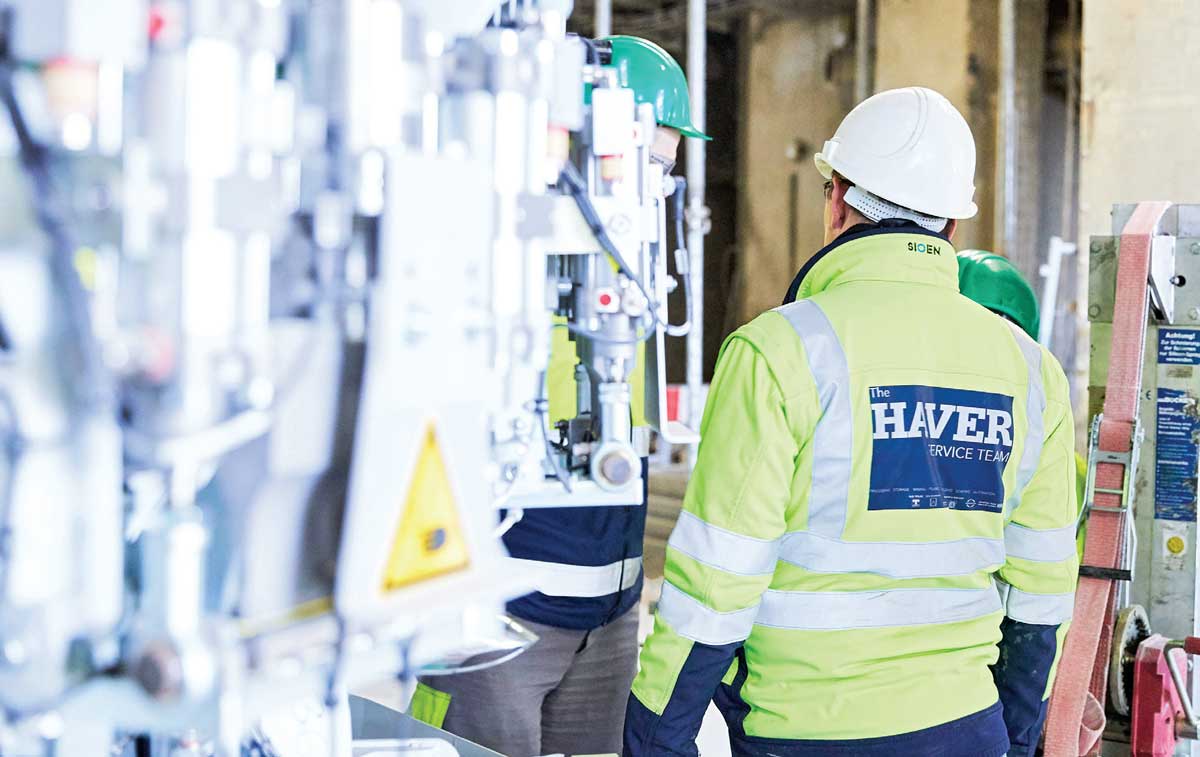
The right packaging does more than protect a product; it protects reputation, efficiency and brand value. Marta Bortolotti, Division Manager Consumables, Haver & Boecker, discusses smart packaging solutions that are becoming a strategic priority for manufacturers.

When it comes to product packaging, every element, from design and materials to compatibility with machinery, product and closure type, plays a vital role in achieving both efficient function and a positive brand image. To maintain a competitive edge, producers must carefully evaluate their packaging choices.

Partner with an expert
Unlike providers who specialise solely in packaging, full-service manufacturers can combine their expertise in packing equipment and product analysis. They can provide bag recommendations that integrate seamlessly with machinery. This approach enhances efficiency, expedites the filling process and ensures operational flow — all while saving resources, preserving product and strengthening brand perception.
A full-service approach tackles common issues like bag leaks, poor sealing or inefficiencies in bag performance. By leveraging detailed testing processes, such as bag volume checks and valve inspections, some manufacturers ensure the bag material and design are tailored to each packing line and product. This precision minimises production disruptions, optimises workflow and delivers packaging that enhances brand visibility and market impact.

Analyse your operational needs
Some manufacturers conceptualise the full-service philosophy as a practical framework that ensures bags, equipment and products work as a cohesive system. By aligning all three pillars, they can create solutions that reduce waste, save resources, improve operational efficiency and maximise output to achieve the perfect flow.
To begin, an expert will analyse the product to define the ideal machine technology and design a packaging solution that fits seamlessly into the operation’s preexisting process. This holistic approach ensures each packing facility can tackle even the most challenging requirements with precision and efficiency. Whether an operation is making a switch from open-mouth to valve-bag equipment and wants to ensure it goes smoothly or is simply looking for inefficiencies with their current packing line, analysing your bags should be a part of the equation.

Test and fine-tune your production line
The process begins with consultations and testing to gain a full understanding of the facility’s products and systems. The manufacturer’s engineers then create a custom bag report and fine-tune designs after thorough testing with the machinery. Finally, look for a manufacturer that can manage the entire supply chain, from bag testing to supply, ensuring a smooth and hassle-free experience. Some manufacturers also provide bag optimisation plans focused solely on the performance of existing bags to ensure they align with the demands of the production line. Through analysis, these manufacturers identify areas for improvement, offering specific recommendations to enhance bag materials, structure and compatibility. This method not only increases productivity and efficiency but also ensures cost-effectiveness and reliability by minimising downtime, reducing waste, optimising resource use and delivering consistent results across all operations.

A bag that reflects your brand
More than just a functional component, a bag serves as a powerful branding tool and a visual business card for each company. While some companies work with multiple providers for packaging, partnering with a single OEM expert, who understands the product, equipment, and production goals, provides unbeatable efficiency and peace of mind. With an integrated approach, every bag becomes a powerful asset for the brand and business.

About the author:
Marta Bortolotti, Division Manager , Consumables, Haver & Boeckers
a driven packaging solutions leader focused on consumables, helping businesses achieve efficient operations, consistent quality, and long-term competitiveness through continuous learning and innovation.


Concrete

Shree Digvijay Cement Reports Annual And Quarterly Results

Annual revenue rises as EBITDA expands sequentially

Published

on

By

Shares


Shree Digvijay Cement Company Limited reported consolidated financial results for the quarter and year ended 31 March 2026, showing higher revenues and improved profitability. Revenue from operations for the quarter was Rs 2,084.7 mn, up from Rs 1,833.4 mn in the prior quarter, while revenue for the year was Rs 7,491.0 mn versus Rs 7,251.5 mn a year earlier. EBITDA for the quarter rose to Rs 251.0 mn from Rs 38.4 mn in the preceding quarter and reached Rs 746.1 mn for the year. Profit after tax for the year was Rs 250.0 mn.

Sales volume for the company s grinding and cement operations was zero point three six four mn t in the quarter and one point four zero three mn t for the year, while traded volumes were zero point zero three mn t in the quarter. EBITDA per tonne improved to Rs637 in the quarter and averaged Rs521 for the year. Under a brand usage, supply and distributorship agreement the company sold 29,928 t of Hi Bond cement, which generated Rs153.6 mn in revenue and Rs20.0 mn in EBITDA during the period.

The company said that it had commenced purchase and distribution of Hi Bond cement effective 19 March 2026 pursuant to the long term distributorship agreement, and that it had paid a refundable security deposit of Rs four bn under the same arrangement. Management indicated that the strategic integration with the Hi Bond network would support future growth and strengthen distribution capabilities. The board cited seasonally higher demand and improved pricing as factors behind the sequential improvement in realisations.

The board recommended a final dividend of Rs one per equity share subject to shareholder approval at the ensuing annual general meeting. The company reiterated focus on sustaining the positive momentum in revenue and margin metrics while integrating the new distributorship, and will continue to monitor market conditions and pricing trends to support further improvement in outcomes.

Continue Reading

Concrete

Cement Production Up Eight Point Six Per Cent To 491.4 mn t In FY26

Icra Sees Seven To Eight Per Cent Growth In FY27

Published

on

By

Shares


Icra reported that cement production volumes rose by eight point six per cent in the financial year 2026 to 491.4 million (mn) metric tonne (t). March output was 48.4 mn t, up four per cent year on year on a high base.

The agency projected that volumes are expected to grow by seven to eight per cent in the current financial year, supported by sustained demand from the housing and infrastructure sectors. Average cement prices were reported to have remained flat in March at Rs 340 per bag on a month on month basis, while prices for FY26 increased by two per cent to Rs 345 per bag year on year.

Among inputs, coal prices declined by 17 per cent year on year to USD 102 per t in April 2026 while petcoke prices rose sharply by 19 per cent month on month and 22 per cent year on year to around Rs 15,800 per t in April. Petcoke was higher by about five per cent year on year in FY26 and diesel prices were reported to have remained steady. Icra noted that coal, petcoke and diesel are expected to trend higher in FY27 and remain exposed to risks from the ongoing West Asia conflict.

The report emphasised that operating margins for Icra’s sample set of companies are estimated to moderate by 200 to 400 basis points (bps) in FY27 on account of a likely increase in input costs, with further downside risks should crude prices rise owing to geopolitical tensions. However, debt protection metrics are projected to remain comfortable and Icra maintained a stable outlook on the Indian cement sector.

Continue Reading

Concrete

UltraTech Cement FY26 PAT Crosses Rs 80 bn

Company reports record sales, profit and 200 MTPA capacity milestone

Published

on

By

Shares


UltraTech Cement reported record financial performance for Q4 and FY26, supported by strong volumes, higher profitability and improved cost efficiency. Consolidated net sales for Q4 FY26 rose 12 per cent year-on-year to Rs 254.67 billion, while PBIDT increased 20 per cent to Rs 56.88 billion. PAT, excluding exceptional items, grew 21 per cent to Rs 30.11 billion.

For FY26, consolidated net sales stood at Rs 873.84 billion, up 17 per cent from Rs 749.36 billion in FY25. PBIDT rose 32 per cent to Rs 175.98 billion, while PAT increased 36 per cent to Rs 83.05 billion, crossing the Rs 80 billion mark for the first time.

India grey cement volumes reached 42.41 million tonnes in Q4 FY26, up 9.3 per cent year-on-year, with capacity utilisation at 89 per cent. Full-year India grey cement volumes stood at 145 million tonnes. Energy costs declined 3 per cent, aided by a higher green power mix of 43 per cent in Q4.

The company’s domestic grey cement capacity has crossed 200 MTPA, reaching 200.1 MTPA, while global capacity stands at 205.5 MTPA. UltraTech also recommended a special dividend of Rs 2.40 billion per share value basis equivalent to Rs 240.

Continue Reading

Video Thumbnail
â–

    SIGN-UP FOR OUR GENERAL NEWSLETTER


    Trending News

    SUBSCRIBE TO THE NEWSLETTER


    Don't miss out on valuable insights and opportunities to connect with like minded professionals.


      This will close in 0 seconds