Sustainable mining is redefining how India sources the backbone of its cement industry — responsibly, efficiently, and transparently. ICR explores how innovation, regulation, and community partnership are shaping the next era of mining for a low-carbon future.
India’s vast mineral endowment underpins not just its industrial ambitions but also some of its most carbon-intensive sectors — and yet, the current paradigm of extraction is increasingly unsustainable. In the cement sector alone, limestone mining is critical: about 97 per cent of the limestone produced in India is of cement grade. According to Market Review of Cement Sector, JSW report, India’s cement production rose to 426.29 million tonnes in FY 24, an increase of 8.90 per cent year-on-year, placing ever greater demand on quarrying operations. The Indian Cement Industry Analysis, IBEF states that with this scale of extraction, the environmental consequences are mounting, compelling the industry and regulators alike to rethink mining practices.
The environmental toll of conventional mining — deforestation, soil erosion, disruptions to hydrological systems, dust pollution, and biodiversity loss — is no longer a future risk but a present reality. A study by Mongabay-India tracking Indian coal-mining regions from 1994 to 2022 found that mining had reduced forest cover by 7.32 per cent to 17.61 per cent, and shrunk water bodies by 5 per cent to 10 per cent in many zones. Moreover, water pollution in several mines has often exceeded permissible norms: between 2013 and 2018, eight out of 28 studied mines were found to breach Bureau of Indian Standards limits. These are cautionary signals for sectors deeply reliant on mined materials — like cement — that sustainability cannot remain an afterthought states Assessment of Environmental Impact due to Mining Activities, PRS India.
Alongside environmental imperatives, there is growing social, regulatory, and economic impetus pushing the mining industry toward transformation. The mining sector currently contributes about 2.5 per cent to India’s GDP states the Mining 2025 – India, Chambers practice guide. Meanwhile, ESG norms, community expectations, and climate goals demand that mining operations align with sustainable development principles. As India charts its path toward Net Zero by 2070, the cement industry must engage not only in low-carbon kiln technologies but also in sustainable sourcing of its raw materials. In this article, we explore how sustainable mining — in policy, practice, and innovation — can become a foundation rather than a constraint for India’s
cement future.
Environmental footprint of traditional mining
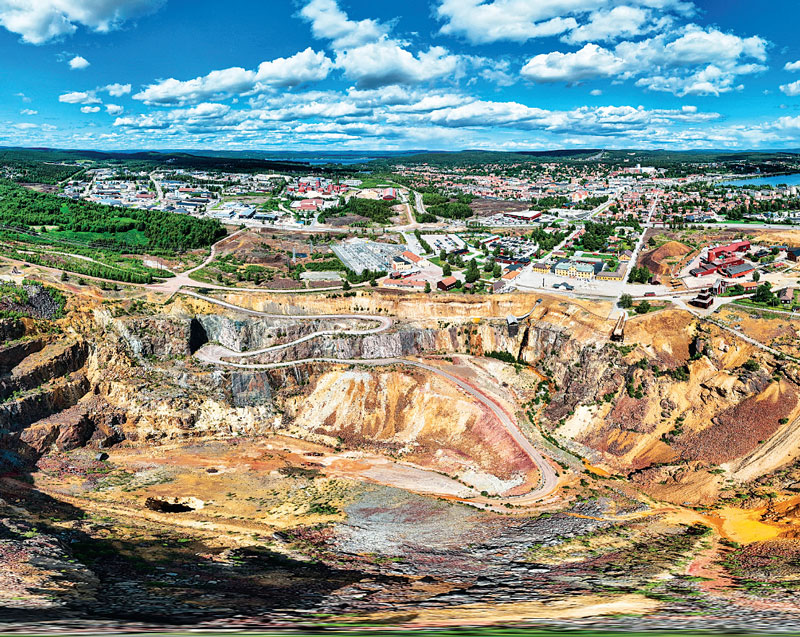
Traditional mining leaves a deep and lasting scar on the natural environment, often in ways that transcend the boundaries of the lease area. Vegetation is cleared, soil structure is disrupted, and topsoil is often lost irreversibly. According to a recent spatial-analysis study, mining areas in one region expanded from 0.00 per cent in 1991 to 8.97 per cent in 2021, while vegetation cover in the same region fell from 40.17 per cent to 31.20 per cent over the same period according to the ‘An assessment of environmental impacts in mining areas’ report, 2024. In mineral-rich states like Odisha, districts such as Rayagada and Koraput have each lost more than 20 km² of forest cover between 2001 and 2019 due to expansion of mining operations. According to the ‘Mining impacts on
forest cover change in a tropical forest’ study such deforestation not only reduces biodiversity and habitat, but also undermines ecosystem services such as carbon sequestration, soil retention, and local
climate regulation.
Pankaj Agarwal – National Mines Head, Shree Cement says, “Sustainable mining means responsibly extracting resources with minimal environmental impact, while ensuring long-term ecological balance and community well-being. As the cement industry moves toward carbon neutrality, mining must transform through clean energy adoption, electrification, and digital innovation to reduce emissions and boost energy efficiency. Embracing alternative raw materials and circular economy principles will lessen reliance on virgin resources, while integrating carbon capture technologies will help close the emissions loop. Responsible land use, biodiversity protection, and community engagement will ensure mining supports both environmental and social sustainability. In this evolving landscape, mining becomes a key enabler of a greener, more resilient cement industry.”
“Responsible mining is not just about extracting resources, it’s about safeguarding ecosystems, empowering communities and ensuring that every step we take today builds a more sustainable tomorrow. At every stage from exploration to rehabilitation, we must embed environmental stewardship, ethical governance, and social accountability into our operations. This is not only a moral imperative but also a strategic one, ensuring long-term value for all stakeholders” he adds.
The environmental burden extends well beyond land cover changes. Water quality and hydrology are frequently disrupted by sediment runoff, acid mine drainage, and leachates carrying heavy metals and suspended particulates. According to a report by PRS India, Assessment of Environmental Impact due to Mining Activities and its Mitigation, 2021, during 2013–18, pollutants in eight out of 28 studied mines exceeded limits prescribed by the Bureau of Indian Standards. Furthermore, in the state of Karnataka, a 2025 assessment of granite quarrying in Ramanagara district found that surface and groundwater around quarry sites showed evidence of contamination, declining groundwater levels, and increased turbidity. Together with dust emissions, noise, vibration from blasting, and slope failures in overburden dumps, these impacts impose health risks on local communities and degrade ecosystems over a broad footprint.
Limestone mining and the cement industry
Limestone is the principal raw material in cement manufacture — indeed, more than 95 per cent of India’s limestone output is consumed by the cement industry. According to a report by JSW, Market Review of Cement Sector, about 97 per cent of the limestone produced in India is cement-grade. Over the past few decades, India has witnessed a surge in limestone extraction to support a rapidly growing cement sector. The Status of Limestone Mining and Cement Industry in India report notes that production increased more than five-fold from 23.8 million tonnes in 1970-71 to over 127 million tonnes by 1999-2000, and this upward trajectory has continued since. As the demand for infrastructure, housing, and urban development accelerates, pressure on limestone quarries intensifies — raising the stakes for mining that is both efficient and ecologically sensitive.
However, the method of extraction — typically opencast or open-pit quarrying — brings with it several environmental challenges that are especially pronounced in limestone mining for cement. Blasting, crushing, and hauling generate large volumes of dust and suspended particulates, which degrade air quality in surrounding habitations and ecological zones. According to a study published in Atmospheric Chemistry and Physics assessing environmental impact, limestone quarrying releases considerable suspended particulate matter and contributes to carbon and other air pollutant emissions. Furthermore, the process of overburden removal and bench formation alters landforms and disturbs soil structure and drainage patterns, increasing susceptibility to erosion and reducing soil fertility in adjacent lands.
Water dynamics and hydrology are also affected by limestone mining, particularly in regions with fractured carbonate bedrock. De-watering and drainage of aquifers, runoff laden with suspended solids and fines, and changes in surface water flow paths can all strain local water resources. In the East Jaintia Hills of Meghalaya, for example, studies have documented observable declines in water availability, contamination of streams, and deterioration of water quality in limestone mining zones sates the ‘Changes in Soil Quality in Limestone Mining Area’ study. Similarly, open-cast mining in Tilakhera, Chittorgarh district (Rajasthan) showed degradation in soil organic carbon, pH, and other fertility indicators up to a depth of 4.5 m beyond the mine boundaries states ‘Impact of open cast Limestone mining activities on soil quality status’. These hydrological and geochemical perturbations often persist long after mining operations cease, complicating restoration efforts.
Ramesh Kumar Ajmera, Founder and Director, Balaji PrimeSteel says, “Water, one of mining’s most critical resources, is being conserved through closed-loop recycling, advanced filtration and dry tailings processing, minimising both consumption and pollution. Meanwhile, waste is no longer just a liability: tailings can be dry stacked and reused in construction, steel slag and fly ash are fed into cement production, and bioleaching extracts residual metals from mine waste. Real-time monitoring with IoT sensors, geographic information system (GIS) and blockchain ensures transparency, ethical sourcing, and early detection of violations. Even post-closure, drones, bioremediation and digital land planning support ecological restoration. While high costs and skill gaps slow adoption, technology ultimately acts as both shield and sword—reducing harm while driving efficiency and profitability in mining’s low-carbon future.”
Given the scale and criticality of limestone supply, the cement industry must embed sustainability into its upstream mining operations. Efficiency in resource usage — such as optimising blasting protocols to reduce waste and flyrock, reclaiming and reusing mine water, preserving topsoil for rehabilitation, and planning quarry layouts to minimise ecological disruption — are no longer optional extras, but essential. A robust Environment Management Plan tailored for limestone quarries, with rigorous monitoring of dust, water, noise, and biodiversity, becomes a baseline expectation states the ‘Environmental Hazards of Limestone Mining and Adaptive Practices’ report. In the subsequent sections, we will examine how technology, rehabilitation, regulation, and innovation can together reimagine limestone mining not merely as an enabler for cement, but as a driver of sustainable industrial development.
Technology-Led mining: digitalisation and automation
In recent years, mining operations have begun to embrace digital transformation in a way that reshapes the entire value chain — from exploration and planning through extraction to monitoring and rehabilitation. According to a report by PwC, Transforming India’s Mining Landscape with Autonomous Technology, autonomous mining integrates operational technology (e.g. automated drilling, haul trucks, and control systems) with information technology (data connectivity, analytics, remote operations) to progressively reduce human presence in high-risk zones and enhance precision. In India, the deployment of IoT sensors, AI algorithms and remote control systems is enabling real-time monitoring of blasting, slope stability, dust levels, and equipment health, thereby optimising energy use and lowering downtime states the EY – Transforming India’s Mining Sector through Sustainability and Innovation report.
Prasanajit M, Founder and Managing Director, Shanvi Resources says, “For Shanvi Resources, sustainable mining means profit with proof — measurable ESG outcomes built into every tonne. Data and technology are central to this vision: live orebody models, smart drilling, and analytics-led operations help cut dilution, fuel, and water use, transforming sustainability from a cost centre into a control variable. To the cement industry, the message is clear — co-design your quarries with your miners. Align raw-mix needs, haulage energy, water management, and land rehabilitation from day zero, because shared KPIs deliver both a lower clinker factor and a lower environmental footprint.”
The results of automation and digitalisation are already noteworthy in global practice, and Indian mining firms are beginning to catch up. According to the Automation and Digitalisation Insights 2024 report, over 60 per cent of surveyed mining professionals have confirmed deployment of automation technologies such as autonomous vehicles and remote operating centres, especially in large scale operations. These technologies reduce exposure of workers to hazardous environments, improve operational consistency, and open the way for predictive maintenance and prescriptive optimisation of workflows. Moreover, the use of digital twins and industrial IoT platforms is showing promise: for example, a 2025 study demonstrated how a prototype system combining IoT sensors with a digital twin layer optimised equipment deployment and process throughput in traditional mining setups states the Industrial IoT and Digital Twin in Mining study. The integration of such technologies in India’s cement-linked limestone mining can yield gains in safety, efficiency and environmental control — provided capital investment and skill development go hand in hand.
Afterlife of mined lands
Once mining operations wind down in a quarry, the ‘afterlife’ of that landscape becomes as important as its active years. The objective of reclamation and rehabilitation is to restore ecological function, make the land safe and stable, and wherever possible repurpose it for productive use (like agriculture, forestry, or recreation). According to a report by FIMI, States’ Best Practices in Mining, 2025, several Indian states have begun mandating comprehensive mine closure and post-mining land use plans as part of their lease conditions. Effective reclamation often begins before closure: stacking and preserving topsoil, contouring benches and slopes, installing drainage, and planting pioneer species to check erosion. In India, bio-reclamation efforts by coal/lignite PSUs have resulted in 10,942 hectares being brought under green cover over FY 2019–20 to 2023–24, with 23.64 million saplings planted in and around mines according to a report by the Ministry of Coal.
“Overburden is systematically stacked and used for backfilling or land reclamation. We also plant trees in reclaimed areas, so the land regains its natural balance over time. Compliance is non-negotiable now. We stay aligned with all statutory norms and so that their concerns are addressed beyond just legal requirements” says Anurag Bagaria, Managing Director, KK Bagaria Group.
Yet rehabilitation is no mere matter of planting trees. In limestone mining regions, success depends on matching appropriate germplasm, soil amendments, moisture retention strategies, and long-term monitoring. The Post-mined Land Rehabilitation in India catalogue highlights that more than 50 tree, shrub and grass species have been trialed across different climatic zones, but the choice must suit local soil and rainfall regimes. In highly weathered or rocky overburden zones, techniques such as compost mixing, mycorrhizal inoculation, and vetiver hedges have often been used to stabilise slopes and shield against erosion states the Post-mined Land Rehabilitation in India catalogue. In limestone quarries specifically, legacy studies have shown that a combination of rainwater harvesting structures, soil ameliorants, and strategic planting of grasses and shrubs can yield self-sustaining vegetation even in complex substrate conditions.
Water management is a core pillar of sustainable mining, because without proper control, dewatering, runoff, or contaminated discharges can degrade downstream aquatic systems. According to a report by Saba Shirin et al, Environmental Impact of Mine Water Utilization and Management in Indian Mines, 2018, untreated mine water often exhibits elevated TDS, suspended solids, and abnormal pH levels — risks that demand robust treatment before reuse or discharge. In practice, mines adopt a “zero or minimal discharge” approach, capturing runoff, sedimenting suspended solids, and recycling treated water back into operations. Many mining firms globally now deploy modular treatment systems, reverse osmosis, and constructed wetlands to polish effluent water suitable for dust suppression, process reuse or irrigation states Mining Wastewater Use: Challenges, Opportunities, and Sustainable Approaches, 2023. Crucially, integrating water budgeting in mine planning—forecasting inflows, seepage, and recycling potential—allows operators to reduce freshwater drawdown and maintain ecological flows in surrounding watersheds.
Waste minimisation and byproduct utilisation represent both an environmental solution and a value opportunity for mining in the cement sector. According to a report by EY, Advancing India’s Mining Sector: Strategies for Sustainable Growth, 2024, mining companies are increasingly adopting circular economy principles by converting waste streams into raw materials, backfill, or construction inputs. Tailings, overburden, fines, and quarry dust — often viewed as liabilities — can be converted into blends for aggregates, bricks, or supplementary cementitious materials (SCMs). The Circular Economy in the Indian Extractive Industry article (2025) notes that improved processing and sorting can increase the usable share of mineral output while reducing the volume of residue requiring storage. Some Indian mines already use tailings or reject for backfilling, stabilising dumps, or as road base; others treat wastewater sludge for land application states Mine Waste as Resource: Indian Mining Scenario of Coal, 2021. The challenge lies in ensuring quality, regulatory compliance, transport economics, and consistent supply — but done right, byproduct valorisation transforms a cost centre into a strategic advantage for sustainable mining.
Green initiatives in mining
Energy efficiency and carbon reduction in mining are no longer aspirational goals but strategic imperatives. According to a report by EY, Advancing India’s Mining Sector: Strategies for Sustainable Growth, one of the three core pillars for decarbonising mining in India is energy efficiency, alongside electrification and the shift to decarbonised fuels. By reducing specific energy consumption in mining machinery, optimising haulage routes, and using variable-speed drives and waste heat recovery systems, mines can materially lower their emissions footprint. In India’s broader industrial sector, energy efficiency programmes achieved savings of 53.60 Mtoe in 2023-24, equivalent to roughly 6 per cent of the country’s primary energy supply. When applied to mining operations, similar gains translate to reductions in fuel use, maintenance costs, and greenhouse gas emissions—especially valuable in energy-intensive sectors like limestone and cement feedstock extraction.
Pukhraj Sethiya, India Managing Director, ReVal Consulting says, “The most underrated driver of sustainable mining is community engagement. While technology and regulations often dominate discussions, the long-term viability of mining truly depends on earning and maintaining a social licence to operate. Employing local people, building cooperative supply chains, and ensuring post-mining land use that benefits surrounding communities can significantly reduce operational risks and strengthen social resilience. These practices move sustainability beyond compliance, embedding it in the very fabric of regional development and stakeholder trust. When communities thrive alongside mining operations, sustainability becomes both a moral and commercial imperative.”
“Consulting plays a pivotal role in accelerating ESG adoption by bridging ambition with execution. By integrating ESG principles into mine design, conducting materiality assessments, and quantifying life-cycle impacts, consultants help organisations turn sustainability into a measurable business advantage. They enable miners to navigate complex regulations, access green finance, and enhance investor confidence while improving operational efficiency. As climate risks, investor scrutiny, and global supply-chain benchmarks redefine the economics of mining, sustainability has shifted from being a choice to a strategic necessity. In cement-linked mining, in particular, responsible and data-driven ESG integration is now the true benchmark of long-term competitiveness” he adds.
Biodiversity conservation and supply-chain greening are complementary but distinct fronts in sustainable mining. Mining activities, particularly for construction minerals, have been flagged among the serious threats to local biodiversity through habitat loss, fragmentation, pollution, and hydrological disruption. According to a report by CONBIO / C-Bio (2024) on mining threats in high-level biodiversity conservation policies, the mining of construction minerals causes direct and indirect impacts on biodiversity via erosion, traffic, pollution and water stress. To counter this, mining operations must develop biodiversity action plans, set aside ecological buffers, and use corridors or “green bridges” to maintain habitat connectivity. Meanwhile, the role of green supply chains becomes critical: adopting green procurement, optimising transport logistics, and ensuring traceability of raw materials can reduce emissions and ecological footprints beyond the mine. A study on green practices in Indian mining supply chains observed that firms are increasingly adopting eco-friendly transport, waste handling, and supplier audits as part of a Green Supply Chain Management (GSCM) framework. Together, energy-efficient mining, biodiversity safeguards, and green supply chains form a triad that can lift mining from being seen as a burden to being a contributor to sustainable value creation.
Case studies
To understand how these principles translate into practice, it’s essential to look beyond policy and theory. In the following section, we explore a series of mining case studies that highlight how different organisations—both in India and globally—are integrating sustainability into their operations. From innovative water reuse systems and biodiversity restoration projects to digital mine planning and community-driven rehabilitation, these examples demonstrate that responsible mining is not only achievable but also commercially rewarding.
Conclusion
The path toward sustainable mining in India demands more than compliance — it calls for a transformation of intent, policy, and practice. The future will be shaped by how effectively policy frameworks integrate sustainability at every stage of mining — from exploration to post-closure rehabilitation. India’s National Mineral Policy (2019) already lays the groundwork by emphasising environmental and social responsibility, but translating policy into practice requires strong institutional capacity, inter-departmental coordination, and transparent monitoring. Strengthening the Star Rating system for mining leases, expanding District Mineral Foundations for equitable community development, and enforcing stricter Environment Management Plans will help close the implementation gap. Equally vital is aligning India’s mining roadmap with its Net Zero 2070 commitments, ensuring that the extraction feeding core industries such as cement becomes low-carbon, circular, and regenerative.
The next phase of sustainable mining will be defined by innovation and collaboration. Advancements in remote sensing, real-time environmental monitoring, green chemistry for beneficiation, and AI-driven resource modelling are already redefining what “responsible extraction” means. But technological innovation must move hand-in-hand with collaboration — between government, academia, private industry, and communities. Mining companies must work alongside environmental scientists and local stakeholders to design site-specific solutions that balance resource utilisation with ecological and social regeneration. In doing so, India has an opportunity not only to secure the raw materials that fuel its economic ambitions but also to demonstrate how a nation rich in minerals can mine responsibly, sustainably, and with foresight for generations to come.
– Kanika Mathur
Case Study 1
Sustainable Mining – a Case Study in Canadian Practice
D H Steve Zou and Cui Lin, Mineral Resource Engineering, Dalhousie University, Halifax, Canada, present a case study that explores how sustainable practices, regulatory frameworks and community-driven reclamation transformed a Canadian coal mine into a model of responsible mineral development.
The case study begins with a clear definition of sustainability in mineral resource development.
Mining is essential for modern life, but mineral resources are finite and extraction disturbs the land. Therefore, sustainability means extracting resources responsibly, reclaiming disturbed land, and minimising environmental impact. Every tonne of mineral extracted reduces
what is left for future generations, which makes careful planning critical.
Three pillars of sustainable mining
The study frames sustainability around three aspects: (a) maximise recovery of resources without waste, (b) minimise or remove footprints through reclamation, and (c) limit environmental pollution by proper waste management. Achieving these goals requires planning, technology and cooperation among mining companies, governments and engineers.
Responsibilities of stakeholders
Mining companies must avoid the practice of only extracting high-grade ores, leaving behind lower grades. They must also develop comprehensive reclamation and waste disposal plans. Governments play a regulatory role, ensuring compliance through inspections, enforcement, and closure planning. Engineers carry ethical responsibility, ensuring no economically recoverable ores are wasted, and effluents meet environmental standards.
Canada’s regulatory framework
Canada has evolved strong regulations over time. Provincial governments are responsible for mining regulations within their jurisdictions, while the federal government oversees projects affecting Crown land or the environment. For new mines, companies must submit reclamation and closure plans, along with financial assurance, before permits are granted. Inspections by professional engineers ensure compliance, with penalties for violations.
National programmes supporting sustainability
The Mining Association of Canada launched the Towards Sustainable Mining (TSM) program in 2004, requiring members to operate in socially, economically, and environmentally responsible ways. This industry-wide initiative formalised sustainability as a core practice, ensuring alignment with community and regulatory expectations.
Case study overview
The featured case study is of a coal mine located within 300 meters of a residential area. Historical mining in the 1800s and early 1900s had removed much of the high-grade coal and left unknown underground workings. To recover the remaining deposits, modern surface mining techniques were used. Given its proximity to the town, blasting was not allowed, making noise and dust control priorities.
Mining operations and waste handling
The coal seams, dipping 20°–25° and lying within 80m depth, were mined using a modified open-pit method. Operations progressed east to west, with waste rocks from new pits used to backfill older ones. Topsoil was stripped and stored for later reclamation. Waste rock volume exceeded pit capacity, so excess was stored on the southern side, later integrated into reclamation plans.
Progressive reclamation approach
Unlike traditional methods where reclamation happens after closure, this mine carried out progressive reclamation. Once a pit was filled with waste rock, it was topped with soil and sod. This minimised long-term disturbance and reduced environmental risks like acid drainage. By the end of operations, the disturbed land was contoured to match natural surroundings.
Lessons and broader implications
This Canadian case study demonstrates that sustainable mining is achievable through careful planning, progressive reclamation and community involvement. By integrating environmental protection, waste management, and social benefits into the mining lifecycle, the project left behind usable land and community infrastructure rather than scars. It exemplifies best practice, showing how the mining industry can support both present needs and future generations.
Case Study 2
Sustainable Mining in Practice
This case study published in Journal of Cleaner Production, Elsevier, 2024, investigates sustainable mining practices by evaluating how modern mining operations can integrate environmental responsibility, technological innovation and socio-economic benefits.
Mining remains a cornerstone of industrial growth, yet it poses significant environmental and social challenges. The authors focus on sustainable frameworks that balance mineral demand with ecological and community priorities.
Background context
Globally, mining activities are linked to high energy use, biodiversity loss, water contamination, and greenhouse gas emissions. The case study highlights that the mining sector contributes around four per cent to seven per cent of global greenhouse gas emissions, stressing the urgent need for sustainable interventions. The challenge lies in meeting mineral demand for industries like cement, steel and renewables while cutting environmental impact.
Research objectives
The case study aims to analyse integrated approaches that reduce mining’s environmental footprint. Key objectives include waste reduction, energy efficiency, carbon neutrality pathways, and restoration of ecosystems post-mining. The paper positions sustainability not just as compliance but as a core business strategy, shaping competitiveness and long-term viability.
Methodology
The study combines life cycle assessment (LCA), carbon accounting, and field data from Chinese mining operations to evaluate sustainability indicators. Parameters such as energy consumption, CO2 emissions, water use, and land restoration progress were quantified to understand the true impact of mining activities and the benefits of greener alternatives.
Data insights – emissions
Findings show that average carbon emissions from coal mining activities range between 1.4 to 2.6 tonnes of CO2 per tonne of coal produced, depending on depth, technology, and energy source. Electrification of equipment, renewable integration, and efficiency upgrades were shown to reduce emissions by 15 per cent to 25 per cent, proving that measurable reductions are achievable through targeted interventions.
Data insights – energy and water
The study highlights that traditional coal mines consume about 30–40 kWh of electricity per tonne of coal. Modernisation, including automation and optimised ventilation systems, reduces this figure by nearly 20 per cent. In terms of water, operations averaged 1.2–2.0 m³ per tonne, with closed-loop recycling cutting water demand by up to 50 per cent. These numbers underscore the role of process redesign in sustainability.
Land and ecological restoration
Post-mining reclamation is another focal point. In the case project, progressive reclamation restored over 65 per cent of disturbed land within operational phases, instead of waiting until closure. Vegetation recovery rates exceeded 70 per cent survival in replanted zones, showing how planned rehabilitation can return land to productive or recreational use while mining is still active.
Community and social impact
The study notes that mining companies adopting sustainable practices enjoy stronger community trust. In the featured project, investment in local water treatment and public green spaces created shared value. Job creation was paired with training in renewable and environmental technologies, aligning workforce development with sustainability goals.
Policy and governance
Regulation plays a central role. The authors stress that strict government policies in China—including carbon neutrality targets for 2060—are accelerating the shift toward sustainable mining. Financial assurance for reclamation, environmental audits, and penalties for violations is shaping corporate behaviour.
Conclusion
The case study demonstrates that sustainable mining is practical and beneficial. By integrating emission reduction, water conservation, land reclamation and community engagement, mining can reduce its ecological footprint while ensuring long-term resource availability. The findings suggest that a structured, data-driven approach to sustainability enhances resilience, meets ESG expectations, and sets benchmarks for the global mining industry.
















 Concrete1 month ago
 Concrete4 weeks ago
 Concrete1 month ago
 Concrete3 weeks ago