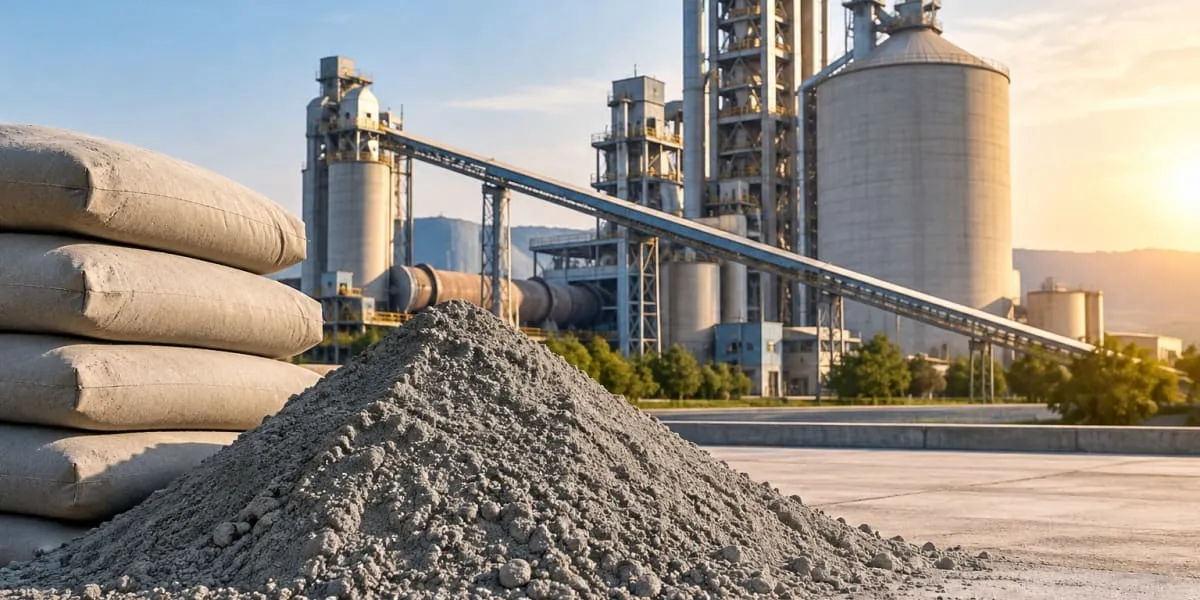
Cement is among the most carbon-intensive materials in the world. Hence, the Indian cement industry needs to chart a practical path to decarbonisation as the country aggressively pursues its green infrastructure goals.
Cement is the lifeblood of modern construction, but it is also among the most carbon-intensive materials in the world. As India’s infrastructure boom continues, balancing the nation’s development priorities with climate commitments has never been more urgent. Cement contributes nearly 7–8 per cent of global CO2 emissions, largely due to the energy-intensive nature of clinker production and the chemical process of calcination. Against this backdrop, the Indian cement industry sits at the crossroads of an immense challenge and an equally significant opportunity: to become a global leader in decarbonised construction.
Sudeshna Banerjee, Managing Director, PS Digitech-HR (India), states, “Cement is literally the backbone of modern construction, but it is also one of the most carbon-intensive materials in the world. As the world races towards net zero, the cement sector faces both an enormous challenge and the unique opportunity to evolve, innovate, adapt and lead the way in sustainable construction.”
Her framing reflects the stark reality. While India’s cement plants are among the most efficient globally in terms of energy consumption per tonne, the scale of India’s construction pipeline — highways, affordable housing, metros, airports, and renewable energy infrastructure — means demand for cement will continue to rise. Without decisive decarbonisation, this growth could lead to rising national emissions, undermining India’s climate pledges.
This makes cement decarbonisation not just an industry issue but a national economic and policy priority.
Pathways to low-carbon cement
Vimal Kumar Jain, Technical Director of Heidelberg Cement, highlights the need to diversify beyond ordinary Portland cement (OPC). “Traditional OPC has a clinker factor exceeding 90 per cent, resulting in a carbon footprint of around 675 kg CO2 per tonne of cement. In comparison, composite cement with a clinker factor of 35 per cent can go as low as 260 kg CO2 per tonne,” he explains.
These numbers illustrate how clinker substitution alone can cut emissions by more than half.
Blended cements such as Portland Pozzolana Cement (PPC) and composite cements reduce reliance
on energy-intensive clinker by incorporating supplementary materials like fly ash, slag, calcined clays or silica fume.
Globally, Europe has pushed ahead with performance-based standards, allowing lower clinker factors while ensuring durability and strength. In India, however, tender specifications and regulatory standards still mandate OPC in many projects. Jain argues, “Wider acceptance of blended cement is crucial, especially among large construction firms and government tenders. This shift is essential, considering the finite nature of limestone deposits that we need to preserve for future generations.”
This is not just an environmental imperative — it is also a resource security strategy for India.
AFR and circular economy: Turning waste into energy
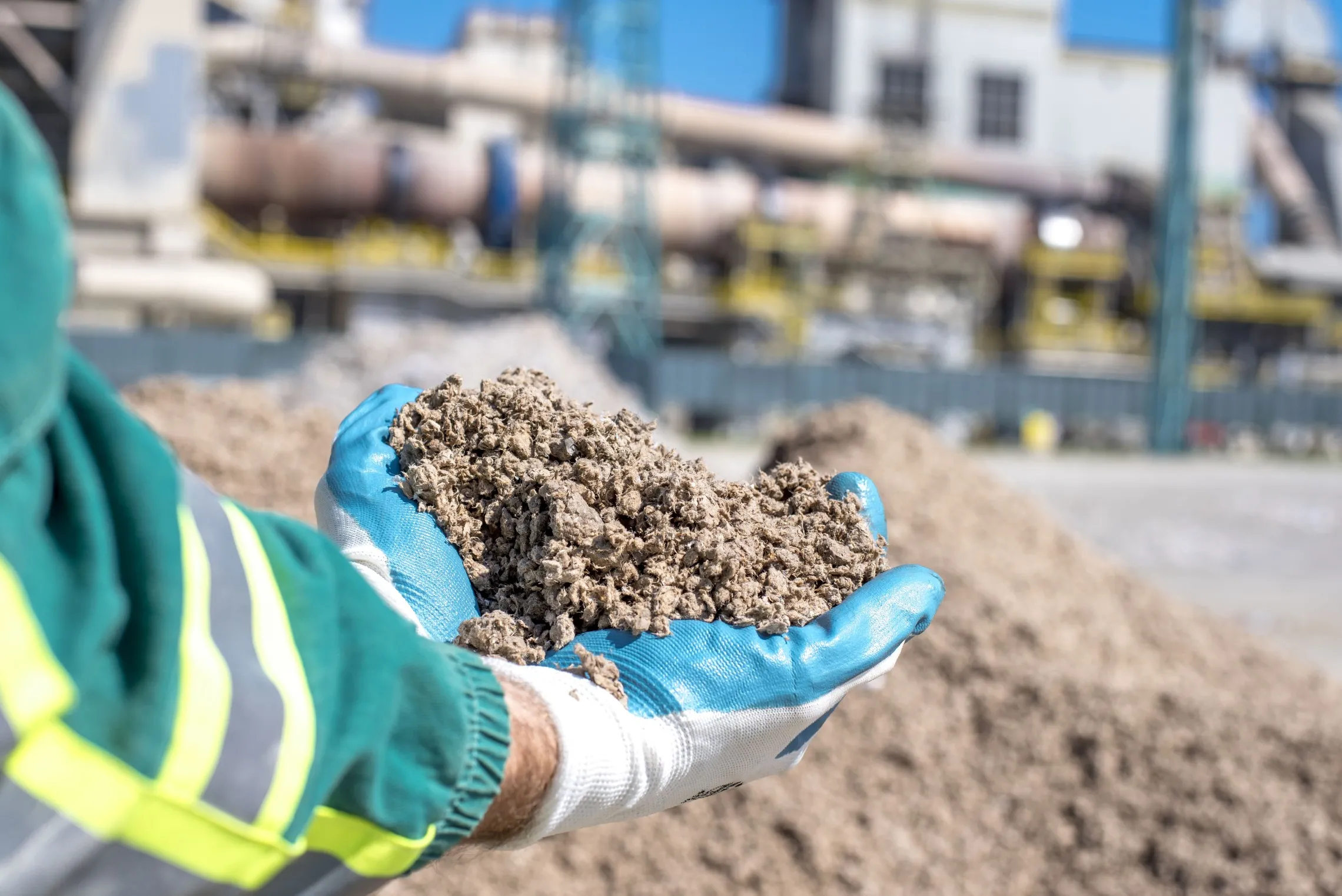
The use of Alternative Fuels and Raw Materials (AFR) is another pillar. AFR involves replacing fossil fuels such as coal and petcoke with biomass, refuse-derived fuel (RDF), and other industrial or municipal waste streams. Dr Ulhas Parlikar, Global Consultant (for waste management, circular economy and policy advocacy), notes, “When scaling AFR, quality and consistency are crucial. Feeding has to be uniform and precise, and chloride content must be managed. Otherwise, combustion efficiency and clinker quality suffer.”
He also points to a less discussed but critical issue — odour. As AFR volumes rise, odour from waste-derived fuels can impact workers and communities, underscoring the need for advanced pre-processing and odour management technologies.
Emphasising the need for collaboration, Dr Parlikar says, “When we can store grains for years together, why can’t we store biomass? Policy frameworks must enable collection, pre-processing, and procurement models for RDF and biomass. Farmers, municipalities, and cement companies must be aligned to unlock this potential.”
This is particularly relevant in India, where stubble burning is a seasonal air pollution crisis. Redirecting agricultural residues into AFR use could create a win–win — reducing urban smog while decarbonising cement kilns.
Research and innovation: The technology roadmap
From a researcher’s perspective, Dr S B Hegde, Professor, Jain College of Engineering & Technology, Hubli and Visiting Professor, Pennsylvania State University, USA, lays out a phased technology roadmap:
- Short-term (2025–2030): AFR expansion, AI-optimised blending, SCMs, and LC3.
- Medium-term (2030–2040): Hydrogen-based fuels, large-scale digital twins.
- Long-term (2040+): Carbon Capture, Utilisation, and Storage (CCUS) at scale, new clinker chemistries and deep structural shifts.
He warns that progress requires not only new technologies but also regulatory reform. “We are still working on prescriptive codes in India. Other countries use performance-based standards, which enable higher SCM substitution without compromising durability. India must adopt similar standards,” Dr Hegde adds.
This shift would remove a key bottleneck: the inability of cement companies to introduce innovative low-carbon products into mainstream projects due to rigid specifications. Addressing the competency and skill gaps of cement plant staff is essential,
he emphasises.
According to Kiranmai Sanagavarapu, Program Manager, Clinker Decarbonisation, FLSmidth Cement, technology can ensure that variability in fuels and raw materials does not compromise quality. “Digitalisation is less about gadgets; it is about confidence. Every time you lower a clinker factor or push alternative fuels, you introduce variability. What keeps plants and customers confident is the ability to measure, predict and stabilise in real time,” she says.
Examples include:
- Kiln predictive controls that maintain flame stability even with high AFR substitution
- Automated labs and analytics that enable consistent production of LC3 or composite cements despite variable raw materials
- Continuous gas analysis and remote services that make troubleshooting proactive rather than reactive
These tools turn decarbonisation from a series of risky experiments into a scalable, repeatable process.
The financing challenge
Transitioning to net-zero cement is capital-intensive. CCUS projects alone require hundreds of millions of dollars per plant. For India, where cement is a highly competitive and price-sensitive sector, this creates tension between sustainability goals and
cost pressures.
Darshak Mehta, Energy Sector Group Consultant, Asian Development Bank (ADB), explains, “Once you know the price of CO2, that will automatically drive the forces in the right direction. Without carbon pricing, it is difficult to know which technology to pick and at what price point.”
ADB has explored multiple avenues:
- Feasibility studies to test CCUS in Indian cement plants.
- CCUS readiness assessments — integrating space, cooling, and design features into new plants at minimal extra cost.
- Blended finance models, where concessional funds de-risk projects for private investors.
- Carbon credit pre-purchase mechanisms, similar to the CDM era that provide upfront liquidity.
He emphasises the need for CO2 hubs, shared infrastructure for capture, transport, and storage. Such hubs, if developed in India, could lower costs by pooling investments across industries. “Policy drivers that create demand will start the production and financing cycle,” states Mehta.
Taking a lead in decarbonisation
According to Lovish Ahuja, Chief Sustainability Officer, Dalmia Cement (Bharat), the company reduced its footprint to 456 kg CO2 per tonne in FY25, from 670 kg ten years ago. “Our blended cement portfolio now stands at 85 per cent, renewable energy penetration is 40 per cent and targeted to reach 65 per cent by 2030, even as we double capacity. Our aspirational target is carbon negativity by 2040. While challenging, it is possible through a portfolio of solutions: clinker factor reduction, renewables, AFR, digitalisation and CCUS.”
He captures the essence of their strategy in one line: “Clean and green is profitable and sustainable.” This message is crucial in a sector often seen as “choosing between cost and climate.” Dalmia’s journey shows sustainability can strengthen competitiveness rather than weaken it.
Sharing the example of Heidelberg’s Brevik project in Norway, Jain says, “The Brevik project is the world’s first full-scale cement CCUS installation, designed to capture 400,000 tonnes of CO2 annually — about 50 per cent of the plant’s emissions. Captured carbon is liquefied, transported by ship, and permanently stored under the seabed in the North Sea. The total investment is €500 million, of which 75–80 per cent is supported by the Norwegian government.
For India, replicating such projects will require strong state support. Jain argues that without concessional finance or incentives like lower GST, CCUS will remain out of reach for Indian plants despite its necessity in the long run.
Policy and standards: Enabling change
India’s cement industry is already globally competitive on energy efficiency, often beating Western plants in Specific Energy Consumption (SEC). But gaps remain:
• Clinker factor: Global best is ~0.60; India averages ~0.70
• AFR substitution: EU averages 30–40 per cent; India is ~18 per cent
• Digitalisation: Europe and South America are ~60 per cent digitised; India ~20 per cent
• CCUS pilots: Europe and China have 5–10 per cent cement capacity under pilots; India is below 1 per cent
Bridging these gaps will determine India’s ability to remain competitive under frameworks like the EU Carbon Border Adjustment Mechanism (CBAM), which from 2026 will tax imports based on embedded carbon. Without rapid decarbonisation, Indian cement exports could face significant tariffs.
To achieve decarbonisation goals, Ahuja emphasises collaboration between all stakeholders. “Decarbonisation is not one silver bullet; it should be seen as a portfolio solution. Partnerships with waste processors, suppliers and policymakers are equally important.”
Industry experts urge the government to:
• Shift from prescriptive codes (mandating minimum clinker content) to performance-based standards.
• Integrate green procurement into CPWD, NHAI and smart city projects.
• Support CCUS and renewables with tax incentives, subsidies and concessional finance.
• Facilitate carbon credit trading, enabling cement companies to monetise their reductions.
Sudeshna Banerjee notes, “This (decarbonisation) journey is not for a single company or institution. It will take the collective will of industry, policymakers, researchers and financiers to make sustainable cement the new norm.”
Cementing a greener future
The decarbonisation of the Indian cement industry is both an engineering challenge and a systems challenge. It will require bold investments in CCUS, creative business models around AFR, enabling policy frameworks, and above all, a shift in mindset across the value chain. “Readiness is key — design plants to be adaptable so they can scale when policy and finance align,” opines Kiranmai Sanagavarapu.
India has the potential not only to meet its net-zero 2070 pledge but to emerge as a global pioneer in sustainable cement production. By embracing blended cements, scaling AFR, leveraging digitalisation, and securing climate finance, the sector can lead India’s green industrial revolution.
With readiness, collaboration, and vision, the Indian cement industry can truly become the green backbone of tomorrow’s infrastructure.
(This article is based on the virtual panel discussion on ‘Sustainability in Cement: Decarbonising the Backbone of Construction,’ organised by FIRST Construction Council and Indian Cement Review, in association with FLSmidth Cement, on Sept 25, 2025)















 Concrete1 month ago
 Concrete4 weeks ago
 Concrete3 weeks ago
 Concrete1 month ago