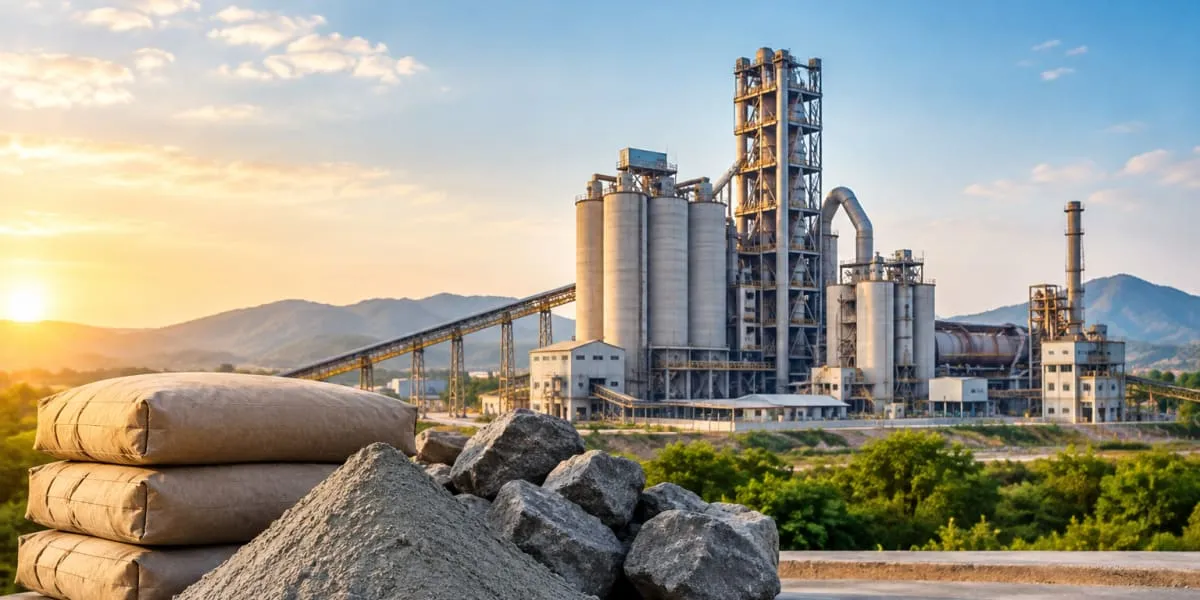
By Sandip Ghose of Birla Corp. Courtesy moneycontrol.com One pic of cement bag.
Cement manufacturers will need to rapidly reinvent their marketing act to compete in a digital marketplace. The more savvy and nimble-footed players will have an edge over their stodgy peers.
Five months after the outbreak of COVID-19 and nationwide lockdown, as the economy is still trying to find its feet, one sector that has given some joy to the markets and investors is cement.
The near-instant bounce back of cement sales in May and June after a virtual washout in April 2020 surprised the manufacturers as much as analysts and industry observers. Various factors have been attributed to the recovery?from pent-up demand to pick up in rural housing post a good rabi harvest and availability of labour in villages, thanks to the returning migrants.
In a parched economic landscape, when people are moving around with magnifying glasses looking for green shoots, concrete – of all things – was found to have gathered some moss. This has been reflected in the buoyancy of cement stocks of both large and midcap companies. The industry players have been expressing "cautious optimism" and predicting a return to the growth path in the next fiscal (2021-22). "Rural demand is likely to help contain the on-year drop in cement sales volume to 12-14 percent this fiscal as against an average annual growth of 6 percent during the last three fiscals," analysts from rating agency Crisil said in an industry research report.
A "V-shaped" recovery was predicted from a sharp contraction of 85 percent in the first quarter to an estimated 7-10 percent growth by the fourth quarter, led by strong rural demand and pick-up in infrastructure activities.
This near-term confidence is based on the assumption of the pandemic blowing over and returning to economic normalcy. However, none of the projections appear to have factored in some of the structural changes that are expected in the post-COVID-19 world.
The Indian cement industry has for long been comfortably numb in the hangover of the "control-raj" days. Stakeholders have historically viewed the industry with the bi-focal lens of supply and demand. The huge headroom in per-capita cement consumption-when compared to economies like China-gave the industry a long runway. The players were, therefore, content to grow in tandem with the national GDP-relying on the natural pull from rapid urbanisation and rural housing.
Cement players, therefore, focused on acquiring limestone reserves and setting up manufacturing capacity to keep pace with demand. To its credit, the Indian cement industry has consistently invested in upgrading technology, being among the best in the world on efficiency and environment parameters.
However, the same focus did not go into product innovation and demand-generation by increasing the use of concrete in novel applications.
Forays into new product forms-such as value-added concrete-were half-hearted given the large rural and "individual home builder" segments, the low hanging fruits as it were. Similarly, there was little attempt to change in "Route-to-Market" or the age-old sales and distribution model.
For increasing footprint and reducing market lead, cement players set up dispersed grinding capacity but comparable investment did not happen in front-end logistics. Bulk transportation, point of consumption storage terminals and packing facilities did not feature in the list of priorities. Even today the standard pack size remains 50 kgs, with high reliance on manual handling at the manufacturing-end and the distribution chain.
Going forward, however, it would be counter-intuitive to believe that disruptions of COVID-19 will spare the cement trade and life will return to the old pre-March 2020 ‘happy days’. There is a general consensus among marketers that contactless delivery and social-distancing norms are here to stay.
It would be a fallacy to assume that these changes will affect only a few sectors like consumer goods and home-delivery services. Therefore, even adjacent product categories such as paints, tile and wood adhesives, water-proofing and construction chemicals are anticipating changes in customer behaviour to impact their businesses. Cement, therefore, cannot remain cosily protected behind a brick and mortar wall, as it were.
Experts have warned that this pandemic may not be a one-time phenomenon. Mankind should expect similar disruptions from both natural and man-made causes. Even in this short period, COVID-19 has taught us that-it has a nasty habit of revisiting in waves. So seasonal surges and localised outbreaks may become a normal feature in the coming days.
This will require the cement industry to rapidly adopt digital marketing and remote working practices. Acquiring technology and digital platforms is going to be easy. The real challenge will be in bringing about the cultural change in organisations steeped in traditional ways of working.
Contactless transactions will be the preferred mode for customers as well as the trade. This will not only accelerate digital order booking and payments but may also trigger a large0scale shift to online portals for the sale of cement.
Manufacturers will need to rapidly reinvent their marketing act to compete in a digital marketplace. The more savvy and nimble-footed players will have an edge over their stodgy peers.
Just like cooking and baking at home, the pandemic will usher a "Do It Yourself" cult among householders. This will require manufacturers to look at smaller pack sizes and product innovations such as quick-setting cement, masonry cement, mortar, ready-to-use concrete mix, bagged concrete and other niche products.
The bigger changes can be expected in construction technology, especially in large projects. Shortage of labour, social-distancing norms and challenges of providing hygienic shelter for workers will encourage contractors to adopt labour-saving practices, automation and use of alternative material such as particle and gypsum boards.
After the pandemic, environmental concerns will again occupy the centre stage. The clamour for reducing the use of cement or replacing it with greener alternatives is bound to increase. Both due to the change in government policy and end-user awareness there will be a greater premium on energy-efficient buildings, green architecture and the use of natural material.
The industry is banking heavily on infrastructure projects. The government has already indicated a willingness to relax the use of bitumen for highways for reasons of cost and speed.
The other area of opportunity that cement makers are looking at is affordable housing. But, to really take off, the definition of affordable housing itself will need to change-through new design, construction material and building technology. It will also require different application skills (beyond basic masonry) that may not be available in the current universe of construction workers.
The pandemic has highlighted the risk of living in congested cities. Given the experience of lockdown, people have turned wary of high rise buildings and housing complexes. With work from home becoming common, there could be reverse migration to the suburbs and smaller towns. This trend will be accelerated by the development of highway infrastructure, air-connectivity and development of ‘rurban’ India.
The cement industry will have to break out of its concrete cocoon and look at changes in the outside world. Production capacity and demand will no longer be the only determinants of success. Size matters. But, strategic foresight and marketing savvy will win the day.
(Sandip Ghose is a marketing professional. He has worked in FMCG, media and cement sectors. He tweets at: GHOSESPOT @SandipGhose)






















 Concrete4 weeks ago
 Concrete3 weeks ago
 Concrete4 weeks ago
 Concrete3 weeks ago