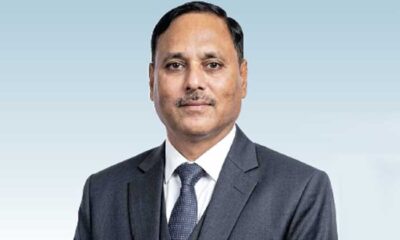
Raju Ramchandran, SVP Manufacturing (Cluster Head – Central), Nuvoco Vistas, sheds light on the company’s robust commitment to sustainable cement production, achieving low emissions through innovative energy solutions, alternative fuels and circular economy practices.
How does your company address the environmental impact of cement production, particularly in terms of reducing emissions?
As a cement manufacturing company, managing energy consumption and emissions is crucial to achieving sustainable operations. At Nuvoco, we have taken significant measures to address this material issue and use it as a competitive advantage for the company. We are consistently enhancing the integration of green power and alternative fuels within our operations. This ongoing commitment is pivotal to our strategy for reducing Greenhouse Gas (GHG) emissions, highlighting our dedication to sustainable practices.
Nuvoco maintains one of the lowest carbon footprints in the industry, with carbon emissions standing at just 457 kg of CO2 per tonne of cementitious materials. Our solar energy capacity has also grown significantly, increasing from 1.5 MW to 5.3 MW for FY 23-24.
What measures have been implemented to monitor and control emissions of CO2, NOx and particulate matter during the cement manufacturing process?
We consistently track air emissions from fuel combustion in our cement manufacturing and power generation operations. The burning of fossil fuels releases pollutants such as Oxides of Sulphur (SOx), Oxides of Nitrogen (NOx), and Particulate Matter (PM), which require stringent monitoring.
We ensure compliance with regulatory standards by using the Continuous Emission Monitoring System (CEMS) to monitor these emissions. For the FY 23-24, both our stack and fugitive emissions have stayed within the permissible limits set by Pollution Control Boards. Moreover, our ongoing monitoring of fugitive emissions ensures that we meet the prerequisite air quality standards.
Can you elaborate on the role of alternative fuels and raw materials in reducing the environmental footprint of cement production?
The use of alternative fuels and raw materials plays a critical role in reducing the environmental footprint of cement production. At Nuvoco, we are actively embracing this approach to promote sustainability and lower our dependence on traditional fossil fuels and virgin raw materials.
Our manufacturing processes enable the use of waste materials from industries like steel and thermal power generation as alternative fuels. Our mix of alternative fuels includes solid waste, liquid solvent, biomass, refuse derived fuels (RDF) from municipal solid waste, and other substances, with a focus on biomass. By incorporating alternative fuels we not only reduce carbon emissions but also contribute to waste management by diverting materials from landfills. Additionally, in line with our sustainability objectives, we plan to considerably expand our use of alternative fuels in the coming years.
During FY 23-24, the utilisation of Alternative Raw Materials (ARM) in our processes increased to 33.9 per cent in cement production, up from 27.7 per cent in the previous year. Incorporating materials such as chemical gypsum, fly ash and slag into our cement formulations significantly reduced our reliance on virgin raw materials and further promoted circularity in our operations.
How does your company approach waste management and recycling to minimise environmental harm?
The principles of a circular economy are integral to our sustainability initiatives. We engage in a variety of efforts to minimise waste generation, promote resource efficiency, and reduce our environmental footprint. We collaborate with other industries to incorporate their waste into our operations, using it as alternative raw materials. By introducing substitute materials into our cement production, such as blended cement with reduced clinker content, we are able to lower waste disposal volumes and significantly reduce carbon emissions.
In our Ready-Mix Concrete (RMX) plants, we actively integrate recycled aggregates from Construction and Demolition (C&D) waste into our manufacturing process. This practice not only boosts the sustainability of our concrete products but also prevents valuable materials from ending up in landfills, contributing to better resource efficiency.
A notable innovation is the ‘Nu Aqua Zero Debris Recycler System,’ which addresses the challenges of solid concrete waste and slurry disposal at RMX plants. This system significantly reduces debris generation and recycles wastewater for reuse, cutting down on freshwater consumption and solid waste. This initiative underscores Nuvoco’s dedication to promoting sustainability and fostering a circular economy in the building material industry.
What long-term goals has your company set in terms of reducing emissions, and what steps are being taken to achieve them?
Nuvoco has set a long-term vision for reducing emissions, anchored in its ‘Protect Our Planet’ agenda. This agenda aligns with the growing focus on Environmental, Social and Governance (ESG) principles, which have become increasingly important to stakeholders, including customers, employees, partners, investors, regulators and local communities. Sustainability is a core component of our business strategy, driving its commitment to responsible and environmentally conscious operations.
The company’s approach is structured around five key themes: Decarbonisation, Water Management, Circular Economy, Biodiversity and Waste Reduction. As part of its decarbonisation strategy, Nuvoco is committed to reducing carbon emissions by 2 per cent annually. This effort includes a focus on maximising the use of alternative fuels, harnessing waste heat for green energy generation, and incorporating innovative green products such as the ECODURE range.
What technological innovations or process optimisations has your company adopted to lower greenhouse gas emissions?
The company has dedicatedly installed a system that is capable of utilising agricultural waste, refuse derived fuel (RDF), plastic waste, municipal waste, biomass, tyre chips and other hazardous waste sources. We have introduced AFR feeding into the pyro process system for enabling uniform feeding and incorporating all necessary safety interlocks throughout. This system allows us to consume alternate fuels in an efficient and effective way without impacting the environmental standards prescribed and approved by the Pollution Control Board of India. Although this project is primarily focused on environmental sustainability, it also has several other benefits for clinker production and can offer significant cost savings through its alternative fuels program.
The company has also made significant modifications across its plants to improve energy efficiency, specifically targeting SHC (Specific Heat Consumption) and SPC (Specific Power Consumption) during clinker and cement production. Our waste heat recovery systems currently have a combined capacity of 44.7 MW, with plans for further optimisation to increase power generation.
– Kanika Mathur