Connect with us

Concrete

We are committed to a sustainable low-carbon future

Published

on

Shares

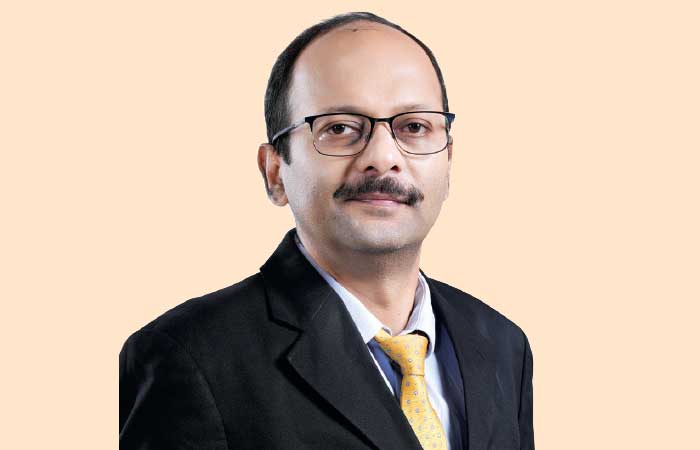
Sudhir Pathak, Head – Central Design and Engg (CDE), QA, Green Hydrogen, Hero Future Energies, talks about empowering India’s hard-to-abate industries with innovative renewable energy technology.

How is Hero Future Energies contributing to reducing emissions in hard-to-abate sectors like cement manufacturing, and what role does renewable energy play in this effort?
Today, Hero Future Energies (HFE) is no longer simply a renewable energy (RE) provider but has transformed into an end-to-end Net Zero partner especially for construction and infrastructure clients in the hard-to-abate sectors. In addition to providing Scope 2 based solutions, such as behind the meter RE (rooftop and ground mount solar) and open access-based RE including developing RE-100 roadmaps we also support Scope 1 and 3 emission decarbonisation by providing complete turnkey solutions through the use of green hydrogen and its derivatives. For hard-to-abate sectors like cement, HFE is in advanced discussions with few leading players, regarding enabling decarbonisation of their heating applications such as pre-calciners, rotary kilns etc through green fuels. This supplements our Scope 2 solutions for the cement industry.

With HFE’s focus on clean technologies like green hydrogen and energy storage, how do you envision these innovations helping the cement industry reduce its carbon footprint?
The cement industry is one of the largest consumers of grid power (Scope 2) and also a guzzler of in-process fossil CO2 (Scope 1) including process-based CO2 through limekilns. In the case of Scope 2, decarbonisation can be achieved only up to 50 per cent to 60 per cent through plain hybrid solar and wind. However, for achieving balance 40 per cent, storage is essential, be it chemical or mechanical. Today, HFE is ready to provide such bespoke storage solutions as is evident through several complex RTC tenders that we have won in the last 6-8 months floated by agencies like SECI, NTPC and SJVN. These include tenders for FDRE projects, peak power, load following, etc. Further, regarding green hydrogen and its derivatives, we are ready to apply these for decarbonising industrial heating and mobility (Scope 1 and 3).

What are some of the biggest challenges you face when working with the cement sector to integrate renewable energy solutions and reduce emissions?
Deployment of renewable energy for mitigating Scope 2 emissions is relatively easy, except for RE behind the meter, looking at the high dust levels involved in cement production particularly in the crushers. Regarding Scope 1 decarbonisation, there are several challenges. Unlike in Europe, the majority of the Indian cement industry uses coal combustion in heating applications. This being a solid fuel, is suitable for horizontal rotary kilns and needs positive pressures for combustion processes, whereas, green hydrogen, being the lightest of molecules, are good and amenable, when working in vertical combustion shafts. Therefore, existing facilities may be used only partially, and for complete conversion, new installations will be needed. This will entail a significant amount of space inside the plants, which is currently scarce.

HFE has been involved in pioneering projects like hybrid power and energy storage. How do these technologies improve energy efficiency and lower emissions in industries like cement manufacturing?
Cement industry by its nature has a 24×7 duty cycle demand for electricity. Therefore, solar power by itself can’t be a perfect solution, the sector needs round-the-clock RE. While hybrid RE (a right mix of solar and wind), can help to an extent (better than only solar), we will still have to depend on storage to provide predictable supply of electricity, or what is termed as ‘Firm Dispatchable’ RE. In such cases, storage can be provided either through batteries like Li Ion, Sodium Ion, Metal Air or Pumped Hydro and Long Duration Energy Storage (LDES) mechanisms.

How does HFE address the intermittency issues of renewable energy, ensuring a stable and reliable energy supply to cement plants while minimising emissions?
As explained above, this can be resolved through appending storage solutions. However this needs meticulous assessment of RE power every year, every month, every day, every hour and every time block (15 minutes). Further, one needs to carry out an arduous due diligence process for forecasting solar and wind patterns for 25 years. We, at HFE, have the expertise to do this to a great extent, thereby derisking ourselves and offtakers from such vagaries. Our success in winning eight complex FDRE tenders in the recent past testify to this.

Given that cement is one of the largest contributors to industrial emissions, what potential do you see for technologies like green hydrogen to decarbonise cement production in the coming decade?
We believe that emergence of green hydrogen presents a huge opportunity to decarbonise hard to abate sectors such as cement. Not only green hydrogen, but its derivatives like ammonia and methanol also hold huge potential to mitigate industrial carbon footprint. The cement industry sees huge volumes of CO2 being emitted as a result of limestone processing, which is a crucial process. These can be reused and converted to low carbon methanol. With the government promoting M15, M85, MD15 and M100, the same can be used for quick decarbonisation.

What are HFE’s long-term goals regarding environmental sustainability and emission reduction, and how does the company plan to scale these efforts to help heavy industries achieve their sustainability targets?
At HFE, we are committed to a sustainable and low-carbon future through provision of smart, affordable, clean energy and tech solutions. On the utility front, we are focused on complex, high CUF projects that aim to help overcome the intermittency barrier and pave the way for firm, dispatchable, round the clock green power. For our C&I clients, we offer a complete suite of solutions as their Net Zero partner, evolving from being just an RE provider.

If India is to achieve its Net Zero goal, then industrial decarbonisation must take centrestage and this is the space where we believe HFE can be a major player. We see ourselves as an end to end integrated Net Zero partner for businesses, particularly those in hard to abate sectors like cement, steel, chemicals and mobility, charting out a Net Zero roadmap for them and then guiding them to reach the target in a phased manner.


Concrete

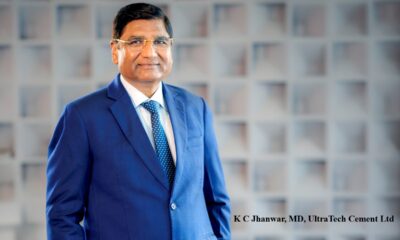
UltraTech Appoints Jayant Dua As MD-Designate For 2027

Executive named to succeed current managing director in 2027

Published

on

By

Shares

UltraTech Cement has appointed Jayant Dua as managing director (MD) designate who will take charge in 2027, the company announced. The appointment signals a planned leadership transition at one of the country’s largest cement manufacturers. The board has set a clear timeline for the handover and has framed the move as part of a structured succession plan.

Jayant Dua will be referred to as MD after assuming the role and will be responsible for overseeing operations, strategy and growth initiatives across the company’s network. The company said the designation follows established governance norms and aims to ensure continuity in executive leadership. The appointment is expected to allow a phased transfer of responsibilities ahead of the formal changeover.

The decision is intended to provide strategic stability as UltraTech Cement navigates domestic infrastructure demand and evolving market dynamics. Management will continue to focus on operational efficiency, capacity utilisation and cost management while aligning investments with long term objectives. The board will monitor the transition and provide further information on leadership responsibilities closer to the effective date.

Investors and market observers will have time to assess the implications of the announcement before the change is effected, and analysts will review the company’s outlook in the context of the succession. The company indicated that it will communicate any additional executive appointments or organisational changes as they are finalised. Shareholders were advised to refer to formal filings and company releases for definitive details on governance or remuneration.

The leadership change will be managed with attention to stakeholder interests and operational continuity, and the company reiterated its commitment to delivery on ongoing projects and customer obligations. Senior management will engage with employees and partners to ensure a smooth handover while maintaining focus on safety and compliance. Further updates will be provided through official investor communications in due course.

Continue Reading

Concrete

Merlin Prime Spaces Acquires 13,185 Sq M Land Parcel In Pune

Rs 273 crore purchase broadens the developer’s Pune presence

Published

on

By

Shares

Merlin Prime Spaces (MPS) has acquired a 13,185 sq m land parcel in Pune for Rs 273 crore, marking a notable expansion of its footprint in the city.

The transaction value converts to Rs 2,730 mn or Rs 2.73 bn.

The parcel is located in a strategic area of Pune and the firm described the acquisition as aligned with its growth objectives.

The deal follows recent activity in the region and will be watched by investors and developers.

MPS said the acquisition will support its planned development pipeline and enable delivery of commercial and residential space to meet local demand.

The company expects the site to provide flexibility in product design and phased development to respond to market conditions.

The move reflects an emphasis on land ownership in key suburban markets.

The emphasis on land acquisition reflects a strategy to secure inventory ahead of demand cycles.

The purchase follows a period of sustained investor interest in Pune real estate, driven by expanding office ecosystems and residential demand from professionals.

MPS will integrate the new holding into its existing portfolio and plans to engage with local authorities and stakeholders to progress approvals and infrastructure readiness.

No financial partners were disclosed in the announcement.

The firm indicated that timelines will depend on approvals and prevailing market conditions.

Analysts note that strategic land acquisitions at scale can help developers manage costs and timelines while preserving optionality for future projects.

MPS will now hold an enlarged land bank in the region as it pursues growth, and the acquisition underlines continued corporate appetite for measured expansion in second tier cities.

The company intends to move forward with detailed planning in the coming months.

Stakeholders will assess how the site is positioned relative to existing infrastructure and connectivity.

Continue Reading

Concrete

Adani Cement and Naredco Partner to Promote Sustainable Construction

Collaboration to focus on skills, technology and greener practices

Published

on

By

Shares

Adani Cement has entered a strategic partnership with the National Real Estate Development Council (Naredco) to support India’s construction needs with a focus on sustainability, workforce capability and modern building technologies. The collaboration brings together Adani Cement’s building materials portfolio, research and development strengths and technical expertise with Naredco’s nationwide network of more than 15,000 member organisations. The agreement aims to address evolving demand across housing, commercial and infrastructure sectors.

Under the partnership, the organisations will roll out skill development and certification programmes for masons, contractors and site supervisors, with training to emphasise contemporary construction techniques, safety practices and quality standards. The programmes are intended to improve project execution and on-site efficiency and to raise labour productivity through standardised competencies. Emphasis will be placed on practical training and certification pathways that can be scaled across regions.

The alliance will function as a platform for knowledge sharing and technology exchange, facilitating access to advanced concrete solutions, innovative construction practices and modern materials. The effort is intended to enhance structural durability, execution quality and environmental responsibility across developments while promoting adoption of low-carbon technologies and green cement alternatives. Companies expect these measures to contribute to longer term resilience of built assets.

Senior executives conveyed that the partnership reflects a shared commitment to strengthening quality and sustainability in construction and that closer engagement with developers will help integrate advanced materials and technical support throughout the project lifecycle. Leadership noted the need for responsible construction practices as urbanisation accelerates and indicated that the association should encourage wider adoption of green building norms and collaboration within the real estate and construction ecosystem.

The organisations said they will also explore integrated building solutions, including ready-mix concrete offerings, while supporting initiatives aligned with affordable and inclusive housing. The partnership will progress through engagements, conferences and joint training programmes targeting rapidly urbanising cities and growth centres where demand for efficient and environmentally responsible construction grows. Naredco, established under the aegis of the Ministry of Housing and Urban Affairs, will leverage its policy and advocacy role to support implementation.

Continue Reading

Trending News

SUBSCRIBE TO THE NEWSLETTER


Don't miss out on valuable insights and opportunities to connect with like minded professionals.


    This will close in 0 seconds