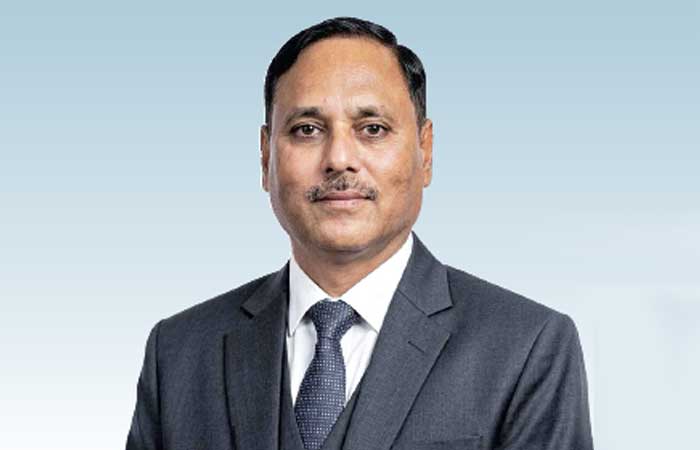
Rajat Goswami, Director, Optifuel Enviro, explains how structured sourcing, process optimisation, and robust compliance frameworks are key to unlocking consistent, high TSR AFR adoption in cement plants.
As cement plants push toward higher thermal substitution rates, the challenge is no longer just adopting AFR but integrating it into a structured, scalable operating model. In this conversation, Rajat Goswami, Director, Optifuel Enviro, outlines how cement producers can move beyond fragmented sourcing to build reliable AFR ecosystems, optimise pyro processes, and align technical, commercial, and regulatory strategies for sustained performance.
How can cement plants move from fragmented AFR sourcing to a structured, high-TSR model across both hazardous and non-hazardous waste streams?
To achieve higher and consistent TSR, cement plants need a structured AFR strategy supported by a dedicated business development team. This team should be divided into focused streams-one for high-volume, TSR-positive materials like RDF and biomass, another for low-volume materials with negative cost benefits such as industrial hazardous waste and sludges, and a third for pre-processed AFR from external platforms. Quality-based sourcing is critical, with strict adherence to parameters like calorific value, ash, moisture, chlorine and particle size to ensure stable kiln performance.
From a commercial and operational perspective, companies should shift to long-term contracts of 5-10 years, especially with large waste generators, to ensure supply stability and cost efficiency. Proper AFR processing-shredding, blending, and homogenisation-is essential to convert waste into consistent, kiln-ready fuel. Strengthening pre-processing capabilities, in-house or through partnerships, is key to achieving higher TSR reliably.
What are the most critical technical bottlenecks in utilising diverse AFR materials, and how can they be systematically resolved at the plant level?
Improper AFR feeding is a major cause of kiln disturbances. Plants must invest in advanced feeding systems such as VFD-controlled screw feeders, apron feeders, and elevators for consistent feed. Selecting the correct feeding point-preferably at the calciner-is critical to ensure proper residence time; poor placement can lead to incomplete combustion and frequent CO generation. Layout constraints at preheater towers can be addressed using air-supported or pipe conveyors for efficient installation.
Another challenge is coating and ring formation due to imbalances in alkali, chlorine and sulphur, especially from AFR inputs. Maintaining optimal ratios and conducting hourly hot meal sampling
helps monitor chloride levels and enable corrective action. Blending AFR streams to control chlorine and ensuring consistent feed quality are essential for stable kiln operation.
How do you evaluate and balance calorific value, chemical composition, and risk when integrating hazardous wastes into cement kilns?
AFR evaluation must cover three dimensions: energy contribution, chemical composition, and
safety risk. Energy assessment includes NCV (as received), moisture, and ash content, which affect combustion efficiency. Chemical analysis must monitor
sulphur, chlorine, alkalis, and heavy metals (Hg, Pb, As) within CPCB limits to avoid operational and environmental risks.
Safety evaluation includes storage hazards (flash point above 55°C or suitable systems for volatile materials), emissions risks, and regulatory classification under Hazardous Waste Rules, 2016. A strong evaluation framework includes pre-acceptance lab testing, controlled trial runs with gradual AFR increase, and continuous monitoring of kiln parameters such as free lime, clinker litre weight, coating condition, emissions, and chloride in hot meal.
What role does pyro process optimisation play in enabling higher and more stable AFR substitution rates?
TSR levels above five per cent require strong kiln optimisation, as AFR directly impacts process stability. Key parameters include kiln outlet oxygen control for efficient combustion and minimising coal fluctuations through proper control systems. Stable burning zone temperature and kiln torque are essential to avoid process disruptions.
Flame shape and momentum must be optimised for proper heat transfer, while precise calciner temperature control ensures complete AFR combustion. Stable kiln draft is equally important, indicating continuous raw mix flow in the preheater. Together, these ensure stable operations and enable higher AFR usage without affecting product quality.
How can synthetic gypsum and alternative raw materials be scaled to reduce dependence on natural resources without affecting product quality?
The cement industry is increasingly using synthetic gypsum as a substitute for natural gypsum, with multiple viable sources available. Captive synthetic gypsum plants produce gypsum through the reaction of limestone with high-purity (98 per cent) sulphuric acid, delivering quality equal to or better than natural gypsum. Leading players like Shree Cement and Ambuja Cement use such systems to replace 50 per cent to 100 per cent of natural gypsum, with purity levels adjustable
between 50 per cent and 85 per cent. Another key source is Flue Gas Desulphurisation (FGD) gypsum from power plants using pet coke or high-sulphur coal, where purity typically ranges between 75 per cent to 80 per cent. In addition, chemical or industrial gypsum generated as a by-product from industries such as dyes, specialty chemicals, fertilisers, rolling mills, and water treatment is widely used due to its low cost, although purity varies between 40 per cent to 80 per cent and may include impurities like chemicals and heavy metals.
To use synthetic or chemical gypsum effectively, certain parameters must be ensured:
• Adequate purity, specifically CaSO4•2H2O content
• Low contaminants such as chlorides and organics
• Consistent quality through proper sourcing
and testing
To enhance its usage, cement plants should invest in:
• Drying and blending systems for consistency
• Long-term supply contracts with power plants and waste generators
• Quality monitoring and controlled dosing to maintain performance
Alongside gypsum, the use of Alternative Raw Materials (ARM) is expanding, driven by availability and location. Common ARMs include slag, fly ash, lime sludge, red mud and mine rejects. Fly ash is widely used in PPC cement, typically at 25 per cent to 30 per cent, while slag usage depends on proximity to steel plants. In regions like Chhattisgarh and Jharkhand, cement manufacturers use 50 per cent to 55 per cent slag in slag cement. These materials reduce dependence on natural resources while improving sustainability and cost efficiency.
What are the key regulatory and compliance challenges in AFR utilisation, and how can industry navigate them more effectively?
AFR adoption in India is governed by CPCB and SPCBs, presenting challenges such as lengthy approvals for hazardous waste, inter-state movement restrictions, extensive documentation, and strict emission compliance. These factors often slow down scaling efforts.
To navigate this, companies should secure approvals for multiple pre-approved waste categories and promote digital manifest systems for better traceability. Implementing Continuous Emission Monitoring Systems (CEMS) ensures compliance and builds regulator confidence. Proactive engagement with authorities-focused on transparency and collaboration-can significantly accelerate AFR adoption.
What practical roadmap should a cement plant follow to move from zero per cent to 20 per cent+ TSR sustainably?
Cement plants can scale AFR usage in phases. In Phase 1 (zero to five per cent), conduct kiln audits, install basic feeding systems, and start with easy AFR streams like biomass and RDF. Phase 2 (five per cent to 10 per cent) focuses on pre-processing, hazardous AFR trials, and building sourcing contracts.
In Phase 3 (10 per cent to 20 per cent), plants should implement multi-point feeding, enhance pre-processing, expand hazardous AFR usage, and strengthen QA/QC systems. Phase 4 (20 per cent+) involves advanced systems like chlorine bypass, Hot Disc, and pyrolysis, along with large pre-processing facilities, AI-based controls, and strong coordination between sourcing and plant teams to ensure sustained high TSR.














 Concrete4 weeks ago
 Concrete3 weeks ago
 Concrete4 weeks ago
 Concrete3 weeks ago