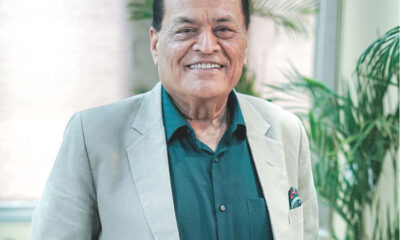
Gulshan Bajaj, Vice President (Technical), HeidelbergCement India, takes us through the various processes that his company has effectively put in place to use alternative raw materials while maintaining clinker and cement quality.
What are the core raw materials used in the production of cement?
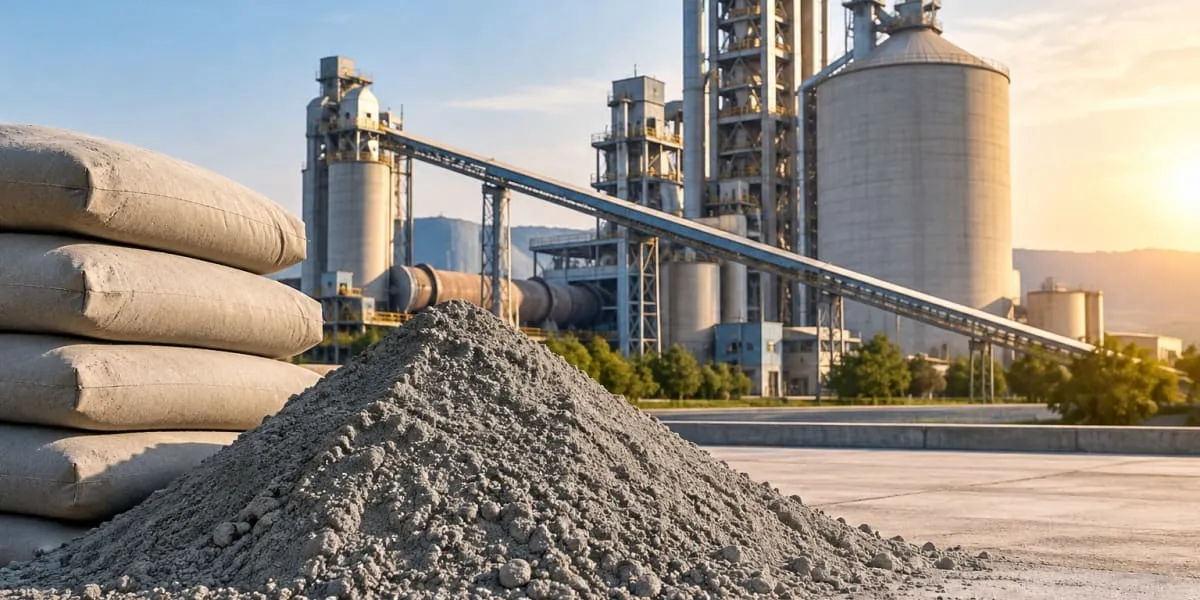
Major component of cement is clinker, which is blended with materials like fly ash, slag and added with gypsum to produce various types of cements like Portland Pozzolana Cement (PPC), Portland Slag Cement (PSC) and composite cement.
Cement clinker, which is a burn out product from kiln resulting from fusion of raw meal, consists of calcium silicates and smaller amounts of calcium aluminates and alumina ferrites. The requirement of calcium is met by limestone in India.
Calcareous clay, calcareous shale, marble and Marl are other materials, which are rich in calcium. Looking at the composition of raw meal, corrective materials like bauxite, aluminous laterite, red mud, iron ore, quartzite, shale, sand etc are added in small quantities to maintain the desired clinker quality.
What are the alternative raw materials (ARM) that can be used in the production of cement? How does that impact the process of production?
Alternative raw materials come from rejects or byproducts of some industrial sectors which can be directly or after an intermediate treatment (preprocessing) can be co-processed in a cement plant. A non-exhaustive list of examples is:
- Foundry sands
- Alumina
- Mill scales
- Bottom or fly ashes from coal/lignite combustion
- Industrial gypsum
- Slags from different metallurgic processes
- Industrial sludge
- Polluted soils
Concrete crusher sand aerated concrete meal and fractions from demolition waste
These materials have already been decarbonated and could be used as an alternative to ‘virgin’ limestone thus avoiding CO2 emissions during its transformation to lime in the production process.
Each material has its own composition and behaves differently during the burning process. In order to maintain the consistent clinker quality and stable clinkerisation process, we need to analyse these materials with respect to quality (during raw mix design) and also impact on the environment (if any harmful gases are released).
There are certain materials, which come in both ARM and cement additives like ashes from coal fired thermal plants and slag from steel plants that have to be looked at from various angles.
Can cement maintain its quality standard with inclusion of supplementary raw materials as against limestone?
Yes, we can maintain clinker and cement quality with use of supplementary raw materials in controlled proportions.
In India, HeidelbergCement (HC) is using red mud as a corrective material to replace costly bauxite. Trials are going on and preliminary results are encouraging. HC at Group level is using ARMs that have been giving stable results with respect to quality.
Explain the impact on carbon emission of the production unit when alternative raw materials are used in various proportions.
When we use alternative raw materials, we directly reduce the CO2 emission at the clinker stage by replacing limestone with the material that has already been decarbonated thus compensating CO2 generated from limestone or correctives being replaced in raw mix.
Also, use of blending materials like fly ash and slag at the time of clinker grinding, results in producing higher quantities of cement by using lesser volume of clinker or limestone without compromising on the quality of the cement. This blending of alternative raw materials with raw material or clinker is reflected in the lower CO2/tonne of cement produced.
How can the cost of production be reduced by using alternative or supplementary raw materials in cement production?
Cost of production can be reduced in current state only if the desired quality of alternative raw material is available in vicinity and landed cost is less than the material being replaced, be it limestone, bauxite, iron ore etc.
Other support to improve alternative raw material usage and making it cost competitive is either by incentives from the government for reduction in CO2 footprint or by issuing certificates that are tradeable (ESCerts) thus, covering additional costs involved. It is likewise in the past ESCerts trading in electrical energy (BEE) and CDP (formerly Carbon
Disclosure Project).
What are the major challenges in using other cementitious materials?
Availability of the desired quality alternative raw material in the vicinity and its landed cost is the main challenge, which acts as a barrier towards increased use of alternate raw materials and investments involved.
Another challenge is competitive disadvantage to source pre-processed ARMs like China clay, which needs to be calcined before use, that adds-on to the cost. Purchase of pre-calcined clay is much costlier to the material it’s going to substitute.
What role does technology play in deciding which alternative materials can be used and the way they can be incorporated in the production process?
Old plants may pose some difficulty in use of alternative raw materials. For such plants, we can set up facilities that lead to better sampling, monitoring and predictive information for optimising the use of these alternate materials. However, technology advancement has opened up opportunities for testing and analysing the quality of ARMs beforehand.
What are the policy interventions expected from the Government to encourage use of ARM by industry?
Various policies that would be helpful in promoting ARM in India may be:
- Incentivising the producer for use of ARM as a replacement of natural materials.
- Implementing a waste policy that recognises and rewards the benefits of co-processing; ensuring no legal implications for use of ARMs.
- Implementing waste legislation aimed at avoiding landfilling with waste that contains recoverable resources in terms of useful mineral content.
- Adopting policies that reward the use of local sources and widely available materials.
- Designing research and development policies aimed at fostering the recovery of minerals from waste for co-processing.
- Making low cost finances available for adoption of technologies and setting up pre-processing.
- Ensuring availability of ARM to the industry on a long term basis to justify the investment.
Does your organisation manufacture a variant of cement made from alternative raw materials? Tell us more about its performance and use.
HC India at present is carrying out trials for use of alternative raw materials at the clinker stage which is giving encouraging results. However, at Group level ARM is being used in various plants and is contributing to preserving natural resources.
In central India, we are already producing 100 per cent blended cement by using fly ash at the cement production stage. Once our ARM trials at the clinker stage are established, we foresee further improvement in our CO2 footprints thus contributing towards the greener environment.
How do you foresee the future of cement production?
With India’s per capita cement consumption at just ~260 kg per capita compared to the global average of ~525 kg per capita, there is a significant potential for the growth of the cement sector in India.
The tailwinds of rapid urbanisation, growing middle class and affordable housing, together with the post-pandemic recovery in construction will further demand for cement in India. Government initiatives in the infrastructure sector are expected to drive the growth of the cement sector over the next several decades.
Looking at climatic change and worldwide focus to bring out sustainable products, we foresee that efforts by industries to promote ARM will be picking up pace for a sustainable future .
Increasing use of AFR to substitute traditional fuels used in kilns (coal/ pet coke) is of great importance both for cement producers and for the society. The potential is enormous since the global cement industry produces about ~3.5 billion tons of cement that consume nearly ~350 million tons of coal-equivalent fossil and alternative fuels.
Thus, AFR is another area that industry would be focussing on.
Increased usage of renewable energy: India’s installed renewable energy accounts for a share of ~38 per cent in the overall power mix(source MNRE). Use of renewable energy in place of conventional energy is another area where industry may be heading to make cement more sustainable.
HC India has set up solar power plants in its surplus land and invested through equity in solar parks to source renewable power. We have also been focussing on increasing use of waste hot gases for power generation (WHR). Some of the HC plants HC have been meeting its > 90 per cent power requirement through renewable sources.
Our endeavour has always been ‘to consistently reduce, recycle and renew to make the world a wonderful place to live for generations to come.’
-Kanika Mathur
















 Concrete1 month ago
 Concrete4 weeks ago
 Concrete1 month ago
 Concrete3 weeks ago