

Concrete
Sustainable Construction with Fly Ash


Ajay Pandey, Deputy COO – Power, Vedanta Aluminium (Jharsuguda Plant), elucidates how the cement industry can harness industrial waste for a more sustainable growth.
India’s construction sector is expected to be the third largest in the world after China and the US, with an overall value of USD 1.4 trillion by 2025. Being an emerging economy, large-scale construction projects are perennially underway in the country. This is a sector where the aluminium industry joins forces with the cement industry to lay the foundations for modern construction and architecture, working towards the 11th Sustainable Development Goal of Sustainable Cities and Communities.
While the average specific thermal energy consumption and average specific electrical energy consumption of the Indian cement industry are lower than the world average due to commendable energy conservation efforts by the domestic players, the GHG emissions of the industry as a whole is high owing to process emissions. The aluminium industry on the other hand produces fly ash in a voluminous quantity, as thermal power generation from coal continues to be the leading source of electricity in India. With the pressing need for climate action intensifying with every passing day, it is high time for both industries to intensify ‘green’ collaborations for manufacturing low carbon products while decarbonising their operations.
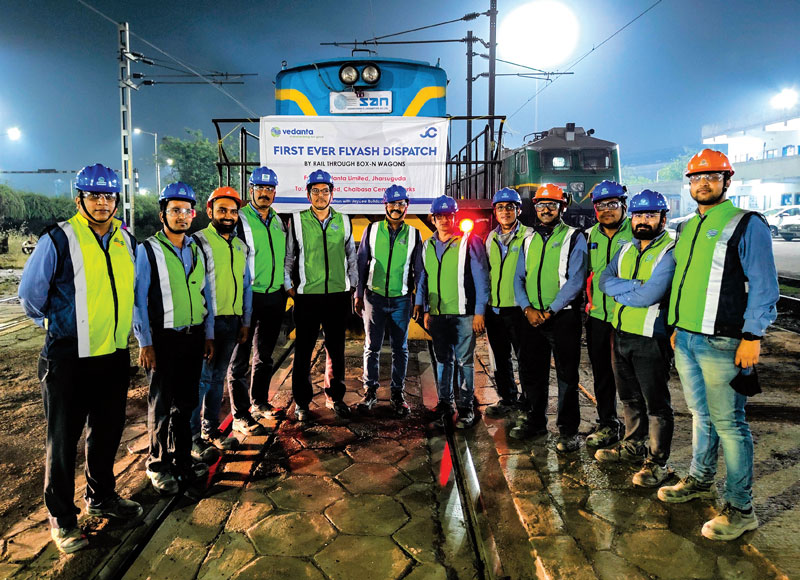
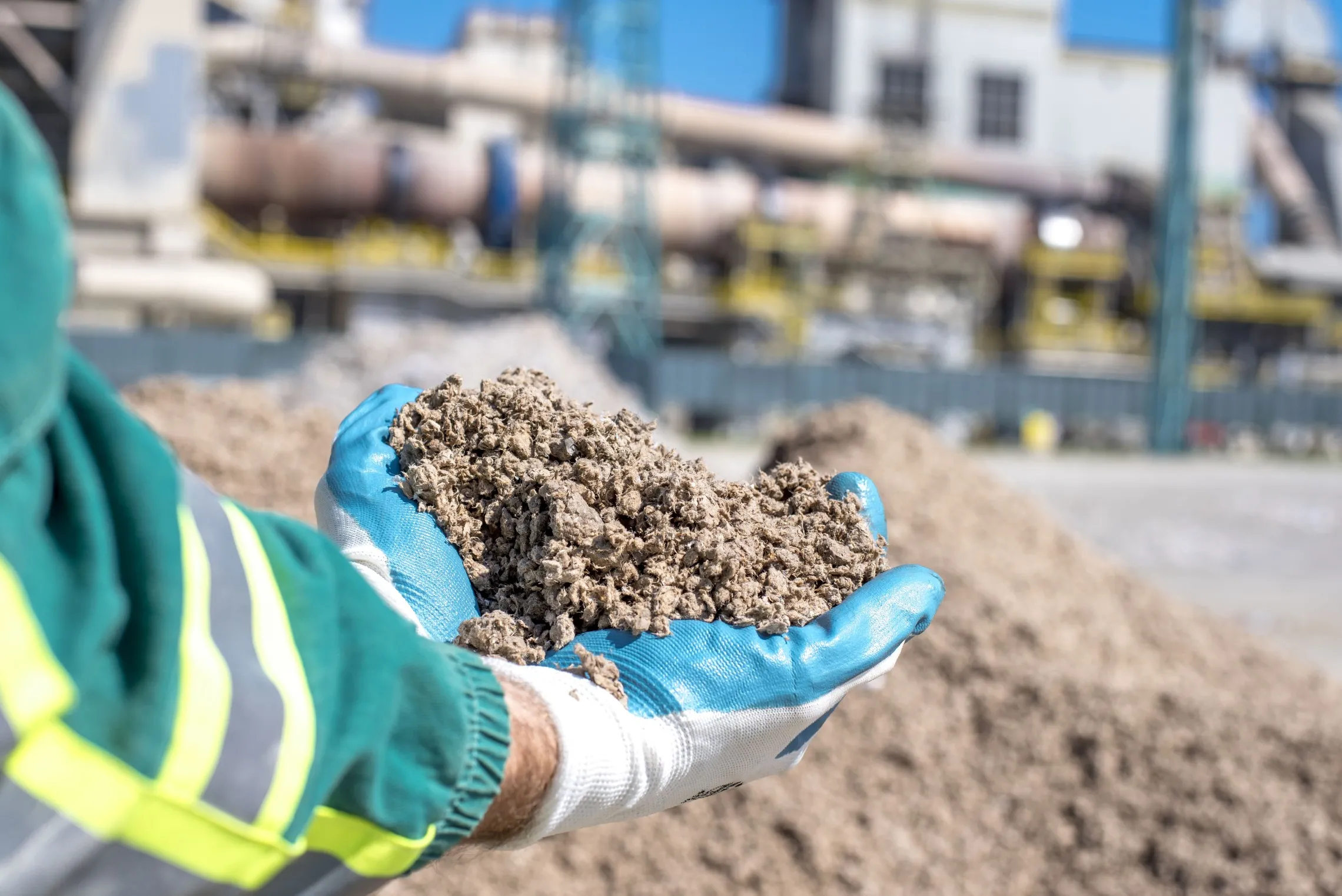
Vedanta Aluminium has signed MoUs with major players in the cement industry, under which we are supplying high-quality fly ash via rakes across India, for utilisation in cement manufacturing. Beyond cement, we are also working with brick manufacturing and infrastructure development (like roadways) industries for fly ash usage in various circular avenues.
Accelerating transition to Net Zero Emissions
The direct CO2 intensity of cement production increased 1.8 per cent per year during 2015-2020. In contrast, 3 per cent annual declines to 2030 are necessary to get on track with the Net Zero Emissions by 2050 Scenario. (Source: International Energy Agency)
According to a report published by the International Energy Agency (IEA) and World Business Council for Sustainable Development (WBCSD), the three main levers that can support sustainable transition of the cement industry are improving energy efficiency (which is already being done by the industry), switching to low-carbon/renewable fuels and energy sources (which is also being done, but are dependent on a variety of market factors such as availability, prices, etc.), integrating carbon capture into cement production (a very nascent technology world over) and finally, reducing clinker-to-cement ratio. The last lever has the second highest emission reduction potential at 37 per cent, since it reduces process emissions which cannot be addressed by energy efficiency measures.
The basic process of calcination, which is essential for manufacturing cement, is responsible for nearly half of the CO2 emissions in the industry and has been one of the main reasons why lowering emissions is difficult. The reduction of clinker in cement production reduces the quantum of thermal energy required for producing cement, which results in CO2 emissions savings. fly ash is useful as a pozzolana material, which means that it possesses cementitious properties and is therefore useful as a replacement material with cement. In fact, fly ash utilisation of up to 35 per cent is permitted in cement production, according to current BIS specifications. India has been a pioneer in the manufacturing of blended cements, using calcined clay, mixes of calcined clay and fly ash, fly ash, bauxite-residue and granulated blast furnace slags.
Making cement better, greener and cost-competitive
Research by leading Indian cement industry players exemplify the effects of fly ash based cements/concretes. fly ash can significantly augment the properties of normal concrete. Not only does it reduce the amount of non-durable calcium hydroxide (lime) present in the mix, but in the process converts it into calcium silicate hydrate (CSH), the most durable portion of concrete paste. Increased usage of fly ash can therefore contribute to a tougher and more chemical resistant product for the cement industry.

combining fly ash with slag.
In fresh concrete, fly ash reduces water demand in concrete, increases workability and pump-ability, bleeding and doesn’t affect setting time. In hardened concrete, in the later stages, it increases the compression strength compared to OPC, while the long-term shrinkage and creep is similar or lower than OPC concrete of the same grade. fly ash also reduces water and chloride permeability at later stages, increases protection of reinforcement if well cured, and substantially increases resistance to sulphate attack. (Source: Sustainability and Blended Cements)
An important factor here is to ensure that the virtues of blended cements are supplemented by the performance criteria of composite cements, thereby resulting in better end-product quality. The advantages of using fly ash with slag for blending offers multiple benefits in terms of water consumption, workability, better mechanical properties and durability. Portland cement may be combined with up to 40-50 per cent fly ash for specific purposes, such as where quick setting time is not necessary, decreasing emissions by nearly the same amount while lowering cost. Fly ash not only aids in the manufacturing process, but it also aids in the durability of concrete. Extending the life of a material decreases emissions and energy consumption when it is used to repair or replace a structure. To ensure good performance, researchers are systematically evaluating the range of chemical and physical properties that fly ash must have, as well as the extent to which it can be mixed with Portland cement. In cement manufacturing, every tonne of fly ash used can help save 700-800 kg of carbon emissions, 4.2 million KJ of energy, and 341 litres of water.
Helping make construction sustainable, beyond cement
The benefits, however, are not limited to usage in the cement industry. From brick manufacturing to road construction, infrastructure development and more, the applications of fly ash are innumerable.
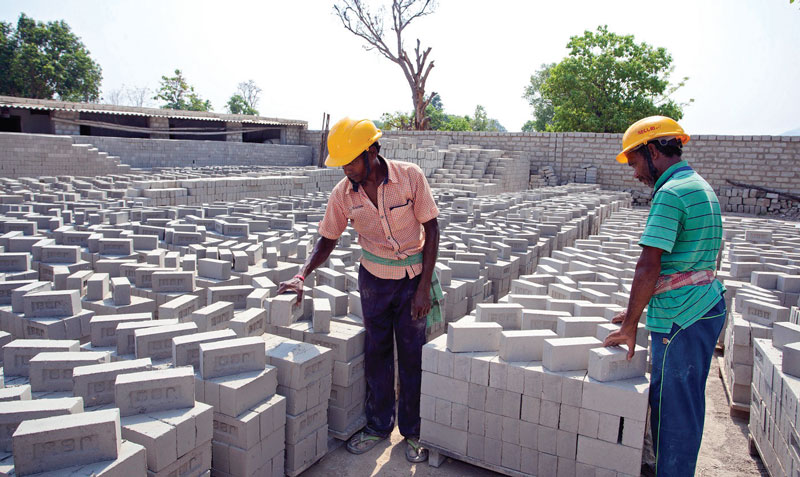
For example, bricks made of fly ash are not only lighter and stronger than traditional clay bricks, but also play a crucial role in preserving nutrient-rich topsoil from being used as the raw material. This amounts to estimated savings of 1.9 metric tonnes of topsoil for every tonne of ash brick manufactured. Besides, ash brick manufacturing is an eco-efficient process, contrary to the energy-intensive process of producing clay bricks in brick kilns that results in substantial greenhouse gas emissions. In fact, for every tonne of ash bricks manufactured, an estimated 5900 kg of carbon dioxide equivalent emissions is avoided. Vedanta Aluminium is supplying fly ash free of cost to hundreds of brick manufacturing MSMEs in the vicinity of its operations. This initiative has created thriving clusters of brick manufacturers in remote regions of Odisha and Chhattisgarh, and reduced migration of aspiring youngsters and entrepreneurs outside their native states in search of jobs or fall back to subsistence farming. We are also supplying fly ash to National Highways Authority of India (NHAI) for construction of ‘green’ roads, linking remote regions to development.
Why partner with us?
Vedanta Aluminium is amongst the world’s leading aluminium producers, and India’s largest producer of aluminium. We take great pride in manufacturing the best quality aluminium products for a wide array of industry sectors, including construction, automobile, electrical, packaging and more. Our world-class aluminium smelters are powered by mammoth thermal power plants, which use high-quality coal that leaves behind good quality fly ash. This ensures that cement companies do not compromise on raw material quality, while producing low-carbon products. Further, given aluminium’s strategic importance as a raw material for the nation, our smelter operations run 24x7x365, requiring a continuous supply of power. Thus, cement players who source fly ash from us get access to an assured stream of good quality raw materials at any time. In fact, through such avenues, Vedanta Aluminium has utilised nearly 2.8 lakh tonnes of fly ash in cement production and supplied 2.7 lakh tonnes for brick manufacturing in FY22.
And yet, the wider adoption of fly ash in these sectors is hampered by perceptions of it being a ‘waste’, rather than a resource. This is why Vedanta Aluminium has developed an ecosystem of research and development experts, domain experts, and eminent professors from India’s premiere technical institutes to expand the knowledge base on fly ash applications in cement, construction and infrastructure industries. Fly ash represents the key hallmark of a circular economy, where the by-product of one industry becomes a viable input for others. Long-term strategic collaborations between businesses in this direction will not only grant a new lease of life to significant volumes of so-called ‘industrial waste’, but also provide an impetus for sustainable growth to other sectors by enabling access to low cost and
improved alternatives.









JSW Cement Commissions 1 MTPA Unit in Rajasthan

Wonder Cement appoints Mahesh Singh as VP Corporate Brand Communication

JSW Cement commissions additional 1 MTPA grinding unit in Rajasthan

JSW Cement Boards Approve Proposed Shiva Cement Merger

JSW Cement commissions additional 1 MTPA grinding unit at Nagaur
JSW Cement Commissions 1 MTPA Unit in Rajasthan
Wonder Cement appoints Mahesh Singh as VP Corporate Brand Communication
JSW Cement commissions additional 1 MTPA grinding unit in Rajasthan
JSW Cement Boards Approve Proposed Shiva Cement Merger







