Concrete
Greener energy has a positive impact on manufacturing
Published
3 years agoon
By
admin
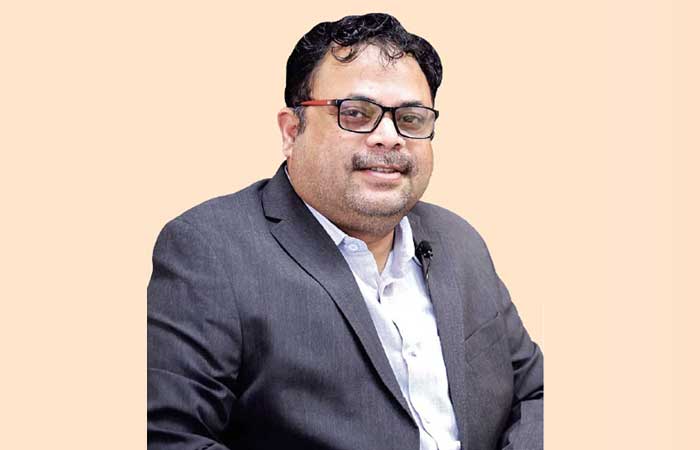
Sameer Kumar Pujari, Senior General Manager, JK Cement, elaborates on the role played by technology, alternative raw materials, cost, infrastructure and local regulations in making cement manufacturing process more energy efficient.
Tell us about the role of energy in the manufacturing of cement? What is the volume of your organisation’s energy consumption?
The role of energy in the manufacturing of cement is significant as it is one of the most energy-intensive industries globally. The production of cement involves several energy-intensive processes, from the extraction and crushing of raw materials to production of clinker and finally converting it into cement.
The production of cement consumes large quantities of energy in the form of thermal and electrical. This requires approximately 3.2 GJ to 5.0 GJ of energy per tonne of clinker produced. As an energy intensive industry, thermal energy used in the cement industry accounts for about 20–25 per cent of the production cost. The typical electrical energy consumption of a modern cement plant is about 70 KWh to 80 KWh per tonne of cement. In the manufacturing process, thermal energy is used mainly during the burning process, while maximum share of electrical energy is used for cement grinding.
Our SEC is approximately 61.8KWH/T cement and specific thermal energy is 3.18 GJ/tonne of cement. We are proud to share that our IU at Muddapur Karnataka and GU at Jhajjar, Haryana, are national leaders in energy and have been awarded by renowned organisations like Confederation of Indian Industry (CII). The source of energy in cement manufacturing is fossil fuels (coal, oil and natural gas) and alternative fuels (biomass/waste material/municipal waste etc.).
Other than above, we also use renewable energy solar/wind, WHRS and grid power to produce cement.
What are the various modes of energy sources used by your organisation for its manufacturing needs?
We use fossil fuels as the energy source for manufacturing needs. This includes coal, oil, and natural gas, which are burned in kilns to generate the heat necessary for the production process. We are also utilising alternative fuels to reduce usage of fossil fuels and promote sustainable practices. These alternative fuels can include RDF, biomass, such as rice/mustard husk or agricultural waste as well as waste materials like shredded tires or sewage sludge. By using these alternative fuels, we are not only progressing towards carbon neutrality but also contributing to waste management efforts.
We are using solar, wind and WHRS, too. We are procuring renewable energy through open access. Our capacity in WHRS is 62 MW, solar is 20 MW and we are progressing towards the goal of green cement by 2030. Our Muddapur, Karnataka, plant has achieved 100 per cent renewable energy uses at zero grid consumption through open access.
Which of the said energy sources yields maximum productivity for the plant and which yields the least?
The productivity of different energy sources for cement plants can vary depending on various factors such as technology being used, availability, cost, infrastructure and local regulations. Here are some examples:
Fossil fuels (e.g., coal, oil, and natural gas): Traditionally been the primary energy source for cement production due to their high energy content. However, they contribute significantly to carbon emissions and are considered non-renewable resources.
Biomass: Biomass, such as agricultural residues or dedicated energy crops, can be used as an alternative fuel source in cement production. Its productivity can vary depending on the availability and sustainability of biomass feedstock.
Waste materials: Certain waste materials, such as shredded tires or municipal solid waste, can be used as alternative fuels in cement kilns. The productivity of waste materials as an energy source depends on their calorific value, availability, and proper waste management practices.
Renewable energy sources: Renewable energy sources like solar, wind or geothermal power can be utilised to generate electricity for cement plants. Their productivity depends on factors such as location, resource availability and the ability to integrate them into the plant’s
energy infrastructure.
It is important to note that each cement plant may have unique circumstances and considerations when choosing an energy source. The optimal solution often involves a combination of different energy sources and technologies to achieve maximum productivity while minimising environmental impact.
What are the alternative energy sources that are being adapted by the cement industry and your organisation?
Generally fossil fuels such as coal, petroleum coke and natural gas provide the thermal energy required for the cement industry. With increasing economic benefits in usage of alternative fuel (AF) over conventional fuels gives high thrust on usage of AF. Other factors, which give a push to usage of AF, are limited resources of fossil fuel and environmental concerns. AF covers all non-fossil fuels and waste from other industries including tire-derived fuels, biomass residues, sewage sludge and different commercial wastes. The kiln used in cement manufacturing is able to burn a wide range of materials due to the long exposure time at high temperatures (up to 1400oC), intrinsic ability of clinker to absorb and lock contaminants into the clinker and the alkalinity of the kiln environment. Materials like waste oils, plastics, waste tires and sewage sludge are being adopted as alternative fuels by the cement industries. Biomass waste and spent pot linings produced in aluminium smelters are also identified as potential alternative fuels for the cement industry.
Our organisation uses almost all kinds of plastic wastes, non-hazardous and hazardous waste, and biomass. We have a dedicated AFR feeding system in our plants. We initially focused on using plastic waste, shredded RDF. Slowly and gradually, we increased our capacity and started using hazardous materials also. For the processing of hazardous waste, we needed impregnation material like biomass such as rice husk, saw dust, wood chips, etc. So, we started utilising them in smaller proportions. And with the experience so far, now we are consuming around 20 per cent to 25 per cent of hazardous solid waste, 40 per cent to 50 per cent MSW/RDF waste, and up to 25 per cent non-hazardous solid wastes.
What is the impact of greener energy sources on the productivity and cost of cement manufacturing?
Greener energy has a positive impact on manufacturing, including commercial and technical aspects. Here are some potential impacts:
- Productivity: Greener energy sources have a positive impact on the productivity of cement manufacturing. For example, using alternative fuels like biomass or waste materials can provide a reliable and consistent source of heat for kilns, ensuring a stable production process. This can help reduce downtime and improve overall productivity.
- Cost: The cost implications of using greener energy sources in cement manufacturing can also vary. In some cases, alternative energy sources may be more cost-effective compared to traditional fossil fuels as AF gives additional revenue to consumers of AF. Additionally, utilising waste materials as alternative fuels can reduce waste disposal costs for cement plants.
- Energy efficiency: Greener energy sources often promote energy efficiency in cement manufacturing. For example, using renewable energy sources like solar or wind power can reduce reliance on fossil fuels and decrease energy consumption. This can result in cost savings and improved overall efficiency.
- Environmental impact: One of the key benefits of greener energy sources in cement manufacturing is the reduction in environmental impact. By transitioning to alternative fuels or renewable energy sources, cement plants can significantly reduce greenhouse gas emissions and air pollution associated with traditional fossil fuel combustion. This can contribute to environmental sustainability goals and help meet regulatory requirements.
- It is important to note that the specific impact on productivity and cost will depend on the individual circumstances of each cement organisation, including factors such as location, availability of resources, technological capabilities and government policies or incentives.
How does automation and technology help in optimising the use of energy in cement plants?
Automation and technology play a pivotal role in optimising the use of energy in cement plants. We are using VFD, Smart MCC, Sensors, Integrated Load Management System, Energy Monitoring System and Smart Lighting System for effectively optimising the use of energy in our organisation.
Here are some ways which helps to reduce the energy:
- Energy monitoring and control: Automation systems can continuously monitor energy consumption in various parts of the cement plant, such as kilns, mills, and crushers. This real-time data allows operators to identify pilferage processes or equipment and optimise energy usage.
- Process optimisation: Advanced control systems and predictive analytics can optimise the cement manufacturing process to minimise energy consumption. By analysing data from various sensors and instruments, these technologies can identify opportunities for energy savings and automatically adjust parameters to achieve optimal efficiency.
- Energy management systems: Automation systems can integrate with energy management systems to provide a holistic view of energy usage across the entire plant. This allows operators to track energy performance and accordingly set targets, and implement energy-saving measures effectively.
- Load management: Automation systems can optimise the scheduling and sequencing of equipment to ensure a balanced load distribution, reducing peak demand and improving overall energy efficiency. For example, by coordinating the operation of kilns, mills, and other machinery, the system can minimise energy wastage during periods of low demand.
- Energy recovery: Automation technology can facilitate the implementation of energy recovery systems in cement plants. For instance, waste heat from kilns can be captured and used to generate electricity or provide heat for other processes, reducing the reliance on external energy sources.
- Equipment optimisation: Automation systems can monitor the performance of individual equipment and identify inefficiencies or malfunctions that may contribute to excessive energy consumption. By providing real-time alerts and diagnostics, operators can take corrective actions promptly, ensuring optimal equipment performance and energy usage.
- Overall, automation and technology enable cement plants to have better visibility, control and optimisation of energy usage. This leads to improved energy efficiency, cost savings and reduced environmental impact.
What are the major challenges your organisation faces in managing the
energy needs?
We are facing challenges of imposition of power curtailment from grid mostly at our
Rajasthan-based plants:
Grid disturbances and power outages There is high volatile market and heavy fluctuations in fuel sourcing
- Energy cost volatility: Cement production is highly energy-intensive, and the cost of energy can fluctuate significantly. This makes it challenging to plan and budget for energy needs effectively an increase in the prices of fossil fuel would adversely impact the industry, leading to an increase in production costs, however we focused on driving optimisation of fuel mix, energy efficiency and use of alternative fuel to mitigate this
- Ageing infrastructure: To upgrade or replace the ageing infrastructure/ systems can be expensive and may require significant downtime. However, we have completed the brownfield modernisation of our Nimbahera Line-3, with the kiln now capable of producing 6,500 TPD, against the earlier capacity of 5,000 TPD. The brownfield projects that have been undertaken over the past few years have been delivering greater efficiencies in the form of reduced power and fuel consumption and increased WHR.
Tell us about the compliance and standards followed by you to maintain energy use and efficiency in the organisation.
Some of the key regulations and standards include:
- ISO 50001: This international standard provides a framework for organisations to establish, implement, maintain, and improve an energy management system. We are ISO 50001 certified company and regularly enhance our energy performance, identify energy-saving opportunities and comply with energy management requirements.
- PAT Compliance: PAT is a mechanism for improvements in energy efficiency of energy intensive industries. Specific high energy intensive industries are identified as Designated Consumers (DC) within certain key sectors, who are required to appoint an energy manager, file energy consumption returns every year and conduct mandatory energy audits regularly. The key tasks in the PAT mechanism is to set the methodology for deciding the Specific Energy Consumption (SEC) norms for each designated consumers in the baseline year and in the target years, devise verification process for SEC, finding ways of issuing the Energy Savings Certificates, operationalisation of the trading process for ESCert in addition to the compliance and reconciliation process for ESCert.
To ensure compliance with these regulations and standards, JK Cement regularly monitors our energy consumption, implements energy management systems, conducts energy audits, invests in energy-efficient technologies, and reports the emissions and energy performance to relevant authorities. Additionally, we collaborate with industry associations, research institutions and government agencies to stay updated on evolving regulations and best practices in energy management.
How often are audits done to ensure optimum use of energy? What is the suggested duration for the same?
- We conduct energy audits every year as a part of energy management practices. This allows us to assess the energy performance, identify areas for improvement and implement energy-saving measures.
- We have formed internal management teams across our plants where we closely monitorour energy consumption on a daily basis. We fix our best targets across the locationsand further compare and revise our targets to further optimisation.
What kind of innovations in the area of energy consumption do you wish to see in the cement industry?
Some potential innovations in the area of
energy consumption that we may wish to see in the cement industry:
• Alternative fuel sources: Increased utilisation of alternative fuels, such as biomass, waste materials, or renewable energy sources, can reduce reliance on fossil fuels and lower carbon emissions.
• Energy-efficient technologies: The adoption of advanced technologies, such as more efficient kilns, improved heat recovery systems, and optimised grinding processes, can help reduce energy consumption in cement production.
• Carbon capture and utilisation: Implementing carbon capture, storage, and utilisation (CCUS) technologies can help capture and store carbon dioxide emissions from cement plants or utilise them in other industrial processes.
• Process optimisation through AI: Continuous process optimisation through AI data analytics, machine learning, and automation can identify areas of inefficiency and enable real-time adjustments to optimise energy consumption.
• Circular economy practises: Adopting circular economy principles, such as recycling and reusing waste materials or by-products from cement production, can reduce resource consumption and minimise environmental impact.
• Collaborative research and development: Encouraging collaboration between industry stakeholders, researchers and governments can drive innovation in energy-efficient cement production technologies and practices.
• We want to innovate to produce entirely green cement with sustainability and to achieve our net zero target by 2030.
• Cement manufacturing with an alternative of fly ash and lesser water curing requirements also plants with less heat consumption during clinker production such as in LC3 cement.
-Kanika Mathur
You may like
-
JK Cement Declared Preferred Bidder For Gilund Limestone Block
-
Indian Railways Plans Green Fly Ash Transport Network
-
ACC To Expand Cement Capacity Amid Strong Infrastructure Demand
-
Modern manufacturing is becoming challenging
-
Energy efficient drives improve equipment reliability
-
Digitalisation is transforming asset management
Concrete
Akhoya Gets New 2.2 Km Road Link Under SASCI
Two cement concrete roads opened at Rs 29.1 million (mn) cost
Published
5 hours agoon
July 3, 2026By
admin
Two cement concrete pavement roads covering a total stretch of 2.2 km in Akhoya village were inaugurated on 27th June 2026 by MLA Nuklutoshi Longkumer, who attended as the special guest. The project comprises the one km L Pangersowa Road and the one point two km Longchara Junction to RC Chiten Jamir Memorial Government High School road. A formal programme followed the inauguration at the school auditorium.
A technical report was presented by Er Waloniba of the Urban Engineering Wing-III, Kohima, which stated the project was sanctioned in March 2026 under the Special Assistance to States for Capital Investment scheme for 2025-26 at a sanctioned cost of Rs 29.1 million (mn). The work order was issued to M/s Ensign Construction on thirtieth April 2026 with a stipulated completion period of 12 months. Work commenced on fourth May 2026 and was completed on sixth June 2026, with the contractor and team finishing the tasks in around two months. The project included a single-lane cement concrete pavement with side drains, two slab culverts and breast walls at required locations.
Longkumer acknowledged the Chief Minister, the advisor for urban development, contractors and other stakeholders for the allocation and support, and he commended the contractor for early completion. He noted that cooperation from landowners and the community had been important in resolving land related issues that can otherwise delay developmental works. He emphasised that planned developmental activities carried out with collective effort would enable more projects to be implemented successfully.
The headmaster of RC Chiten Jamir Memorial Government High School, I Chubasenba Longkumer, outlined the school background, noting it was established in 1962, was earlier known as Government High School Changtongya and was renamed in 2014. Local representatives said the improved approach roads would ease access for students, staff, patients and the general public and fulfil a long standing aspiration of residents. A dedicatory prayer was offered by the pastor and the programme concluded with a ribbon cutting attended by village council and town council representatives.
Indian Cement Review (ICR) and Fuller Technologies brought industry, policy and technology leaders together to discuss how cement innovation can drive green construction at scale, writes Rakesh Rao.
India is building at a pace few countries can match. Highways, airports, housing, logistics parks, industrial corridors and urban infrastructure are reshaping the country’s economic geography. But beneath this growth story lies a difficult question: can India continue to build at scale without locking itself into a high-carbon future?
That question formed the core of an online panel discussion titled “Driving Green Construction Through Cement Innovation”, organised by Indian Cement Review (ICR) in association with Fuller Technologies as the Presenting Partner on June 25, 2026. The webinar brought together experts from cement technology, R&D, global industry platforms, building performance policy and international development cooperation to examine how low-carbon cement and material innovation can accelerate India’s green construction transition.
The discussion came at a crucial time. India has committed to achieving net-zero emissions by 2070 and reducing the carbon intensity of its economy by 45 per cent by 2030. At the same time, the country’s construction sector is expanding rapidly, driven by urbanisation, infrastructure development, housing demand and industrial growth. Cement, as one of the most widely used construction materials, sits at the heart of this transition. It is indispensable to development, but also central to the challenge of reducing embodied carbon in buildings and infrastructure.
Moderated by Nitika Krishan, Senior Urban Infrastructure and Sustainable Policy Consultant, the panel featured:
- Kiranmai Sanagavarapu, Director, Low Carbon Solutions, Fuller Technologies;
- Dr Hemantkumar Aiyer, VP and Head R&D, Nuvoco Vistas Corp Ltd;
- Devika Wattal, Innovation Lead, Global Cement and Concrete Association (GCCA);
- Dr Sunita Purushottam, MD, GBPN India (Global Buildings Performance Network); and
- Vaibhav Rathi, Senior Technical Advisor, GIZ (the German Agency for International Cooperation)
Setting the tone for the discussion, Nitika Krishan underlined the scale of the challenge before the sector. “The question before us is no longer whether we build, but how we build sustainably,” she said. She pointed out that construction accounts for nearly 40 per cent of global energy-related carbon emissions when both operational and embodied carbon are considered. Cement production, she added, remains one of the hardest industrial processes to decarbonise.
For India, this is not merely an environmental issue. It is a development issue, a competitiveness issue and increasingly, a market issue. As one of the world’s largest cement producers and among the fastest-growing construction markets, India’s material choices will influence the carbon trajectory of its built environment for decades. As Krishan observed, sustainability solutions in economies such as India must not remain limited to laboratory success. They must be scalable, commercially viable and practical at national level.
The innovation gap: From technology to market
Experts believe that there is a need to bridge the innovation gaps for making decarbonisation in cement and concrete scalable. Devika Wattal of GCCA, explained, “The starting point must be the core cement manufacturing process itself. The first and foremost is the heart of our process, the heart of cement manufacturing. How do we reduce clinker? That is always a topic where industry is working very intrinsically.”
Clinker reduction remains one of the most important pathways for lowering emissions in cement. Since clinker production is energy-intensive and chemically emits carbon dioxide, reducing the clinker factor through supplementary cementitious materials (SCMs), blended cements and new chemistries can have a significant impact. Wattal also noted that carbon capture, utilisation and storage (CCUS) will have a role, though it may not be the first lever for all markets.
However, she stressed that innovation cannot stop at technology development. A solution that works in the lab must also be adaptable to industry, scalable in production and acceptable in construction practice. “It is important for that innovation to be adaptable, to be scalable, and so that it can be executed in real time,” she said.
Wattal also called for stronger enabling systems around innovation. These include performance-based standards, product-level embodied carbon databases and clearer frameworks for evaluating green materials. Without these, low-carbon cement products may struggle to compete with conventional materials in procurement and design.
R&D must balance carbon, cost and performance
Bringing in the R&D perspective into the discussion, Dr Hemantkumar Aiyer of Nuvoco Vistas emphasised that low-carbon cement development cannot be treated as a single-variable exercise. Cement must perform in real construction conditions. It must deliver strength, durability, consistency and cost competitiveness, while also reducing carbon.
“The root of understanding and balancing all these aspects lies in materials, and knowing the materials,” he said.
According to Dr Aiyer, R&D teams must understand the variability of raw materials such as fly ash, slag and clinker. Different sources produce different material behaviours. This makes mix optimisation, material characterisation and processing-property relationships critical. When performance is affected, cement manufacturers must understand how strength enhancers, admixtures and other performance chemicals interact with the material system.
He also linked material science with process efficiency. Clinkerisation takes place at extremely high temperatures, around 1,400 to 1,450 degrees Celsius. Any improvement in raw mix design, process control or energy optimisation can, therefore, help reduce emissions and cost. Dr Aiyer pointed to artificial intelligence-based optimisation, Cement 4.0 tools and advanced software as important enablers for real-time process and material control.
“The more you understand the materials, the more you can control it,” he said.
LC3: The promise is proven, the sequencing is not
Limestone calcined clay cement, commonly referred to as LC3, has attracted global attention because it can reduce clinker content significantly by using calcined clay and limestone while maintaining performance in many applications. Kiranmai Sanagavarapu of Fuller Technologies said the technology itself has already moved beyond proof of concept. Fuller Technologies has worked with calcined clay technology for nearly two decades and has seen plants running in France and Ghana. These plants, she said, are meeting local and national specifications, while the economics are beginning to make sense.
“The calciner is performing, the economics is stacking up, it is making business sense to produce,” she said.
But if the technology is viable, why has adoption not scaled faster? For Sanagavarapu, the answer lies in project sequencing. Too often, clay characterisation happens after equipment is specified. This, she warned, is a backward approach because calciner design depends on clay mineralogy, kaolinite content, iron levels, reactivity, moisture and other variables.
“If you don’t know what your deposit looks like before you commit for the equipment, you are, in a way, going blind into designing,” she said.
She also identified permitting and plant integration as major bottlenecks. Environmental clearances, mining permissions and local regulatory approvals must begin early. Similarly, calcined clay must be integrated into existing grinding, blending and logistics systems from the design stage, not treated as an afterthought during commissioning.
India already has IS 18189:2023 standard for LC3, but Sanagavarapu pointed out that the standard is not yet visible enough in procurement documents. “The gap between what is technically being permitted and what the procurement is asking is the single biggest bottleneck,” she said.
In her view, successful scale-up depends on getting the sequence right: clay characterisation first, permitting in parallel, standards aligned with construction, and integration built into plant design.
India’s LC3 journey: Progress, but demand remains thin
Providing details of India’s LC3 commercialisation experience, Vaibhav Rathi of GIZ noted that JK Cement carried out the first commercial production of LC3 at its Rajasthan plant, followed by JK Lakshmi Cement three months later. These initiatives were supported by the International Climate Initiative of the Government of Germany, with IIT Delhi contributing deep institutional knowledge on LC3 research and BIS certification.
Rathi said India’s early experience has produced clear lessons. One of the biggest was the need to build capacity among regulators. While BIS certification existed, State Pollution Control Boards were unfamiliar with the technology and unsure about the approval pathway.
“The capacity building is not just needed amongst the producer and the users of the cement, but also the regulators who are working with this technology for the first time,” he said.
He also highlighted the need for better information on China clay deposits. Since China clay is currently classified as a minor mineral, centralised data on availability, quality and location is limited. If cement manufacturers are to adopt LC3 at scale, stronger mineral intelligence will be important.
The third issue is demand. LC3 has already been used in projects such as Palava City in Mumbai and Noida International Airport, but these remain limited examples. “It is in a chicken and egg situation,” Rathi said. “Cement companies are saying we need more demand, and users are saying there is not enough cement available.”
Public procurement, he suggested, could help break this cycle. If agencies such as CPWD and other public bodies begin testing, accepting and specifying LC3, it could create the market confidence needed for cement companies to invest in production and storage.
Building codes must catch up with innovation
Dr Sunita Purushottam of GBPN India argued that material choices will determine built environment emissions over the long term, but India’s current policy signals remain fragmented. Although LC3 has received BIS recognition, she pointed out that building codes, municipal bylaws, schedules of rates and sustainability codes do not yet provide uniform guidance on low-carbon cement.
“The current cement regulations are largely prescriptive and favouring traditional materials,” she said. This limits the ability of alternative materials to compete on performance, durability and emissions.
Dr Purushottam also raised the issue of taxation. Cement, including LC3, currently falls under the same GST bracket as conventional cement. A differentiated tax structure, she argued, could help accelerate market adoption. “In order for the market to demand LC3, that differentiation in the GST could go a long way,” she said.
She noted that green building certifications such as IGBC and GRIHA are already creating demand for low-carbon materials by assigning points for embodied carbon and sustainable material use. However, she said large-scale adoption will require regulatory mandates, particularly through building codes and state-level notifications.
She also cautioned that low-carbon cement alone does not solve the entire building performance problem. A material may reduce embodied carbon, but the operational carbon of a building depends on thermal performance, design, insulation and energy use. “The energy part has two elements,” she said. “One is the embodied carbon of the material itself, and the other is the operational carbon.”
Collaboration is the bridge between invention and impact
Wattal said GCCA sees innovation as a strategic priority and works through platforms that connect industry with academia and start-ups. “There is no way we will decarbonise our sector without innovation,” she said.
However, she stressed that research must be connected to actual industry challenges. Innovations developed in isolation may fail when they encounter real-world barriers such as raw material variability, plant integration, cost, standards and finance. Start-ups, too, need industry mentorship and scale-up pathways.
Wattal also flagged the importance of finance. Even strong technologies may struggle to attract investment if there is no common understanding of bankability. “We have always put projects into, is this a bankable project? But the definition of a bankable project has never been defined,” she said.
For India, she saw strong potential in its academic and start-up ecosystem, but said the challenge lies in alignment and prioritisation. The country has the research base, industrial capacity and market size. What it now needs is a coordinated route from innovation to deployment.
There is a practical concern for cement manufacturers: how can existing plants be adapted for lower emissions without compromising reliability or commercial viability?
Kiranmai Sanagavarapu addressed, “The reliability risk in calcined clay retrofit is definitely real, but it is almost always self-inflicted. The risk arises when a new process is added to an existing circuit without properly redesigning grinding and blending configurations.”
Existing cement plants, she explained, can take two broad routes. The first is external sourcing of calcined clay combined with mill optimisation. This requires lower capital investment and can potentially move in 12 to 18 months if other conditions are in place. It may reduce emissions by around 20 to 30 per cent. The second route is integrated calcination on site, which requires higher capital expenditure and longer lead times, but provides greater control over quality, supply and emissions reduction potential.
For Sanagavarapu, the principle is simple: low-carbon retrofits must be designed with intent. “Design it with an intent properly from the start. Start in the market conditions where the economics are already working,” she said.
Circularity: The overlooked advantage
According to Vaibhav Rathi, fly ash and slag are already well established in cement and construction (C&D), but construction and demolition waste remains underutilised. “C&D waste is a growing business opportunity which not many have taken up,” he said. India’s continuous construction and demolition activity creates huge volumes of waste, much of which contributes to air pollution, land degradation and material inefficiency. With the right processing and standards, this waste can be converted into useful construction products.
Rathi also pointed out that LC3 has a circular economy dimension that is often overlooked. It can use low-grade kaolin-rich clay left behind after high-grade clay is extracted for other applications. “LC3 is not only a low-carbon solution, but also a circular economy solution,” he said.
At the same time, he cautioned that LC3 in India is not yet cheap because it has not reached scale. Site-specific techno-commercial feasibility studies, supported jointly by development agencies and industry, could help companies assess whether LC3 production makes technical and financial sense at a given location.
Dr Purushottam added that India must address both low-carbon cement and construction waste together. “Both low-carbon cement and C&D waste go hand in hand. India does not have an option but to work on both,” she said.
Dr Aiyer called for policy shifts from both government and industry, including preferential purchasing of sustainable materials, minimum supplementary cementitious material requirements in public and public-private projects, and faster regulatory implementation. “If we can fast-track the regulatory standards and their implementation on the ground, that is the way to go,” he said.
From green ambition to green construction
Cement innovation is no longer only about chemistry. It is about systems. Low-carbon cement will scale only when technology, standards, procurement, finance, regulation, education and construction practice move together.
LC3 and other low-carbon technologies have shown promise. India has early commercial examples, strong research capability and growing market interest. But mainstream adoption will depend on whether demand can be created, regulators can be capacitated, standards can be embedded in procurement, and manufacturers can see a clear business case.
For a country building at India’s scale, the opportunity is enormous. Cement will continue to be central to infrastructure and urban development. The challenge now is to ensure that the cement used in India’s growth story carries a lower carbon burden.
- Rakesh Rao
Participate in Cement Expo 2026 and discover how next-gen infrastructure can be built with innovations in cement.
Concrete
JK Cement Declared Preferred Bidder For Gilund Limestone Block
Shares Edge Higher As Company Wins Rajasthan Block
Published
3 days agoon
June 30, 2026By
admin
JK Cement gained after being declared preferred bidder for the Gilund Limestone Block in Chittorgarh, Rajasthan, a lease area of 370.96 hectares. The firm saw its shares trade at Rs. 5550.05, up by 28.45 points or 0.52 per cent from the previous close of Rs. 5521.60 on the BSE. The scrip opened at Rs. 5569.15 and touched a high of Rs. 5625.00 and a low of Rs. 5531.00.
The stock recorded turnover of 1742 shares on the counter and the BSE group A stock with face value Rs. 10 has a 52 week high of Rs. 7565.00 on 20-Aug-2025 and a 52 week low of Rs. 4670.05 on 12-Jun-2026. Last one week high and low stood at Rs. 5625.00 and Rs. 5329.00 respectively. The promoters holding in the company stood at 45.66 per cent, while institutions and non-institutions held 40.61 per cent and 13.73 per cent respectively.
The e-auction conducted by the Government of Rajasthan resulted in the company being declared preferred bidder for the mining lease, and the allocation will enable the company to plan phased development of the deposit, subject to regulatory approvals. The Gilund block spans 370.96 hectares and its allocation is intended to support raw material security for the company’s cement operations in the region. The designation follows the government auction process and will allow the company to plan development and integration of the deposit into its supply chain.
The current market capitalisation stands at Rs. 430.38 billion (bn), reflecting market response to the mining news and prevailing valuation levels for the sector. Investors and analysts will watch for formal allotment and related disclosures that can clarify timelines, capital expenditure and expected production profiles. The report is intended for informational purposes and does not constitute investment advice, and market participants are advised to consult advisers before making decisions.
Akhoya Gets New 2.2 Km Road Link Under SASCI
Green Construction Through Cement Innovation
JK Cement Declared Preferred Bidder For Gilund Limestone Block
Star Cement Named Preferred Bidder For Boro Lakhindong Block
KERC Proposal To Cut Rooftop Solar Export Tariff Raises Concern
Akhoya Gets New 2.2 Km Road Link Under SASCI
Green Construction Through Cement Innovation
JK Cement Declared Preferred Bidder For Gilund Limestone Block
Star Cement Named Preferred Bidder For Boro Lakhindong Block