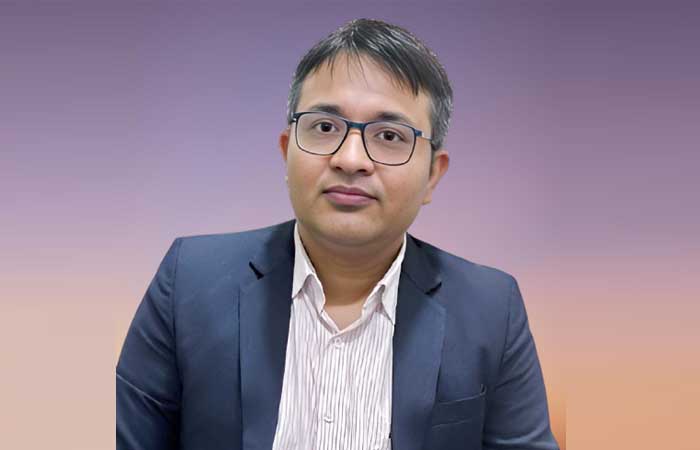
Rajesh Kumar Nayma, Assistant General Manager – Environment, Wonder Cement, shares the company’s ambitious commitment to reducing emissions through advanced technology and alternative fuel use, thereby driving significant change in the cement industry.
How does your company address the environmental impact of cement production, particularly in terms of reducing emissions?
Wonder Cement Limited (WCL) has played a vital role in Indian infrastructure development and focuses towards a more sustainable future, including environment protection, clean energy and water positivity. The organisation is a firm believer in putting a positive impact on the environment. Environment and sustainability is a core value that drives our operations. We are committed to minimising the environmental impact from cement production, particularly when it comes to emissions. We do the impact analysis due to operation of the units being carried out at design stage level to ensure minimum impact on the environment i.e. air, water and land. Equipment selection is done accordingly taking various measures to ensure no fugitive emission, stack emission, water pollution and soil degradation such as installation of best-in-class air pollution control equipment (ESP’s Reverse Air Baghouse); bag filters at all the material transfer points; provided covered storage facilities/storage silos to maintain ambient air quality; fugitive emission and stack emission well within the prescribed emission Norms, Selective Non Catalytic Reactor (SNCR) for control of NOx Emission; and preventive routine maintenance of air pollution control equipment are carried out. By taking these measures, WCL ensures emissions are well below the stipulated norms for particulate matter, SO2 and NOx.
We are focusing on reducing the GreenHouse Gases (GHG) emissions, too. Due to our operations, we have done GHG Invertisation, which aims to achieve Net Zero by 2060, in line with the nation’s commitment in COP-26.
We have Zero Liquid Discharges facilities across all our units. Being dry process cement manufacturing units, the wastewater generation in our units is very low in quantum and the implemented closed-loop systems help to reuse process water and minimise fresh water consumption. WCL is reusing 100 per cent STP/ETP water in its process, greenbelt development and dust suppression at its integrated cement plant and split grinding units.
What measures have been implemented to monitor and control emissions of CO2, NOx, and particulate matter during the cement manufacturing process?
We have installed an Online Continuous Stack Monitoring System (OCEMS) in all the process stacks along with PTZ cameras and Continuous Ambient Air Quality Monitoring Systems (CAAQMS) in all our operating units. Real time data of OCEMS/CAAQMS is transmitted to SPCB/CPCB servers, and also to our control systems, which enables us to take corrective action on priority.
The major pollutants through air are particulate matter and gaseous emissions. The emissions of particulate matters from all the stacks are maintained within the prescribed norms by installing bag house, bag filters and electorstatic precipitator (ESP) at all major sources of air pollution i.e. raw mill, kiln, clinker cooler and coal mill cement mills and captive power plant (CPP).
We have also installed SNCR technology along with a low NOx burner to reduce NOx emissions effectively to keep the same in the prescribed norms and lime dosing systems have been installed in the power plants to ensure SO2 emission within the prescribed norms.
We use alternative fuels and raw materials (AFR) in order to increase our green energy portfolio, to reduce the clinker factor and to reduce the power/energy consumption per tonne of clinker/cement. The installation of WHRB in all the operating kilns has further helped in cutting down the CO2 emissions.
Can you elaborate on the role of alternative fuels and raw materials in reducing the environmental footprint of cement production?
The use of AFR plays a critical role in our strategy to reduce the environmental footprint of cement production. By substituting traditional fossil fuels with waste-derived alternatives like biomass, refuse-derived fuel (RDF) and industrial by-products, we significantly lower CO2 emissions and reduce the demand for natural resources.
The utilisation of supplementary cementitious materials (SCMs), such as fly ash, helps in reducing clinker consumption, which is a major source of carbon emissions in cement production. This not only decreases our reliance on energy-intensive processes but also promotes waste recycling and resource efficiency. AFR adoption is an integral part of our commitment to the circular economy, ensuring that we minimise waste and optimise the use of materials throughout the production cycle, ultimately contributing to a more sustainable and eco-friendly cement industry.
WCL is exploring transitioning from fossil fuels to cleaner alternatives like biofuels or hydrogen or RDF/plastic waste/other hazardous waste. Till date, 5 per cent TSR has been achieved, while the intent is to achieve more than 20 per cent TSR. WCL is utilising the hazardous and other waste as an alternative fuel or raw material. We have used more than 3 lakh metric tonne of hydrogen waste and other waste in FY-2023-24.
How does your company approach waste management and recycling to minimise environmental harm?
WCL is focusing on the 3 R’s – Reduce, Reuse and Recycle. We focus on optimum utilisation of natural resources and reuse of said resource as well as recycling of the waste material generated from our operations.
We are contributing to reduce the legacy waste generated in our municipalities and we have co-processed more than 50000 tonnes of RDF/plastic waste. Additionally, we are sending other waste generated at our facilities such as used oil / used lead acid batteries / e-waste to authorised recyclers. We are focused on targeted reduction in waste generation.
We are also utilising alternative raw materials. which are the waste from other industries such as red mud, chemical gypsum, iron sludge and ETP sludge to substitute natural resources.
WCL is also increasing the use of recycled content of plastic in PP bags.
We have met our EPR target for plastic waste introduced in the market for FY 23-24 through co-processing of plastic waste in its kiln. Additional EPR credit will be traded for this in the market.
What are the biggest challenges your company faces in achieving compliance with environmental regulations, both locally and globally?
WCL is committed toward 100 per cent compliances to applicable rules and regulations and having dedicated resources to do so, when we talk about the challenges WCL faces in complying with environmental regulations is the constantly evolving nature of both local and global environmental rules and regulation which further leads to strength. While we are committed to adhering to stringent regulations, keeping up with the rapid changes in environmental laws requires continuous upgradation in technology and processes. Another challenge is the high capital investment needed for adopting cleaner technologies, such as De_Sox System / SNCR / Up-gradation of ESP /bag house and carbon capture systems.
Additionally, the availability of AFR can be inconsistent, making it difficult to achieve consistent reductions in GHG emissions. Despite these challenges, WCL remains committed to sustainability and continuously collaborates with regulatory bodies and industry experts to stay ahead of compliance requirements. We also invest in research and development to innovate our production processes, ensuring that we not only meet but exceed environmental compliances.
What technological innovations or process optimisations has your company adopted to lower greenhouse gas emissions?
WCL has adopted several technological innovations and process optimisations to lower greenhouse gas emissions. One of the key initiatives is the installation of 45 MW waste heat recovery systems, which capture excess heat from the production process and convert it into energy, reducing the overall carbon footprint. We have also introduced advanced burner technology with lower NOx emissions and optimised energy consumption and presently we are less than 47 KWh/tonne of clinker, which is one of the best in the cement industry.
The deployment of energy-efficient vertical roller mills (VRM) for clinker grinding also contributes to reducing energy consumption and emissions. These innovations are part of our broader commitment to sustainability and are continuously enhanced to meet global environmental standards.
WCL is focusing on investing in renewable energy sources like solar or wind power to meet the electricity needs. We have installed a solar power plant at our Nimbahera plant and Jhajjar grinding unit as well as 15 MW windmills at Pratapgarh, for our grinding units located at Aligarh, Uttar Pradesh and Dhule Maharashtra. We have renewable power purchase agreements to source renewable energy, which will replace approximately 50 to 60 per cent of energy demand from the grid, further leading to reducing the GHG emissions.
WCL is taking various operational/capex measures to reduce the energy requirement like installation of VFD, optimisation of differential pressures across bag filters and optimisation of kiln operation to get maximum output.
How does your company engage with stakeholders, including local communities and environmental agencies, to ensure transparency and sustainability in your operations?
WCL has a well-defined approach for identification of stakeholders, which is done after considering the material influence each group has on the company’s ability to create value (and vice-versa). The objective of stakeholder engagement is to foster connections, build trust and confidence and buy-in for your company’s key initiatives. This can also help us mitigate potential risks and conflicts with stakeholders.
Stakeholder engagement is done is to understand the needs and expectation of anyone who has a stake in our company, based on which we can develop our strategy and identify our focus areas such as:
- What long-term goals has the company set in terms of reducing emissions
- What steps are being taken to achieve them
- What are the key focus areas to take society along with us
WCL places great emphasis on engaging with stakeholders, including local communities, environmental agencies and industry experts, to ensure transparency and sustainability. We conduct regular environmental audits and share our findings with relevant regulatory bodies to ensure compliance. Our CSR initiatives are closely aligned with community needs, particularly in areas like water conservation, afforestation and waste management, health, education and women empowerment, which directly impact the local environment.
We maintain an open dialogue with local residents to address their concerns about air quality, emissions and resource use and carry out need based assessment and accordingly design our CER/CSR programme and further implement the same.
Additionally, WCL participates in various industry forums and collaborates with environmental agencies to stay ahead of regulatory changes and adopt best practices. Transparency is key to building trust, and we ensure that all stakeholders are kept informed about our sustainability initiatives through periodic reports and community outreach programs. This collaborative approach ensures that we maintain a positive environmental and social impact.
What long-term goals has your company set in terms of reducing emissions, and what steps are being taken to achieve them?
WCL has set ambitious long-term goals to significantly reduce emissions in line with global climate targets. One of our primary objectives is to achieve net-zero carbon emissions by 2060, with interim goals to reduce CO2 intensity by 25 per cent by 2040 through increasing Green Energy Portfolio from present 41 per cent to 70 per cent, AFR and green hydrogen 3 per cent to 40 per cent, reduction in clinker factor from 79 to 60 per cent and CCUS and electrification of the kiln, introduction of LC3 and PLC cements based on techno-economic feasibility.
To achieve these targets, we are investing to develop facilities to feed more AFR, which helps to reduce dependence on fossil fuels and natural resources and lower carbon emissions. We are also exploring carbon capture and storage (CCS) technologies to capture CO2 emissions at their source. WE are committed to achieving its long-term sustainability goals and contributing to the global effort to combat climate change.
– Kanika Mathur
















 Concrete4 weeks ago
 Concrete2 weeks ago
 Concrete2 weeks ago
 Concrete4 weeks ago