Connect with us

Concrete

Our role is to make sustainability bankable

Published

on

Shares

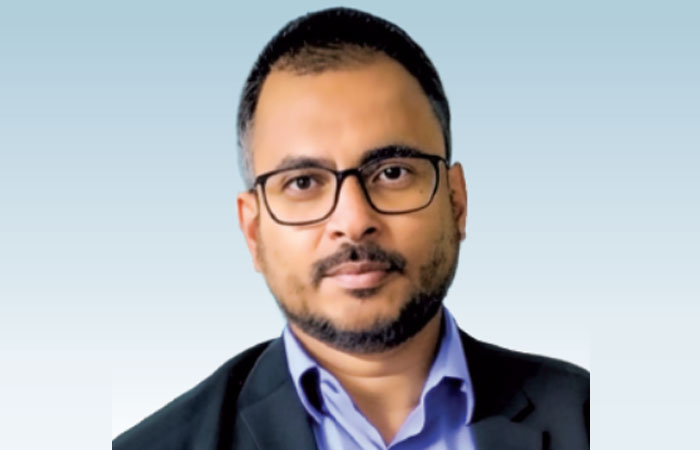
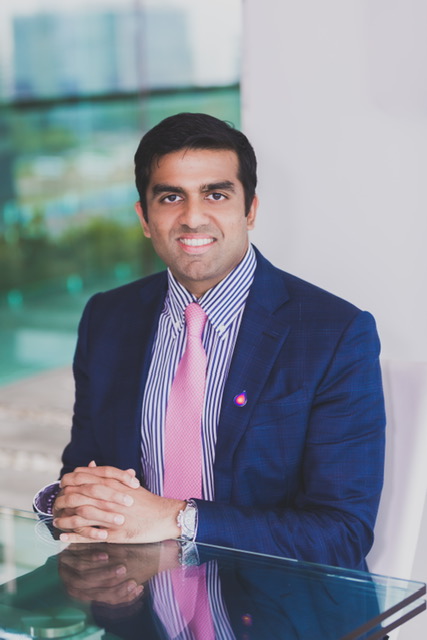
By integrating geology, engineering and sustainability into every decision, Prasanajit M, Founder and Managing Director, Shanvi Resources, helps companies deliver measurable ESG outcomes while securing long-term operational and financial resilience.

In this insightful interview, Prasanajit M, Founder and Managing Director, Shanvi Resources, shares how advisory services are driving sustainable practices across the mining lifecycle. From resource estimation and feasibility studies to digital modelling and ESG integration, consultancy is shaping mines that are profitable, environmentally responsible and socially trusted.

How do you define sustainable mining from a consulting and advisory perspective?
Sustainable mining is the disciplined alignment of geology, engineering, environment and economics so that every tonne mined today preserves or enhances the social, ecological and financial capacity to mine tomorrow. As advisors, we translate that into bankable plans with measurable ESG outcomes, lifecycle cost realism and transparent stakeholder governance.

What role do geology and resource estimation play in ensuring long term sustainability?
Geology is destiny. Robust resource models (domain-controlled, QA/QC-defensible, with appropriate classification) underpin selective mining, low strip ratios and predictable feed. Accurate estimation reduces dilution and re-handling, optimises pit designs, stabilises plant throughput/grade, and thereby lowers carbon and water intensity per tonne of product.

How can feasibility studies integrate both economic and environmental considerations?
By treating environmental and social factors as design inputs not afterthoughts.

In practice:
• Embed carbon, water, land-disturbance, and biodiversity metrics into the options trade-off matrix.
• Price externalities (carbon, rehabilitation, water) into NPV and sensitivity cases.
• Apply ‘avoid–minimise–restore–offset’ sequencing to mine, waste and tailings footprints.
• Use staged capital to derisk ESG alongside metallurgy and logistics, with clear leading indicators and trigger points.

What do global reporting standards (JORC, NI 43-101) mean for responsible mining in India?
They institutionalise accountability. JORC/NI 43-101 require qualified persons, transparent data, reasonable prospects for eventual economic extraction and clear communication of risks. For India, wider adoption elevates investor confidence, improves comparability across deposits, and nudges the ecosystem toward better QA/QC, data custody and community aware planning well before the first shovel turns.

How do you help mining companies balance compliance with profitability?
We embed compliance into the value chain:
• Map regulatory requirements to process gates (exploration ? feasibility ? construction ? operations).
• Convert permits and local content duties into scheduled deliverables with owners and budgets.
• Quantify the ROI of compliance (e.g., lower disruption risk, faster approvals, premium pricing, better debt terms).
• Use digital audit trails so reporting is by-product, not rework.

What innovations in exploration are enabling more efficient and eco-friendly mining?
• AI assisted targeting from multi-sensor remote sensing and historical data.
• Lightweight, low impact geophysics and precision drilling that reduce pads, roads, and fuel.
• Portable analytics/XRF for smarter, tighter drilling programs and fewer barren metres.
• Drone based mapping and environmental baseline capture that shrink field time and disturbance.

How do you see digital modelling transforming sustainable resource management?
From static models to living ‘digital twins’ of the orebody and operation:
• Dynamic block models linked to short-interval control reduce dilution and energy/water per tonne.
• Scenario pits and schedules quantify ESG and cost trade-offs before execution.
• Integrated tailings/waste models optimise landforms and closure from day one.
• Predictive maintenance and dispatch analytics cut idle time and emissions.

What is your vision for consultancy’s role in shaping a greener mining ecosystem?
Consultants must be integrators and challengers bringing rigorous standards, local context and cross-disciplinary design to deliver profitable mines that communities can trust and ecosystems can tolerate. Our role is to make sustainability bankable, measurable and operational every day, not just in reports.

– Kanika Mathur

Concrete

Niraj Cement JV Wins Railway and Metro Contracts

Two orders worth over Rs 1.64 billion boost infrastructure portfolio

Published

on

By

Shares

Niraj Cement Structurals (JV) has secured two major contracts from the Northeast Frontier Railway (NF Railway) and the Mumbai Metropolitan Region Development Authority (MMRDA), strengthening its position in large-scale infrastructure development.

The first contract, valued at Rs 815.2 million, has been awarded by NF Railway. It involves the construction of multiple-span 12.20-metre PSC slab underpasses, a major bridge (No. 727), retaining and guide walls, embankments and one minor bridge along the proposed UP and Down line near Deepor Beel. The project covers Km 163/00 to 164/200 between Azara and Kamakhya stations and forms part of the New Bongaigaon–Goalpara Town–Kamakhya (NBQ–GLPT–KYQ) railway doubling programme.

The second contract, worth Rs 826.6 million, has been awarded by MMRDA for constructing a foot overbridge (FOB) equipped with a travellator to improve connectivity between the SGMC monorail station and the Mahalaxmi metro and suburban railway stations.

The two projects underscore the company’s technical capabilities in both transportation infrastructure and environmentally sensitive construction, further strengthening its portfolio in key railway and urban mobility developments.

Continue Reading

Concrete

Peddapalli MP Seeks Clear Timelines for Rs 42.10 Bn Projects

Peddapalli MP Gaddam Vamshi Krishna has urged the Union Government to specify execution timelines for major infrastructure projects worth Rs 42.10 billion in his constituency.

Published

on

By

Shares

Peddapalli MP Gaddam Vamshi Krishna has called on the Centre to provide definitive timelines for a series of sanctioned infrastructure works that he said are essential for the region’s economic progress. Speaking in the Lok Sabha, he stressed that many approved projects remain stalled without clear implementation schedules, limiting their potential impact on connectivity and employment.

A key pending work is the Peddapalli–Manuguru Railway Line, a 137 km stretch linking Peddapalli with Manuguru in Bhadradri Kothagudem district. Although the line has received required approvals and special project status, the execution schedule has not yet been announced. The project is expected to support freight efficiency, improve coal logistics, and strengthen local job creation.

Extending his appeal beyond physical infrastructure, the MP urged the Centre to consider including Peddapalli in the India Semiconductor Mission, citing the district’s industrial ecosystem, skilled workforce, and readiness to support advanced manufacturing.

By pressing for structured timelines, Krishna emphasised the need for coordinated planning and timely execution to advance the constituency’s long-term development goals.

Continue Reading

Concrete

IndiaAI, Gujarat Govt Host Regional Conclave Ahead of 2026 AI Summit

A regional pre-summit event in Gandhinagar recently gathered leaders to advance AI for good governance.

Published

on

By

Shares

The IndiaAI Mission under the Ministry of Electronics and Information Technology, along with the Government of Gujarat and IIT Gandhinagar, convened a Regional Pre-Summit Event at Mahatma Mandir, Gandhinagar. The initiative is part of the build-up to the India–AI Impact Summit 2026, scheduled for 15–20 February 2026 at Bharat Mandapam, New Delhi.

The conclave brought together senior policymakers, technology leaders, researchers and industry practitioners to examine how AI can accelerate economic, digital and social transformation across sectors. The programme focused on the overarching theme of ‘AI for Good Governance: Empowering India’s Digital Future’.

The inaugural session featured key dignitaries including Bhupendrabhai Rajnikant Patel, Chief Minister of Gujarat; Harsh Rameshbhai Sanghavi, Deputy Chief Minister of Gujarat; Arjunbhai Devabhai Modhwadia, Minister for Science & Technology, Government of Gujarat; Manoj Kumar Das, Chief Secretary, Government of Gujarat; Abhishek Singh, Additional Secretary, MeitY and Director General, NIC; and Ponugumatla Bharathi, Secretary, Department of Science & Technology, Government of Gujarat.

High-impact keynote sessions led by national and global experts from MeitY, Bhashini, Google Cloud, Microsoft, IBM Research, NVIDIA, Oracle and AWS examined themes including AI in governance, public service delivery, urban development, rural transformation, healthcare, agriculture, fintech and multilingual accessibility enabled through Bhashini.
Delegates also visited an Experience Zone curated by IndiaAI and DST Gujarat, which showcased AI solutions across governance, agriculture, health and industry.

By convening government, industry and academic stakeholders, the conclave aimed to strengthen India’s AI ecosystem through frameworks that prioritise trust, scalability and public interest. Insights generated from the event will contribute directly to the agenda and outcomes of the India–AI Impact Summit 2026. 

Continue Reading

Trending News

SUBSCRIBE TO THE NEWSLETTER


Don't miss out on valuable insights and opportunities to connect with like minded professionals.


    This will close in 0 seconds