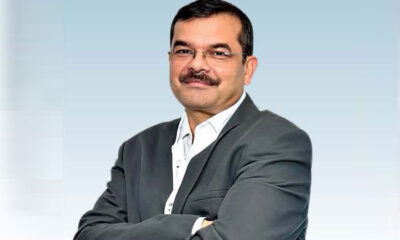
Prashant Verma, Co-Founder and India Head, Nanoprecise Data Services, helps us in amping up our understanding of how AI and IoT works for the benefit of industry stakeholders.
Tell us about the concept of Nanoprecise asset maintenance systems and products.
Nanoprecise is an AI and IoT-based predictive and prescriptive maintenance solutions provider that specialises in the implementation of Artificial Intelligence and IoT technology for predictive asset maintenance and reducing the carbon footprint of manufacturing plants. The integrated AI-based solution consists of a unique 6-in-1 IoT sensor and an AI-based automated analytics platform.
The wireless sensor offers real-time insights about the health and performance of industrial assets, by measuring 6 important parameters of vibration, acoustic, speed, magnetic flux, temperature and humidity. It works on Cellular networks (3G/4G/5G) using an e-sim to connect the machines to the internet. MachineDoctor is Atex and IECEx Zone 0 certified, enabling it to be used within explosive atmospheres/hazardous industrial environments, thereby bringing productivity and safety benefits to manufacturing operations. It also complies to international standards such as C1D2, IP68, FCC/ISED/CE/UKCA and RED. They are truly wireless, which also helps to avoid the hassles of complex wiring. It offers extensive coverage and provides a high level of security for communication.
The AI-based energy efficiency and health analytics platform analyses complex machine health data using a combination of Artificial Intelligence as well as physics-based models to enhance the life of machines. It helps users to track the performance as well as the energy consumption patterns of motor-driven equipment sets, to prevent unplanned downtime and reduce the carbon footprint. It detects patterns automatically by building a prediction model that identifies when a given equipment and its components are approaching the end of their remaining useful lives (RULs) or risk of failures.
The solution also helps to determine which assets are consuming higher energy and can help maintenance teams to mitigate any inefficiencies in their energy consumption. It not only allows them to reduce the carbon footprint but also enables to save energy costs for businesses, thereby allowing them to achieve their Net-Zero Goals.
The predictive maintenance framework of Nanoprecise brings the sensor data from over from the site to the corporate network, to help maximise the value of information. It allows maintenance teams to monitor every aspect of the manufacturing operation, leading to greater productivity and reduced emissions. It also helps improve the safety of the operators and operations, with real-time data and predicting issues arising from equipment anomalies/faults. In complicated manufacturing operations, this solution can efficiently monitor the health of critical assets, thereby enabling better operational oversight.
Which machines and equipment of the cement plants can your system monitor?
At Nanoprecise Sci Corp, our unwavering commitment to optimising and streamlining processes is reflected in our holistic approach to equipment maintenance. With our keen focus on delivering exceptional solutions, we consider each piece of equipment as a separate entity, ensuring that every aspect of the production process is meticulously monitored and maintained. We provide end-to-end automated solutions that cater to the unique needs of cement manufacturers, specifically targeting the health and performance of rotating machines such as mills and roller presses. Our comprehensive approach extends beyond these processes, as we cover a wide range of equipment in the clinker process, including crushers, silos, bucket elevators, vertical roll mills, fans, motors, and kilns, amongst others. The culmination of these efforts represents our unwavering dedication to providing unparalleled solutions that drive sustainable growth and progress.
Do you offer customisation in your system solutions?
Customers generally have needs and requirements that are unique, and a one-size-fits-all approach may not meet their specific requisite. Our solution can be customised to meet the individual requirements of the customers with a high level of cybersecurity.
Customisations can help to meet the diverse and evolving needs of customers, while enhancing the usability of the solution. For example, integrations with a range of vertical and horizontal stacks such as CMMS or EAM software such as IBM Maximo provides the meaningful insights and recommendations to the users on the shop floor. In addition, it can even monitor complicated machines like the roller press due to its ability to monitor low and ultra-low speed applications with ease. Moreover, the system can also be deployed on cloud or on-premises servers, thereby allowing for a simple plug and play, hassle-free deployment, without worrying about any extra IT infrastructure.
What is the skill set required for those who are operating your sensors and systems?
Our automated solutions cater to a diverse range of end users, who may possess varying levels of technical expertise, regardless of their department within the cement plant. The system generates real-time alerts that prompt the user to take necessary action, ensuring smooth and efficient operations. In addition, our state-of-the-art dashboard or visualisation layer enables end user monitoring experts to view data from multiple dimensions, delivering an intuitive and user-friendly interface. The seamless integration of these features enables streamlined and optimised operations within the cement plant.
How does data help you better your product?
Cement plants generate a large amount of data that can be leveraged for better operational performance. However, simply collecting data is not enough; it must be analysed and acted upon to deliver value.
We use AI + Physics based models to analyse these vast amounts of data and offer insights about the performance of machines and equipment sets. The accuracy of our models is an important factor that allows us to offer meaningful insights to our customers. With more data, the models can better capture the underlying patterns and relationships in the data, resulting in improved accuracy. However, it is important to note that simply having more data is not always sufficient; it must also be of high quality and relevance to the problem at hand.
Is there any innovation in the pipeline that the cement industry should look forward to?
We have a dedicated R&D department that focuses on developing innovative solutions to address the challenges facing the cement industry. Our team of experts works tirelessly to identify new technologies and processes that can improve efficiency, reduce costs, and enhance the productivity of our customers.
Our team is currently working on identifying ways and means to corelate the process and equipment parameters of the machines, to provide overall operational visibility. In addition, we are continuously working to improve the capabilities of our sensors to improve their operational efficiency.
With continuous commitment and dedication, we are able to stay at the forefront of innovation and deliver cutting-edge solutions that meet the evolving needs of our customers and the industry as a whole. The R&D department is a key part of our commitment to continuous improvement and ensuring that we remain a leader in the industry.
Do you have a specific solution that tracks energy consumption and carbon emission?
We recently launched our flagship product – NrgMonitor to help customers track their energy consumption reduce their emissions. NrgMonitor is an Energy Efficiency and Health Analytics Platform that helps manufacturers track their energy efficiency and carbon footprint, along with condition monitoring of their motor-driven equipment. It determines which assets are consuming higher energy and allows maintenance teams to mitigate any inefficiencies in their energy consumption, Moreover, it helps them pinpoint faults with the potential to cause downtime, and identifies when a given equipment is approaching the end of its Remaining Useful Life. It employs a data-driven approach to help operators achieve their Net-Zero goals while preventing unplanned downtime.
-Kanika Mathur






















 Concrete4 weeks ago
 Concrete3 weeks ago
 Concrete2 weeks ago
 Concrete4 weeks ago