Connect with us

Concrete

Our strategy is to establish reliable local partnerships

Published

on

Shares

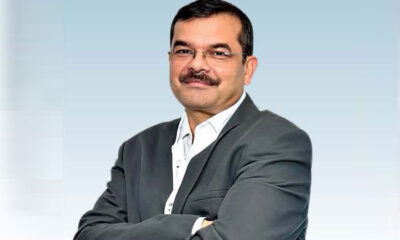
Jean-Jacques Bois, President, Nanolike, discusses how real-time data is reshaping cement delivery planning and fleet performance.

As cement producers look to extract efficiency gains beyond the plant gate, real-time visibility and data-driven logistics are becoming critical levers of competitiveness. In this interview with Jean-Jacques Bois, President, Nanolike, we discover how the company is helping cement brands optimise delivery planning by digitally connecting RMC silos, improving fleet utilisation and reducing overall logistics costs.

How does SiloConnect enable cement plants to optimise delivery planning and logistics in real time?
In simple terms, SiloConnect is a solution developed to help cement suppliers optimise their logistics by connecting RMC silos in real time, ensuring that the right cement is delivered at the right time and to the right location. The core objective is to provide real-time visibility of silo levels at RMC plants, allowing cement producers to better plan deliveries.
SiloConnect connects all the silos of RMC plants in real time and transmits this data remotely to the logistics teams of cement suppliers. With this information, they can decide when to dispatch trucks, how to prioritise customers, and how to optimise fleet utilisation. The biggest savings we see today are in logistics efficiency. Our customers are able to sell and ship more cement using the same fleet. This is achieved by increasing truck rotation, optimising delivery routes, and ultimately delivering the same volumes at a lower overall logistics cost.
Additionally, SiloConnect is designed as an open platform. It offers multiple connectors that allow data to be transmitted directly to third-party ERP systems. For example, it can integrate seamlessly with SAP or other major ERP platforms, enabling automatic order creation whenever replenishment is required.

How does your non-exclusive sensor design perform in the dusty, high-temperature, and harsh operating conditions typical of cement plants?
Harsh operating conditions such as high temperatures, heavy dust, extreme cold in some regions, and even heavy rainfall are all factored into the product design. These environmental challenges are considered from the very beginning of the development process.
Today, we have thousands of sensors operating reliably across a wide range of geographies, from northern Canada to Latin America, as well as in regions with heavy rainfall and extremely high temperatures, such as southern Europe. This extensive field experience demonstrates that, by design, the SiloConnect solution is highly robust and well-suited for demanding cement plant environments.

Have you initiated any pilot projects in India, and what outcomes do you expect from them?
We are at the very early stages of introducing SiloConnect in India. Recently, we installed our
first sensor at an RMC plant in collaboration with FDC Concrete, marking our initial entry into the Indian market.
In parallel, we are in discussions with a leading cement producer in India to potentially launch a pilot project within the next three months. The goal of these pilots is to demonstrate real-time visibility, logistics optimisation and measurable efficiency gains, paving the way for broader adoption across the industry.

What are your long-term plans and strategic approach for working with Indian cement manufacturers?
For India, our strategy is to establish strong and reliable local partnerships, which will allow us to scale the technology effectively. We believe that on-site service, local presence, and customer support are critical to delivering long-term value to cement producers.
Ideally, our plan is to establish an Indian entity within the next 24 months. This will enable us to serve customers more closely, provide faster support and contribute meaningfully to the digital transformation of logistics and supply chain management in the Indian cement industry.


Concrete

Shree Digvijay Cement Reports Annual And Quarterly Results

Annual revenue rises as EBITDA expands sequentially

Published

on

By

Shares


Shree Digvijay Cement Company Limited reported consolidated financial results for the quarter and year ended 31 March 2026, showing higher revenues and improved profitability. Revenue from operations for the quarter was Rs 2,084.7 mn, up from Rs 1,833.4 mn in the prior quarter, while revenue for the year was Rs 7,491.0 mn versus Rs 7,251.5 mn a year earlier. EBITDA for the quarter rose to Rs 251.0 mn from Rs 38.4 mn in the preceding quarter and reached Rs 746.1 mn for the year. Profit after tax for the year was Rs 250.0 mn.

Sales volume for the company s grinding and cement operations was zero point three six four mn t in the quarter and one point four zero three mn t for the year, while traded volumes were zero point zero three mn t in the quarter. EBITDA per tonne improved to Rs637 in the quarter and averaged Rs521 for the year. Under a brand usage, supply and distributorship agreement the company sold 29,928 t of Hi Bond cement, which generated Rs153.6 mn in revenue and Rs20.0 mn in EBITDA during the period.

The company said that it had commenced purchase and distribution of Hi Bond cement effective 19 March 2026 pursuant to the long term distributorship agreement, and that it had paid a refundable security deposit of Rs four bn under the same arrangement. Management indicated that the strategic integration with the Hi Bond network would support future growth and strengthen distribution capabilities. The board cited seasonally higher demand and improved pricing as factors behind the sequential improvement in realisations.

The board recommended a final dividend of Rs one per equity share subject to shareholder approval at the ensuing annual general meeting. The company reiterated focus on sustaining the positive momentum in revenue and margin metrics while integrating the new distributorship, and will continue to monitor market conditions and pricing trends to support further improvement in outcomes.

Continue Reading

Concrete

Cement Production Up Eight Point Six Per Cent To 491.4 mn t In FY26

Icra Sees Seven To Eight Per Cent Growth In FY27

Published

on

By

Shares


Icra reported that cement production volumes rose by eight point six per cent in the financial year 2026 to 491.4 million (mn) metric tonne (t). March output was 48.4 mn t, up four per cent year on year on a high base.

The agency projected that volumes are expected to grow by seven to eight per cent in the current financial year, supported by sustained demand from the housing and infrastructure sectors. Average cement prices were reported to have remained flat in March at Rs 340 per bag on a month on month basis, while prices for FY26 increased by two per cent to Rs 345 per bag year on year.

Among inputs, coal prices declined by 17 per cent year on year to USD 102 per t in April 2026 while petcoke prices rose sharply by 19 per cent month on month and 22 per cent year on year to around Rs 15,800 per t in April. Petcoke was higher by about five per cent year on year in FY26 and diesel prices were reported to have remained steady. Icra noted that coal, petcoke and diesel are expected to trend higher in FY27 and remain exposed to risks from the ongoing West Asia conflict.

The report emphasised that operating margins for Icra’s sample set of companies are estimated to moderate by 200 to 400 basis points (bps) in FY27 on account of a likely increase in input costs, with further downside risks should crude prices rise owing to geopolitical tensions. However, debt protection metrics are projected to remain comfortable and Icra maintained a stable outlook on the Indian cement sector.

Continue Reading

Concrete

UltraTech Cement FY26 PAT Crosses Rs 80 bn

Company reports record sales, profit and 200 MTPA capacity milestone

Published

on

By

Shares


UltraTech Cement reported record financial performance for Q4 and FY26, supported by strong volumes, higher profitability and improved cost efficiency. Consolidated net sales for Q4 FY26 rose 12 per cent year-on-year to Rs 254.67 billion, while PBIDT increased 20 per cent to Rs 56.88 billion. PAT, excluding exceptional items, grew 21 per cent to Rs 30.11 billion.

For FY26, consolidated net sales stood at Rs 873.84 billion, up 17 per cent from Rs 749.36 billion in FY25. PBIDT rose 32 per cent to Rs 175.98 billion, while PAT increased 36 per cent to Rs 83.05 billion, crossing the Rs 80 billion mark for the first time.

India grey cement volumes reached 42.41 million tonnes in Q4 FY26, up 9.3 per cent year-on-year, with capacity utilisation at 89 per cent. Full-year India grey cement volumes stood at 145 million tonnes. Energy costs declined 3 per cent, aided by a higher green power mix of 43 per cent in Q4.

The company’s domestic grey cement capacity has crossed 200 MTPA, reaching 200.1 MTPA, while global capacity stands at 205.5 MTPA. UltraTech also recommended a special dividend of Rs 2.40 billion per share value basis equivalent to Rs 240.

Continue Reading

Video Thumbnail
â–

    SIGN-UP FOR OUR GENERAL NEWSLETTER


    Trending News

    SUBSCRIBE TO THE NEWSLETTER


    Don't miss out on valuable insights and opportunities to connect with like minded professionals.


      This will close in 0 seconds