Connect with us

Concrete

More Oversight Makes Cement Plants Less Safe

Published

on

Shares

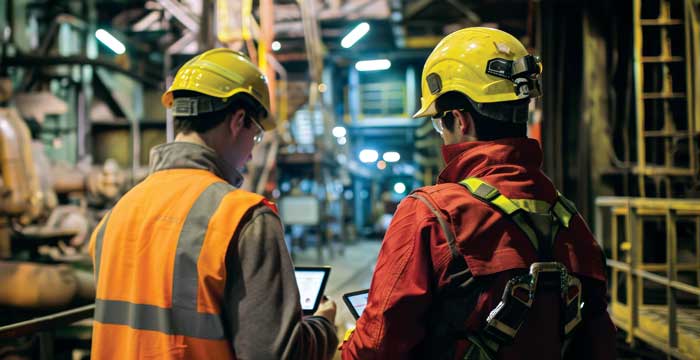
Dijam Panigrahi makes a counterintuitive but data-backed argument that routing every sensor alert through human approval does not make cement plants safer.

India’s cement industry has spent the last two years wiring kilns, mills and coolers with sensors and automated control systems, and the safety case for doing so is strong on paper. Contract workers still make up the majority of the industry’s workforce, and fatal accidents remain a recurring problem. The Indian National Cement Workers Federation has noted that around 83 per cent of workers in the sector hold precarious positions, a fact that resurfaced after an oxygen cylinder explosion killed three contract workers at a plant in Chhattisgarh.
Industry tallies compiled by IndustriALL found cement plants recorded at least seventeen accidents in one year with 21 workers killed, and ten accidents the following year with nine killed, most of them contract staff. Automated monitoring, in theory, closes that gap. A sensor never gets complacent and never skips a check because a shift is short staffed.
However, plants that respond by routing every anomaly reading to a person for approval are quietly building a system that fails the same way understaffing does. When operators receive dozens of flagged deviations a shift, most of them minor, they learn a simple lesson: the fastest way through the queue is to approve without reading closely. The safety benefit disappears, not because the technology failed, but because the humans supervising it adapted to the volume.

Why alerts get ignored
A study cited by manufacturing technology publisher Applied SmartFactory found more than 95 per cent of alarms in a semiconductor fab were low priority, and only about 4 per cent ever triggered an action, with just 100 out of 5,000 alarms accounting for 70 per cent of all alarm activity. The mechanism is the same whether the trigger is a vibration sensor or an AI model flagging a kiln temperature swing. Once the ratio of noise to signal crosses a threshold, workers stop treating the system as a decision aid and start treating it as a formality to clear.
The scale of AI deployment underway makes this more than a theoretical risk. Stanford’s 2026 AI Index Report found organisational adoption of AI has reached 88 per cent, even as documented AI incidents rose to 362 in 2025, up sharply from 233 the year before, according to analysis of the report. The Index also found only about a third of organisations have adopted a formal governance framework, with NIST’s AI Risk Management Framework cited by 33 per cent and ISO/IEC 42001 cited by 36 per cent.
Most manufacturers are deploying monitoring systems faster than they are building the judgment for when a flagged event actually needs a person’s attention. In India, plants run by JK Cement have begun pairing CCTV feeds with AI to define safe zones around heavy machinery, a promising direction that still depends on operators trusting and reading the alerts the system generates.

A three-tier model for cement plant
The fix is not less monitoring or more monitoring. It is classifying decisions by risk and by novelty, rather than treating human oversight as a single switch that is either on or off. A workable model sorts factory floor events into three tiers.
The first tier, proceed, covers deviations the plant has seen before that fall within known safe bounds, such as a kiln feed rate adjustment within an established range. These should run without a stop for approval, because routing them to a person only trains that person to click through.
The second tier, pause, covers events that are unusual but not yet dangerous, such as a vibration reading trending toward a limit or a fuel blend shifting outside its typical mix. These warrant a brief human check before the system proceeds, giving an operator the chance to apply judgment the model does not yet have.
The third tier, escalate, covers events that are both high risk and unfamiliar, such as a pressure reading combined with a temperature spike that has no close precedent in the plant’s history. These should stop the process entirely and require a decision from someone with the authority to shut down a line.

Who should set the threshold
Where these tiers get drawn matters as much as the framework itself. Threshold setting is frequently handed to the vendor supplying the monitoring software or to a plant’s IT department, both of which understand the technology but not the specific tolerances of a given kiln, mill or line. Operations staff, who know that a particular grinding unit runs hotter under monsoon humidity or that a calciner behaves differently after a refractory reline, are better positioned to calibrate what counts as routine on their own equipment.
Handing threshold ownership to operations does not remove IT or vendors from the process, but it puts the calibration decision closest to the people who live with its consequences on the floor.

Signals that oversight is actually working
A few concrete indicators reveal whether a monitoring setup is functioning as intended or simply providing the appearance of safety. The escalation rate over time is the first: a rate that stays flat or climbs slowly as operations mature is healthy, while one that spikes and then falls sharply often means operators have started overriding the system rather than engaging with it. Time to resolution is the second: escalations that take progressively longer to close suggest fatigue or confusion about ownership, not diligence. The third, and most telling, is how accurate the system’s own uncertainty estimates turn out to be, meaning whether events flagged as high risk actually correlated with real incidents, and whether events waved through stayed incident free. A system whose escalations do not track with actual outcomes trains operators toward the same complacency that unmonitored equipment produces.
None of this argues against automation in Indian cement manufacturing, where a labor structure built on contract work and a track record of serious accidents make better monitoring an urgent need. It argues for treating human oversight as a design problem with three distinct settings, rather than a single
dial turned up whenever a plant wants to look safer on paper.

About the author:
Dijam Panigrahi, Co-founder and COO, GridRaster, is a spatial computing platform for industrial enterprises and manufacturers.


Concrete

Cement Demand Strong As Prices Remain Stable

Volumes rise amid steady trade pricing and higher fuel costs

Published

on

By

Shares


Channel checks show cement demand remained healthy with volume growth estimated at six to seven per cent in July and August 2026. Trade prices were broadly stable while non-trade prices were volatile in the East, and attempted hikes were rolled back amid higher competition. Average fuel costs rose in August by five to nine per cent, lifting spot petcoke and coal prices.

All-India trade price remained flat month on month in August as increased rake supplies and competition offset early increases. Monsoon related demand softness limited sustained hikes and dealers indicated further attempts would depend on demand trends. Combined July and August volumes were estimated at six to seven per cent, supported by infrastructure spending while retail housing remained weather sensitive.

In the South, a Rs20 a bag hike in August did not hold and prices stayed flat month on month, while dealers planned Rs25 to Rs30 a bag from fifth September 2026 but with uncertain sustainability. In the East, trade prices were unchanged and non-trade prices corrected by Rs15 to Rs20 a bag amid weak construction in West Bengal, Jharkhand and Odisha.

The West remained most resilient on pricing and demand despite attempted hikes of Rs10 to Rs15 a bag, and Gujarat saw relatively better volumes in August. North and Central markets kept prices range bound as players focused on ramping up utilisation of new capacity, with schemes of up to Rs2 to Rs3 a bag used to meet month-end targets. Overall construction activity improved as the monsoon eased, aiding a pickup in several states.

Fuel cost pressures persisted, with South African coal at USD114 a t and petcoke around USD146 to USD147 a t in August, while spot imported petcoke and coal were higher. Imported coal consumption cost stood at Rs2.07 per Kcal and petcoke at USD2.11 per Kcal. Analysts estimate the all-India trade spread to decline by Rs90 to Rs100 a t quarter on quarter, weighing on near-term profitability and they prefer UltraTech Cement (UTCEM), JK Cement (JKCE) and Grasim Industries (GRASIM).

Continue Reading

Concrete

Aditya Birla Group Launches Ultravolt Wires And Cables Business

UltraTech extends building solutions into electrical wiring

Published

on

By

Shares


Aditya Birla Group has entered the wires and cables market through Ultravolt, extending UltraTech’s move from building materials into building solutions. The shift builds on UltraTech Building Solutions, a multi-category platform that already addresses customers across different stages of construction and extends beyond cement into ready-mix concrete, waterproofing, tile-fixing solutions and mortars.

The company intends to enter with scale, seeking presence across 100,000 retailers in more than 500 districts and availability through 5,000 plus UltraTech Building Solutions (UBS) outlets. The portfolio spans house wires, light-duty cables, communication cables, solar cables and low-tension and industrial cables to meet changing electrical requirements driven by solar installations, communications infrastructure and industrial automation.

An upstream advantage begins in the Group’s metals ecosystem, with conductor quality central to product performance. Ultravolt wires will use TruePure Copper, defined as 99.97 per cent pure electrolytic-grade annealed copper sourced from Hindalco, providing greater control over raw material quality and provenance and supporting electrical performance, safety and durability.

The business also targets the electrician community as a decisive influence on product choice and installation quality. The Wires and Cables Business has launched a Skill India Electrician Training Programme in partnership with the Electronics Sector Skills Council of India that aims to train and certify more than 40,000 electricians across India over the next year, focusing on safe wiring practices, correct installation and advanced wire technologies and offering Skill India-aligned certification and identification credentials.

The move combines market opportunity, UltraTech’s construction ecosystem, manufacturing capability and Group-level resources. A large Gujarat facility, advanced machinery and in-house testing and research and development underpin the product strategy, which is designed for both traditional and emerging applications. The ambition is to build a scaled national brand and become one of the top two players within five years, making the Group an integral participant in modern building infrastructure.

Continue Reading

Concrete

Ramco Cements Mine Restoration Gets Global Biodiversity Certification

Pandalgudi mine restoration receives Advanced Certification from TGBS

Published

on

By

Shares


The ecological restoration of Ramco Cements’ limestone mine at Pandalgudi in Virudhunagar district, Tamil Nadu, has received international recognition with the site being awarded Advanced Certification by The Global Biodiversity Standard (TGBS). The recognition makes Pandalgudi the first site in Peninsular India to receive the certification and places it among globally recognised biodiversity restoration projects.
TGBS, recognised by the International Union for Conservation of Nature (IUCN) and the Convention on Biological Diversity (CBD), assesses biodiversity restoration projects based on scientific evaluation and their contribution to ecosystem recovery and local communities. The certification is supported by more than 250 scientists and academics worldwide.
Spread across over 500 acres of worked-out mine areas, the restoration project includes a certified 234-acre site. Initiated in 2018 with technical support from Auroville Botanical Gardens, the project began plantation activities in 2019 and is expected to be completed by 2027. More than 430,000 native trees and shrubs belonging to 150 ecologically significant species have been planted at the site.
The restored mine, which was once a barren landscape with limited biodiversity, has recorded over 72 bird species and 53 butterfly species. The project has also captured an estimated 10,000 tonnes of carbon dioxide over the past seven years, supporting broader sustainability and carbon reduction goals.
Opened officially in 2022, the site has attracted more than 13,000 visitors through educational programmes for schools, colleges and training institutions. The restoration initiative has also contributed to the development of the Rajapalayam Masterplan and supported Tamil Nadu’s carbon neutrality ambitions.
Commenting on the achievement, Mr P. R. Venketrama Raja, Chairman, Ramco Group, said the company aims for the Pandalgudi restoration project to serve as an inspiration and blueprint for the mining industry in India. Dr David Bartholomew, CEO, The Global Biodiversity Standard, highlighted the project’s long-term commitment to biodiversity recovery and independent assessment of ecological outcomes.
The certification reinforces Ramco Cements’ focus on sustainable mining practices and ecological restoration as part of its commitment towards a carbon-neutral future.

Continue Reading

Video Thumbnail

    SIGN-UP FOR OUR GENERAL NEWSLETTER

    Trending News

    SUBSCRIBE TO THE NEWSLETTER


    Don't miss out on valuable insights and opportunities to connect with like minded professionals.


      This will close in 0 seconds