From the increased use of modern techniques of control to advanced software solutions, technology is accelerating cement processes in myriad ways. ICR looks at the economic impact of AI and automation on the cement sector.
The history of cement production dates back to 12,000 years ago. The earliest archaeological discovery of a consolidated whitewashed floor made from burned limestone and clay is found in modern-day Turkey. Around 800 BC, the Phoenicians had the knowledge that a mixture of burnt lime and volcanic ash, today called ‘pozzolana’, could be used to produce hydraulic lime, which was not only stronger than anything previously used, but also hardened under water. The Romans perfected it later with their process called, ‘opus caementicium,’ a type of concrete made of lime with aggregates of sand and crushed rock. No wonder the Colosseum and Pantheon in Rome, and the Hagia Sophia in Istanbul, all stand perfectly fine today.
But modern production of cement is million times bigger in scale and must be controlled to derive the benefits of cost, throughput and quality, sometimes several objective functions must be optimised to give the overall gain in terms of profit maximisation. The technology itself progressed in leaps and bounds to make allowance for both throughput increase and cost while the quality improved from one milestone to the next. The first cement standard for Portland cement was approved in Germany in 1878, defining the first test methods and minimum properties, with many other countries following suit.
Cement production and applications surged globally at the turn of the century. Since the 1900s, rotary kilns have replaced the original vertical shaft kilns, as they use radiative heat transfer, more efficient at higher temperatures. achieving a uniform clinkering temperature and producing stronger cement. Gypsum is now also added to the resulting mixture to control setting and ball mills are used to grind clinkers.
Other developments in the last century include calcium aluminate cements for better sulphate resistance, the blending of Rosendale (a natural hydraulic cement produced in New York) and Portland cements to make a durable and fast-setting cement in the USA, and the increased usage of cementitious materials to store nuclear waste. New technologies and innovations are constantly emerging to improve the sustainability, strength and applications of cement and concrete. Some advanced products incorporate fibres and special aggregates to create roof tiles and countertops, for example, whilst offsite manufacture is also gaining prominence with the rise of digitalisation and AI, which could reduce waste and improve efficiency and on-site working conditions. Cements and concretes are also being developed, which can absorb CO2 over their lifetimes, reducing the carbon footprint of the building material.
The focus of the current times is manifold – on the one hand cement process and technology experts have the job cut out to create sustainable solutions and on the other, the process control techniques have improved to embrace new digitisation techniques to better improve the following processes:
- Quarrying and preparation
- Close circuit blending systems that create the ideally suited raw mix
- Clinker kilning
- Cement grinding
The systems of the cement production control these operations to produce maximal quantity of the cement with prescribed quality and minimal cost. The quality also depends on many variables. The appropriate rate of the basic components determining the setting time, strength, heat of hydration, expansion, etc. is the most important. The free lime content (FLC) also influences the quality similarly to the size distribution and the relative surface area. A great many open and closed loop controls can be found in the cement production, however, the proper control of the operations-triplet proportioning-burning-grinding can ensure to reach the overall control aim, the other controls are auxiliary ones. The synthesis of this would aim at thermal efficiency parameters with use of different fuel mixes, alternate fuels included and the raw mix must be so blended such that a range of objective functions can be met that include Lumping, Burnability, High Heat of Hydration, Fast Setting, One Day, 3 Day, 7 Day, 28 Day Strength, etc.
The burnability parameters include lime saturation factor, silica ratio, af ratio, content of coarse quartz, content of coarse calcite, while the compositional parameters like content of C3S, MgO, C3A and presence of alkali. Silica ratio and other aspects could together influence the attainment of the quality objectives like fast setting or efficiency objectives like high heat of hydration. This is where control systems step in to play a decisive role to make adjustments in a number of parameters, while the production process remains continuous. Achieving stability of the process, where coal feed, kiln feed, raw mix, all have a myriad of parameters to be weighed against the objectives of productivity, efficiency and quality.
The AI to Z of Technology
Artificial intelligence (AI) today provides valuable decision support and control techniques in these uncertain environments. Two common techniques used in this field are artificial neural networks and fuzzy logic. Fuzzy logic is especially useful for processes that are difficult to control by conventional or discrete methods due to the lack of knowledge of quantitative relations between the inputs and outputs. Controls based on fuzzy logic employ a close-to-human language to describe the input-output relationships of the controlled process. The controller converts an expert knowledge-based control strategy into an automatic control strategy imposed on the process. Most control environments have steadily moved towards adoption of AI and fuzzy logic techniques as dynamic environments are impossible to model with any other tools and techniques unless we want to avoid the inter-play and friction of some of the control parameters.
Use of modern techniques of control have shown productivity gains (t/h) of 3 per cent and energy gains (Kcal/t) of 5 per cent compared to expert operators using controls. In cement milling, the productivity increased by 3.1 per cent and the energy savings were 2.9 per cent. In clinkerisation, there were increases from 1 to 3 per cent in the daily production, reductions from 2 to 4 per cent in energy consumption, reductions from 12 to 16 per cent in the variability of clinker quality requirements, and reduction of up to 10 per cent in the variability of the lifetime of the liner. In other clinker kilns, there were from 4 to 5 per cent reduction in fuel consumption, from 80 to 90 per cent decrease in variability and increase from 7 to 8 per cent in productivity.
Now the focus in controls have shifted to use of algorithms and software that would step in to make allowance on the selection of specific objective functions like quantity over efficiency or efficiency over quality or vice versa, as the optimisation objectives could vary. The forward progress also shows far greater focus on use of alternate fuels that actually changes the dynamics by a considerable extent. For CO2 abatement measures and carbon sequestration processes, the use of controls are moving to the next level of automation as more complexity is getting introduced. Electronics and electrical systems are now inseparable from the field of software and algorithms that embrace AI to create the right blend of self-controls and automation that limits human interventions as the complexities of the dynamic environment makes it impossible for humans to interact any more.
Software solutions together with drone systems and automation allow the process to be self-serving in delivering multi-objectives within the framework of optimisation; the caution however is that the final decision on the choices must include proper testing (in a test environment) before selection of the type of the AI based system as the number of options are on the increase and competing systems all vouch for the similar end-results.
Software progress should not be limited to cement production systems alone, but cement distribution and logistics as well. With tracking and tracing systems in place it is easy to match planning with execution where one can make a simulation of movements of cement deliveries across the demands of micro, mini and regional markets to arrive at the best overall distribution to attain the goals of sales and profitability; this need not be based on rule of thumb which has nothing to do with the realities on the ground where the situation is far too dynamic throughout the day. Merging planning algorithms with track and trace systems has everything ready to be used, only the lack of intent seems ominous for some. The leaders however have progressed considerably in this regard.
-Procyon Mukherjee





















 Concrete3 weeks ago
 Concrete3 weeks ago
 Concrete4 weeks ago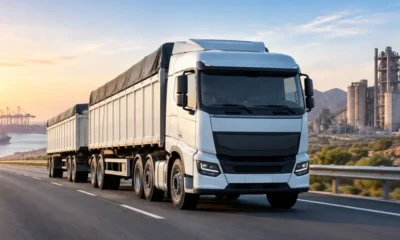
 Concrete3 weeks ago