From LC3 and AI-driven kilns to RDF gasification, ICR explores the full breadth of technological innovation reshaping India’s cement industry. Low-carbon materials, digital manufacturing, alternative fuels and breakthrough concrete science are collectively advancing the sector’s transition from high-emission commodity producer toward a net-zero, infrastructure-ready future.
Innovation has become the defining force shaping the future of the cement industry. As the world’s second-largest cement producer, India is witnessing rising demand driven by infrastructure development, urbanisation, affordable housing, and industrial growth. At the same time, the International Energy Agency (IEA) estimates that cement production accounts for nearly 7 per cent to 8 per cent of global CO2 emissions, with clinker manufacturing contributing the largest share, making innovation an operational necessity. The industry is therefore investing heavily in low-carbon cement technologies, artificial intelligence (AI), digital manufacturing, alternative fuels, renewable energy and carbon capture, utilisation and storage (CCUS). Innovations such as limestone calcined
clay cement (LC3), supplementary cementitious materials (SCMs), AI-driven process optimisation and automated quality control are enabling manufacturers to produce more sustainable, efficient, and high-performance cement.
According to the Global Cement and Concrete Association (GCCA), achieving net-zero emissions will require a combination of material innovation, digital transformation, circular economy practices and collaborative research, making innovation central to the industry’s long-term competitiveness and India’s sustainable infrastructure growth.
Next-generation cement
The future of cement lies in reducing its dependence on clinker-the most carbon-intensive component of cement-through the adoption of low-carbon materials and advanced blended cement technologies. Products such as Portland Pozzolana Cement (PPC), Portland Slag Cement (PSC), Portland Composite Cement (PCC), and LC3 are driving this shift by replacing clinker with SCMs like fly ash, GGBS, calcined clay and limestone.
According to GCCA, SCMs can replace 30 to 50 per cent of clinker, with some applications exceeding 70 per cent, significantly reducing carbon emissions without compromising strength or durability. These blended cements also improve concrete performance by enhancing durability, reducing permeability, and increasing resistance to chloride and sulphate attacks. As the availability of traditional SCMs declines with the decarbonisation of the power and steel sectors, the industry is increasingly exploring alternative materials and next-generation cement formulations to support long-term sustainability.
Shrivats Singhania, Deputy Managing Director, JK Lakshmi Cement, says, “Innovation is enabling the cement industry to address one of its most important challenges – producing more with fewer resources and lower emissions. Across the value chain, manufacturers are deploying technologies that simultaneously improve operational efficiency and advance sustainability goals. For example, greater adoption of alternative fuels, waste heat recovery systems, renewable energy, and digital process controls is helping reduce energy consumption and optimise resource utilisation. Data-driven manufacturing allows plants to monitor operations in real time, improve equipment reliability, minimise downtime, and reduce wastage, resulting in both environmental and economic benefits.”
“Meaningful progress is also being achieved through material innovation. The growing use of blended cements and next-generation products such as LC3 reduces dependence on clinker, the most carbon-intensive component of cement production, thereby lowering embodied carbon without compromising performance,” he adds.
Among emerging technologies, LC3 has gained global recognition as one of the most promising low-carbon cement innovations. In a standard formulation, LC3 comprises approximately 50 per cent clinker, 30 per cent calcined clay, 15 per cent limestone, and 5 per cent gypsum. LC3 can reduce CO2 emissions by up to 40 per cent compared with Ordinary Portland Cement (OPC) while delivering comparable strength and enhanced durability. Its reliance on abundant, locally available raw materials, rather than industrial by-products, makes it highly scalable and well suited to countries like India.
According to the LC3 Project, nearly 75 per cent of cement plants worldwide could adopt LC3 using existing manufacturing infrastructure, potentially reducing global CO2 emissions by over 400 million tonnes annually, if adopted at scale globally. India’s introduction of BIS standard IS 18189:2023 for LC3, coupled with its adoption in projects such as the Noida International Airport, marks a step toward commercial implementation. As demand for sustainable construction grows, LC3 is poised to become a cornerstone of low-carbon infrastructure development.
Making of a smart cement plant
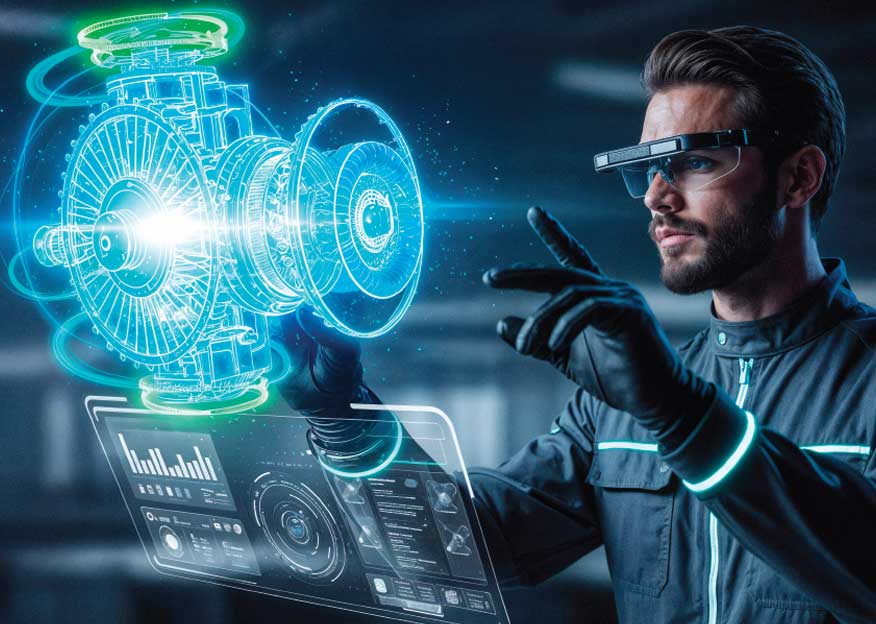
The modern cement plant is rapidly evolving into a digitally connected, AI-enabled manufacturing ecosystem where data drives every aspect of production – from raw material proportioning and kiln operations to quality control, maintenance and energy management.
According to IEA, digital technologies can improve energy efficiency in heavy industries by 10 per cent to 20 per cent. Advanced process control systems in cement plants have demonstrated the potential to reduce thermal energy consumption by 3 to 5 per cent, lower electricity consumption by 2 to 10 per cent, and improve kiln throughput and clinker quality. AI-powered predictive maintenance further helps reduce unplanned equipment downtime by 30 to 50 per cent and extend equipment life by continuously analysing sensor data to detect failures before
they occur.
Jignesh Kundaria, Director and CEO, Fornnax Technology, says, “AFR is no longer viewed solely as a sustainability initiative. It has become a strategic business priority for cement manufacturers. Rising fuel costs, stricter environmental regulations, and growing pressure to reduce dependence on conventional fuels are accelerating AFR adoption across the industry. However, the success of an AFR project depends heavily on how effectively waste is processed before it reaches the kiln. Poor preprocessing can negatively impact kiln performance, fuel efficiency, and emission control systems. Inconsistent fuel
quality often forces operators to make frequent adjustments, reducing throughput and increasing energy consumption.”
Dr Kapil Kukreja, General Manager, NCCBM, says, “Variations in composition, particle size, and calorific value can lead to inconsistent combustion behaviour resulting in fluctuating heat release patterns. These fluctuations can affect process stability, temperature control and clinker quality. Additionally, incomplete combustion of RDF particles can result in increased emissions, higher unburnt carbon content, and operational difficulties within the calciner system. Higher ash and inert content of RDF can dilute the clinker quality and reduce calciner efficiency.”
Meanwhile, digital twins are allowing manufacturers to simulate entire production processes, optimise kiln performance, evaluate process changes virtually, and reduce operational risks before implementation. Automated Laboratory Information Management Systems (LIMS), coupled with online and offline XRF and XRD analysers, are delivering real-time monitoring of clinker chemistry and mineralogy, ensuring tighter quality control, lower clinker variability and more consistent cement performance.
Dr Prateek Sharma, Group Project Manager, NCCBM, explains, “Chlorides and alkalis present in RDF can lead to excess buildup and blockages in the kiln and calciner increasing the downtime of cement plants. Hence, issues with direct utilisation of RDF establishes the need for fuel conditioning and alternative utilisation approaches that can maximise the energy potential of RDF while minimising adverse impacts on plant operation. RDF gasification emerges as an efficient tool for converting solid RDF into syngas which can be used as a fuel with improved characteristics.”
Digitalisation and intelligent manufacturing will be among the most critical enablers of achieving the cement industry’s net-zero ambitions by improving operational efficiency while simultaneously reducing energy consumption and greenhouse gas emissions, confirms a GCCA report.
From research to reality
While the cement industry has made remarkable progress in developing breakthrough technologies, the transition from laboratory research to large-scale commercial deployment remains one of its greatest challenges. The successful adoption of innovations such as LC3), CCUS, advanced alternative fuels, green hydrogen and novel SCMs depend not only on technical feasibility but also on economic viability, regulatory support, raw material availability, and market acceptance.
Veerendra Jamdade, CEO and Founder, Vritti Solutions, states, “The cement industry has a market that is constantly in flux, due to factors such as infrastructure investment, seasonality of demand, fuel costs, building activity by region and general economic cycles; therefore, having accurate forecasts is very important in this type of market. Traditional ERP systems are primarily data repositories with limited analytic functionality; thus, they capture transactional and operational information but generally lack advanced analytical capabilities for converting captured data into actionable information. This
affects everything from demand forecasting and inventory planning through procurement and production scheduling.”
According to IEA, technologies that are still at the demonstration or early commercial stage-including CCUS and next-generation low-carbon binders-are expected to contribute nearly 40 per cent of the emissions reductions required for the global cement sector to achieve net-zero emissions by 2050, underscoring the importance of accelerating their scale-up. This requires robust R&D ecosystems, stronger collaboration between cement manufacturers, research institutions, technology providers,
equipment suppliers, and policymakers, as well as supportive standards and financial incentives to reduce investment risks.
Ashutosh Pandita, Director – Head, Cement Business, TKIL Industries, elaborates, “The cement industry’s most transformative innovation today is the increased use of alternative fuels and raw materials (AFR), supported by advanced feeding systems and process technologies that are driving both operational efficiency and decarbonisation. Looking ahead, oxyfuel combustion and carbon capture technologies remain underappreciated but hold immense potential for enabling deep reductions in carbon emissions and accelerating the industry’s journey towards net-zero production. By 2030, cement manufacturing is expected to become significantly more sustainable, energy-efficient, and technology-driven, with widespread adoption of AFR, low-clinker cement technologies, greater digitalisation and automation, and the early commercial deployment of carbon capture solutions, all supported by stronger industry collaboration and a shared commitment to achieving long-term sustainability goals.”
In India, organisations such as the National Council for Cement and Building Materials (NCCBM), leading academic institutions, and major cement companies are working together to develop and validate emerging technologies, while the introduction of standards such as IS 18189:2023 for Limestone Calcined Clay Cement (LC3) marks a significant step towards commercial adoption. However, challenges such as high capital investment, long validation cycles, limited infrastructure for technologies like CCUS, fluctuating availability of alternative raw materials, and customer acceptance continue to slow implementation. Bridging the gap between research and commercial reality will therefore require sustained investment in innovation, knowledge-sharing, pilot projects, policy support, and industry-wide collaboration to ensure that promising technologies evolve into scalable, economically viable solutions capable of transforming the future of cement manufacturing.
Creating a green future
Clinker production will increasingly rely on low-carbon technologies such as LC3, high-volume SCMs, AFR, renewable energy, waste heat recovery, and eventually CCUS, enabling manufacturers to significantly reduce their environmental footprint.
Achieving net-zero concrete by 2050 will require a combination of clinker substitution (around 37 per cent of cumulative CO2 reductions), carbon capture technologies (approximately 36 per cent), and improvements in thermal efficiency, renewable energy, and circular economy practices.
Industry Expert SA Khadilkar comments, “Customer requirements are a key driver of innovation in the cement industry, influencing product development, process improvements, sustainability initiatives, and digital solutions. Innovation is most effective when it addresses real market needs, particularly in areas such as performance, durability, and application-specific requirements. Around a decade ago, ACC and Ambuja Cements (now Adani Cement) recognised this shift and introduced performance-oriented blended cement brands with enhanced durability, reduced water penetration, and OPC-like properties. Their success encouraged other major cement manufacturers to develop specialised cement brands with unique performance characteristics, demonstrating how product innovation has evolved to meet changing customer expectations.”
“Ultimately, customer expectations have transformed innovation from a technology-driven exercise into a market-driven strategy, ensuring that new developments create measurable value across the construction value chain,” he adds.
India is expected to add nearly 500 million square metres of urban built-up area by 2030, driving sustained demand for greener, more durable, and higher-performing construction materials, according to NITI Aayog. Meeting this demand will require cement manufacturers to evolve from commodity producers into integrated providers of sustainable building solutions, supported by data-driven manufacturing, collaborative R&D, customer-centric product innovation, and circular resource management. The cement plant of tomorrow will therefore be defined not only by its production capacity but also by its ability to manufacture smarter, cleaner, and more sustainable construction materials that support India’s ambitious infrastructure and climate goals.
Conclusion
The path ahead is clear in its direction, if not yet in its pace. India’s position as the world’s second-largest cement producer, combined with its infrastructure ambitions and its 2070 net-zero commitment, makes this transition both urgent
and consequential.
What this article has made evident is that no single technology will carry the industry to net zero. LC3 addresses clinker dependency. Digital manufacturing addresses efficiency and waste. Alternative fuels address fossil fuel dependence. CCUS addresses the residual process emissions that no other lever can reach. Each is necessary. None is sufficient alone. The industry’s task is to advance all of them simultaneously, at a pace that matches the scale of the challenge.
The plants that will build tomorrow’s highways, airports and homes will need to do so with a fraction of today’s carbon footprint.
Innovations in cement and concrete
- Carbon mineralisation in concrete: A 2026 peer-reviewed study in the Journal of the American Ceramic Society by MIT’s Masic Lab and CarbonCure Technologies used in-situ Raman microspectroscopy to show that CO2 injected during cement mixing triggers a three-stage hydration sequence, producing a more uniform microstructure with approximately 13 per cent higher early strength while permanently sequestering carbon within the concrete matrix.
Source: www.carboncure.com
- Zero-clinker geopolymer blocks: Theseus Development manufactures geopolymer blocks using upcycled aluminosilicate waste from quarries and mines through an inorganic polymerisation process, achieving up to 80 per cent lower embodied carbon compared to conventional cement blocks. An interlocking block design reduces mortar requirements, lowering construction costs while eliminating clinker entirely from the production process.
Source: www.rmi.org
- 3D-printed basalt fibre grids: Austrian startup Fiber Elements, founded in 2023, uses robotically wound continuous basalt fibres arranged into three-dimensional reinforcement grids that replace steel in concrete structures. The resulting composites are three times stronger than steel, weigh two-thirds less, resist corrosion entirely and reduce CO2 emissions by up to 70 per cent compared to conventional steel-reinforced concrete.
Source: www.eitmanufacturing.eu
- Self-healing concrete: Dutch company Basilisk leads commercial deployment of bacteria-based self-healing concrete, with licensed production now active in Japan and a highway viaduct pilot planned for 2026. Dormant Bacillus bacteria embedded in the mix activate upon crack formation, metabolising nutrients to precipitate calcium carbonate that autonomously seals fractures. The global self-healing concrete market is projected to grow significantly through 2031, driven by green building mandates and infrastructure agencies targeting lower maintenance costs and extended structural life.
Sources: www.thelegaljournalontechnology.com and www.mordorintelligence.com
















 Concrete4 weeks ago
 Concrete3 weeks ago
 Concrete2 weeks ago
 Concrete4 weeks ago