Economy & Market
Cement Outlook 2012: Not as bleak as it looks

Published
15 years agoon
By
admin
Every other news that pertains to the cement sector presents a gloomy picture and leading the posse are research analysts who are not very optimistic of cement stocks with the exception of a few leading companies that have consistently performed well even under duress. Indian Cement Review checks out whether it is time to call the doctor….The Indian cement industry had witnessed a dream run in the recent past. Consumption of cement in the country had grown at a CAGR of 9.9 per cent during the period FY 06-10. The cement demand growth had surpassed the economic growth rate during the same period. In FY10, cement demand grew at 11.1 per cent recording a multiplier of 1.4 times with the economic growth rate. However, in FY11, cement demand grew at merely 5.1 per cent on YoY basis. The multiplier of cement demand growth to the GDP growth declined below one. Construction activities remained subdued in the last fiscal owing to various reasons. Prolonged monsoon, heavy winter, delay in execution of infrastructural projects due to environmental hurdles and end of construction activities related to Commonwealth Games all together led to lower cement demand growth in FY11. Slowdown in the housing sector due to rising interest rates also impacted cement off take.The long-term cement demand in the country is expected to remain intactGoing forward, cement demand will largely be driven by the increased focus of the government on the infrastructure development and promotion of low-cost affordable housing in the country. The real estate sector continues to dominate as the largest cement-consuming sector in the country. Decent economic growth, rising income levels of a growing middle class, concept of nuclear families catching pace, tax incentives and modern attitudes towards home ownership (the average age of a new homeowner has declined to 32 years compared with 45 years a decade ago) will continue to boost the housing demand and real estate related to the retail segment. The measures announced in the recent budget also indicate continued support of the government to the affordable housing segment which will help the real estate sector to continue its growth momentum and in turn cement demand. CARE Research estimates that in the next four to five years, cement demand to the tune of about 250-260 mn tonne is expected to emanate from the construction of new dwellings in the urban region alone.Infrastructure sector will need more than 600 million tonne of cement during the Twelfth Five Year PlanCement demand is expected to pick up as government expenditure on infrastructure projects catches momentum. In the recent budget, GoI has taken various initiatives to attract foreign funds towards the infrastructural sector. Such measures will help in providing the much-needed financial support to the infrastructural projects and in turn enable faster execution which will boost the cement demand. GoI has envisaged an investment of more than Rs 4000 bn for infrastructure development under the Twelfth Five Year Plan. This will augur well for the cement industry, currently almost 25 per cent of the total cement consumption in the country is contributed by the infrastructure sector. Based on the cement component in the civil construction, CARE Research has estimated that the investments planned under various sub-sectors of the infrastructure sector during the Twelfth Five Year Plan will derive a cement demand of more than 600 million tonne. The share of the infrastructure sector in the total cement consumption is estimated to reach a level of 35 per cent by the end of FY17. Cement demand which is expected to emanate on the back of the planned investments under different infrastructure sub-segments in the Twelfth five year plan is shown in the following chart: Cement demand is expected to grow at a CAGR of 9.3 per cent during the period FY 12-14. The following table gives the overall cement demand-supply situation over next three years:Capacity utilisation rate to remain in the range of 74-76 per cent during FY 12-14In past few years, the gap between cement demand and capacity has been widening due to substantial capacity addition. The cement industry witnessed a capacity addition of about 142.2 million tonne during the period of FY05-11. Out of this, about 67 million tonne of capacity was added in last two fiscals which is almost 23 per cent of industry’s total capacity as on March 31, 2011. As a result, the overall utilisation rate of the industry dropped from the peak of 93 per cent in FY07 to 75 per cent in FY11.Cement industry is expected to add capacity of about 86 million tonne in the period FY 12-14. The industry will continue to face a surplus situation. The operating rate of the industry will remain in the narrow range of 74 – 76 per cent during FY 12-14.Even though the Break-even Cushion is at comfortable level, prices to remain under pressureEven with the decline in the operating rate to a level below 80 per cent, the cement industry has been able to hold the prices on the back of high break-even cushion value.Break-even CushionBreak-even cushion is defined as the ratio of overall capacity utilisation rate of the industry to the utilisation rate at the break-even point in a particular year.Although the break-even cushion value has declined in the past three years, it is still at the comfortable level of two times. With this, cement industry is in better position to avoid substantial price cuts. However, CARE Research expects cement prices to remain under pressure in the current fiscal.(Revati Kasture, Head – Industry Research & Chaitanya Raut, Sr. Manager CARE Ratings)Operating rates will be challenged, profitability headed towards decadal lowCRISIL Research expects cement profitability to decline to its lowest level in the past 10 years by 2012-13. A huge demand-supply imbalance, fueled by supply glut, will drive cement profitability down. The supply glut will slacken cement manufacturers’ operating rates, restricting their ability to pass on a sharp rise in power and fuel costs to consumers.Over the next two years, while cement capacities rise by 60 million tonne per annum (mtpa), demand will increase by a mere 30 mtpa. Operating rates of cement manufacturers will therefore plunge to around 72 per cent in 2012-13 from an already subdued 78 per cent in 2010-11. Cost of power and fuel, a major input for cement, will increase by around 18 per cent in 2011-12, given a steep increase in coal prices by the industry’s dominant supplier, Coal India Ltd. In addition, an increase in effective excise duty rates will lower cement manufacturers’ net price realisations by 2-4 per cent."The magnitude of the demand-supply imbalance and cost escalation will halve the cement industry’s EBITDA margins from the current 20 per cent to around 10 per cent in 2012-13 – the lowest level in the past 10 years," Prasad Koparkar, Head – Industry and Customised Research, CRISIL Research said. Small-sized cement manufacturers – with capacities of less than 2 mtpa – are likely to post losses of about 2 per cent at the EBITDA level in 2012-13. Large cement manufacturers – capacities of 10 mtpa or higher, however, will fare better than the industry average, with EBITDA margins of about 12 per cent.The key reasons for the better performance of large cement manufacturers will be their greater use of captive power and their inherent economies of scale. These companies meet three-fourth of their power requirements through captive generation. Small cement companies, in contrast, meet a mere 5 per cent of their power requirements through the captive route, and source the remainder from the more expensive grid power. "Captive power can make a critical difference to cement profitability," Ajay D’souza, Head, CRISIL Research explained. "Every 10 percentage point increase in captive power consumption can improve cement companies’ EBIT DA margins by 50 basis points."An expert from the industry however dismisses the fears and says that the environment is being painted gloomier than it actually is. "If you look at some established companies they have been doing well despite the hardships and constraints. We expect the agriculture sector to grow and with the good monsoons we have had so far, we are looking at greater rural demand – NREGA spending is up. In a bid to counter global slowdown the government is already planning to boost up internal spending on infrastructure."Sumit Banerjee, CEO, Reliance Cementation, has this to say on the scenario: "Cement sector is cyclical and what we are seeing today is hopefully the bottom of the cycle. The current imbalance in the demand-supply situation is temporary and that too regional in nature. While a near equilibrium exists between demand and supply in some regions, there is excess capacity in South. With consumption growth expected to remain under pressure on account of delays in infrastructure and reality projects, rising capital cost, etc. the average all India capacity utilisation level in FY 12 is expected to touch less then 75 per cent, lowest in the past decade, and then gradually climbing back to 77 per cent in FY 13 and more than 78 per cent in FY14. However, on a longer term basis, with a GDP growth back on track, and thrust on development of physical infrastructure, we expect the growth in cement demand to be robust at around 10% in future. Moreover, with fewer limestone deposits now available to support new plants, coupled with constraints of acquiring land and getting statutory approvals, capacity additions through new green field projects will also slacken in the coming few years. Together, both these factors are likely to result in shortening the down cycle time for the industry and 90 per cent capacity utilization level could be reached earlier than expected."On the drop of prices in the month of July he says, "The drop in cement prices in July is on expected lines due to onset of monsoon as there is an overall slowdown in construction activities. Prices are expected to remain under pressure until Oct 11 and thereafter we may see some upward correction."According to him the eastern and central regions are expected to show higher growth as compared to the other regions.Don’t call the doctor yet….Bleak as it looks, the industry has the capability to withstand the onslaught of varied negative factors and still come out a winner. Despite many analysts predicting dark days ahead for cement companies, shares of some of the larger companies have managed to hold their own while other sectors have dipped. Post the announcement of RBI on credit tightening, domestic benchmark indices have lost 12 per cent in value. The Bombay Stock Exchange’s benchmark Sensex lost 2,194.54 points, to close at 16,676.75 on August 30. But cement stocks have not only stood steady some of them have appreciated. At the time of going to press, UltraTech Cement had gained 7.1 per cent since then and Ambuja Cements was up by 1.4 per cent and ACC gained 0.4 per cent. While it may be true that the June quarter results may have something to do with their performance experts agree that it is definitely better than expected.True cement companies are facing problems that stretch from over-capacity, low price realisation to falling demand for building material, rising input costs, lack of major infrastructure projects and, a charge of cartelisation, but the days ahead still hold some hope. Comes the good news from some companies that dispatches are on the rise. Jaiprakash Associates has announced that its cement shipments in August rose 21 percent from a year earlier to 1.32 million tonne. ACC has announced that its production & despatch figures for the month of August 2011 recorded an increase in sales at 1.88 million tonne compared to 1.57 million tonne in the corresponding period. Also the production increased from 1.56 million tonne to 1.88 million tonne.With the monsoon coming to an end, demand is surely going to pick up soon. The government may also quick track many infrastructure projects to balance the global downgrade and help the economy and this also bodes well for the cement sector.10 Per cent growth, a possibilityWorldwide cement consumption is forecast to reach a record 3,859 million tonne in 2012, 17 per cent up from 2010 levels. Global cement consumption growth had slowed to 2.4 per cent in 2008, the crisis ridden year, recovered to 5.9 per cent in 2009 with volumes touching 2,998 million tonne and further to 3,294 million tonne in 2010, giving annual growth rate of 9.9 per cent. China dominates world cement statistics consuming 1,851 million tonne in 2010, almost double of 2004 levels, while India, the world’s second-largest consumer registered 212 million tonne in 2010. The United States, the third-largest consumer, saw demand fall down to 69 million tonne.What happened in India? The Indian cement industry sustained its growth rate even in the tough conditions of economic slowdown. According to FIRST Infocentre, the Indian cement industry witnessed tremendous growth on the back of continuously rising demand from the housing sector, increased activity in infrastructure, and construction boom. Recent industry developments and the government supportive policies are attracting global cement giants and sparking off a spate of mergers and acquisitions to spur growth. Numerous domestic and international cement companies are striving hard to establish their production base in the country.Majority of the cement companies expanded their installed capacity against the backdrop of government backed infrastructure construction projects as these projects created strong demand for cement. With the growth in real estate activities and boom in the development of infrastructure, cement industry was on a roll in India.Before venturing into forecast for 2012, it would be necessary to dwell into the base year, 2011. After growing by less than 5 per cent in 2010, cement consumption is projected to grow by 11 per cent to 240 million tonne in 2011.Cement consumption has a very strong correlation with the economic growth as construction activities pick-up with the rise income levels. Construction GDP is projected to grow 10 per cent.FIRST Infocentre provides three scenarios for cement consumption forecast for 2012 based on the correlation of past drivers, challenges, and opportunities for expansion;
- The worst-case scenario forecast pegs cement consumption growth at 8 per cent in 2012 if real GDP grows by 6.5 per cent and prices of fuel inputs rise faster than in 2011.
- The most likely scenario is around 10 per cent increase in cement consumption, wherein, the GDP will grow by 8 per cent and fuel costs move up moderately in line with the general inflation rate.
- The optimistic projection pegs consumption growth at 12.2 per cent, assuming GDP grows 9.5 per cent and fuel prices rise slower than the general inflation rate.
Thoroughly examining all emerging trends and drivers fueling growth in the cement industry, the regional cement demand-supply dynamics varies from state to state. The Twelfth Five Year Plan is expected to spend over US$1 trillion on infrastructure sector over the five year period beginning 2012-13. During the first year, more of spill over projects will be targeted for completion, along with the addition of new plan projects. This will boost demand for cement in states that attract more investment projects. For example, Orissa has been seeing number of projects increasing rapidly.Courtesy: FIRST Infocentre










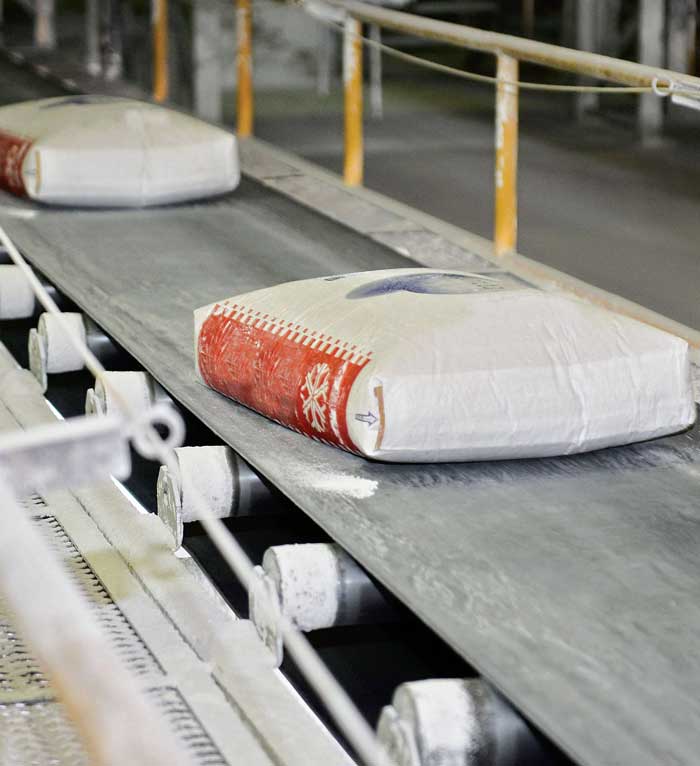
As a cement bag leaves a plant, it transcends from being a product to being a carrier of quality and brand reputation. No longer a despatch activity, today, cement packaging is a strategic link between production, logistics and the market. Together with automation and traceability, packaging is what holds product integrity and brand credibility together. ICR explores the growing importance of digital traceability, improved bag materials and automated packing systems.
In today’s cement industry, the journey of a bag from plant to project site is as critical as the product itself. As supply chains stretch across multiple touchpoints, from dispatch yards and transport networks to dealer warehouses and retail outlets, packaging has moved beyond its traditional role to become a key enabler of product integrity, operational efficiency and brand trust. With logistics accounting for nearly 20 per cent to 25 per cent of total cement costs and packaging contributing another 5 per cent to 7 per cent (CMA India, 2023; McKinsey, 2022), even minor inefficiencies can significantly impact margins. Additionally, industry estimates suggest that 1 per cent to 3 per cent of cement losses occur due to handling, pilferage and packaging issues, while global usage exceeds 30 billion cement bags annually (World Cement Association, 2023). As demand for reliability grows and supply chains become more complex, the focus is shifting towards smarter packaging systems backed by automation and traceability—turning every bag into a data point that enhances visibility, control and competitiveness.
Role of packaging in cement distribution
Cement packaging has traditionally been viewed as a functional necessity, designed primarily to protect the product from moisture and contamination during transit. However, with increasing distribution complexities and longer supply chains, packaging is now expected to ensure durability across diverse climatic conditions, particularly in markets like India where temperature and humidity variations are significant. According to a report by the Cement Manufacturers’ Association (CMA), nearly 2–3 per cent of cement losses occur due to handling and packaging inefficiencies, highlighting the need for more robust and reliable packaging systems (CMA India, 2023).
Marta Bortolotti, Division Manager Consumables, Haver & Boecker, says, “A bag serves as a powerful branding tool and a visual business card for each company. While some companies work with multiple providers for packaging, partnering with a single OEM expert, who understands the product, equipment, and production goals, provides unbeatable efficiency and peace of mind. With an integrated approach, every bag becomes a powerful asset for the brand and business.”
“When it comes to product packaging, every element, from design and materials to compatibility with machinery, product and closure type, plays a vital role in achieving both efficient function and a positive brand image. To maintain a competitive edge, producers must carefully evaluate their packaging choices” she adds.
In addition, packaging is increasingly being recognised as a key touchpoint for branding and differentiation. High-quality printed bags, especially BOPP laminated and block-bottom bags, not only improve shelf appeal but also enhance stacking efficiency and storage optimisation. A study by Smithers (2022) highlights that advanced packaging formats can improve pallet stability and reduce transportation losses by up to 15 per cent, thereby directly impacting logistics efficiency. This shift reflects a broader industry trend where packaging is becoming integral to both operational performance and market positioning.
From protection to performance
The choice of packaging materials in the cement industry has evolved significantly over the years, moving from paper-based sacks to polypropylene (PP) woven bags and now to advanced laminated structures. PP woven bags dominate the market today due to their strength, moisture resistance, and cost-effectiveness, accounting for over 70 per cent of cement packaging in emerging economies (MarketsandMarkets, 2023). These materials offer improved durability, reducing breakage and spillage during transportation.
The focus is now shifting towards performance-driven packaging that balances strength, sustainability and cost. Innovations such as BOPP laminated bags and block-bottom valve bags provide superior sealing, better print quality, and improved stacking efficiency.
Ana Juraga, Content Writer, Cortec Corporation says, “By adopting VpCI® films and papers, a facility eliminates the need for petroleum-based rust preventatives and the subsequent hazardous solvents required for their removal. This directly reduces the plant’s (VOC emissions and prevents the generation of solvent-contaminated runoff. In many jurisdictions, the reduction of hazardous waste at the point of origin is a key metric for industrial environmental compliance. Moving from a ‘wet’ preservation cycle to a ‘dry’ molecular cycle allows cement producers to streamline their environmental reporting while improving worker safety by removing hazardous chemicals from the workshop.”
According to Allied Market Research (2023), the global industrial packaging market is expected to grow at a CAGR of 4.5 per cent, driven by demand for high-performance and sustainable materials. At the same time, the environmental impact of plastic-based packaging is pushing manufacturers to explore biodegradable and recyclable alternatives, although cost remains a major constraint in large-scale adoption.
Understanding bag traceability
As cement distribution networks become more complex, the need for end-to-end visibility has become critical. Bag traceability enables manufacturers to track each unit from the plant to the dealer and end user, ensuring accountability and transparency across the supply chain. According to Deloitte (2022), companies implementing supply chain traceability systems have seen a 20–30 per cent improvement in operational efficiency and a significant reduction in losses due to pilferage and mismanagement. In the cement industry, where high volumes and low margins dominate, even marginal improvements can lead to substantial cost savings.
Traceability also plays a crucial role in combating counterfeit products, which remain a persistent challenge in developing markets. The OECD (2021) estimates that counterfeit goods account for 3.3 per cent of global trade, and the construction materials sector is not immune to this issue. By integrating traceability features such as unique identification codes and digital tracking systems, manufacturers can ensure product authenticity and build greater trust among dealers and customers. Moreover, traceability data can be leveraged for demand forecasting, inventory optimisation, and improved decision-making, making it a strategic asset rather than just a compliance requirement.
Technologies enabling traceability
A range of technologies is enabling effective bag traceability in the cement industry, each offering varying levels of sophistication and cost implications. Barcodes and QR codes are widely adopted due to their low cost and ease of implementation, allowing basic tracking and authentication.
Dr SB Hegde, Global Cement Industry Leader says, “The global cement packaging sector is expanding steadily, supported by growing infrastructure demand and increased emphasis on reliable and moisture-resistant packaging solutions. The cement packaging market is projected to grow steadily in the coming decade as companies adopt automation, smart packaging technologies and integrated logistics systems to improve despatch efficiency and supply chain transparency. In this context, benchmarking against global indicators helps cement plants identify performance gaps and adopt best practices such as automated bagging systems, QR-based traceability, ERP-linked despatch monitoring, and predictive maintenance of packing equipment.”
Meanwhile, RFID technology provides real-time tracking and enhanced data capture, although higher costs have limited its widespread adoption. According to McKinsey (2023), digital supply chain technologies, including IoT and RFID, can reduce logistics costs by up to 15 per cent and improve service levels by 20 per cent, making a strong case for their integration into cement packaging systems.
Combating leakage, pilferage and counterfeiting
Leakage and pilferage remain major challenges in cement logistics, particularly in markets with fragmented distribution networks. Industry estimates suggest that losses due to pilferage and handling inefficiencies can account for up to 1–2 per cent of total sales volume, directly impacting profitability (CMA India, 2023). Traceability systems help address these challenges by providing real-time visibility into product movement, enabling faster detection of anomalies and accountability at every stage of the supply chain.
Additionally, digital authentication mechanisms embedded in packaging can significantly reduce the circulation of counterfeit products, protecting both brand reputation and customer trust. A report by PwC (2022) highlights that companies implementing advanced tracking systems have seen a 30–50 per cent reduction in shrinkage, underscoring the tangible benefits of traceability.
Digital supply chains and erp systems
The integration of packaging systems with digital supply chains and ERP platforms is transforming how cement companies manage their operations. By linking packaging data with enterprise systems, manufacturers can achieve real-time visibility into production, inventory and distribution. This integration enables seamless coordination between different functions, from manufacturing to logistics and sales. According to SAP (2023), companies with integrated digital supply chains can improve forecast accuracy by up to 25 per cent and reduce inventory holding costs by 20 per cent, leading to more efficient operations.
Furthermore, digital integration facilitates data-driven decision-making, allowing companies to optimise routes, manage inventory levels, and improve customer service. Advanced analytics and AI-driven insights can help identify inefficiencies, predict demand patterns, and enhance overall supply chain resilience. As cement companies continue to invest in digital transformation, the convergence of packaging and digital systems will play a pivotal role in achieving end-to-end supply chain optimisation.
Balancing strength, cost and environmental impact
Sustainability is becoming a key focus area in cement packaging, driven by regulatory pressures and growing environmental awareness. The use
of plastic-based packaging materials has raised concerns due to their long degradation periods and environmental impact. According to the World Economic Forum (2023), only 9 per cent of global plastic waste is recycled, highlighting the urgent need for sustainable alternatives.
Cement manufacturers are increasingly exploring recyclable, biodegradable, and reusable
packaging solutions, although cost and performance trade-offs remain significant challenges. Achieving the right balance between strength, cost, and environmental impact will be critical for the future of cement packaging.
The future of cement packaging lies in the convergence of smart technologies and digital supply chains. Smart packaging solutions, embedded with sensors and IoT capabilities, can provide real-time data on product condition, location, and handling, enabling greater transparency and control. According to Gartner (2023), by 2027, over 50 per cent of supply chains will invest in real-time visibility technologies, reflecting the growing importance of digitalisation in logistics.
In addition, advancements in AI, blockchain and cloud computing are expected to further enhance traceability and data security. Blockchain-based systems, for instance, can provide tamper-proof records of product movement, ensuring authenticity and trust across the supply chain. As the cement industry continues to evolve, the adoption of smart packaging and digital technologies will be essential for improving efficiency, reducing costs, and meeting sustainability goals.
Conclusion
Cement packaging is undergoing a significant transformation, evolving from a basic protective function to a strategic enabler of efficiency, traceability and sustainability. As the industry grapples with rising costs, complex supply chains and increasing environmental concerns, packaging and traceability systems are emerging as critical components of operational excellence. The integration of advanced materials, digital technologies, and data-driven insights is reshaping how cement is packaged, transported and delivered.
Looking ahead, companies that invest in smart packaging and robust traceability systems will be better positioned to navigate industry challenges and capitalise on emerging opportunities. By embracing innovation and sustainability, the cement industry can build more resilient and efficient supply chains, ensuring long-term growth and competitiveness.

Logistics, from the factory exit point to the last mile connectivity, is a key driver of efficiency and cost optimisation in the cement industry. With digitalisation, multi-modal integration and sustainability, logistics is the differentiator that will give the manufacturer a competitive advantage. Let us explore how logistics has today become a deciding factor that players cannot afford to ignore.
India, the second-largest cement producer globally, has an installed capacity exceeding 600 million tonnes per annum, with demand driven by infrastructure, housing, and urbanisation (IBEF, 2024). However, logistics remains one of the most significant cost components, accounting for nearly 20 to 30 per cent of the total cement cost, primarily due to the bulk nature and low value-to-weight ratio of the product (Cement Manufacturers’ Association, 2023; McKinsey, 2022).
With over 70 per cent of cement transported via road, inefficiencies in logistics directly impact profitability, delivery timelines, and customer satisfaction (NITI Aayog, 2021). As supply chains grow more complex, end-to-end logistics is emerging as a critical lever for cost optimisation, operational efficiency, and competitive advantage.
Logistics: The game changer
Logistics plays a central role in the cement industry, where timely delivery and cost efficiency are key determinants of market competitiveness. Unlike many other industries, cement has a low shelf value relative to its transportation cost, making logistics optimisation critical. According to McKinsey (2022), logistics costs in cement can reach up to 30 per cent of total production costs, significantly higher than global manufacturing averages. This underscores the importance of efficient distribution networks in maintaining margins and ensuring consistent supply.
Moreover, logistics directly influences market reach and dealer satisfaction. Cement companies with optimised logistics networks can ensure faster delivery cycles, improved availability, and better service levels. A report by Deloitte (2023) highlights that companies focusing on logistics optimisation have seen improvements of up to 15 per cent to 20 per cent in delivery efficiency, reinforcing the role of logistics as a strategic differentiator rather than just an operational function.
Mapping the cement supply chain
The cement supply chain is complex and involves multiple stages, including raw material transportation, clinker movement, cement production, warehousing, and final distribution to dealers and project sites. Each stage requires careful coordination to minimise delays and costs. According to World Cement Association (2023), inefficiencies in supply chain coordination can lead to 5 per cent to 8 per cent losses in overall operational efficiency, highlighting the need for integrated logistics planning.
From plant despatch to last-mile delivery, the movement of cement involves various stakeholders such as transporters, distributors, and retailers. In India, the fragmented nature of the logistics ecosystem further complicates coordination. A study by PriceWater Cooper (PwC 2022) indicates that lack of integration across supply chain nodes can increase transit times by 10 per cent to 15 per cent, affecting project timelines and customer satisfaction.
Key challenges in end-to-end logistics
One of the biggest challenges in cement logistics is infrastructure limitation, particularly in rural and semi-urban areas where demand is rapidly growing. Despite improvements, India’s logistics infrastructure still faces bottlenecks such as poor road conditions, congestion, and limited rail connectivity. According to NITI Aayog (2021), logistics inefficiencies contribute to India’s overall logistics costs being around 13 per cent to 14 per cent of GDP, significantly higher than the global benchmark of 8 per cent to 9 per cent. For the cement industry, this translates into higher transportation costs and reduced competitiveness.
Professor Procyon Mukherjee says, “For decades, cement companies designed their networks around limestone availability. Plants were built near quarries, and finished cement was transported long distances to markets. This model, while logical from a production standpoint, created massive outbound logistics costs. Indian cement companies have begun to challenge this logic. The shift: decoupling clinker production from cement grinding.”
He adds, “Clinker plants remain near limestone reserves, but grinding units are increasingly located close to consumption centres. In many markets, logistics accounts for up to 30 per cent of total cost. The implication is stark: companies that redesign their end-to-end logistics, from inbound flows to last-mile delivery, can fundamentally alter their competitive position.”
Another critical challenge is demanding variability and lack of real-time visibility across the supply chain. Cement demand is highly seasonal and project-driven, making demand forecasting complex. Additionally, limited adoption of digital tools leads to poor tracking and coordination. According to McKinsey (2023), companies lacking digital logistics systems experience up to 20 per cent higher inefficiencies in fleet utilisation and delivery planning. These challenges highlight the need for greater integration, digitalisation, and infrastructure development to achieve efficient end-to-end logistics.
Multi-modal logistics
The integration of multiple transportation modes—road, rail, and coastal shipping—is becoming increasingly important for optimising cement logistics. While road transport dominates with over 70 per cent share, rail and coastal shipping offer cost-effective and environmentally sustainable alternatives for long-distance movement (NITI Aayog, 2021).
According to the Ministry of Ports, Shipping and Waterways (2023), coastal shipping can reduce logistics costs by up to 20 per cent to 25 per cent compared to road transport, while also lowering carbon emissions. The adoption of multi-modal logistics can help cement companies achieve better cost efficiency, reduce transit times, and improve supply chain resilience.
Anuradha Parakala, Co-founder, Chief Strategy and Product Officer, Fleetronix Systems, says, “Real-time visibility in logistics is no longer a competitive advantage. It has become a baseline requirement. The cost of not knowing what’s happening across the supply chain has simply become too high. Customers expect consistent and reliable deliveries, finance teams demand tighter cost control, and regulators require greater compliance and transparency. None of these expectations can be met without real-time insight into fleet movement and operations. What was once considered a differentiator is now essential, and companies that still operate without visibility are already falling behind in an increasingly performance-driven environment.
“At the same time, data-driven logistics is redefining how cement supply chains operate, shifting them from reactive systems to predictive, planning-led ecosystems. Fuel remains the single biggest cost lever in fleet logistics, and within that, driver behaviour offers the fastest and most impactful gains. It often delivers 12 per cent to 18 per cent fuel savings through better driving practices such as smoother acceleration, controlled speeds, and reduced idling. Beyond cost savings, data enables companies to move from guesswork to precision—anticipating disruptions, optimising routes, and planning with real numbers instead of buffers. The result is not just improved efficiency, but a stronger foundation of trust with customers, giving early adopters a clear and lasting competitive edge,” she adds.
Digitalisation of cement logistics
Digitalisation is transforming cement logistics by enabling real-time visibility, improved coordination, and data-driven decision-making. Technologies such as GPS tracking, IoT sensors, and advanced analytics allow companies to monitor shipments, optimise routes, and reduce delays. According to Gartner (2023), organisations that implement digital supply chain solutions can achieve up to 50 per cent improvement in supply chain visibility and 20 per cent reduction in operational costs. In the cement industry, where timely delivery is critical, such improvements can significantly enhance efficiency and customer satisfaction.
Dijam Panigrahi, Co-Founder and COO, GridRaster, says, the cement supply chain is uniquely complex. A single integrated plant may manage limestone quarrying, kiln operations, grinding, packing, and dispatch simultaneously, with finished product flowing through rail, road, and waterway networks to reach hundreds of regional depots and distribution points. Coordinating this network using spreadsheets, siloed ERP data, and phone calls is not merely inefficient; it is a structural liability in a competitive market where delivery reliability is a key differentiator. Digital twin technology offers a way out. A cement logistics digital twin is a continuously updated, three-dimensional virtual replica of the entire supply chain, from the truck loading bays at the plant to the inventory levels at district depots.”
Optimising fleet efficiency and last-mile delivery
Fleet efficiency is a critical factor in cement logistics, given the heavy reliance on road transport. Optimising fleet utilisation, reducing idle time, and improving route planning can lead to substantial cost savings. According to McKinsey (2022), optimised fleet management can reduce transportation costs by 10 per cent to 15 per cent, while improving delivery timelines. Technologies such as telematics, fuel monitoring systems, and driver behaviour analytics are increasingly being adopted to enhance fleet performance.
Pushpank Kaushik, CEO, Jassper Shipping, says, “Handling cement both in bulk and bagged form presents several operational challenges across the logistics chain. These include inadequate road infrastructure, port congestion during peak demand periods, and weather-related disruptions. At ports, limited mechanisation during high-volume periods can slow down cargo movement, increasing the risk of moisture exposure and product degradation. Jassper mitigates these challenges through its extensive operational expertise and global network. Managing a significant volume of vessel movements annually and working closely with experienced mariners and operators, we ensure precise coordination, efficient cargo handling, and smooth transitions across all logistics stages.”
Last-mile delivery, however, remains one of the most challenging aspects of cement logistics. Delivering cement to construction sites often involves navigating congested urban areas or remote rural locations, leading to delays and increased costs. A report by Deloitte (2023) highlights that last-mile logistics can account for up to 40 per cent of total delivery costs in certain scenarios. Addressing these challenges requires better route planning, localised distribution hubs, and increased use of technology to ensure timely and efficient delivery.
Sustainability in cement logistics
Sustainability is becoming a key focus area in cement logistics, driven by environmental regulations and corporate sustainability goals. Transportation is a major contributor to carbon emissions in the cement value chain. According to the International Energy Agency (IEA, 2023), logistics-related emissions account for a significant portion of the industry’s overall carbon footprint. Shifting towards rail and coastal shipping, improving fuel efficiency, and adopting alternative fuels can help reduce emissions. Additionally, optimising logistics operations not only lowers environmental impact but also reduces costs, creating a win-win scenario for the industry.
The future of cement logistics
The future lies in the adoption of automation, advanced analytics, and smart supply chain technologies. Autonomous vehicles, AI-driven planning systems, and blockchain-based tracking solutions are expected to redefine logistics operations. According to McKinsey (2023), companies that adopt advanced supply chain technologies can achieve up to 30 per cent improvement in efficiency and significant cost reductions. As the cement industry continues to evolve, the integration of these technologies will be crucial for building resilient, efficient, and future-ready logistics networks.
Conclusion
End-to-end logistics is no longer just an operational necessity but a strategic imperative for the cement industry. With rising costs, increasing demand, and evolving customer expectations, companies must focus on optimising their logistics networks to remain competitive. From multi-modal integration to digitalisation and sustainability, the future of cement logistics will be defined by innovation and efficiency.
- – Kanika Mathur
Ana Juraga, Content Writer, Cortec Corporation brings the spotlight on advanced sustainable technology vis-à-vis the traditional rust prevention methods in cement plants that often lead to hidden costs through labour, cleaning and hazardous waste.
The global cement industry operates in one of the most demanding industrial environments. The combination of highly alkaline dust, extreme temperature fluctuations, and often high humidity creates a constant threat of corrosion for critical infrastructure and mechanical assets. While the industry’s primary sustainability focus remains on carbon capture and alternative fuels, a significant operational challenge persists in the storage and transport of spare parts and equipment.
The maintenance of a strategic asset reserve, the essential inventory of spare gears, kiln components, electrical sensors and structural steel is a fundamental requirement for minimising unplanned downtime. Traditionally, the preservation of these assets has relied on legacy barrier methods such as heavy mineral oils and petroleum-based greases. However, as the industry moves toward more sophisticated maintenance protocols and stringent environmental standards, these traditional methods are being replaced by Vapor phase Corrosion Inhibitor (VpCI®) packaging technology.
Technical limitation of traditional barrier coatings
In a cement plant, traditional wet rust preventatives are a major liability. Because these oils and greases stay tacky, they effectively act as a magnet for fine, alkaline cement dust. Over time, this mixture turns into a thick, abrasive sludge. If you don’t scrub every last bit of that residue off before installation, you are essentially putting a grinding compound into your bearings and seals. This ‘cleanup tax’, the hours spent with pressure washers and hazardous solvents doesn’t just delay repairs; it creates a secondary stream of toxic waste that the plant is then forced to manage.
Mechanism of VpCI® packaging technology
The transition to VpCI® packaging represents a shift from physical barrier protection to molecular-level chemistry. VpCI (Vapor phase Corrosion Inhibitor) technology can be seen as a ‘dry’ alternative to the messy greases and oils that have dominated industrial maintenance for decades. Instead of coating a part by hand, you use packaging-like films, papers, or emitters that slowly release protective molecules into the air. Once a metal component is enclosed in a VpCI® package, the inhibitors are released into the headspace of the container. These molecules travel through the air to reach every exposed metal surface, including deep recesses, internal threads, and complex geometries that are often inaccessible to spray-on coatings. When the molecules contact the metal, they form an invisible, monomolecular protective layer. This layer creates a hydrophobic shield that prevents oxygen and moisture from reaching metals thereby stopping the electrochemical process of corrosion. The most significant technical advantage of VpCI® packaging in the cement industry is that it is a “dry” process. When the component is eventually removed the protective molecular layer simply dissipates into the air. The part is clean, dry, and ready for immediate welding, painting or assembly without any chemical cleaning or surface preparation.
Sustainability through source reduction and elimination
By adopting VpCI® films and papers, a facility eliminates the need for petroleum-based rust preventatives and the subsequent hazardous solvents required for their removal. This directly reduces the plant’s (VOC emissions and prevents the generation of solvent-contaminated runoff. In many jurisdictions, the reduction of hazardous waste at the point of origin is a key metric for industrial environmental compliance. Moving from a ‘wet’ preservation cycle to a ‘dry’ molecular cycle allows cement producers to streamline their environmental reporting while improving worker safety by removing hazardous chemicals from the workshop.
Circularity and the VpCI® plastic recycling service
A significant portion of industrial waste in cement plants comes from single-use plastics and packaging materials. Standard polyethylene (PE) films used for palletising and shipping are typically linear waste products that end up in landfills. To address this, the industry is increasingly adopting recyclable VpCI® films, such as the VpCI®-126 series. These films are engineered to be fully compatible with standard recycling streams. To close the loop further, Cortec® Corporation has implemented the VpCI® Plastic Recycling Service. This program allows manufacturers to collect used VpCI® film, which is then reprocessed and incorporated into the production of new protective packaging. By utilising high-quality Post-Consumer Recycled (PCR) content, the industry can maintain a circular economy for its logistics materials, significantly reducing the demand for virgin resins and fossil-fuel-based plastic production.
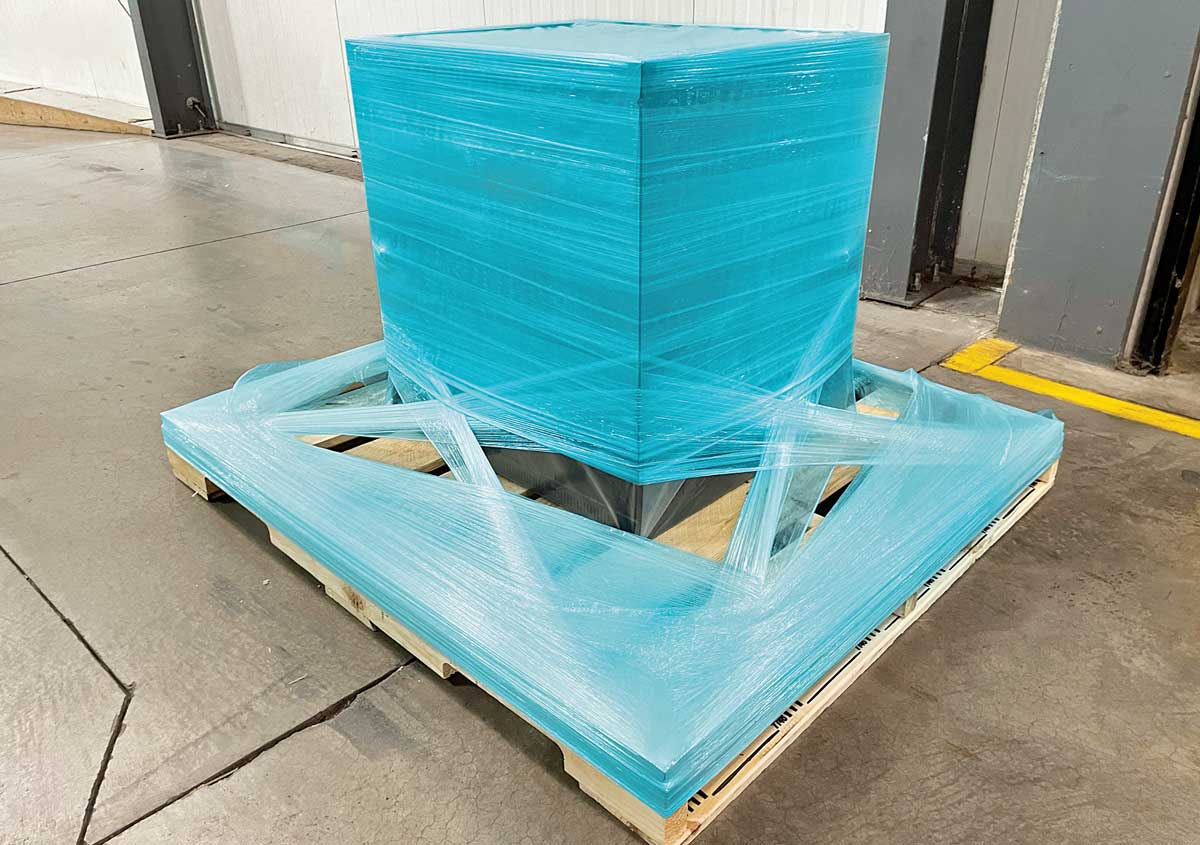
Indoor warehouse space is often limited, forcing many plants to store large-scale components, such as kiln tires or conveyor sections, in outdoor yards. Outdoor storage in a cement plant is particularly challenging due to UV degradation and the ‘greenhouse effect’ created by standard plastic wraps, which can trap moisture and accelerate rust.
Advanced packaging solutions, such as MilCorr® VpCI® Shrink Film, are specifically designed for outdoor preservation and provide strong protection system with high ultraviolet (UV) light protection to maintain the integrity of the film itself as well as the parts packaged within. MilCorr® VpCI® Shrink Film, a heavy-duty mechanical barrier against wind and rain while incorporating UV stabilisers to prevent the plastic from becoming brittle. Internally, the VpCI® molecules protect metals, allowing components to remain in excellent condition.
Protecting electronics and control systems
The modern cement plant is increasingly reliant on sophisticated electronic controls and sensors. These components are highly sensitive to micro-corrosion, which is often exacerbated by the conductive nature of cement dust and high ambient humidity. A single failed circuit board in a control room can result in an entire line shutdown. VpCI® packaging technology extends to these sensitive systems through specialised emitters and anti-static (ESD) films.
EcoSonic® VpCI®-125 PCR HP Permanent ESD Films and Bags EcoSonic are high-performance anti-static, corrosion inhibiting film and bags for use in the protection of static sensitive multi-metal items such as electronics. They contain permanent anti-static properties to immediately reduce or eliminate static buildup as long as the films or bags are in use, independent of the presence of humidity. They also form a molecular corrosion inhibiting layer on metal substrates and do not interfere with the physical or chemical properties of electronic components. This film has been developed with a high amount of post-consumer recycled content for the purpose of efficient recovery, recycling, and reuse of resources to minimise the economy’s negative ecological footprint.
For active control cabinets, VpCI® emitters (such as the VpCI®-105 or 111 capsules) can be placed inside the enclosure to saturate the air with protective molecules. This provides an invisible layer of protection for contacts and connectors without affecting electrical resistance or interference. This ‘clean’ protection is vital in dusty environments where air-tight sealing of cabinets is rarely successful.
VpCI® packaging is also evolving to incorporate renewable resources. Products like EcoStretch™, the world’s first commercially available compostable stretch film provides an “end-of-life” solution for logistics waste. Furthermore, bio-based films derived from renewable resins reduce the carbon footprint of the packaging itself. For cement plants located in environmentally sensitive regions, using a compostable or bio-derived packaging material reduces the risk of long-term plastic pollution and aligns with corporate sustainability mandates to reduce fossil-fuel dependency.
VpCI® packaging proves that the ‘green’ solution can also be the cheapest. Although the film itself has a higher initial price, the total cost is much lower because you eliminate the labor, chemicals, and waste fees associated with traditional grease. Since parts are ready to install the moment they are unwrapped, you also slash the duration of expensive outages.
Conclusion
The shift toward VpCI® technology shows that the cement industry is becoming both more efficient and more responsible. By moving away from messy, labour-intensive grease, plants are finding a better way to operate. VpCI® is one of those rare solutions where the best way to protect your equipment is also the cleanest for the environment. By cutting out toxic chemicals and reducing plastic waste, producers can protect their critical spare parts while shrinking their ecological footprint. As the industry modernises, this ‘dry’ molecular protection will likely become the standard for any facility that values its machinery as much as its sustainability goals.
About the author:
Ana Juraga, Content Writer, Cortec Corporation has been a content writer at Cortec Corporation for 15 years. Besides dealing with media relations, she collaborates with Cortec’s engineers and chemists in creating informative technical content. She is passionate about educating engineering community about green corrosion-inhibiting technologies and numerous advances in this field.