Connect with us

Concrete

Cement is once again our primary focus

Published

on

Shares

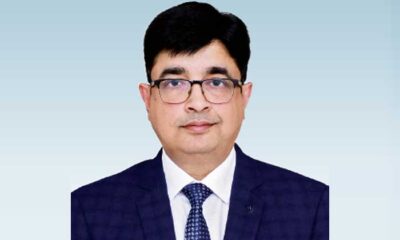
Sine Bogh Skaarup, Vice President, Head of Green Innovation and R&D, Fuller Technologies, discuss re-engineering cement for a low-carbon, high-efficiency future, and how the company is sharpening its focus to power the next era of cement manufacturing.

As the cement industry balances rapid capacity expansion with the urgent need for efficiency and decarbonisation, technology partners are playing a more critical role than ever before. In this interview, Sine Bogh Skaarup, Vice President, Head of Green Innovation and R&D, Fuller Technologies, share how the company’s deep-rooted expertise, renewed focus on cement, and advanced automation, digitalisation and low-carbon solutions are helping producers improve productivity, reduce emissions and prepare for the next phase of sustainable growth.

How do you support the cement industry, and what technologies do you bring that help improve productivity and operational efficiency?
We deliver more or less all the end-to-end equipment solutions to the cement industry. Our portfolio includes equipment for power and grinding, feeding technology, packing, conveying and full plant automation. There are many different technologies involved across a cement plant, and with more than 140 years of experience, we have consistently delivered solutions that have supported the industry’s development over time.

Do you offer turnkey or EPC solutions to cement plants?
We do not offer turnkey or EPC projects. Our focus is firmly on the core processes within cement technology. We specialise in delivering high-performance equipment and process solutions rather than complete EPC execution.

Can you share some recent innovations or initiatives that you have implemented or are currently working on?
One of our key focus areas is decarbonisation. We help cement producers reduce CO2 and overall carbon emissions. We offer alternative fuel solutions and calcined clay technologies to enable the production of LC3 cement, which play a significant role in decarbonising the cement industry. By combining alternative fuels and calcined clay solutions, CO2 emissions can be reduced by up to 50 per cent, making this a highly impactful approach for sustainable cement production.

What role do digitalisation, Industry 4.0 and advanced technologies play in your operations, and how are they changing the game?
Automation has always been a core business area for us, previously as FLSmidth Cement and now as Fuller Technologies. This focus has existed for decades. Optimising a cement plant, even by a few percentage points, has a significant impact. Digital solutions today can deliver 5 per cent, 10 per cent or even 15 per cent improvements in efficiency, capacity throughput, emissions reduction, and electrical consumption.
Digitalisation and Industry 4.0 also allow us to optimise plant logistics and integrate advanced laboratory systems that precisely control cement chemistry. Accuracy and precision are critical in cement manufacturing, and our digital solutions enable customers to achieve both. This comprehensive approach allows us to support optimisation across the entire plant.

What challenges do you see in the Indian cement industry, and how are you working to address them?
There are no challenges that are uniquely specific to India, as cement production processes are largely similar worldwide. However, India is currently a booming market with rapidly increasing capacity requirements. The key challenge is delivering this capacity on time while ensuring we become a preferred technology partner for cement producers.
At the same time, there is a strong focus on modernisation, achieving the highest efficiency with the lowest possible emissions. India has a unique opportunity because of the large amount of new capacity being installed. This gives the country a chance to set global benchmarks for high-efficiency production and some of the lowest CO2 emissions in the cement industry. Supporting producers in achieving this is a challenge, but it is a very positive and exciting one.

How will the transition from FLSmidth Cement to Fuller Technologies impact the brand and its engagement with the cement industry?
The rebranding follows our acquisition by Pacific Avenue Capital. We are transitioning from FLSmidth Cement to Fuller Technologies with a renewed and sharper focus on the cement industry. Previously, the company had a strong presence in both mining and cement, but cement had gradually become a non-core area. Now, cement is once again our primary focus.
Over the past two years, we had limited presence in the pyro and grinding segments. Moving forward, we are reinvesting and refocusing on these areas. This is an exciting phase for us, as it allows us to relaunch the brand, clarify our identity, and clearly define what Fuller Technologies stands for as a dedicated cement technology partner.


How do you see the cement industry evolving in the near future, and how do you plan to align with this growth?
The cement industry has evolved steadily over many years, but it remains a conservative sector due to the scale of investments involved. Cement plants require massive capital expenditure, and these investments are critical not only for industrial growth but also for national infrastructure development, especially in India and other developing regions.
Efficiency and low-emission production will remain central priorities. Introducing new materials into cement production is essential. Calcined clay and other supplementary cementitious materials will play a crucial role in reducing CO2 emissions. These materials will also help diversify raw material sources, ensuring that the industry can meet growing cement demand while remaining sustainable. Our role is to support this evolution with technologies that enable efficient, flexible and low-carbon cement production.


  • Kanika Mathur

Concrete

Cement Prices to Stay Flat in Q2 FY27 as Costs Squeeze Margins

HDFC Securities warns monsoon slowdown and higher fuel costs

Published

on

By

Shares


HDFC Securities has said the cement industry is unlikely to register a sequential increase in prices in Q2 FY27 as monsoon-related demand moderation coincides with rising fuel and packaging costs that will squeeze margins. The brokerage observed that price gains remained modest, with increases of two to three per cent quarter-on-quarter across regions, and noted subdued offtake in May with improvement in June as a delayed monsoon supported construction activity. The brokerage added that modest pricing gains so far have been insufficient to offset the input cost escalation.

The report stated that input cost pressures intensified in Q1 FY27 owing to the West Asia conflict, which pushed up coal and pet coke prices and is expected to keep fuel costs elevated, with a likely peak in Q2 FY27. It assessed that total variable costs, including packing, could rise by around Rs 150 per t quarter-on-quarter and that lower offtake and seasonal operating deleverage could further raise operating expenditure by about Rs 50 per t quarter-on-quarter.

Overall, cement prices were estimated to remain flat in Q2 FY27 as monsoon-led demand weakness offsets limited upside in realisation, and rising fuel costs alongside seasonal deleverage were expected to compress industry margins by over Rs 100 per t quarter-on-quarter to below Rs 880 per t. The brokerage indicated that the combined impact of energy inflation and higher packing expenditure would be the principal drivers of margin contraction in the near term. HDFC Securities projected a recovery in margins in H2 FY27 should the West Asia turmoil subside and energy and packing costs cool off.

The brokerage expressed optimism on long-term demand fundamentals and said improving realisation together with an anticipated cost cool-off should support a margin rebound from H2 FY27 onward, underpinning favourable industry prospects over the medium term. Its outlook rests on monsoon normalisation and a decline in imported fuel prices in the second half of the fiscal year.

Continue Reading

Concrete

Dalmia Bharat Begins Rs 31 Bn Green Cement Unit in Kadapa

New Andhra Pradesh plant to add 9.6 MTPA cement capacity by FY28

Published

on

By

Shares


Dalmia Bharat Limited recently laid the foundation stone for its second manufacturing unit at Kadapa in Andhra Pradesh. The company will invest Rs 31 billion in developing the next-generation integrated cement manufacturing facility.
The foundation-laying ceremony was attended by Nara Lokesh, Andhra Pradesh Minister for Information Technology, Electronics and Communications, Real-Time Governance and Human Resources Development, along with Puneet Dalmia, Managing Director and Chief Executive Officer, Dalmia Bharat, senior government officials and company representatives.
Scheduled to be commissioned by the third quarter of FY28, the Kadapa unit will become Dalmia Bharat’s largest integrated manufacturing facility in southern India. It will have a clinker production capacity of 6.1 million tonnes per annum and a cement manufacturing capacity of 9.6 million tonnes per annum.
The facility is designed to produce what the company describes as one of the world’s greenest cements. It is also expected to generate approximately 1,000 direct and indirect employment opportunities while supporting local MSMEs, transporters, contractors and service providers.
Lokesh said the investment reflected Dalmia Bharat’s confidence in Andhra Pradesh and aligned with the state’s objective of promoting sustainable industrialisation, job creation and technology-led economic growth.
Puneet Dalmia said the project represented the company’s long-term vision of developing low-carbon cement manufacturing assets. He added that the facility would establish new benchmarks in operational efficiency and sustainability while supporting India’s infrastructure and environmental goals.
Dalmia Bharat will also expand its regional community development programmes in education, healthcare, skill development and welfare through its DIKSHa and Gram Parivartan initiatives.
The company currently has an installed cement manufacturing capacity of 54.7 million tonnes across 19 manufacturing units in 12 states. It is also the first cement company globally to commit to the RE100, EP100 and EV100 initiatives.

Continue Reading

Concrete

Nuvoco Inaugurates Limla Cement Plant in Surat

Acquisition boosts Western India cement capacity

Published

on

By

Shares


Nuvoco Vistas Corporation Limited inaugurated the Limla Cement Plant in Surat, Gujarat, marking a key milestone in its acquisition and revival of Vadraj Cement Limited.

The company completed the acquisition of Vadraj, which had been undergoing a corporate insolvency resolution process, by discharging a consideration of Rs 18 billion (bn) in June 2025. Vadraj’s asset base includes a clinker unit at Kutch and a grinding unit at Limla, along with high quality captive limestone reserves and a captive jetty at Kutch that enhance logistics efficiency.

Since taking over the assets, Nuvoco has undertaken revival, refurbishment and expansion across both sites, culminating in the opening of the Limla facility. The grinding unit at Limla achieved project completion ahead of schedule with the commissioning of two million tonnes per annum (mn t per annum) grinding capacity, further expanding the company’s scale and market reach.

Upon full operationalisation of the Vadraj assets, nearly 40 per cent of Nuvoco’s total cement capacity will be accounted for by plants in the North and West regions, supporting improved access to high growth markets. The plant is expected to support a phased volume ramp up in Gujarat and to serve adjoining markets in western Maharashtra while releasing northern capacities for other markets.

It will produce a complete portfolio of cement products including Ordinary Portland Cement, Portland Slag Cement, Portland Pozzolana Cement and Portland Composite Cement, and will offer the Duraguard range including the premium Duraguard Microfibre. The transaction is set to create synergies with Nuvoco’s existing manufacturing facilities at Nimbol and Chittorgarh, strengthening logistics optimisation and market access across key regions.

Nuvoco reported total income of Rs 113.62 billion (bn) in FY 2025-26 and stated it is on track to consolidate total cement capacity to 35 million tonnes per annum (mn t per annum) by FY2028. The company operates across cement, ready-mix concrete and modern building materials segments and highlighted a pan-India ready-mix presence alongside contributions to major infrastructure projects. Corporate communications contact details were provided by the company.

Continue Reading

Video Thumbnail
â–

    SIGN-UP FOR OUR GENERAL NEWSLETTER


    Trending News

    SUBSCRIBE TO THE NEWSLETTER


    Don't miss out on valuable insights and opportunities to connect with like minded professionals.


      This will close in 0 seconds