Connect with us

Concrete

Waste co-processing and RDF adoption are key pillars

Published

on

Shares

Harjot Singh Chatha, Director, Alfa Therm talks about empowering India’s cement sector with scalable, compliant and efficient AFR solutions.

As India accelerates its shift toward sustainable cement production, Alfa Therm is playing a pivotal role in enabling this transformation through innovative RDF and AFR solutions.
In this interview, Harjot Singh Chatha, Director, Alfa Therm, outlines how it is driving circular economy practices, improving regulatory compliance, and future-proofing operations for the green transition.

How is Alfa Therm enabling cement companies to adopt AFR and RDF solutions?
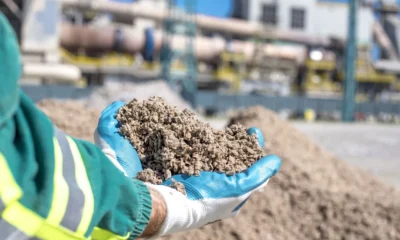
Alfa Therm has been at the forefront of helping Indian cement companies transition from conventional fossil fuels to Alternative Fuels and Raw Materials (AFR) through robust Refuse Derived Fuel (RDF) processing and handling solutions. Our engineered RDF plants are designed to deliver consistent fuel quality, customised to kiln specifications, ensuring seamless integration into existing fuel lines.
Additionally, our shredders and pre-processing systems help cement plants optimise calorific value, reduce feed variability and manage a wide range of waste streams, thereby accelerating the shift towards a more sustainable fuel mix.
How does Alfa Therm’s engineering approach ensure efficiency, safety and environmental compliance?
Our engineering philosophy centres on designing robust, modular systems built for India’s demanding industrial environments. We prioritise process efficiency through automated control systems, in-built safety interlocks and dust/fume extraction mechanisms that ensure safe operation and regulatory compliance. Our machines are built with high-grade, corrosion-resistant materials to ensure durability and minimal downtime. Regular customer training and remote monitoring further bolster safety and performance outcomes.

What role do you see waste co-processing and RDF adoption playing in India’s journey towards achieving a circular economy?
Waste co-processing and RDF adoption are key pillars in building India’s circular economy. By diverting non-recyclable waste streams from landfills to cement kilns, the industry not only substitutes fossil fuels for resource conservation. Cement kilns offer an ideal environment for complete thermal destruction of waste residues with zero secondary waste. As regulations tighten around landfill disposal and the cost of waste management rises, RDF-based co-processing will become a cornerstone of India’s waste-to-energy transition.

How is Alfa Therm positioned to support this transformation at scale?
With over 35 years of experience and a nationwide presence, Alfa Therm is uniquely positioned to support the cement industry at scale. We have the capacity to design and deliver turnkey RDF lines, shredding systems, and fuel feeding solutions customised to plant requirements. Our in-house R&D and fabrication units ensure rapid delivery and serviceability. By partnering closely with cement producers, we tailor our offerings for each project’s technical, regulatory and commercial context, helping clients meet
rising demand for alternative fuels while reducing operational risks.

How is Alfa Therm helping cement manufacturers improve their sustainability performance and meet evolving compliance norms?
As ESG reporting and emissions compliance tighten, Alfa Therm provides end-to-end solutions that help cement manufacturers track, measure and reduce their environmental impact. Our equipment is designed with emissions control in mind, including advanced dust extraction and filtration systems.
We also support clients with data-driven process optimisation and reporting tools that ease compliance documentation. Our team actively monitors regulatory shifts and shares knowledge with clients to future-proof their operations against emerging norms.

How do you see the AFR market evolving in India over the next decade?
The AFR market in India is poised for significant growth as regulations around waste disposal and emissions tighten and as cement players aim to meet ambitious TSR targets. We expect greater integration of digital tools for fuel tracking and optimisation, increased investment in localised RDF pre-processing infrastructure and broader acceptance of diverse waste streams including industrial and hazardous waste. Over the next decade, we anticipate TSR in India to grow from single digits to levels comparable with European benchmarks, driven by policy push and growing climate-consciousness across the industry.

Concrete

BMC Cement Concretisation Cuts Pothole Repairs By 70 Per Cent

Project worth Rs 170 billion (Rs 170 bn) aims to concretise 1,900 km by 2027

Published

on

By

Shares

The Brihanmumbai Municipal Corporation’s cement concretisation project, valued at Rs 170 billion (Rs 170 bn), has reduced expenditure on pothole repairs by 70 per cent over three years. Spending on repairs fell from Rs 2.02 billion in 2023–24 to Rs 1.56 billion in 2024–25 and then to Rs 890 million (Rs 890 mn) in 2025–26. The current tender is expected to be about Rs 440 million, representing a further 50 per cent reduction.

The project is being executed in two phases, with Phase I covering 307 km from October 2023 and Phase II covering 370 km from October 2024. The Indian Institute of Technology is auditing Phase II and will now also audit Phase I to ensure quality and accountability. Mumbai’s total road network spans approximately 2,050 km, of which about 1,200 km had been converted to cement concrete before 2022.

Since 2022 an additional 677 km were taken up for concretisation and nearly 71 per cent of that work, amounting to 481 km, has been completed. Municipal officials indicated that 10–15 per cent of the remaining work is expected to be completed by May 2026 and another 10 per cent by December 2026. The entire programme is scheduled for completion by May 2027, by which time nearly 1,900 km of Mumbai’s roads are expected to be fully concretised.

The administration has also developed a real time dashboard that displays detailed information about contracts, contractors and progress and citizens can access the latest updates online. The dashboard includes contact details for the civic officials and contractors responsible for particular roads to enhance transparency and accountability. The commissioner directed that ongoing works be completed by 31 May ahead of the monsoon to safeguard completion targets and minimise disruption.

Continue Reading

Concrete

Shree Cement Approves Rs 1,800 Crore Meghalaya Plant

Integrated unit to be completed by quarter ending March 2028

Published

on

By

Shares

Shree Cement has approved the establishment of an integrated cement plant in Meghalaya, signalling a targeted capacity expansion to serve regional demand. The board cleared a unit at Village Daistong in East Jaintia Hills District with a clinker capacity of zero point nine five million tonnes per annum (mn t) and a cement capacity of zero point nine nine million tonnes per annum (mn t). The project was approved on April four, 2026 and is designed as a new addition to the company’s production network where it currently has no existing plant.

The company has earmarked an estimated investment of Rs 1,800 crore (Rs 18 billion (bn)) for the project, which will be financed through a mix of internal accruals and debt. Management has indicated a balanced financing strategy to preserve cash flows while supporting long-term growth and operational investment. The financing approach is intended to avoid over reliance on external borrowing and to maintain financial discipline during the build out.

The plant is expected to improve logistics efficiency and compress distribution distances to emerging demand centres in the north-east, potentially lowering transportation costs and lead times. By locating production closer to demand the company aims to strengthen market access and respond more effectively to regional construction activity. The project forms part of a broader strategy to diversify the production base across geographies and reduce concentration risk.

Execution is planned over a multi-year window with completion targeted by the quarter ending March 2028 and the company will proceed with construction and requisite regulatory clearances. The integrated design is intended to enhance operational control and production efficiency once operational. The decision follows a regulatory filing dated April four, 2026 and the disclosed details have not been independently verified.

Continue Reading

Concrete

WCA Welcomes SiloConnect as associate corporate member

Published

on

By

Shares

The World Cement Association (WCA) has announced SiloConnect as its newest associate corporate member, expanding its network of technology providers supporting digitalisation in the cement industry. SiloConnect offers smart sensor technology that provides real-time visibility of cement inventory levels at customer silos, enabling producers to monitor stock remotely and plan deliveries more efficiently. The solution helps companies move from reactive to proactive logistics, improving delivery planning, operational efficiency and safety by reducing manual inspections. The technology is already used by major cement producers such as Holcim, Cemex and Heidelberg Materials and is deployed across more than 30 countries worldwide.

Continue Reading

Video Thumbnail

    SIGN-UP FOR OUR GENERAL NEWSLETTER


    Trending News

    SUBSCRIBE TO THE NEWSLETTER


    Don't miss out on valuable insights and opportunities to connect with like minded professionals.


      This will close in 0 seconds