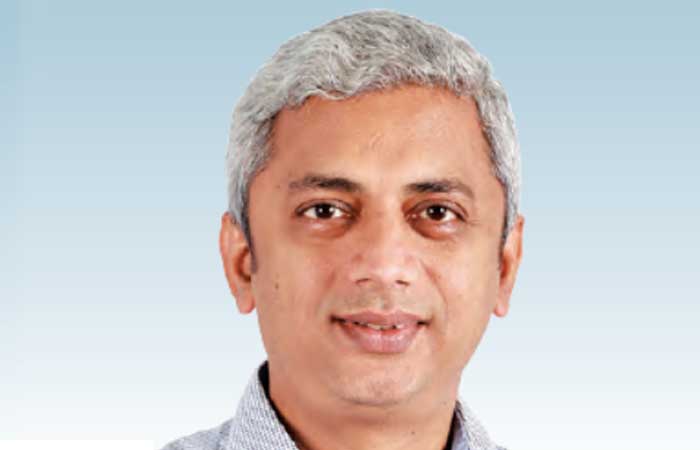
Chirag Shah, Head – Marketing, Nuvoco Vistas, explains how branding strategy transforms cement from a commodity into a customer-first, innovation-led experience.
In a market where cement is often viewed as a commodity, Nuvoco is breaking the mould through powerful branding built on innovation, sustainability and customer centricity. The brand’s evolution is both strategic and purpose-driven. In this interview, Chirag Shah, Head – Marketing, Nuvoco Vistas, explores how the company has redefined trust, value and differentiation across diverse geographies and digital landscapes.
How has branding influenced buyer preference in a largely commodity-driven cement market?
A strong brand riding on its USP’s will drives choice, shape perception, and influence preferences. At Nuvoco, our brand philosophy is firmly rooted in innovation and sustainability, enabling us to deliver solutions that not only meet expectations but consistently raise the bar. We believe it is the value we create for our customers that truly sets us apart in a commodity-driven market. In this pursuit, we continuously introduce industry-first innovations and adopt customer-centric approaches that emphasise accuracy, speed and delight.
By consistently enhancing our offerings and customer experiences, our brand shapes perceptions and strengthens preference in the market.
What role does trust play in your brand’s positioning strategy?
Trust is a cornerstone of our brand strategy. Recognising its importance, we have revisited and redefined our mission statement which reads: ‘Trusted Building Materials Company Creating Value forour Stakeholders.’
This wasn’t just a cosmetic change, it was a conscious, strategic decision that reflects our intent to be recognised not merely for the scale of our operations, but as a trusted brand that delivers lasting value to our most important stakeholder—our customer.
By placing customer centricity at the center of our approach, we aim to understand evolving needs, respond with agility and ultimately create experiences that drive customer delight, reinforcing trust at every touchpoint.
How do you balance price competitiveness with premium brand perception?
Premiumisation is a key strategic focus for us, built on the idea of delivering value over volume. Rather than focusing solely on price, we aim to provide differentiated products that offer clear and meaningful advantages to our customers.
This approach is yielding strong results, with premium products accounting for 40 per cent of total sales. Our flagship brands, Nuvoco Concreto UNO and Nuvoco Duraguard Microfiber, Cement with added fibre, continue to gain traction, driven by their performance, durability and relevance to evolving customer needs.
By combining innovative product development with market expansion, we are able to maintain price competitiveness in value segments while continuing to build and reinforce a strong premium brand identity across the country.
In what ways has your branding evolved with the shift towards green and sustainable cement?
Sustainability is at the core of everything we do. It’s embedded in our vision statement: ‘Building a Safer, Smarter, and Sustainable World’, a principle that continues to guide how we innovate and operate. Over the years, our brand has evolved to reflect this deeper purpose. While strength and durability remain the foundation of our offerings, we now place equal emphasis in promoting the use of blended cements like Portland Composite Cement (PCC) to investing in low-carbon cement technologies, our approach is strongly aligned with global environmental priorities.
A key example is our Ecodure range of Green Concrete, which is designed to embrace sustainability by reducing carbon emissions by up to 60 per cent compared to standard OPC mixes. Additionally, our latest breakthrough, Ecodure Thermal Insulated Concrete, is designed to reduce indoor temperatures—directly addressing India’s rising heat and supporting energy efficiency.
These innovations are powered by our Construction Development and Innovation Centre (CDIC), which plays a pivotal role in developing smarter, greener building materials for tomorrow’s needs. Through this journey, our brand has grown to represent not just performance, but responsible progress.
How important is regional branding in a diverse market like India?
We recognise that consumer preferences, behaviours and emotional triggers vary widely across geographies, and a one-size-fits-all approach simply doesn’t work.
At Nuvoco, we’ve adopted a multi-faceted and hyper-localised marketing strategy to build stronger connections at the grassroots level. Our efforts go beyond traditional advertising, we focus on community-led engagement and cultural relevance.
Campaigns such as Sabse Khaas Sarpanch in Madhya Pradesh, which reached 4,000 villages, engaged 2,500 sarpanchs, and honoured 150 top performers, and Sabse Khaas Pehalwaan in Haryana, which saw participation from over 1,500 aspiring wrestlers across all 22 districts, are prime examples of this approach. Similarly, our Nuvoco Sarthi initiative at the Mahakumbh offered an immersive brand experience to devotees and valued channel partners, including dealers, sub-dealers, and influencers, through strategic engagements and personalised services that reached over 25,000 visitors.
Additionally, our recently launched ‘Mera Bharosa’ campaign further underscores our strong drive to connect with target groups through regional influencers. This unique initiative builds advocacy by having dealers endorse our integral waterproofing solution directly at the point of purchase. Dealer cut-outs with the message ‘Ghar ke waterproofing ke liye Mera Bharosa – Nuvoco Zero M’ create instant credibility and impact.
These activations honour and empower local influencers—be it village sarpanchs or local wrestling champions—by celebrating their contributions and integrating them into our brand narrative.
Supported by modern tech tools and rural outreach, these regional campaigns help us not only build trust and relevance but also strengthen customer loyalty, build brand equity, and create lasting relationship.
What role does digital outreach play in reinforcing your brand identity today?
Digital outreach is a powerful enabler that allows us to engage with stakeholders in meaningful, measurable and increasingly personalised ways.
At the core of this strategy is our Nuvo Nirmaan app, which offers customers valuable tools such as home and floor plans, Vaastu scores, and material calculators. This reflects our customer-centric mindset and underscores our commitment to enhancing customer experience and delight. With over five million downloads, the app stands as a testament to its relevance and impact.
We’ve also introduced a suite of modern loyalty rewards programmes through mobile apps like Vriddhi, Milan, Maitri and Nipun, designed to cater to dealers, sub-dealers and individual home builders. These platforms are seamlessly integrated with our ERP systems, enabling smoother transactions and real-time tracking of loyalty benefits.
As consumer behaviour increasingly shifts toward online research and decision-making, we focus on creating informative, accessible, and relevant digital content that empowers buyers to make confident choices. Our data-driven approach allows us to optimise campaigns using metrics such as reach, engagement, and conversions, helping us fine-tune our outreach in real time. We also actively leverage social media platforms like LinkedIn, Facebook, and Instagram to share insights, showcase landmark projects, and foster conversations that build brand affinity. Additionally, influencer marketing—through partnerships with industry experts and content creators—expands our reach and strengthens trust through authentic endorsements and testimonials.
Our digital ecosystem further includes YouTube for demonstrative videos, WhatsApp for real-time dealer and contractor support, and CRM platforms for precise, tailored engagement. For us, it’s not just about maintaining visibility—it’s about participating in the right conversations at the right time.
Together, these efforts help shape a brand that is not only trustworthy but also deeply attuned to customer needs and how they prefer to engage.
How do you measure the return on investment (ROI) of brand-building activities?
Measuring ROI on brand-building is all about measuring impact, perception, and staying competitive. At Nuvoco, we use a blend of brand health metrics like awareness, recall, and NPS alongside business outcomes like market share, pricing power and
dealer satisfaction.
We listen closely through third-party research, CRM tools and social channels, gathering real feedback from customers, influencers, and partners. This tells us what’s resonating, and what needs refinement. On the digital side, we track reach, engagement and conversions while running omnichannel campaigns that combine online and offline touchpoints for greater efficiency and control.
– Kanika Mathur