Concrete
Customised Solutions for Alternative Solid Fuels
Published
3 years agoon
By
admin
Looking at the properties of secondary fuels and other parameters in a bid to understand the correct technical solutions required for handling ASF.
WALTER Materials Handling division of ATS Group-France, is a globally renowned brand in the field of design, manufacturing machines for Alternative Solid Fuels (ASF) handling systems since 1990s. In 2005, ATS Group established a state-of-art facility in India at Chakan MIDC of Pune, registered with the name, ATS Conveyors India Pvt Ltd and this facility serves as a global manufacturing hub for the products of WALTER Materials Handling Division.
Properties of secondary fuels, conditions of materials supply, requisite precision of processing, feed position in the kiln, automation requirements as well as the specific operating conditions at cement works all these have to be considered while working out a successful technical solution for handling ASF. It is well known that the properties of the secondary fuels are never constant and are heterogeneous in nature. This requires the use of equipment that is very flexible in operation. Walter Materials Handling division of ATS with its decades of experience in design, manufacturing of ASF handling systems for cement plants has therefore developed suitable equipment specifically for safe and reliable feeding of alternative fuels such as Municipal Waste, RDF, Shredded tires, impregnated saw dust, shredded plastics etc. As a rule the alternative fuels, which are just listed above as examples, all tend to bridge when stored in hoppers or silos and, as lightweight materials, often have bulk densities as low as 0.1 t/m3 or in some cases even less.
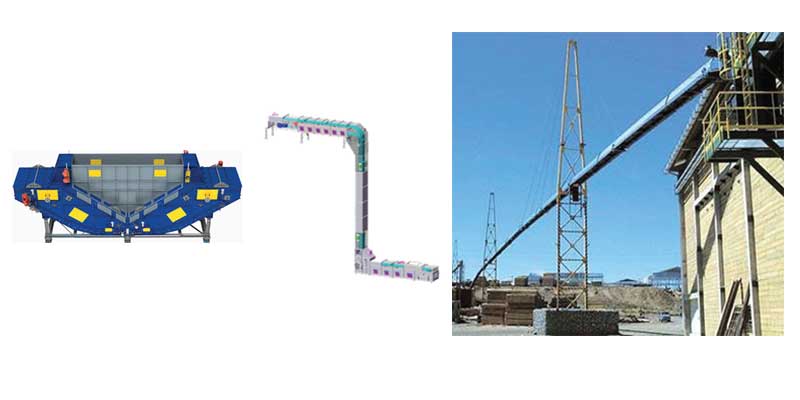
After the multiple successfully operating installations, of ATS designed Extractors and Double Flap Valves throughout the Globe in various Cement plants, we are delighted to announce the launch of our below listed new innovative products designed dedicated for addressing very specific customised site requirements evolved in the field of ASF handling based on feedback from different clients.
Major Indian customers of ATS in Cement industry include UltraTech, Dalmia, Birla Corporation, Ambuja, ACC, JK Lakshmi, JSW and many more.
TWIN DOSEAHORSE: This is a unique solution by ATS for Extraction cum Dosing system, used for controlled Dosing of Alternate Solid Fuels in two different feeding points. Additional advantage of this system is that it can be installed in the preheater tower of a cement kiln, very close to the inlet point for excellent dosing response, which is one of the key factors required for the substitution of fossil fuel. Using this system avoids the need of Flow Diverter and Weigh Belt Feeders for dosing in two different feeding point. Side Walls Conveyor: Transfer solution to the Pre-Heater building with a Side Walls conveyor for ASF conveying in a customised route. This can be used to convey AFR material on a high inclination and even for vertical conveying. Air Floating Conveyor: Air Floating Conveyor of ATS is very useful to convey ASF material with zero spillage up to long distances using the minimum investment of time and cost for project installation as well as operation maintenance.
You may like
-
UltraTech Board Approves Rs 50 bn Fundraise Via NCDs
-
Dealers are the most powerful brand medium
-
Nuvoco Vistas launches Limla cement plant, expands Gujarat footprint
-
ACC To Expand Cement Capacity Amid Strong Infrastructure Demand
-
Modern manufacturing is becoming challenging
-
JK Lakshmi Advances LC3 Cement Expansion
Concrete
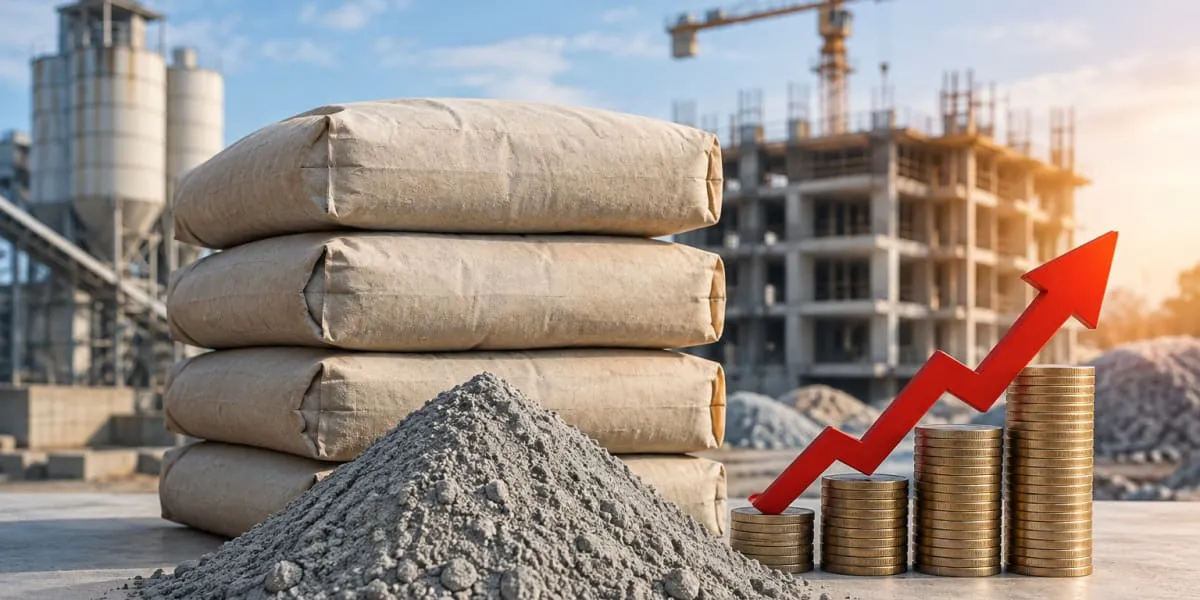
Cement Makers’ Margins To Fall Rs 50-75 Per Tonne Amid West Asia Conflict
Crisil Sees Margins Easing Despite Steady Demand
Published
3 weeks agoon
July 29, 2026By
admin
Crisil said operating margins of Indian cement manufacturers are expected to decline by Rs 50-75 per tonne (t) this fiscal to Rs 925-950 per t due to higher input costs triggered by the West Asia conflict. The analysis covered 18 cement companies accounting for nearly 90 per cent of India’s domestic cement capacity and noted margins had improved sharply to around Rs 1,000 per t in fiscal 2026.
Crisil noted that the reduction would be driven mainly by higher power and fuel costs, which account for about 30 per cent of total costs, as petcoke and imported coal prices have surged amid geopolitical uncertainties. Freight costs, which account for about a quarter of total costs, are also expected to remain elevated because of higher diesel prices. The impact on profitability is likely to be more pronounced in the first half of the fiscal year before easing commodity prices moderate cost pressures later.
The rating agency said steady domestic demand and strong balance sheets should keep credit profiles stable despite the moderation in margins. Green energy currently accounts for 35-40 per cent of the sector’s total electricity consumption and is expected to partly cushion higher energy costs. Operating cash flows are likely to remain resilient, supported by projected 6-7 per cent growth in cement demand this fiscal.
Crisil highlighted that demand growth will be driven primarily by infrastructure spending, which meets about one-third of sector consumption, and by a nearly 18 per cent higher budgetary allocation for core ministries that should support project execution. Weaker rural housing demand amid pressure on agricultural incomes from a possible below-average monsoon may be offset by improved urban housing demand supported by favourable home-loan rates and a strong pipeline of Pradhan Mantri Awas Yojana-Urban projects. Ongoing capacity additions will keep capital expenditure elevated and may lift net debt to EBITDA to between 1.2 and 1.4 times from around 1.0 time last fiscal, though ratios are expected to remain healthy.
Concrete
UltraTech Board Approves Rs 50 bn Fundraise Via NCDs
Company to issue half a million debentures for expansion plan
Published
3 weeks agoon
July 28, 2026By
admin
UltraTech Cement’s board of directors has approved raising Rs 5,000 crore (Rs 50 bn) through non?convertible debentures issued in rupees.
The finance committee cleared a proposal to issue up to 500,000 fully paid, unsecured, listed, rated, redeemable, rupee?denominated, non?convertible, non?cumulative debentures of Rs 1 lakh each (Rs 0.1 mn each), aggregating to the Rs 5,000 crore programme.
As of June 2026 the firm reported net debt of Rs 15,875 crore (Rs 158.75 bn) and said its capacity expansion projects under execution are backed by capital expenditure of about Rs 17,000 crore (Rs 170 bn) over the next two to two?and?a?half years.
UltraTech spent Rs 9,500 crore (Rs 95 bn) on capital expenditure in financial year 2026 and in April the group crossed 200.1 mn tonnes per annum of domestic grey cement capacity and 205.5 mn tonnes per annum of global capacity.
The chief financial officer indicated the company would take consolidated capacity beyond 242 mn tonnes per annum, with grey cement capacity reaching 212.7 mn tonnes per annum by the end of financial year 2027. He noted the net debt?to?earnings before interest, taxes, depreciation and amortisation ratio stood at 0.87 times as of June 2026 and the company was confident of ending financial year 2027 with the ratio below one time.
In the first quarter of financial year 2026?27 UltraTech’s net profit attributable to owners rose 16.8 per cent year?on?year to Rs 2,599.3 crore (Rs 25.993 bn) and revenue from operations increased 15.9 per cent to Rs 24,648.20 crore (Rs 246.482 bn). The board approval is expected to complement internal cash flows as the company advances its expansion programme.
Concrete
Green Construction through Cement Innovation
Published
4 weeks agoon
July 21, 2026By
admin
ICR and Fuller Technologies brought industry, policy and technology leaders together to discuss how cement innovation can drive green construction at scale.
India is building at a pace few countries can match. Highways, airports, housing, logistics parks, industrial corridors and urban infrastructure are reshaping the country’s economic geography. But beneath this growth story lies a difficult question: can India continue to build at scale without locking itself into a high-carbon future?
That question formed the core of an online panel discussion titled ‘Driving Green Construction Through Cement Innovation’, organised by Indian Cement Review (ICR) in association with Fuller Technologies as the Presenting Partner on June 25, 2026. The webinar brought together experts from cement technology, R&D, global industry platforms, building performance policy and international development cooperation to examine how low-carbon cement and material innovation can accelerate India’s green construction transition.
The discussion came at a crucial time. India has committed to achieving net-zero emissions by 2070 and reducing the carbon intensity of its economy by 45 per cent by 2030. At the same time, the country’s construction sector is expanding rapidly, driven by urbanisation, infrastructure development, housing demand and industrial growth. Cement, as one of the most widely used construction materials, sits at the heart of this transition. It is indispensable to development, but also central to the challenge of reducing embodied carbon in buildings and infrastructure.
Moderated by Nitika Krishan, Senior Urban Infrastructure and Sustainable Policy Consultant, the panel featured:
• Kiranmai Sanagavarapu, Director, Low Carbon Solutions, Fuller Technologies;
• Dr Hemantkumar Aiyer, VP and Head R&D, Nuvoco Vistas;
• Devika Wattal, Innovation Lead, Global Cement and Concrete Association (GCCA);
• Dr Sunita Purushottam, MD, GBPN India (Global Buildings Performance Network); and
• Vaibhav Rathi, Senior Technical Advisor, GIZ (the German Agency for International Cooperation)
Setting the tone for the discussion, Krishan underlined the scale of the challenge before the sector. “The question before us is no longer whether we build, but how we build sustainably,” she said. She pointed out that construction accounts for nearly 40 per cent of global energy-related carbon emissions when both operational and embodied carbon are considered. Cement production, she added, remains one of the hardest industrial processes to decarbonise.
For India, this is not merely an environmental issue. It is a development issue, a competitiveness issue and increasingly, a market issue. As one of the world’s largest cement producers and among the fastest-growing construction markets, India’s material choices will influence the carbon trajectory of its built environment for decades. As Krishan observed, sustainability solutions in economies such as India must not remain limited to laboratory success. They must be scalable, commercially viable and practical at national level.
The innovation gap: From technology to market
Experts believe that there is a need to bridge the innovation gaps for making decarbonisation in cement and concrete scalable. Wattal explained, “The starting point must be the core cement manufacturing process itself. The first and foremost is the heart of our process, the heart of cement manufacturing. How do we reduce clinker? That is always a topic where industry is working very intrinsically.”
Clinker reduction remains one of the most important pathways for lowering emissions in cement. Since clinker production is energy-intensive and chemically emits carbon dioxide, reducing the clinker factor through supplementary cementitious materials (SCMs), blended cements and new chemistries can have a significant impact. Wattal also noted that carbon capture, utilisation and storage (CCUS) will have a role, though it may not be the first lever for all markets.
However, she stressed that innovation cannot stop at technology development. A solution that works in the lab must also be adaptable to industry, scalable in production and acceptable in construction practice. “It is important for that innovation to be adaptable, to be scalable, and so that it can be executed in real time,” she said.
Wattal also called for stronger enabling systems around innovation. These include performance-based standards, product-level embodied carbon databases and clearer frameworks for evaluating green materials. Without these, low-carbon cement products may struggle to compete with conventional materials in procurement and design.
R&D must balance carbon, cost and performance
Bringing in the R&D perspective into the discussion, Dr Aiyer emphasised that low-carbon cement development cannot be treated as a single-variable exercise. Cement must perform in real construction conditions. It must deliver strength, durability, consistency and cost competitiveness, while also reducing carbon.
“The root of understanding and balancing all these aspects lies in materials, and knowing the materials,” he said.
According to Dr Aiyer, R&D teams must understand the variability of raw materials such as fly ash, slag and clinker. Different sources produce different material behaviours. This makes mix optimisation, material characterisation and processing-property relationships critical. When performance is affected, cement manufacturers must understand how strength enhancers, admixtures and other performance chemicals interact with the material system.
He also linked material science with process efficiency. Clinkerisation takes place at extremely high temperatures, around 1,400 to 1,450 degrees Celsius. Any improvement in raw mix design, process control or energy optimisation can, therefore, help reduce emissions and cost. Dr Aiyer pointed to artificial intelligence-based optimisation, Cement 4.0 tools and advanced software as important enablers for real-time process and material control.
“The more you understand the materials, the more you can control it,” he said.
LC3: The promise is proven, the sequencing is not
Limestone calcined clay cement, commonly referred to as LC3, has attracted global attention because it can reduce clinker content significantly by using calcined clay and limestone while maintaining performance in many applications. Sanagavarapu said the technology itself has already moved beyond proof of concept. Fuller Technologies has worked with calcined clay technology for nearly two decades and has seen plants running in France and Ghana. These plants, she said, are meeting local and national specifications, while the economics are beginning to make sense.
“The calciner is performing, the economics is stacking up, it is making business sense to produce,” she said.
But if the technology is viable, why has adoption not scaled faster? For Sanagavarapu, the answer lies in project sequencing. Too often, clay characterisation happens after equipment is specified. This, she warned, is a backward approach because calciner design depends on clay mineralogy, kaolinite content, iron levels, reactivity, moisture and other variables.
“If you don’t know what your deposit looks like before you commit for the equipment, you are, in a way, going blind into designing,” she said.
She also identified permitting and plant integration as major bottlenecks. Environmental clearances, mining permissions and local regulatory approvals must begin early. Similarly, calcined clay must be integrated into existing grinding, blending and logistics systems from the design stage, not treated as an afterthought during commissioning.
India already has IS 18189:2023 standard for LC3, but Sanagavarapu pointed out that the standard is not yet visible enough in procurement documents. “The gap between what is technically being permitted and what the procurement is asking is the single biggest bottleneck,” she said.
In her view, successful scale-up depends on getting the sequence right: clay characterisation first, permitting in parallel, standards aligned with construction, and integration built into plant design.
India’s LC3 journey: Progress, but demand remains thin
Providing details of India’s LC3 commercialisation experience, Rathi noted that JK Cement carried out the first commercial production of LC3 at its Rajasthan plant, followed by JK Lakshmi Cement three months later. These initiatives were supported by the International Climate Initiative of the Government of Germany, with IIT Delhi contributing deep institutional knowledge on LC3 research and BIS certification.
Rathi said India’s early experience has produced clear lessons. One of the biggest was the need to build capacity among regulators. While BIS certification existed, State Pollution Control Boards were unfamiliar with the technology and unsure about the approval pathway.
“The capacity building is not just needed amongst the producer and the users of the cement, but also the regulators who are working with this technology for the first time,” he said.
He also highlighted the need for better information on China clay deposits. Since China clay is currently classified as a minor mineral, centralised data on availability, quality and location is limited. If cement manufacturers are to adopt LC3 at scale, stronger mineral intelligence will be important.
The third issue is demand. LC3 has already been used in projects such as Palava City in Mumbai and Noida International Airport, but these remain limited examples. “It is in a chicken and egg situation,” Rathi said. “Cement companies are saying we need more demand, and users are saying there is not enough cement available.”
Public procurement, he suggested, could help break this cycle. If agencies such as CPWD and other public bodies begin testing, accepting and specifying LC3, it could create the market confidence needed for cement companies to invest in production and storage.
Building codes must catch up with innovation
Dr Purushottam argued that material choices will determine built environment emissions over the long term, but India’s current policy signals remain fragmented. Although LC3 has received BIS recognition, she pointed out that building codes, municipal bylaws, schedules of rates and sustainability codes do not yet provide uniform guidance on low-carbon cement.
“The current cement regulations are largely prescriptive and favouring traditional materials,” she said. This limits the ability of alternative materials to compete on performance, durability and emissions.
Dr Purushottam also raised the issue of taxation. Cement, including LC3, currently falls under the same GST bracket as conventional cement. A differentiated tax structure, she argued, could help accelerate market adoption. “In order for the market to demand LC3, that differentiation in the GST could go a long way,” she said.
She noted that green building certifications such as IGBC and GRIHA are already creating demand for low-carbon materials by assigning points for embodied carbon and sustainable material use. However, she said large-scale adoption will require regulatory mandates, particularly through building codes and state-level notifications.
She also cautioned that low-carbon cement alone does not solve the entire building performance problem. A material may reduce embodied carbon, but the operational carbon of a building depends on thermal performance, design, insulation and energy use. “The energy part has two elements,” she said. “One is the embodied carbon of the material itself, and the other is the operational carbon.”
Collaboration is the bridge between invention and impact
Wattal said GCCA sees innovation as a strategic priority and works through platforms that connect industry with academia and start-ups. “There is no way we will decarbonise our sector without innovation,” she said.
However, she stressed that research must be connected to actual industry challenges. Innovations developed in isolation may fail when they encounter real-world barriers such as raw material variability, plant integration, cost, standards and finance.
Start-ups, too, need industry mentorship and scale-up pathways.
Wattal also flagged the importance of finance. Even strong technologies may struggle to attract investment if there is no common understanding of bankability. “We have always put projects into, is this a bankable project? But the definition of a bankable project has never been defined,” she said.
For India, she saw strong potential in its academic and start-up ecosystem, but said the challenge lies in alignment and prioritisation. The country has the research base, industrial capacity and market size. What it now needs is a coordinated route from innovation to deployment.
There is a practical concern for cement manufacturers: how can existing plants be adapted for lower emissions without compromising reliability or commercial viability?
Sanagavarapu explained, “The reliability risk in calcined clay retrofit is definitely real, but it is almost always self-inflicted. The risk arises when a new process is added to an existing circuit without properly redesigning grinding and blending configurations.”
Existing cement plants, she explained, can take two broad routes. The first is external sourcing of calcined clay combined with mill optimisation. This requires lower capital investment and can potentially move in 12 to 18 months if other conditions are in place. It may reduce emissions by around 20 to 30 per cent. The second route is integrated calcination on site, which requires higher capital expenditure and longer lead times, but provides greater control over quality, supply and emissions reduction potential.
For Sanagavarapu, the principle is simple: low-carbon retrofits must be designed with intent. “Design it with an intent properly from the start. Start in the market conditions where the economics are already working,” she said.
Circularity: The overlooked advantage
According to Rathi, fly ash and slag are already well established in cement and construction (C&D), but construction and demolition waste remains underutilised. “C&D waste is a growing business opportunity which not many have taken up,” he said. India’s continuous construction and demolition activity creates huge volumes of waste, much of which contributes to air pollution, land degradation and material inefficiency. With the right processing and standards, this waste can be converted into useful construction products.
Rathi also pointed out that LC3 has a circular economy dimension that is often overlooked. It can use low-grade kaolin-rich clay left behind after high-grade clay is extracted for other applications. “LC3 is not only a low-carbon solution, but also a circular economy solution,” he said.
At the same time, he cautioned that LC3 in India is not yet cheap because it has not reached scale. Site-specific techno-commercial feasibility studies, supported jointly by development agencies and industry, could help companies assess whether LC3 production makes technical and financial sense at a given location.
Dr Purushottam added that India must address both low-carbon cement and construction waste together. “Both low-carbon cement and C&D waste go hand in hand. India does not have an option but to work on both,” she said.
Dr Aiyer called for policy shifts from both government and industry, including preferential purchasing of sustainable materials, minimum supplementary cementitious material requirements in public and public-private projects, and faster regulatory implementation. “If we can fast-track the regulatory standards and their implementation on the ground, that is the way to go,” he said.
From green ambition to green construction
Cement innovation is no longer only about chemistry. It is about systems. Low-carbon cement will scale only when technology, standards, procurement, finance, regulation, education and construction practice move together.
LC3 and other low-carbon technologies have shown promise. India has early commercial examples, strong research capability and growing market interest. But mainstream adoption will depend on whether demand can be created, regulators can be capacitated, standards can be embedded in procurement, and manufacturers can see a clear business case.
For a country building at India’s scale, the opportunity is enormous. Cement will continue to be central to infrastructure and urban development. The challenge now is to ensure that the cement used in India’s growth story carries a lower carbon burden.
The Road Ahead Begins Here
Cement Makers’ Margins To Fall Rs 50-75 Per Tonne Amid West Asia Conflict
UltraTech Board Approves Rs 50 bn Fundraise Via NCDs
Fornnax Names Lukas Baur as Authorised Service Partner to Bolster EU Operations
Green Construction through Cement Innovation
The Road Ahead Begins Here
Cement Makers’ Margins To Fall Rs 50-75 Per Tonne Amid West Asia Conflict
UltraTech Board Approves Rs 50 bn Fundraise Via NCDs
Fornnax Names Lukas Baur as Authorised Service Partner to Bolster EU Operations
Green Construction through Cement Innovation
Trending News
-
Concrete4 weeks agoLokesh Lays Stone For Rs 31 Billion Cement Unit In Kadapa
-
Economy & Market4 weeks agoFornnax Names Lukas Baur as Authorised Service Partner to Bolster EU Operations
-
Concrete3 weeks agoUltraTech Board Approves Rs 50 bn Fundraise Via NCDs
-
Concrete3 weeks agoCement Makers’ Margins To Fall Rs 50-75 Per Tonne Amid West Asia Conflict