Concrete
Creating a Carbon Sink
Published
7 months agoon
By
admin
Olli Hänninen, Owner and Co-founder, Moviator Oy, discusses the future of decarbonising cement through smart material utilisation.
Over the decades, the cement sector has advanced from scale to sophistication, and now it faces its most profound transformation yet — decarbonisation of one of the world’s most carbon-intensive industries.
The theme — The 3Cs: Cut, Cement, Carbon — captures a new mindset. Cutting emissions is no longer just about compliance; it is central to competitiveness. Cement, once seen as a fixed formula, is being reimagined through technology and circularity. And carbon itself, traditionally treated as waste, is emerging as a potential input. Together, these three Cs define not only a challenge but also a remarkable opportunity.
Cement’s dual carbon burden
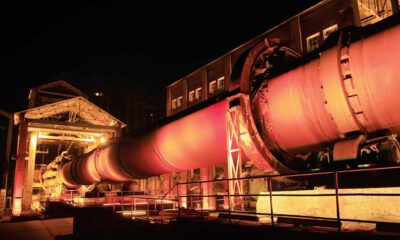
Cement production carries a double carbon burden — from both the energy required to heat kilns and the chemical release of CO2 from limestone during clinker production. Even with modern efficiency improvements, the underlying chemistry of the process remains inherently carbon-intensive.
Traditional ‘Cut’ measures — improving thermal efficiency, using alternative fuels, or lowering the clinker factor — are vital, but not sufficient on their own. The next step lies in rethinking the materials themselves: how we process them, how we use them, and how we can capture and store carbon directly within them.
Slag: From by-product to resource
Among industrial by-products, steelmaking slag stands out as one of the most underused materials in the journey to decarbonisation. Produced at roughly 200 kg per tonne of steel, it is often stockpiled or landfilled, despite containing valuable calcium- and magnesium-bearing compounds.
Blast-furnace slag from ironmaking is already widely used in blended cements, but steel slags from basic oxygen or electric arc furnaces remain challenging. They are heterogeneous, often solidifying into massive rock-like blocks known as steel skulls, or into finer, inconsistent fractions. These forms are difficult to process and integrate reliably into cement production.
Yet this complexity conceals opportunity. Slag is abundant, stable, and — with the right processing — capable of replacing a large share of clinker while storing CO2 within its structure.
Unlocking the hidden value in slag
At Moviator Oy, we focus on two critical and often overlooked fractions of steelmaking slag that have historically been difficult to process — but which hold immense untapped potential for decarbonising cement and improving circularity in steel production.
1. Large solidified steel skulls
These massive, irregular formations solidify at the bottom of ladles or converters and have traditionally been cut apart using oxygen lances — a slow, energy-intensive, and hazardous process. Moviator has developed an innovative process that enables the efficient treatment of solidified steel skulls, eliminating the need for conventional thermal cutting and improving material recovery.
Once treated, the recovered metallic portions are returned to the steelmaking cycle, while the mineral component is directed for cementitious applications. This dual recovery approach maximises resource efficiency, reduces waste, and lowers both carbon and energy footprints across the steel and cement value chains.
2. The sub-50 mm fine fraction
At the other end of the size spectrum, finer slag particles can be further refined through advanced grinding techniques, achieving reactivity levels well above standard cement benchmarks. This transformation enhances the slag’s ability to act as an effective supplementary cementitious material (SCM), capable of replacing a substantial portion of the clinker in blended cements.
Together, these two complementary approaches — recovery and recycling of steel skulls and activation of fine slag through precision grinding — enable Moviator to transform slag from an inert by-product into a high-performance, low-carbon cement material, while simultaneously closing the loop within the steel industry.
This material transformation is only the first step. The next challenge — and opportunity — lies in what we do with carbon itself.
Beyond storage: Turning CO2 into stone
Most global attention focuses on carbon capture and storage (CCS) — compressing CO2 and injecting it underground. While CCS has value, it raises questions of permanence, cost, and long-term monitoring.
Moviator takes a different path: carbon utilisation through mineral carbonation. In simple terms, captured CO2 reacts with calcium- and magnesium-rich compounds in slag to form stable carbonates, effectively turning gaseous emissions into solid minerals within a controlled process environment.
This approach achieves two outcomes:
1. Permanent carbon binding: CO2 is locked into a solid matrix with no risk of re-release.
2. Improved material properties: Carbonated slag is more stable and can exhibit enhanced early strength and durability.
This is more than a laboratory concept. Pilot-scale work has already demonstrated that 4–5 tonnes of slag can permanently store around one tonne of CO2, confirming that industrial by-products can become long-term carbon sinks within a circular cement economy.
A realistic path to a circular, carbon-negative loop
Our vision is a circular, carbon-negative cement ecosystem — one that absorbs more CO2 than it emits. In this system, industrial waste becomes both raw material and carbon storage medium, creating a closed loop between the steel, cement, and carbon management sectors.
This concept builds on real trends already taking shape:
- Cement plants near steelworks using slag as feedstock.
- Pilot carbonation systems integrating captured CO2 from industrial exhausts.
- Early life-cycle assessments showing that mineralised slag can achieve net CO2 reductions of 70–90 % compared to conventional clinker.
However, realising a fully circular model will require more than technology. It will demand:
- Clean energy for grinding and carbonation to ensure net carbon benefits.
- Proximity and logistics between steel, cement and CO2 sources.
- Updated standards and policies that recognise mineral carbonation as a verified form of carbon removal.
Currently, most climate frameworks credit geological storage but not yet mineralised products. Changing that will take collaboration between innovators, regulators, and investors. Still, the direction is clear: CO2 mineralisation is emerging as a credible, permanent carbon sink with industrial-scale potential.
Practical optimism: Balancing vision and reality
The idea of a carbon-negative cement industry is ambitious — and it should be. Cement contributes roughly 7-8 per cent of global CO2 emissions, so any solution must be bold. But ambition must come with realism.
Scaling up slag carbonation will take time. Reactors must handle large volumes efficiently, and the economics depend on CO2 availability, energy costs, and policy incentives. Yet progress is rapid: several European plants are already demonstrating carbonated aggregates and binder materials commercially.
Moviator’s strategy reflects this practical optimism — combining proven engineering principles with forward-looking applications. Each tonne of refined, carbonated slag replaces high-emission clinker and locks away CO2 permanently, turning waste into value step by step.
The mindset shift: The 3Cs reimagined
The 3Cs — Cut, Cement, Carbon — are not separate goals but interconnected levers of transformation:
- Cut emissions by improving efficiency and material circularity.
- Cement innovation by replacing clinker with reactive industrial by-products.
- Carbon redefined as a useful input, not just a waste stream.
To truly decarbonise, the industry must embrace both radical innovation and practical integration. Every action that converts waste to raw material and emissions to mineral stability brings us closer to a sustainable cement future.
From incremental to transformative
Decarbonising cement will not happen overnight. It will take imagination, cross-sector collaboration and new standards that reward permanent carbon binding. But the tools are already here — from smarter slag processing to direct CO2 mineralisation.
Moviator’s work in refining steel skulls and utilising slag demonstrates that circular, low-carbon materials are not science fiction. They are emerging now, one pilot and partnership at a time.
The 3Cs mindset is ultimately about shifting perception — from seeing materials as static commodities to viewing them as active agents in the carbon cycle. Through this lens, cement production can evolve from a major emitter to a permanent carbon sink, helping build not only the world’s infrastructure but also its climate resilience.
ABOUT THE AUTHOR:
Olli Hänninen, Owner and Co-founder, Moviator Oy, helps industries maximise material recovery with advanced slag processing technology.
Concrete
Cement Makers Reaffirm Commitment to Sustainable Growth
Published
6 days agoon
June 5, 2026By
admin
World Environment Day spotlight on innovation and circularity
On World Environment Day, the Indian cement industry reiterated its commitment to supporting India’s climate ambitions through sustainable manufacturing, resource efficiency and the adoption of cleaner technologies.
The Cement Manufacturers’ Association (CMA) said the sector remains aligned with the Government of India’s Net Zero commitments and is accelerating efforts to reduce its environmental footprint while supporting the country’s infrastructure and development agenda.

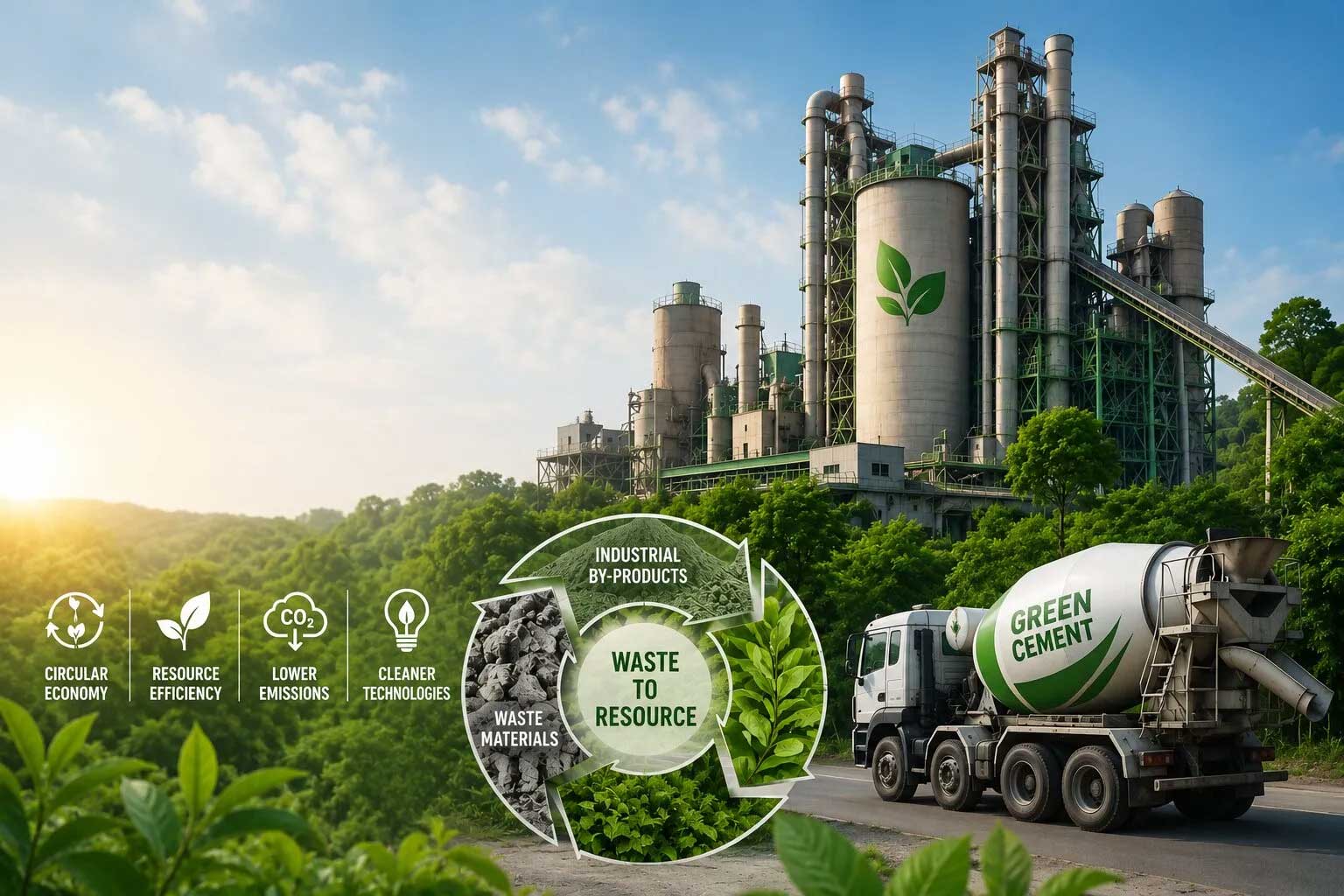
Parth Jindal, President, CMA and Managing Director, JSW Cement, said the industry is increasingly adopting cleaner technologies, improving energy efficiency and expanding the use of alternative fuels and raw materials. He also highlighted the growing importance of circular economy practices, where industrial by-products and waste streams from one sector are utilised as resources in another.
“The Indian Cement Industry is aligned to the Government’s commitments on carbon mitigation and is accelerating the adoption of cleaner technologies, resource efficiency and circular economy practices while actively exploring the potential of Carbon Capture, Utilisation and Storage (CCUS) as a critical pathway for deep decarbonisation,” said Jindal.
He added that coprocessing industrial waste and by-products helps conserve natural resources, reduce disposal requirements and lower the environmental footprint across multiple sectors.
According to Jindal, sustainability is no longer limited to manufacturing processes but is increasingly influencing investment decisions, innovation strategies and long-term growth plans within the industry.
Echoing similar views, Dr Raghavpat Singhania, Vice President, CMA and Managing Director, JK Cement, said sustainable development extends beyond emissions reduction and must also focus on responsible resource utilisation and waste minimisation.

“Sustainability in the built environment cannot be measured by emissions alone. It is equally about how efficiently we use resources, how effectively we minimise waste and how responsibly we create the infrastructure that will serve future generations,” said Singhania.
He noted that the cement industry is advancing its sustainability agenda through greater resource efficiency, increased circularity, technological innovation and continuous improvements in manufacturing practices. As a key contributor to India’s infrastructure development, the sector has a critical role to play in balancing economic growth with environmental responsibility.
On the occasion of World Environment Day, industry leaders reaffirmed their commitment to supporting India’s climate goals while delivering the materials required for resilient, durable and sustainable infrastructure.
Environmental sustainability requires immediate action, not just long-term commitments and discussions. Recycling, circular economy practices, and technology-driven waste management can help industries reduce environmental impact while supporting sustainable growth.
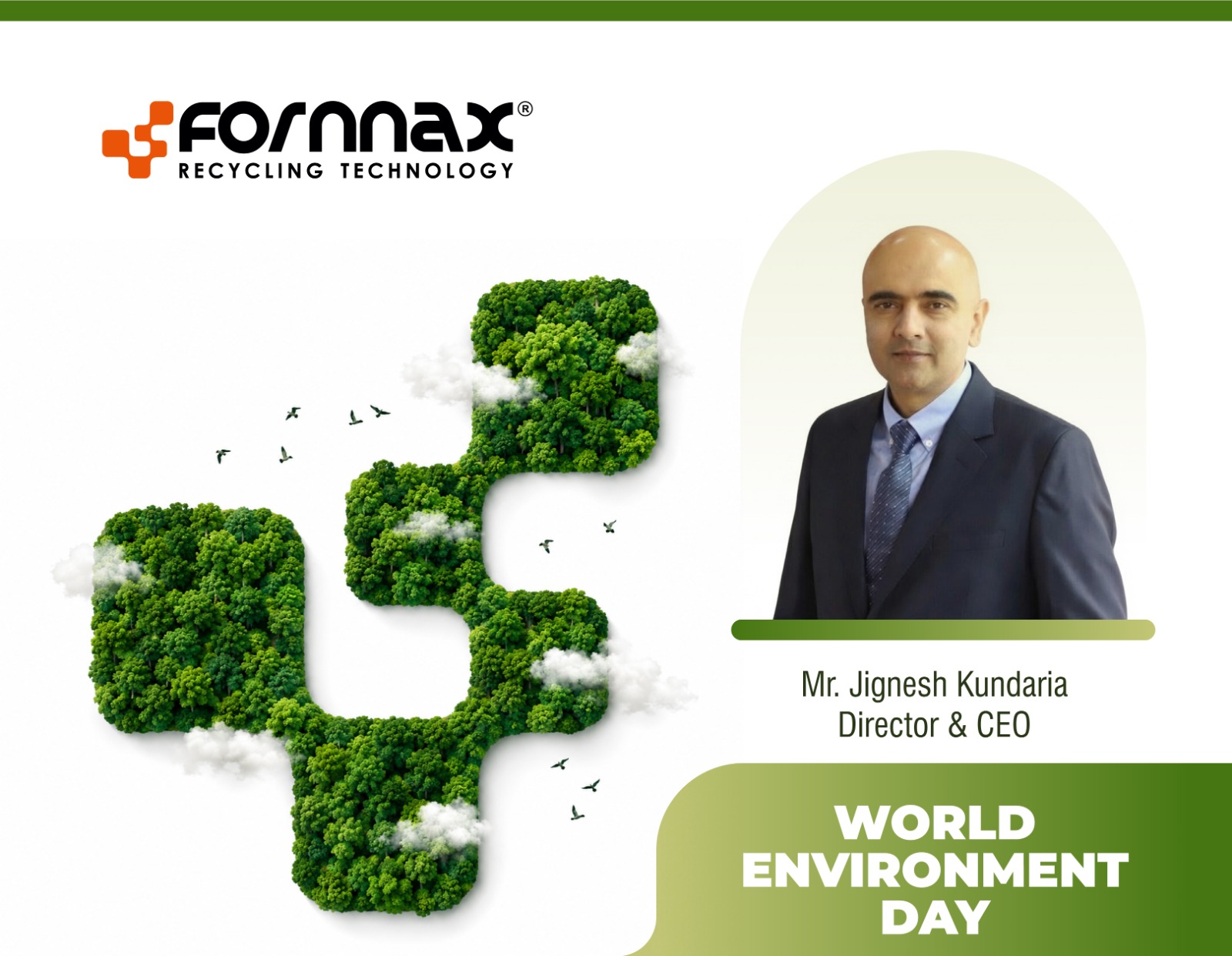
Author: Jignesh Kundaria, Director and CEO, Fornnax Technology
World Environment Day serves as an important reminder that environmental sustainability can no longer remain confined to discussions, reports, or long-term commitments. The environmental challenges facing the world today demand immediate, measurable, and collective action. Across industries and communities, waste generation continues to outpace our ability to process it responsibly, placing increasing pressure on ecosystems, natural resources, public health, and the well-being of future generations.
One of the most significant shifts required today is a change in how society perceives waste. Rather than being viewed as a material to be discarded, waste must be recognised as a valuable resource that can contribute to both economic growth and environmental protection when managed through the right technologies and systems. This mindset forms the foundation of the circular economy model that countries across the world are increasingly adopting to reduce landfill dependence, recover valuable materials, and create more sustainable industrial ecosystems.
India has made meaningful progress in strengthening awareness around sustainability, recycling, and environmental responsibility over the past decade. Significant efforts are being made to formalise the recycling sector through improved infrastructure, technology adoption, policy implementation, and broader stakeholder participation. These developments are creating a stronger foundation for responsible waste management and resource recovery across the country.
However, achieving long-term environmental impact requires collaboration from all stakeholders. Industries, policymakers, technology providers, and communities must work together with greater accountability to strengthen recycling ecosystems, encourage responsible waste management practices, and create sustainable outcomes through consistent execution rather than temporary interventions.
As someone closely associated with the recycling industry, I firmly believe that technology will play a decisive role in addressing future environmental challenges. Advanced recycling systems have the potential to recover valuable resources, reduce pollution, minimise landfill burdens, and conserve energy, creating a more sustainable future for generations to come. This belief is deeply reflected in Fornnax’s motto, “Committed to Create a Green Future,” which embodies our commitment to building long-term environmental value through innovation and responsible action.
At the same time, technology alone cannot deliver meaningful change. Real progress requires intent, awareness, participation, and a shared sense of responsibility. Sustainable development can only be achieved when innovation is supported by collective action and a genuine commitment to environmental stewardship.
On this World Environment Day, let us move beyond conversations and take meaningful steps towards creating a cleaner, greener, and more sustainable planet. By embracing innovation, strengthening recycling ecosystems, and acting responsibly today, we can create lasting environmental impact and secure a better future for generations to come.
Concrete
JK Lakshmi Advances LC3 Cement Expansion
Company highlights commercial production and research partnerships
Published
1 week agoon
June 1, 2026By
admin
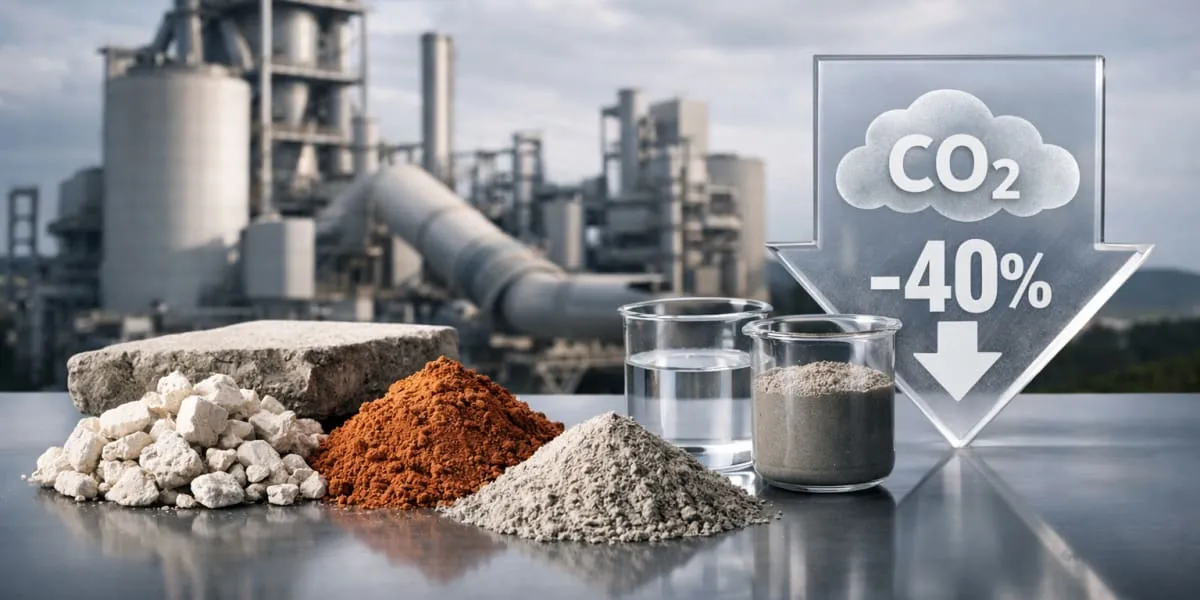
The meeting reviewed progress in limestone calcined clay cement (LC3) technology and its commercial adoption in India’s cement sector, focusing on low-carbon alternatives to conventional binders. JK Lakshmi Cement noted that limestone calcined clay cement can reduce carbon dioxide emissions by up to 40 per cent compared with conventional cement and said this reduction supports industry decarbonisation. The company highlighted that it was among the first two cement manufacturers in India to move LC3 into commercial production after the Bureau of Indian Standards approved the technology as a cement standard.
Vinita Singhania said the transition of LC3 from research to commercial production reflected collaboration between industry, academia and international institutions. Maya Tissafi acknowledged JK Lakshmi Cement’s role in advancing LC3 adoption in India and its contribution in taking the technology from laboratory trials to commercial implementation. Both representatives underlined the growing relevance of sustainable construction materials as India expands infrastructure and urban development.
The meeting explored continued collaboration with Swiss research institutions such as EPFL, EMPA and ETH Zurich alongside Indian academic partners and development organisations. JK Lakshmi Cement has been associated with the LC3 initiative since 2014 and worked with EPFL, IIT Delhi, IIT Madras, Development Alternatives and Technology and Action for Rural Advancement. The company conducted one of the earliest industrial trials of LC3 and recently announced commercial production of Green Pro LC3 cement from its Jaykaypuram plant in Rajasthan.
India remains the world’s second-largest cement producer and expansion of infrastructure, urbanisation and housing demand continue to support long-term sector growth, increasing interest in low-carbon technologies. The company reported an annual turnover of more than Rupees (Rs) 60 bn and current cement capacity of about 18 million (mn) tonnes (t) per annum, with a target of reaching 30 million (mn) tonnes (t) by 2030. Apart from grey cement, the company also makes ready-mix concrete, gypsum plaster, wall putty, primers, adhesives and fly ash blocks, and both sides concluded on the need for continued collaboration to develop sustainable construction solutions.
Cement Makers Reaffirm Commitment to Sustainable Growth
Building a Greener Future Together
JK Lakshmi Advances LC3 Cement Expansion
Burnpur Cement Reports Standalone Net Loss Of Rs 207.4 Million
Ramco Cements Campaign Wins Six Kyoorius Honours
Cement Makers Reaffirm Commitment to Sustainable Growth
Building a Greener Future Together
JK Lakshmi Advances LC3 Cement Expansion
Burnpur Cement Reports Standalone Net Loss Of Rs 207.4 Million