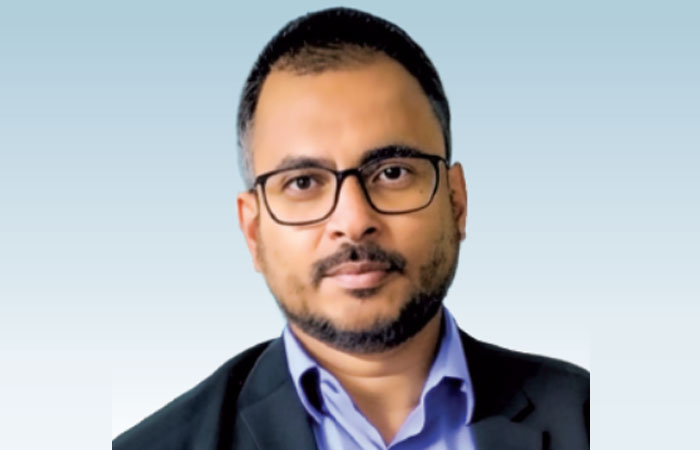
By integrating geology, engineering and sustainability into every decision, Prasanajit M, Founder and Managing Director, Shanvi Resources, helps companies deliver measurable ESG outcomes while securing long-term operational and financial resilience.
In this insightful interview, Prasanajit M, Founder and Managing Director, Shanvi Resources, shares how advisory services are driving sustainable practices across the mining lifecycle. From resource estimation and feasibility studies to digital modelling and ESG integration, consultancy is shaping mines that are profitable, environmentally responsible and socially trusted.
How do you define sustainable mining from a consulting and advisory perspective?
Sustainable mining is the disciplined alignment of geology, engineering, environment and economics so that every tonne mined today preserves or enhances the social, ecological and financial capacity to mine tomorrow. As advisors, we translate that into bankable plans with measurable ESG outcomes, lifecycle cost realism and transparent stakeholder governance.
What role do geology and resource estimation play in ensuring long term sustainability?
Geology is destiny. Robust resource models (domain-controlled, QA/QC-defensible, with appropriate classification) underpin selective mining, low strip ratios and predictable feed. Accurate estimation reduces dilution and re-handling, optimises pit designs, stabilises plant throughput/grade, and thereby lowers carbon and water intensity per tonne of product.
How can feasibility studies integrate both economic and environmental considerations?
By treating environmental and social factors as design inputs not afterthoughts.
In practice:
• Embed carbon, water, land-disturbance, and biodiversity metrics into the options trade-off matrix.
• Price externalities (carbon, rehabilitation, water) into NPV and sensitivity cases.
• Apply ‘avoid–minimise–restore–offset’ sequencing to mine, waste and tailings footprints.
• Use staged capital to derisk ESG alongside metallurgy and logistics, with clear leading indicators and trigger points.
What do global reporting standards (JORC, NI 43-101) mean for responsible mining in India?
They institutionalise accountability. JORC/NI 43-101 require qualified persons, transparent data, reasonable prospects for eventual economic extraction and clear communication of risks. For India, wider adoption elevates investor confidence, improves comparability across deposits, and nudges the ecosystem toward better QA/QC, data custody and community aware planning well before the first shovel turns.
How do you help mining companies balance compliance with profitability?
We embed compliance into the value chain:
• Map regulatory requirements to process gates (exploration ? feasibility ? construction ? operations).
• Convert permits and local content duties into scheduled deliverables with owners and budgets.
• Quantify the ROI of compliance (e.g., lower disruption risk, faster approvals, premium pricing, better debt terms).
• Use digital audit trails so reporting is by-product, not rework.
What innovations in exploration are enabling more efficient and eco-friendly mining?
• AI assisted targeting from multi-sensor remote sensing and historical data.
• Lightweight, low impact geophysics and precision drilling that reduce pads, roads, and fuel.
• Portable analytics/XRF for smarter, tighter drilling programs and fewer barren metres.
• Drone based mapping and environmental baseline capture that shrink field time and disturbance.
How do you see digital modelling transforming sustainable resource management?
From static models to living ‘digital twins’ of the orebody and operation:
• Dynamic block models linked to short-interval control reduce dilution and energy/water per tonne.
• Scenario pits and schedules quantify ESG and cost trade-offs before execution.
• Integrated tailings/waste models optimise landforms and closure from day one.
• Predictive maintenance and dispatch analytics cut idle time and emissions.
What is your vision for consultancy’s role in shaping a greener mining ecosystem?
Consultants must be integrators and challengers bringing rigorous standards, local context and cross-disciplinary design to deliver profitable mines that communities can trust and ecosystems can tolerate. Our role is to make sustainability bankable, measurable and operational every day, not just in reports.
– Kanika Mathur