Pukhraj Sethiya and Kundan Singh present an analytical outlook on how the Indian cement industry is approaching sustainable mining, exploring the guiding frameworks, facing challenges and utilising digital tools.
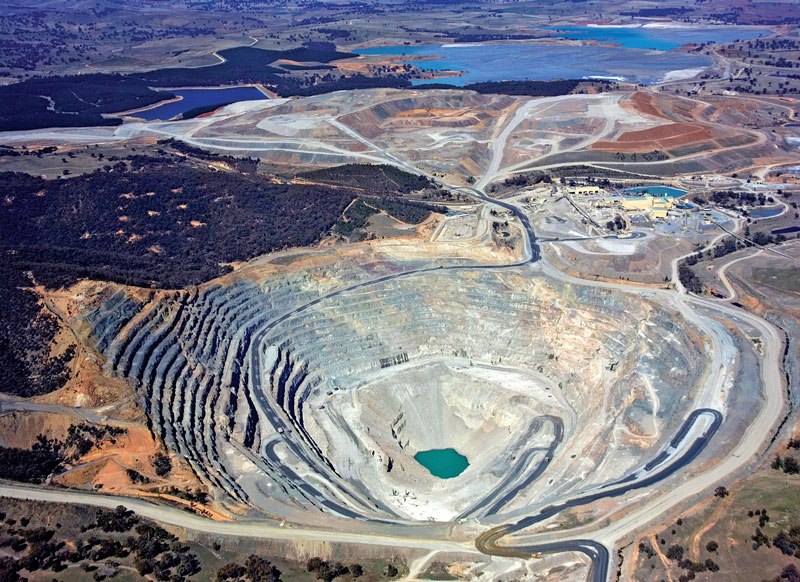
India’s cement industry, second only to China in scale, is a backbone of national infrastructure and housing development. With over 700 million tonnes per annum (MTPA) of installed capacity and around 450 MTPA production in FY 2025, the sector accounts for nearly 8 per cent of global cement output. Limestone, the principal raw material, is sourced largely from shallow, land-intensive mining operations.
However, this dependence on primary extraction raises pressing concerns: land degradation, water stress, emissions, and community displacement. As India commits to net-zero by 2070 and global supply chains increasingly demand ESG compliance, cement-linked mining must undergo a transformation towards low-carbon, resource-efficient and socially inclusive practices.
This article provides an analytical view of sustainable mining in the cement sector, covering frameworks, barriers, digital enablers, consulting roles and global benchmarks shaping the industry.
Defining sustainable mining in the cement ecosystem
Sustainable mining is not merely about compliance—it is about optimising resource use while safeguarding ecological and social systems. In cement-linked mining, it implies:
Resource efficiency
o Moving beyond simple limestone extraction by minimising waste and optimising blasting, haulage, and processing.
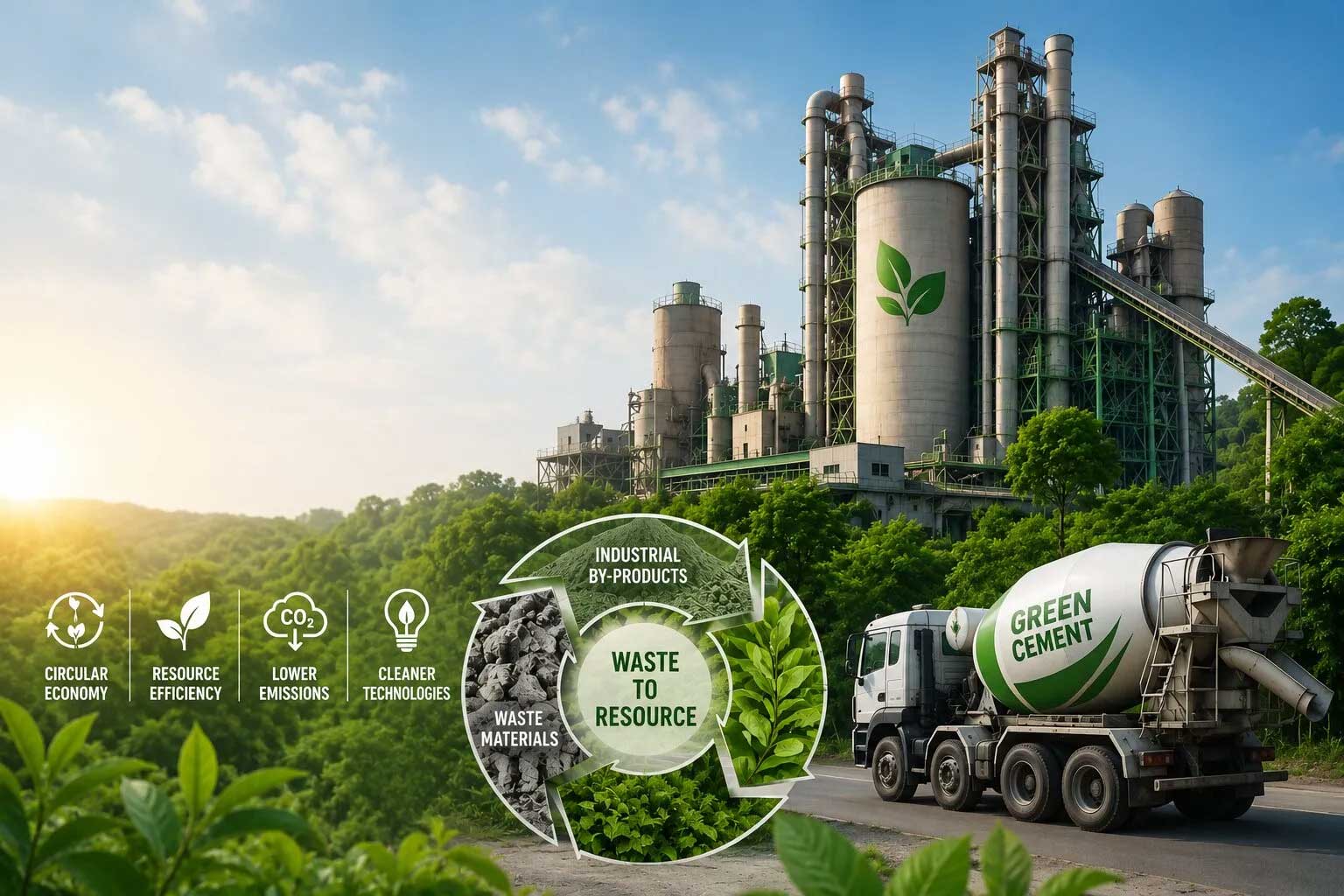
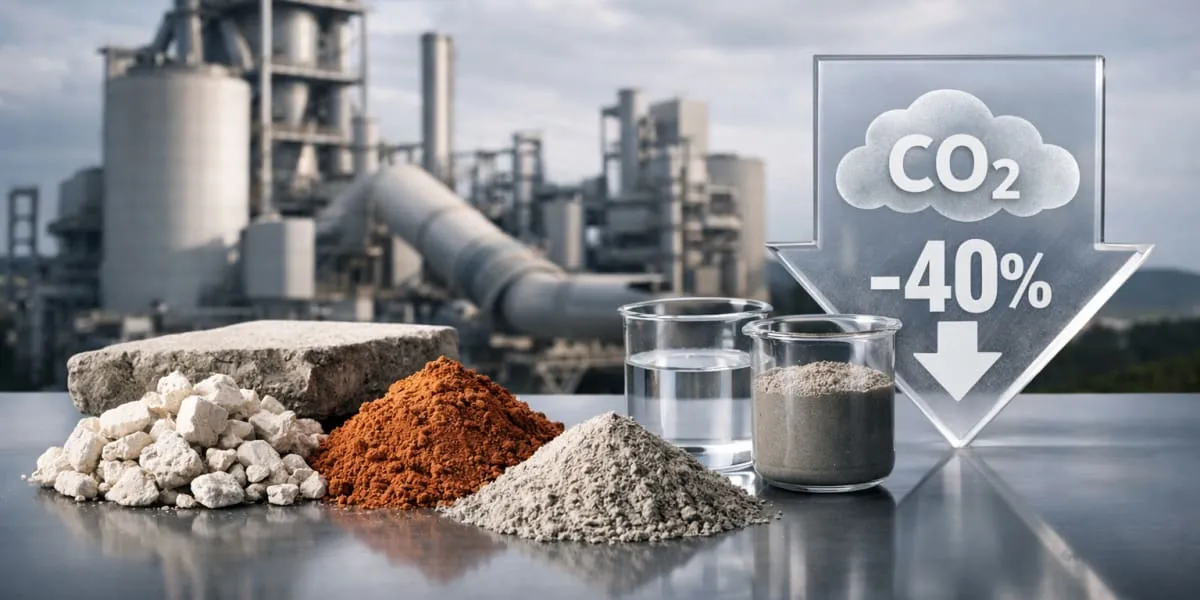
o Integrating secondary raw materials (e.g., fly ash, slag, red mud) to reduce dependence on virgin limestone and extend the mine’s life.
o India’s clinker-to-cement ratio of ~0.70 (lower than the global average of 0.74) demonstrates progress, but further reduction is possible through blended cements.
Environmental stewardship
o Preventing soil erosion and biodiversity loss through scientific mine planning and phased reclamation.
o Water recycling, rainwater harvesting, and mine-pit water use are critical given that the cement sector is one of the top 10 industrial water consumers in India.
o Repurposing mine dumps for solar installations or afforestation can offset emissions and create alternative land value.
Community engagement
o Beyond CSR, sustainable mining emphasises creating resilient local economies.
o Employing local communities in ancillary services (transport, catering, non-critical supplies) promotes shared value and reduces operational risks from social unrest.
Regulatory compliance
o Adherence to evolving environmental clearance (EC) conditions, Mine Closure Plans and labour laws is non-negotiable.
o Global investors increasingly view non-compliance as a reputational and financing risk.
Post-mining land use
o Mine closure should not result in abandoned pits but in planned transitions—industrial estates, recreational parks or even water reservoirs that benefit surrounding regions.
Consulting: enabling sustainability-linked profitability
Mining companies often face a false dichotomy between sustainability and profitability. Consulting firms help realign strategies by quantifying the business case for sustainability.
- Materiality Assessments: Identifying ESG factors most relevant to mining (e.g., water scarcity in Rajasthan, dust emissions in limestone belts of Chhattisgarh).
- Life Cycle Costing: Demonstrating savings from energy-efficient crushers, conveyor systems over trucking or water-recycling plants.
- Integrated ESG in Mine Lifecycle: Embedding sustainability from exploration (site selection) through design (haul road optimisation) to closure (reclamation).
- Regulatory Navigation: Guiding companies through multi-layered frameworks—MoEFCC clearance, DGMS safety standards, and international benchmarks (GRI, TCFD, SBTi).
- Cultural Transformation: Enabling leadership to cascade ESG values into operational metrics (e.g., tonnes CO2 per tonne clinker, water used per tonne mined limestone).
Such interventions convert ESG from a cost centre to a competitive advantage, directly improving investor confidence and market positioning.
Digital tools and financial modelling as enablers
Digital transformation in mining is no longer optional—it is a differentiator. When integrated with financial modelling, these technologies provide decision-makers with quantifiable sustainability outcomes.
GIS and remote sensing
- Enables precise resource mapping, monitoring land-use changes, and real-time compliance tracking.
- Concept of ‘Borehole to Boardroom’ allows linking geological data directly with management dashboards.
Mine planning software + fleet management
- Optimises pit design, reduces haul distances,and cuts diesel consumption (a major cost and emission source).
- Fleet automation and dispatch systems can reduce fuel use by 10 per cent to 15 per cent.
IoT monitoring
- Real-time sensors track air quality (dust), water discharge, and noise, ensuring early intervention before regulatory breaches.
AI and predictive analytics
- Prevents equipment failures, reducing downtime and energy wastage.
- Optimised blasting and grinding reduce overburden movement and electricity use.
Digital twins
- Simulating various mining approaches allows assessment of both environmental outcomes and financial viability.
- Enables stress-testing against future carbon prices or water-scarcity scenarios.
When combined with financial modelling, these tools demonstrate that upfront sustainability investments can yield long-term financial gains through reduced operating costs, risk mitigation, and enhanced funding access.
Challenges facing indian miners
Transitioning to ESG-aligned operations is not straightforward, especially in India. Major roadblocks include:
- Capital Constraints: Many small to mid-tier miners lack access to low-cost financing for green technologies, unlike global peers where sustainability-linked loans are common.
- Skill Gaps: A decade-long slump in mining activity has created shortages of skilled manpower, particularly in ESG integration and digital mining.
- Regulatory Complexity: Overlapping state and central laws cause clearance delays. India ranks poorly on ‘ease of mine permitting’ compared to global peers.
- Technological Lag: More than 70 per cent of limestone mines still rely on conventional drilling and blasting, with limited adoption of automation.
- Weak Stakeholder Pressure: Unlike Europe, where consumer preference drives ESG compliance, India’s cement demand is largely cost-driven, lowering pressure on producers to adopt sustainability measures.
ReVal consulting’s ESG integration framework
ReVal Consulting’s approach demonstrates how ESG can be embedded into mining strategy:
- Early-Stage ESG Screening: Risks identified during exploration reduce future compliance costs.
- Customised ESG Roadmaps: Action plans aligned with IFC, SBTi, and ICMM frameworks.
- Innovative Mine Planning: Incorporating low-energy equipment, optimised mine sequencing, and land-efficient layouts.
- Carbon Accounting and Reporting: Comprehensive measurement of Scope 1, 2, and 3 emissions.
- Stakeholder Management: Engaging local communities as active partners, not passive beneficiaries.
- Closure Planning: Designing legacy projects—reclaimed land converted to industrial hubs, eco-tourism parks or renewable energy sites.
This interdisciplinary model ensures that sustainability drives operational, financial and reputational outcomes simultaneously.
Global benchmarks shaping indian mining
Indian miners are increasingly influenced by international standards due to trade and investment flows:
- ICMM Principles: Provide a framework for ethical mining across 38 global members.
- SBTi (Science-Based Targets Initiative): Pushes companies to set emissions reductions in line with climate science.
- TCFD (Task Force on Climate-related Financial Disclosures): Drives climate-risk reporting in corporate governance.
- GRI and SASB Standards: Ensure comparability in ESG reporting, critical for global investors.
Aligning with these benchmarks improves access to green financing, enhances transparency and strengthens competitiveness in export markets.
Low-carbon mining strategy
Looking ahead, India’s cement-linked mining must align with the nation’s 2070 net-zero target. Strategic shifts will include:
- Electrification and Renewables: Wider use of electric mining trucks, conveyors and renewable-powered crushers.
- Smart Mine Design: AI-driven pit optimisation, autonomous haulage and real-time monitoring for efficiency.
- Circular Mining: Repurposing overburden and tailings into aggregates, bricks or backfilling material.
- Green Financing: Sustainability-linked bonds and loans increasingly tied to ESG performance indicators.
- Policy-Led Innovation: Government incentives (e.g., Production-Linked Incentives for green tech), stricter emission caps and possible carbon pricing mechanisms.
Conclusion
For India’s cement sector, where mining is the foundation of operations, sustainability is both an imperative and an opportunity. Transitioning to ESG-driven mining practices is not simply about environmental stewardship; it is about ensuring long-term competitiveness, investor confidence and societal license to operate. With the right mix of consulting expertise, digital adoption, global benchmark alignment and policy support, Indian mining can reposition itself as a global leader in sustainable cement production. The critical question is no longer if mining should be sustainable, but how quickly and effectively the sector can pivot towards that future.
About the author:
Pukhraj Sethiya, India MD, ReVal Consulting, leverages two decades of mining expertise to deliver strategic, sustainable, and impactful solutions.
Kundan Singh, Associate Director and Lead – Management and Strategy Consulting, ReVal Consulting, specialises in strategy, finance, and due diligence across coal, cement, and metal mining.