Connect with us

Concrete

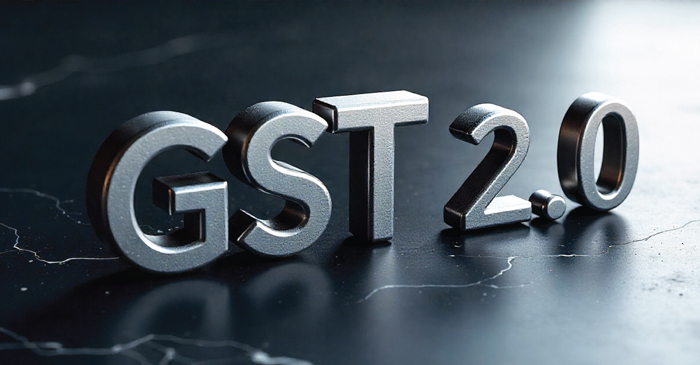
GST 2.0: Strengthening the Cement Sector

Published

on

Shares

The reduction of GST on cement from 28 per cent to 18 per cent marks a landmark correction in India’s tax regime. This reform promises lower construction costs, greater housing affordability and stronger momentum for infrastructure development.

In a major structural reform, the GST Council has slashed the tax rate on cement from 28 per cent to 18 per cent, aligning it with other core construction materials. This long-overdue move corrects a tax anomaly, as cement had been taxed significantly higher than steel, bricks, and other inputs. The tax reform is part of India’s broader ‘GST 2.0’ framework, simplifying the slab structure to just two tiers—5 per cent for essentials and 18 per cent for most goods and services.
According to analysts at Yes Securities, the industry will likely pass on most of the savings to end-users, moderating any immediate spike in profit margins.
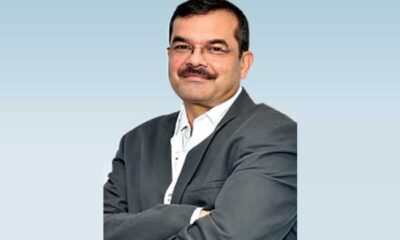
Dharmender Tuteja, CFO, Dalmia Bharat, says, “The reduction of GST rates for goods and services of mass consumption and particularly on cement from 28 per cent to 18 per cent is a very positive step, both for consumers and industry. It will set in motion a virtuous cycle of creating higher purchasing power in the hands of wider cross section of population leading to higher consumption of goods and services and GDP growth in the economy leading to higher demand for cement also. Reduced prices of cement and higher purchasing power specially increase the affordability of housing for middle and lower-income groups spurring the demand for cement. Reduced prices also improve affordability of premium categories of cement leading to likely shift of demand towards these categories. Dalmia Bharat welcomes this move and will meet the expected rise and shift in cement demand responsibly and sustainably.”
The reduction translates to meaningful savings of around Rs.25–Rs.30 per 50 kg bag of cement—equating to lower construction costs for developers and faster affordability for homebuyers. According to the Economic Times, this input cost drop is expected to translate to overall construction cost reductions of approximately 3 per cent to 5 per cent, which could bring down affordable housing prices by 2 per cent to 4 per cent. As a result, developers in this segment may reinvigorate projects and boost demand.
While long-term gains are apparent, cement manufacturers may experience short-term margin pressures. A news report noted that companies are expected to aggressively pass on the GST cut benefits, limiting immediate pricing flexibility. Concurrently, stock prices of major cement players surged—Ambuja Cements and ACC saw gains up to 4 per cent, reflecting positive investor sentiment toward this development.
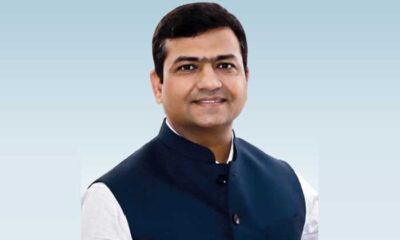
Vivek Bhatia, Managing Director and CEO, TKIL Industries, says, “The 56th GST Council reforms are a forward-looking step towards Viksit Bharat! We welcome the initiative to place more purchasing power in the hands of consumers which will certainly accelerate broad-based economic growth! At a time of global uncertainty, the reforms provide a welcome boost to clean energy and industrial transition. The cut in GST on cement from 28 per cent to 18 per cent will speed up infrastructure development and make adding capacity more appealing. Cutting GST on renewable devices and fuel-cell vehicles aligns India with its decarbonisation strategy. It gives manufacturers a better case for boosting sustainable solutions. From the perspective of TKIL Industries, these reforms will go far beyond just the tax reduction that will be immediate, but will provide a big positive push, reinforcing our position as the fastest growing leading economy, fast track our growth to becoming the third largest economy, accelerate Make in Bharat, promoting cleaner technology, positioning Bharat as a global leader in the energy transition. Our congratulations and appreciation to Central and State Government leaders for taking this bold and welcome step!”
Lower cement prices are poised to create demand ripples across related sectors such as paints, fittings, and interiors. Another news report highlighted that reduced building costs may increase disposable income, encouraging homeowners to invest in premium finishes and accessories. This, in turn, could bolster sales in downstream industries and help stimulate broader construction-related economic activity.
“India’s historic GST reform is poised to drive stronger execution momentum across the infrastructure sector. The reduction in GST on cement is expected to unlock working capital, improve cash flow efficiency and accelerate project delivery timelines. In parallel, lower GST rates on various consumer-facing categories are likely to boost consumption, creating a more favourable environment for sustained economic activity. This, coupled with the ongoing infrastructure push, is expected to catalyse private sector capex, adding further depth to the investment cycle. A timely and progressive reform that aligns with KEC’s focus on faster execution, operational excellence, and balance sheet strengthening—reinforcing India’s infrastructure growth story,” says Vimal Kejriwal, Managing Director and CEO, KEC International.
Despite enhanced affordability and potential demand revival, near-term demand may remain inelastic due to seasonal factors and supply-side bottlenecks, such as labour shortages and sand mining constraints. Yes Securities has projected that meaningful demand pickup may materialise post-festive season, likely in the December quarter. Therefore, while the GST cut offers a significant structural lever for growth, sustained industry recovery may depend on complementary policies and market conditions.

Concrete

JSW Paints to Raise Rs 33 Billion for Akzo Nobel India Deal

Funds to part-finance Rs 129.15 billion acquisition of 74.76 per cent stake.

Published

on

By

Shares

JSW Paints Limited (JSWPL) plans to raise Rs 33 billion through non-convertible debentures (NCDs) to partly fund the Rs 129.15 billion acquisition of a 74.76 per cent stake in Akzo Nobel India Ltd, according to an exchange filing. The deal, which will trigger an open offer for the remaining shares, forms part of the JSW Group’s Rs 65 billion capital infusion plan.

The bonds, to be issued on Friday, are rated ‘AA– (Stable)’ by ICRA, which noted that the NCDs will carry a five-year bullet repayment, with a call/put option after three years. Only a portion of the coupon will be paid annually, with the balance payable upon redemption.

ICRA said JSW Paints’ debt servicing obligations can be comfortably met through operating profits and dividends expected from Akzo Nobel India until maturity. However, it cautioned that the company’s leverage will remain elevated at over four times in the medium term.

JSW Paints, part of the JSW Group promoted by Sajjan Jindal and led by Managing Director Parth Jindal, plays a strategic role in supplying industrial coatings to JSW Steel. To date, JSW Steel has infused Rs 7.5 billion, while South West Mining Ltd has contributed Rs 1.5 billion towards capital expenditure, debt repayment, and working capital needs.

ICRA expects continued promoter support for the acquisition, which will be financed through a mix of borrowings and equity infusion at the JSW Paints level.

Post-acquisition, JSW Paints’ business profile is expected to strengthen significantly, benefiting from operational synergies, an expanded dealer network, and access to advanced coating technologies. The merger will position the combined entity — JSW Paints and Akzo Nobel India — as India’s fourth-largest decorative paint company and second-largest in the industrial segment. The acquisition will also give JSW access to premium brands like Dulux and new segments such as vehicle refinishes and marine coatings.

In FY25, JSW Paints recorded revenues of Rs 21.55 billion. The company expects a sharp rise in FY26 and beyond, supported by synergies in manufacturing, logistics, and marketing. ICRA projects healthy double-digit operating margins by FY27, marking a strong turnaround from operating losses in FY25.

The acquisition, initially announced in June 2025, valued the 74.76 per cent stake at Rs 94 billion and received Competition Commission of India (CCI) approval on 16 September 2025. The deal is expected to close within the current financial year.

Following the transaction, the Dutch parent company of Akzo Nobel India will retain the powder coatings business and R&D centre, while JSW Paints will integrate the rest of the operations.

Continue Reading

Concrete

SAIL Bokaro Develops New Electrical Steel Grade

BSL produces 1,100 tonnes of energy-efficient special steel.

Published

on

By

Shares

Steel Authority of India Limited (SAIL) has announced that its Bokaro Steel Plant (BSL) has developed a special grade of electrical steel for the first time, marking a significant milestone in the company’s efforts to expand its portfolio of high-value and advanced steel products.

The newly developed steel is designed for use in electric motors, generators, small power transformers, electrical appliances, and rotors for hybrid and electric vehicles, contributing to enhanced energy efficiency and supporting India’s growing green mobility and energy infrastructure sectors.

In a statement, SAIL said, “The Bokaro Steel Plant has achieved a major milestone in product development by successfully producing about 1,100 tonnes of 0.5 mm thick IS 18316 LS Grade Non-Grain Oriented (NGO) Electrical Steel for the first time.”

The innovation is expected to position SAIL as a key domestic supplier of specialised electrical steel, reducing dependence on imports for critical industrial applications. It also aligns with the company’s broader strategy to move up the value chain and contribute to India’s self-reliance in advanced materials manufacturing.

The Bokaro Steel Plant’s success in developing this new grade of steel underscores SAIL’s focus on technology-driven production, quality enhancement, and sustainable industrial growth.

Continue Reading

Concrete

Steel Ministry to Launch Third Round of PLI Scheme

New PLI phase to boost specialty steel output and cut imports.

Published

on

By

Shares

The Ministry of Steel, Government of India, is set to launch the third round (PLI 1.2) of the Production Linked Incentive (PLI) Scheme for Specialty Steel, a flagship initiative under the Atmanirbhar Bharat vision. The launch will be led by Union Minister for Steel and Heavy Industries H.D. Kumaraswamy, in the presence of senior officials and industry stakeholders.

Approved by the Union Cabinet in July 2021 with an outlay of Rs 63.22 billion, the PLI Scheme aims to transform India into a global manufacturing hub for high-value, advanced steel grades. The scheme incentivises incremental production, investment, and innovation across selected product categories to enhance domestic value addition and reduce import dependence in critical sectors such as defence, power, aerospace, and infrastructure.

So far, the PLI Scheme has attracted a committed investment of Rs 438.74 billion, of which Rs 229.73 billion has already been realised, resulting in the creation of over 13,000 jobs under the first two rounds.

The scheme covers 22 product sub-categories, including super alloys, cold-rolled grain-oriented (CRGO) steel, alloy forgings, stainless steel (long and flat products), titanium alloys, and coated steels.

Under PLI 1.2, incentive rates will range from 4 to 15 per cent, applicable for five years starting from FY 2025–26, with payouts beginning in FY 2026–27. The base year for pricing has been revised to FY 2024–25 to better reflect prevailing market trends.

The third round of the PLI Scheme represents another significant step in advancing India’s self-reliance in specialty steel production, encouraging technological upgradation and private sector participation in one of the nation’s most vital industrial sectors.

Continue Reading

Trending News

SUBSCRIBE TO THE NEWSLETTER


Don't miss out on valuable insights and opportunities to connect with like minded professionals.


    This will close in 0 seconds