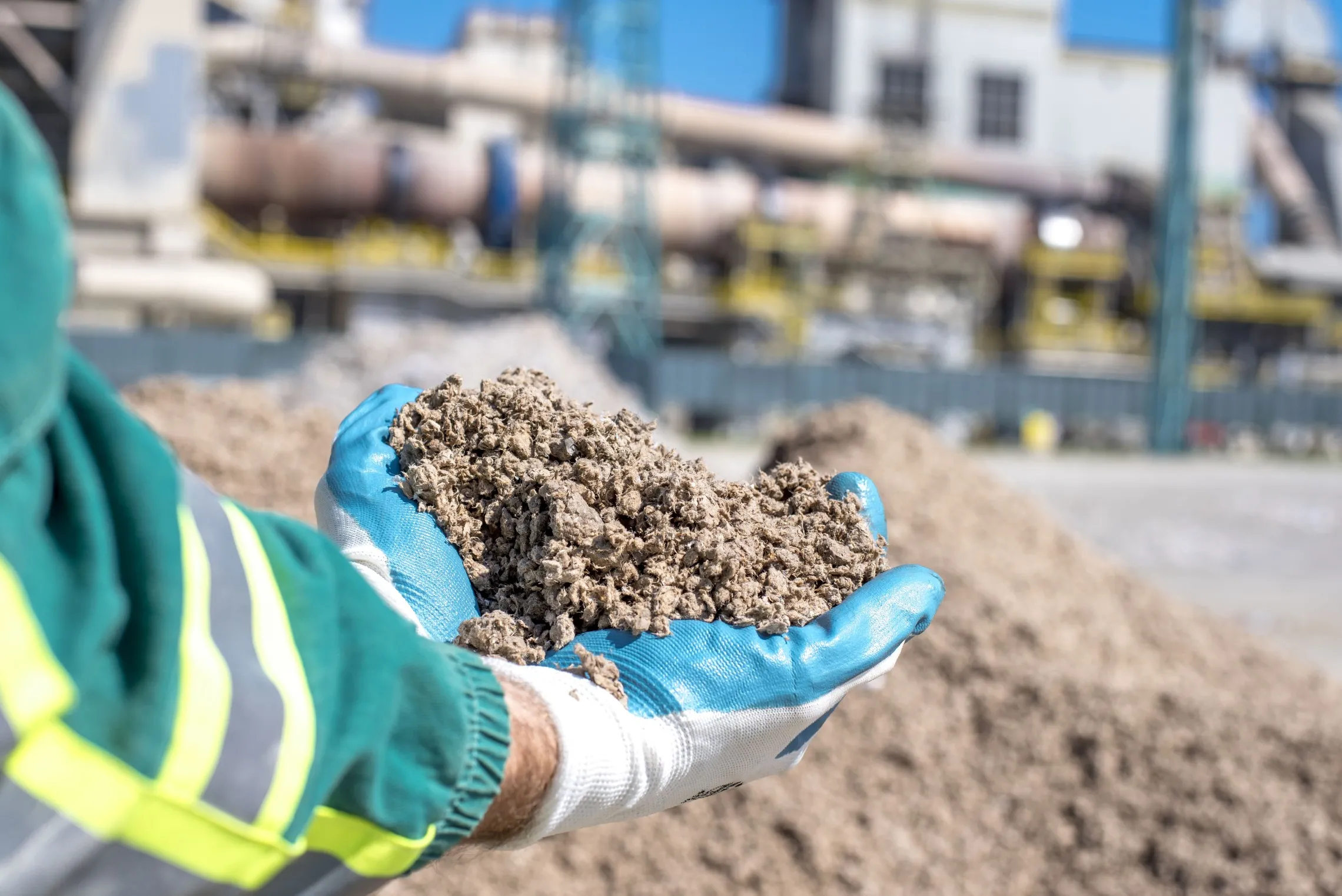
The cement industry is redefining its resource-intensive legacy by embracing circular economy principles such as co-processing, clinker substitution and industrial symbiosis. These strategies help cut emissions and unlock economic efficiencies, positioning cement as a driver of sustainable growth.
The cement industry is inherently resource-intensive, yet it holds immense potential to embrace circular economy principles, for example, shifting from wasteful linear models to regenerative systems of reuse and resource efficiency. According to joint research by the World Economic Forum and McKinsey, transitioning to a circular built environment could not only reduce embodied CO2 emissions by up to 75 per cent, but also generate US$ 360 billion in net profits annually by 2050. Cement, responsible for nearly 30 per cent of material-related emissions in construction, is a pivotal actor in this shift.
On a global scale, embracing circular strategies, such as recycling construction and demolition waste, substituting clinker with recycled content, and recovering energy from waste, could unlock up to €110 billion in value by mid-century and mitigate about 2 billion tonnes of CO2 emissions, according to McKinsey. Such measures, when applied systematically, offer both environmental traction and economic upsides across the cement value chain.
In India, the circular transformation is already underway. Cement companies are increasingly integrating industrial by-products like fly ash, slag and calcined clays to substitute virgin limestone, reducing both resource extraction and emissions. As identified in a systematic review, this shift is fast gaining industrial momentum, reflecting a widening interest in recycling, clinker substitution and co-processing of waste streams across research
and practice.
Why Circular Economy?
The cement industry’s transition to a circular economy isn’t just an environmental imperative, it’s a powerful economic opportunity. According to joint research by the World Economic Forum and McKinsey, shifting to circular practices in the built environment, including cement, could reduce embodied CO2 emissions by up to 75 per cent and generate as much as $ 360 billion in net profits annually by 2050. Cement alone contributes roughly 30 per cent of building-related materials emissions, underscoring why transforming its production processes is both urgent and economically compelling.
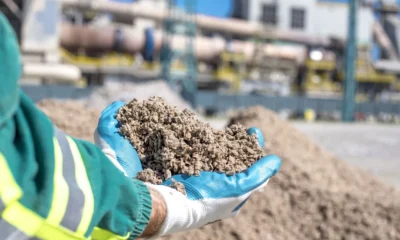
Sanjay Mehta, President Procurement and Corporate Affairs, Shree Cement, says, “Cement plants are widely recognised as optimal facilities for the safe and efficient disposal of industrial wastes, owing to their high-temperature processing and closed-loop systems. At Shree Cement, we co-process a wide range of materials in strict adherence to Central Pollution Control Board (CPCB) guidelines. Commonly used wastes include agricultural residues (such as crop stubble and biomass), municipal solid waste
in the form of RDF, rubber and plastic waste and dried sewage sludge. This approach not only
ensures sustainable waste management but also significantly reduces reliance on fossil fuels and virgin raw materials, reinforcing our commitment to circular economy principles.”
Embedded in the principles of industrial ecology, co-processing transforms what would be waste into useful feedstock, providing both energy and material value. According to the Confederation of Indian Industry (CII) and Shakti Foundation, different waste streams—Municipal Solid Waste (MSW) at 57 per cent, biomass at 34 per cent, tyre waste at 7 per cent, hazardous material at 3.5 per cent, and spent pot lining at under 1 per cent—could together serve as alternative fuels in cement kilns by 2025. Not only does this divert landfill-bound refuse, it replaces virgin mineral and fossil fuel inputs, aligning profit-generating practices with ecological responsibility.
Indian cement companies are trailing global frontrunners yet making encouraging strides. Ambuja Cement, through its Geoclean initiative, co-processed approximately 0.54 million tonnes of alternative fuels in FY 2023–24, accounting for about 6.36 per cent of their thermal energy needs. They also used 8.6 million tonnes of waste-derived raw materials like fly ash and slag, demonstrating how circular strategies can scale within existing operations.
Additionally, Geocycle India has co-processed over 2 million tonnes of waste in recent years, achieving up to 6 per cent TSR at select plants, including those in Gujarat at 7 per cent TSR, highlighting both opportunity and industrial momentum.
That said, co-processing demands careful planning, technology, and logistics. Pre-processing infrastructure, such as shredders, homogenous storage, feeder systems and on-site labs, is essential to ensure consistent calorific value, safe combustion and clinker quality. According to CPCB estimates, investing Rs.25–30 crore per million tonne per annum of clinker capacity is required to retrofit plants to achieve a 15 per cent thermal substitution rate (TSR). Yet, the combined environmental benefits, ranging from GHG reductions and natural resource conservation to supporting municipal waste solutions, make co-processing a smart, pragmatic step toward cementing circularity in the industry.
Clinker Substitution and AFR
Reducing clinker usage remains one of the most impactful pathways for decarbonising cement. A report by Indian Cement Benchmarking mentions that India has lowered its national average clinker factor to around 0.68–0.70, compared to the global average of 0.75–0.77, with top producers pushing it further down to 0.65 or below using blended cements like Portland Pozzolana Cement (PPC) and Portland Slag Cement (PSC). Beyond emission cuts,
clinker substitution conserves limestone, lowers production costs and reduces energy demand per tonne of cement produced.
The concept of industrial symbiosis enables industries to feed off each other’s by-products, creating value from what would otherwise be waste. A notable example is Denmark’s Kalundborg Eco-Industrial Park, where gypsum from a power plant is used in wallboard manufacturing, and fly ash and clinker by-products support road construction and cement production. This circular collaboration significantly enhances environmental and economic efficiency, encouraging resource sharing, cost-saving and reduced waste. In India, similar models can redefine material cycles between steel, power and cement clusters, leveraging by-products like slag, fly ash and effluent residues as valuable inputs.
“Collaboration begins with shared sustainability goals. Cement companies can work with traders to identify low-carbon alternatives, co-develop supplier standards and invest in pre-processing infrastructure. Long-term partnerships can unlock access to circular materials like biomass, construction waste and industrial residues, while also ensuring traceability and quality control across borders,” says Uttam Sur, Chief Sustainability and Security Officer, Valency International Pte.
Co-processing waste as alternative fuels and raw materials aligns economic viability with sustainability. According to ‘From Grey to Green – Decarbonising India’s Cement Industry,’ India’s Thermal Substitution Rate (TSR) has risen from one per cent in 2010 to around seven per cent, with some plants reaching TSR levels as high as 25 per cent to 35 per cent using Refuse-Derived Fuel (RDF), biomass, hazardous wastes and industrial residues. This shift reduces reliance on coal, curbs emissions and embeds a circular fuel-and-feedstock cycle within cement operations.
Expanding on this, data from Indian Cement Benchmarking 2023 shows an average TSR of seven per cent, with leading plants achieving up to 38 per cent TSR, and many targeting 20 per cent to 30 per cent per cent plus TSR in the near future. Embracing biomass, industrial waste and novel fuel mixes, these plants are setting the stage for a more resilient and sustainable fuel portfolio.
Quarry to Kiln
The cement industry’s transition from resource depletion to circular sourcing hinges on securing raw materials responsibly, from the quarry to the kiln. Sustainable sourcing not only mitigates ecological impact but also shields businesses from supply disruptions and volatile commodity prices. For instance, utilising locally available raw materials like Nimbahera stone can dramatically reduce transportation emissions and the environmental footprint associated with long-haul logistics. Nimbahera stone, a blue limestone prevalent in Rajasthan, is widely sourced for regional cement plants, exemplifying how proximity-to-resource offers both sustainability and economic benefits.
Clinker substitution further reinforces sustainable sourcing by curbing reliance on virgin limestone. A report by the Cement Manufacturers’ Association reveals that India’s clinker-to-cement ratio stands around 69.5 per cent, closely aligned with global top performers at 65 per cent, meaning nearly 30 per cent of material inputs derive from supplementary resources like fly ash and slag. Reducing clinker demand not only conserves natural resources but also cuts CO2 emissions, estimated at 0.83 tonnes per tonne of clinker displaced.
Beyond raw material sourcing, upstream innovations such as recycling spent refractories are gaining traction. A report in Indian Cement Review notes that leading firms like ACC and UltraTech have begun blending 30 per cent to 40 per cent spent refractories into raw meal, significantly reducing dependence on virgin inputs. This shift is projected to reduce refractory disposal costs by `15–20 crore annually, while enhancing thermal efficiency in
kiln operations.
Digital Technologies
The cement industry is increasingly leveraging digitalisation and artificial intelligence (AI) to unlock circular economy practices. Advanced AI- and IoT-powered process-control systems are instrumental in optimising production, minimising waste, enabling predictive maintenance and streamlining material flows, thus facilitating the integration of by-products like fly ash and slag back into the process. These smart systems also support emissions monitoring and ensure resource efficiency across operations.
Moreover, digital twins, which refers to virtual replicas of physical plant operations, allow operators to simulate and optimise process changes in real time. A report by KPMG illustrates how a digital twin of a raw mill can optimise energy usage by continuously modelling variable process parameters. Parallelly, AI-based ‘mine mix optimisers’ and fuel schedulers dynamically balance inputs to flatten energy loads and enhance material consistency.
These interventions not only elevate energy efficiency but also lay the groundwork for circularity-enabled production.
Waste Management
Partnerships between cement players and waste management firms are emerging as pivotal enablers of circularity. Indian digital recycling platforms like Recykal are transforming the supply-side value chain by connecting waste generators, collectors, and recyclers—thus ensuring a steady stream of alternate inputs into cement kilns. Recykal’s digital platform scaled rapidly—from recycling 30,000 tonnes of plastic in 2017 to over 200,000 tonnes by 2021—demonstrating the power of tech-enabled collaboration to feed circular processes.
On the ground, municipal collaborations are also gaining traction. For instance, the Haryana government recently sanctioned a `89.9 crore PPP to reclaim 14 lakh tonnes of legacy waste at the Bandhwari landfill, explicitly mandating the use of resulting refuse-derived fuel (RDF) by industrial users like cement plants. This public-private model repositions waste as feedstock and not as landfill fodder, shifting the circular sector into action.
Regulatory Push and Policy Support
Regulatory frameworks are emerging as powerful levers for circular economy adoption in India’s cement sector. The Perform, Achieve and Trade (PAT) scheme under India’s National Mission for Enhanced Energy Efficiency is a prime example. According to the Bureau of Energy Efficiency, cement plants participating in PAT cycles have consistently surpassed their energy-saving targets, achieving around 1.48 MTOE in Cycle I and 1.56 MTOE in
Cycle II—both significantly over their targets. Furthermore, the upcoming Carbon Credit Trading Scheme (CCTS) is expected to evolve from PAT, setting specific carbon intensity targets per tonne of cement and enabling tradable credits for greener performance. These market-linked incentives are nudging the industry to align energy efficiency initiatives with regulatory expectations.
Beyond energy-specific schemes, waste management rules underscore circular pathways like co-processing. The 2016 Solid Waste Management rules, and the Hazardous Waste Management standards, explicitly recognise co-processing in cement kilns—facilitating faster approvals provided emission standards are met, while enabling interstate waste movements through simplified protocols. Complementing these measures, the CII Waste Material Exchange portal offers a marketplace connecting waste generators with cement plants, fostering resource-sharing partnerships across sectors. Together, these policies and platforms are lowering institutional barriers and creating structured pathways for cement’s engagement in the circular economy.
Market Incentives and Green Financing
Financial mechanisms are pivotal in scaling circular and low-carbon transitions. According to a joint report by MUFG Bank and the Climate Bonds Initiative, India will need a staggering $ 1.3 trillion in cumulative green, social and sustainability-linked funding by 2030 to decarbonise energy-intensive sectors like cement and steel. Concrete proof of financial innovation’s potential is seen at UltraTech Cement, which secured $ 500 million in sustainability-linked loans in 2024, its second such financing, tying funding to ESG performance and green energy uptake. These instruments allow cement companies to raise capital while embedding sustainability targets within debt structures.
On the institutional front, green credit channels are emerging to support circular upgrades. Recently, the State Bank of India (SBI) signed a €100 million (`900 crore) green finance agreement with Agence Française de Développement (AFD), aimed at scaling up climate mitigation projects across India. SBI’s goal is to increase its green loan portfolio to 7.5 per cent to 10 per cent of domestic advances by 2030.
Meanwhile, MSMEs, often integral to cement value chains, stand to benefit from initiatives like MSE-SPICE and MSE-GIFT, which offer incentives and concessional financing for adopting circular economy and clean technology practices. These emerging financing tools make circular investments more accessible and create a viable economic framework for industry-wide scale-up.
Challenges Ahead
India’s journey toward circularity in cement hinges critically on building robust infrastructure and coordination across value chains. According to a CEEW study, transitioning to widespread industrial symbiosis, where waste streams are repurposed effectively, faces major logistical and infrastructure constraints, with fragmented collection systems, inconsistent waste segregation and limited pre-processing facilities hampering scale. Meanwhile, the country’s municipal solid waste (MSW) generation is already estimated at 62 million tonnes annually, of which only approximately 70 per cent is collected, and a mere 20 per cent processed, leaving the rest in landfills or open disposal, undermining cement sector efforts to source viable refuse-derived fuel (RDF).
Beyond infrastructure shortfalls, there is a pervasive awareness and standardisation gap that slows circular adoption in cement operations. Many industry players remain unconvinced about the quality and consistency of alternative raw materials like construction-demolition waste or spent refractories. In addition, while technical guidelines on co-processing exist, variance in enforcement, lack of uniform standards across states and lingering misconceptions about emissions compliance contribute to slow uptake. Overcoming these perceptual and regulatory asymmetries will require concerted efforts in training, stakeholder alignment and harmonised norms to ensure that circular practices are not just technically viable but trusted across the sector.
Conclusion
The cement industry’s embrace of circular economy principles marks a decisive shift from linear ‘produce–use–discard’ models toward regenerative resource use. By scaling co-processing of waste, clinker substitution, and industrial symbiosis, cement manufacturers are demonstrating that environmental responsibility and business competitiveness can go hand in hand. According to the International Finance Corporation (IFC), co-processing alone could help the sector reduce up to 15 per cent of its fossil fuel use in India, while clinker substitution strategies could curb emissions by 200–250 kg of CO2 per tonne of cement. These gains not only lower the industry’s carbon footprint but also unlock cost efficiencies and extend the lifespan of finite raw material reserves.
Looking ahead, the sector’s success in circular transitions will depend on three enablers: policy harmonisation, collaborative ecosystems and digital technologies. With regulatory frameworks tightening around waste management and carbon emissions, and with green financing mechanisms gaining traction, the cement industry has both the mandate and opportunity to lead by example. By forging stronger partnerships with waste managers, technology providers and policymakers, and by investing in AI-driven monitoring and resource optimisation, the industry can accelerate its path toward net-zero cement production. In doing so, it positions itself not just as a consumer of resources, but as a vital solution-provider in building a sustainable, circular economy.
– Kanika Mathur