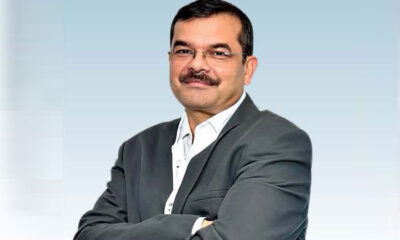
Satish Maheshwari, Chief Manufacturing Officer, Shree Cement, talks about combining cutting-edge innovation with environmental responsibility to build stronger, more sustainable structures.
As the world grapples with the urgent need to decarbonise, the cement industry—one of the largest emitters—finds itself at a pivotal crossroads. Green cement is emerging as a transformative solution, offering a sustainable alternative without compromising strength or durability. In this interview with Satish Maheshwari, Chief Manufacturing Officer, Shree Cement, we explore the advantages, innovations, and future potential of green cement. From its superior performance to its environmental benefits, green cement is redefining modern construction. Industry leaders and policymakers are now aligning to accelerate its adoption at scale.
What exactly is green cement and how does it differ from traditional cement?
Green cement is a major innovation in sustainable construction, significantly reducing carbon emissions and environmental impact. Traditional cement production, which relies heavily on limestone and fossil fuels, is highly energy-intensive, generating approximately 800-900 kg of CO2 per tonne.
In contrast, green cement incorporates alternative materials such as fly ash, slag, calcined clay and industrial by-products, reducing emissions to around 400-600 kg per tonne—a reduction of up to 55 per cent.
Beyond its environmental benefits, green cement offers superior performance. It has higher tensile strength, better crack resistance and enhanced durability compared to traditional cement. Its lower porosity makes it more resistant to acid rain, temperature fluctuations and chloride penetration, increasing the lifespan of structures. Additionally, its energy-efficient production process requires significantly less fossil fuel, further reducing its carbon footprint.
As the construction industry moves toward sustainable solutions, green cement is emerging as a key player in building a resilient, low-carbon future. Its advanced properties make it an ideal choice for infrastructure projects such as bridges, roads and high-rise buildings.
What are the key environmental benefits of using green cement?
Green cement is an eco-friendly innovation that significantly reduces carbon emissions, lowers energy consumption and minimises waste by incorporating industrial by-products that would otherwise be discarded. By utilising alternative cementitious materials, it not only cuts emissions but also reduces dependence on non-renewable resources, helping to preserve natural reserves.
By repurposing industrial waste, green cement helps reduce landfill accumulation and optimises resource efficiency, making construction more environmentally responsible. Its production process requires less energy, further lowering its carbon footprint. Additionally, green cement enhances durability and resistance to harsh weather conditions, ensuring long-lasting structures with reduced maintenance needs. Its excellent thermal and acid resistance makes it particularly suitable for extreme climates and pollution-prone areas.
While initial costs may be higher, the long-term economic and environmental advantages make it a valuable investment. As the construction industry adopts greener solutions, green cement plays a crucial role in reducing environmental impact while maintaining the strength and reliability needed for sustainable development.
Can green cement match the durability and strength of conventional cement?
With advancements in material science and innovative manufacturing techniques, green cement has evolved into a high-performance alternative that meets the rigorous demands of modern infrastructure. Formulations like geo polymer and calcium sulphoaluminate cement offer superior strength, lower shrinkage and enhanced resistance to corrosion, fire and extreme weather. These properties ensure longevity while reducing maintenance costs, crucial for large-scale and government projects. Additionally, its low-heat properties minimise thermal cracking, further enhancing durability.
From a strategic perspective, investing in green cement is not just an environmental imperative but a business advantage. As global regulations tighten around carbon emissions and sustainability standards, companies that embrace green cement position themselves as leaders in responsible construction. The material’s ability to reduce emissions by up to 80 per cent without compromising performance underscores its transformative potential. The future of infrastructure lies in sustainable innovation and green cement is a critical component of that vision. It is not merely an alternative, it is the way forward.
What innovative technologies are being used to produce green cement?
Innovative technologies are transforming the cement industry, making green cement production more efficient while significantly reducing carbon emissions. These advancements ensure sustainability without compromising structural performance. Key advancements include carbon capture, alternative fuels, nanotechnology and AI-driven process optimisation all designed to reduce environmental impact while maintaining strength and reliability.
Blended cements play a crucial role in reducing clinker dependency and emissions. These include Portland-Slag Cement, Portland Pozzolana Cement, Composite Cement, Limestone Calcined Clay Cement (LC3) and Portland-Limestone Cement, all of which incorporate sustainable materials to lower CO2 footprints. Beyond blended cements, advanced formulations like geo polymer cement, magnesium-based cement and calcium sulphoaluminate cement offer high-performance, low-carbon alternatives. Emerging carbon capture and utilisation (CCU) techniques further minimise emissions by repurposing CO2 into eco-friendly materials.
AI and automation are optimising energy use, reducing waste and streamlining production, driving both efficiency and sustainability. With these innovations, the cement industry is poised to meet sustainability goals while enhancing resilience and cost efficiency, paving the way for a greener future in construction.
How cost-effective is green cement compared to traditional options?
Green cement presents a cost-effective alternative to traditional options by reducing reliance on clinker, a key component that is both energy-intensive and expensive. By incorporating industrial by-products green cement lowers raw material costs while significantly cutting carbon emissions. While advanced formulations like geopolymer and magnesium-based cement may have higher initial costs due to specialised processing, their long-term benefits far outweigh the upfront investment. These innovative cements offer superior durability, reduced maintenance costs and enhanced resistance to environmental factors, resulting in lower lifecycle expenses. Additionally, green cement production consumes less energy, further optimising operational costs.
With increasing adoption, government incentives, carbon credits and regulatory support are further strengthening the financial viability of green cement. As technology evolves and production scales up, green cement is becoming an increasingly competitive, cost-efficient and sustainable solution for the construction industry.
Moreover, the use of recycled materials in green concrete enhances its cost-effectiveness. By leveraging industrial by-products and recycled aggregates, green concrete reduces dependency on natural raw materials, offering an economically attractive and environmentally responsible choice for modern construction.
What challenges does the industry face in adopting green cement on a large scale?
India produces over 500 million metric tonnes of cement annually, yet the transition to green cement faces multiple challenges. Scaling up production, managing costs and driving innovation remain key hurdles. High production costs and limited incentives slow adoption. A clear and stable regulatory framework is essential to encourage investment and accelerate growth. Supply chain challenges such as limited CO2 storage and dwindling fly ash availability continue to pose significant obstacles. Other cement companies are securing long-term slag contracts to ensure a steady supply. Infrastructure bottlenecks add to logistics costs and delays. Industry leaders are optimising transportation through fleet management and alternative transport solutions to improve efficiency. Innovation in carbon capture, durability and cost efficiency is critical for large-scale adoption. Continued investment in R&D will be key to making green cement a mainstream choice.
Addressing these challenges through policy support, infrastructure development and sustained innovation will position India as a leader in sustainable cement production.
Are governments and regulators supporting the shift to green cement?
The transition to green cement is a key priority in India’s sustainability roadmap, with the government playing an active role in accelerating its adoption. This aligns with global commitments like the Paris Agreement and supports India’s goal of achieving net-zero emissions by 2070. Key policy initiatives such as the National Action Plan on Climate Change (NAPCC) and the Perform, Achieve and Trade (PAT) scheme incentivise energy efficiency and promote the use of alternative fuels and raw materials. Updated building codes and eco-labeling systems further support the shift toward low-carbon construction.
As global climate policies continue to evolve, India’s proactive regulatory approach, combined with industry partnerships and green financing mechanisms, positions the country to become a leader in sustainable cement production and contribute meaningfully to the global low-carbon transition.
How do you see the future of green cement in global construction?
The future of green cement in global construction is set for rapid transformation, driven by sustainability goals and evolving industry demands. With stricter carbon regulations and a growing push for green-certified buildings, the shift toward low-carbon materials is accelerating. Green cement offers more than just environmental benefits. Its superior tensile strength and corrosion resistance make it a viable alternative to traditional cement. Builders are increasingly recognising its role in enhancing long-term project value while reducing carbon footprints.
Advancements in carbon capture, alternative binders and energy-efficient production processes are making green cement more commercially viable. Countries like India and China are already integrating it into large infrastructure projects, setting the stage for global adoption. While challenges around cost, supply chain constraints and scalability remain, regulatory support, financial incentives and sustained R&D will continue to drive momentum. As the construction industry evolves, green cement will be at the heart of a more sustainable and resilient future.