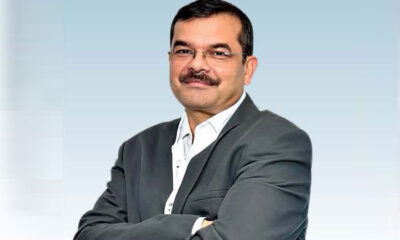
Ramesh Joshi, Business Head – RMC, Shree Cement, discusses how with innovation and quality control at their core, materials such as RMC, precast shapes and M-Sand are driving better project outcomes across the sector.
The construction industry is undergoing a major shift toward greater efficiency, sustainability and quality. Ready-Mix Concrete (RMC), precast shapes and M-Sand are at the forefront of this transformation, offering faster, cleaner and more reliable building solutions. Ramesh Joshi, Business Head – RMC, Shree Cement, sheds light on how these materials are redefining modern construction practices. From improving site safety to enhancing structural durability, they are shaping a more resilient future.
How does Ready-Mix Concrete (RMC) improve construction efficiency compared to traditional site-mixed concrete?
RMC has transformed the construction landscape by enhancing efficiency, quality and overall project performance. Unlike traditional site-mixed concrete, RMC is produced under controlled conditions, ensuring consistent strength and quality in every batch. This consistency leads to faster project completion and improved cost management, as the need for on-site mixing is eliminated.
A key advantage of RMC lies in its ability to reduce labor requirements and minimise material wastage. Its precise mix design enables accurate material estimation, helping contractors avoid over-ordering and surplus inventory, leading to better resource management and lower costs.
RMC also contributes to a safer and more organised work environment by reducing dust, noise and handling risks. Its superior strength and durability ensure longer-lasting structures, lowering maintenance and repair expenses over time. By combining consistency, efficiency and safety, RMC has become an essential element in modern construction, driving better project outcomes and long-term value.
What are the key advantages of using precast shapes in modern construction?
Factory-made precast elements have revolutionised modern construction by offering exceptional durability and weather resistance, ensuring long-term performance. Off-site manufacturing reduces on-site work, leading to faster project completion and lower labour costs. The design flexibility of precast elements allows architects to create innovative forms and finishes, enhancing the visual appeal of structures. Strict factory quality control ensures consistent strength and finish, improving overall construction reliability.
Precast construction minimises material waste, is highly cost-effective and sustainable, and supports eco-friendly building practices. Its ability to combine strength, efficiency and design versatility makes it ideal for modern infrastructure projects. The streamlined production process reduces delays and site disruptions, allowing for quicker turnaround times without compromising quality. Additionally, the reduced reliance on traditional on-site construction methods helps manage labor shortages and improve project timelines. Precast elements are a smart solution for building resilient, aesthetically pleasing and environmentally conscious structures.
How does M-Sand compare to natural river sand in terms of quality and performance?
M-Sand and river sand are both essential in construction, but they differ in quality and performance due to their source and production process. M-Sand is produced using VSI crushers in a controlled environment, ensuring consistent quality, particle size and strength. Its angular shape improves bonding and reduces segregation, enhancing the durability of concrete. In contrast, river sand, sourced naturally, often has inconsistent particle sizes and impurities that can weaken concrete strength. M-Sand offers greater consistency, strength and cost-effectiveness, making it a more reliable choice. Its sustainable production process also makes it environmentally friendly, addressing the issues of riverbed erosion and scarcity linked with river sand. The controlled production of M-Sand ensures minimal impurities and better gradation, reducing the chances of structural inconsistencies. Its uniform quality and enhanced strength make it a preferred option for high-performance construction, providing long-term durability and better structural integrity.
Are there any environmental benefits of using RMC, precast shapes, and M-Sand?
Using RMC, precast shapes and M-Sand provides substantial environmental benefits. RMC enhances resource efficiency by minimising material waste and reducing carbon emissions through controlled production and precise mixing. This improves energy efficiency and reduces the environmental footprint of construction projects. Precast shapes contribute to sustainability by reducing site waste and energy consumption during installation. Their enhanced durability and material efficiency result in longer-lasting structures, further lowering the environmental impact. M-Sand, produced from crushed rocks, reduces the need for river sand, helping to conserve riverbeds and protect aquatic ecosystems. Its consistent quality and controlled production ensure minimal impurities, enhancing structural strength while preserving natural resources. The use of M-Sand also reduces water consumption during mixing, making it a more sustainable alternative. Collectively, RMC, precast shapes and M-Sand promote eco-friendly construction by improving efficiency, reducing waste and conserving natural resources, reflecting a more responsible and sustainable approach to modern building practices.
What challenges do builders face when transitioning to these materials?
Builders face several challenges when transitioning to RMC, precast and M-Sand materials. For RMC, a fully skilled team is essential to handle mixing and application effectively. Significant investment in R&D is required to develop high-performance concrete products, while environmental regulations can add to operational complexity and costs.
In precast construction, identifying reliable vendors for high-end concrete products is crucial to achieving the required strength and finish within tight timelines. Training a specialised team or building internal expertise is necessary for successful execution. The use of heavy lifting machinery for handling and installing precast elements adds to the logistical demands. Additionally, large working spaces for production and storage are required, increasing infrastructure costs. Transitioning to M-Sand involves setting up quarries to meet large-scale demand while maintaining consistent supply. The quality of VSI crushers directly impacts sand grading, requiring regular maintenance of plants and machinery to ensure consistent production quality and performance.
How does the cost of RMC, precast shapes and M-Sand compare to traditional materials?
The cost of RMC, precast shapes and M-Sand varies compared to traditional materials, but the long-term benefits often outweigh the initial expenses. RMC typically comes at a premium, costing around 10 per cent to 20 per cent more per cubic meter than site-mixed concrete. However, its consistency, faster construction and reduced labor requirements make it a more efficient solution in the long run. Precast shapes, on the other hand, are more cost-efficient, offering savings of around 10 per cent to 20 per cent compared to traditional construction. The faster installation and reduced on-site labor requirements contribute to overall cost savings and quicker project completion. M-Sand stands out for its affordability, being 30 per cent to 50 per cent cheaper than river sand, depending on the location. Its controlled production ensures consistent quality and availability, reducing dependency on natural resources. While initial costs for RMC may be higher, the combined advantages of precast and M-Sand make them financially attractive and operationally efficient.
What innovations are shaping the future of these materials in construction?
Innovations in RMC, precast shapes and M-Sand are transforming construction with enhanced efficiency and performance. In RMC, high-end R&D in batching plants reduces space requirements and improves automation. Transit mixers with advanced sensors ensure smoother transit and better product regulation. Precast construction is benefiting from improved casting machines that require less manual intervention and high-tonnage heavy lifting equipment, making installation more efficient. For M-Sand, advancements in VSI crushers are producing better-graded sand, improving concrete strength and consistency. These innovations are driving greater precision, speed and cost-effectiveness in modern construction.
How do you ensure the consistent quality and reliability of these products?
Ensuring consistent quality and reliability in RMC, precast shapes and M-Sand requires a structured and focused approach. Continuous development and product optimisation play a key role in meeting specific project requirements and enhancing overall performance. By adapting to evolving construction needs, manufacturers can maintain high standards and improve product outcomes. Well-defined SOPs for production and execution ensure operational consistency. Random quality checks during production help identify and address deviations early, maintaining uniformity in product performance. This proactive approach minimises errors and enhances reliability.
Customer feedback through post-production surveys and satisfaction reviews provides valuable insights for continuous improvement. Addressing customer concerns promptly helps in refining processes and improving overall quality.



















 Concrete4 weeks ago
 Concrete2 weeks ago
 Concrete2 weeks ago
 Concrete4 weeks ago