Connect with us

Concrete

Our backward integration strategy is a key differentiator

Published

on

Shares

Mayank Gugalia, Director, Mahakoshal Refractories, talks about their specialisation in alumina refractories with a strong focus on sustainability with their commitment to quality, innovation in AFR solutions, and backward integration set them apart in the industry.

Could you share the sustainability initiatives undertaken by your company and how they contribute to environmental preservation?
Our company specialises in manufacturing alumina refractories and has grown to become one of the largest producers in India. Our product range includes alumina bricks, castables, high alumina cements, and synthetic aggregates.
Regarding sustainability, we recently installed a 1.5-megawatt solar power plant, which meets a significant portion of our energy requirements. Over the past three years, we have planted approximately 1,500 trees, reflecting our commitment to afforestation. Additionally, we have obtained the EcoWater certification, a notable recognition in sustainability and ESG. These efforts align with the government’s emphasis on green initiatives and underscore our dedication to environmental stewardship.

How does your brand distinguish itself from competitors, and what key attributes of your company would you like to highlight?
Our company focuses exclusively on alumina refractories, setting us apart from competitors. While others may diversify into basic refractories or flow controls, we prioritise becoming the best in the alumina segment. In terms of volume, we are among India’s largest manufacturers, and our quality standards have earned us a leading position domestically and in export markets, including the Middle East and Europe. Our commitment to sustainability further strengthens our reputation as a trusted and environmentally responsible manufacturer.

Cement is a significant consumer of refractories. Could you explain your association with the cement industry and provide an overview of the products you supply?
Our marketing portfolio is highly diversified, serving industries such as steel, aluminum, cement, and exports. For cement plants, we supply alumina bricks for rotary kilns, preheaters, and coolers, as well as a variety of castables. Our range includes gunning castables, tip casting products, and specialised solutions for critical applications like burner pipes. This extensive product portfolio positions us as a reliable partner for the cement industry.

How does your product portfolio align with the evolving needs of the cement industry, especially in terms of alternative fuels and raw materials (AFR)?
The specifications of AFR vary between cement companies due to its nature as a waste product. To meet these diverse needs, we conduct thorough R&D. We collect AFR samples, analyse their chemical properties in our laboratory, and design castables tailored to specific applications. Recently, we developed and implemented products in cement plants that have shown excellent performance and durability. By focusing on factors such as alkali content and chemical reactions, we ensure our products are optimised for AFR use.

Could you elaborate on the backward integration practices you’ve adopted and how they benefit cement plants?
Our backward integration strategy is a key differentiator. We own bauxite mines, ensuring a consistent supply of high-quality raw materials. We also process raw materials in-house using rotary kilns to produce high alumina cements and synthetic aggregates. These intermediate products are used in our refractory castables and are also sold to other refractory companies in India. This approach allows us to maintain strict quality control, improve product consistency, and enhance self-sustainability.

What is your perspective on the net-zero emissions mission and decarbonisation? How does your company align with these goals?
The net-zero mission is crucial for all industries, including medium-scale enterprises. While some perceive decarbonisation as costly, advancements such as affordable solar power installation have made renewable energy more accessible. Small and medium enterprises can also contribute by adopting eco-friendly fuels, planting trees, and implementing robust pollution control measures to manage dust and emissions. By reducing carbon footprints through these practices, industries can collectively move closer to achieving net-zero goals.

– Kanika Mathur

Concrete

Shree Digvijay Cement Reports Annual And Quarterly Results

Annual revenue rises as EBITDA expands sequentially

Published

on

By

Shares

Shree Digvijay Cement Company Limited reported consolidated financial results for the quarter and year ended 31 March 2026, showing higher revenues and improved profitability. Revenue from operations for the quarter was Rs 2,084.7 mn, up from Rs 1,833.4 mn in the prior quarter, while revenue for the year was Rs 7,491.0 mn versus Rs 7,251.5 mn a year earlier. EBITDA for the quarter rose to Rs 251.0 mn from Rs 38.4 mn in the preceding quarter and reached Rs 746.1 mn for the year. Profit after tax for the year was Rs 250.0 mn.

Sales volume for the company s grinding and cement operations was zero point three six four mn t in the quarter and one point four zero three mn t for the year, while traded volumes were zero point zero three mn t in the quarter. EBITDA per tonne improved to Rs637 in the quarter and averaged Rs521 for the year. Under a brand usage, supply and distributorship agreement the company sold 29,928 t of Hi Bond cement, which generated Rs153.6 mn in revenue and Rs20.0 mn in EBITDA during the period.

The company said that it had commenced purchase and distribution of Hi Bond cement effective 19 March 2026 pursuant to the long term distributorship agreement, and that it had paid a refundable security deposit of Rs four bn under the same arrangement. Management indicated that the strategic integration with the Hi Bond network would support future growth and strengthen distribution capabilities. The board cited seasonally higher demand and improved pricing as factors behind the sequential improvement in realisations.

The board recommended a final dividend of Rs one per equity share subject to shareholder approval at the ensuing annual general meeting. The company reiterated focus on sustaining the positive momentum in revenue and margin metrics while integrating the new distributorship, and will continue to monitor market conditions and pricing trends to support further improvement in outcomes.

Continue Reading

Concrete

Cement Production Up Eight Point Six Per Cent To 491.4 mn t In FY26

Icra Sees Seven To Eight Per Cent Growth In FY27

Published

on

By

Shares

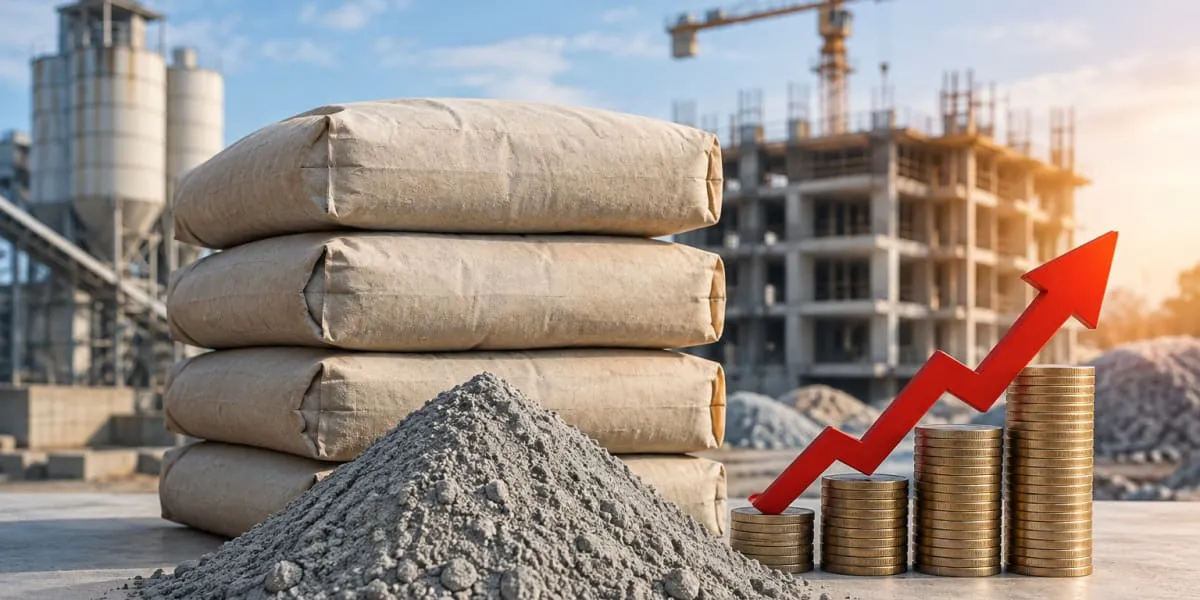
Icra reported that cement production volumes rose by eight point six per cent in the financial year 2026 to 491.4 million (mn) metric tonne (t). March output was 48.4 mn t, up four per cent year on year on a high base.

The agency projected that volumes are expected to grow by seven to eight per cent in the current financial year, supported by sustained demand from the housing and infrastructure sectors. Average cement prices were reported to have remained flat in March at Rs 340 per bag on a month on month basis, while prices for FY26 increased by two per cent to Rs 345 per bag year on year.

Among inputs, coal prices declined by 17 per cent year on year to USD 102 per t in April 2026 while petcoke prices rose sharply by 19 per cent month on month and 22 per cent year on year to around Rs 15,800 per t in April. Petcoke was higher by about five per cent year on year in FY26 and diesel prices were reported to have remained steady. Icra noted that coal, petcoke and diesel are expected to trend higher in FY27 and remain exposed to risks from the ongoing West Asia conflict.

The report emphasised that operating margins for Icra’s sample set of companies are estimated to moderate by 200 to 400 basis points (bps) in FY27 on account of a likely increase in input costs, with further downside risks should crude prices rise owing to geopolitical tensions. However, debt protection metrics are projected to remain comfortable and Icra maintained a stable outlook on the Indian cement sector.

Continue Reading

Concrete

UltraTech Cement FY26 PAT Crosses Rs 80 bn

Company reports record sales, profit and 200 MTPA capacity milestone

Published

on

By

Shares

UltraTech Cement reported record financial performance for Q4 and FY26, supported by strong volumes, higher profitability and improved cost efficiency. Consolidated net sales for Q4 FY26 rose 12 per cent year-on-year to Rs 254.67 billion, while PBIDT increased 20 per cent to Rs 56.88 billion. PAT, excluding exceptional items, grew 21 per cent to Rs 30.11 billion.

For FY26, consolidated net sales stood at Rs 873.84 billion, up 17 per cent from Rs 749.36 billion in FY25. PBIDT rose 32 per cent to Rs 175.98 billion, while PAT increased 36 per cent to Rs 83.05 billion, crossing the Rs 80 billion mark for the first time.

India grey cement volumes reached 42.41 million tonnes in Q4 FY26, up 9.3 per cent year-on-year, with capacity utilisation at 89 per cent. Full-year India grey cement volumes stood at 145 million tonnes. Energy costs declined 3 per cent, aided by a higher green power mix of 43 per cent in Q4.

The company’s domestic grey cement capacity has crossed 200 MTPA, reaching 200.1 MTPA, while global capacity stands at 205.5 MTPA. UltraTech also recommended a special dividend of Rs 2.40 billion per share value basis equivalent to Rs 240.

Continue Reading

Video Thumbnail
â–

    SIGN-UP FOR OUR GENERAL NEWSLETTER


    Trending News

    SUBSCRIBE TO THE NEWSLETTER


    Don't miss out on valuable insights and opportunities to connect with like minded professionals.


      This will close in 0 seconds