Connect with us

Concrete

Indian Cement Industry Sees Further Consolidation

Cement industry to face consolidation soon.

Published

on

Shares

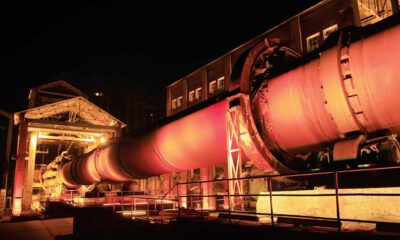
India’s cement sector is set for further consolidation in the near-to-medium term, according to a recent report. With increasing competition, rising input costs, and the need for economies of scale, companies are expected to explore mergers and acquisitions (M&A) to strengthen their market positions. As the industry faces various challenges, including high energy costs and fluctuating demand, consolidation is viewed as a strategic move to drive growth and sustainability.

Key Points:
Market Consolidation: The Indian cement industry has already witnessed significant consolidation over the past few years, with several large firms acquiring smaller players to enhance their market share. The trend is expected to continue, driven by the need to optimize operations, cut costs, and gain better pricing power. Consolidation helps companies to expand their geographic reach and strengthen their portfolios.

Rising Costs and Challenges: One of the primary drivers of consolidation is the rising cost of inputs, particularly energy and raw materials. With costs of coal and petroleum coke (key energy sources for cement production) soaring, companies are looking for ways to maintain profitability. Smaller and medium-sized players, in particular, find it challenging to cope with these rising costs, making them more likely targets for acquisition by larger companies.

Economies of Scale: Larger cement companies benefit from economies of scale, which help them absorb the impact of rising input costs more effectively. Consolidation allows firms to streamline production processes, reduce operational inefficiencies, and invest in advanced technologies that improve productivity. These efficiencies become critical in maintaining competitiveness in an increasingly challenging environment.

M&A Activity: The report highlights the potential for more mergers and acquisitions in the cement sector, particularly among mid-sized and regional players. The Indian cement market, which is highly fragmented, presents numerous opportunities for larger companies to acquire smaller firms and gain a foothold in new markets. M&A activity is expected to accelerate as firms seek growth through strategic alliances and acquisitions.

Regional Focus: Consolidation efforts are likely to be regionally focused, with companies looking to expand their presence in specific geographic areas where demand for cement is strong. Infrastructure development, government projects, and urbanization are driving demand in various parts of the country, making regional expansions an attractive proposition for firms looking to grow.

Impact on Competition: While consolidation may lead to a more concentrated market, it could also intensify competition among the remaining players. Larger firms with more resources and market reach could dominate pricing strategies and influence market dynamics. Smaller firms may either merge or struggle to compete, leading to a reshaping of the competitive landscape.

Demand Outlook: The near-term outlook for the cement industry remains uncertain, with demand being influenced by factors such as construction activity, infrastructure projects, and government initiatives. The report notes that while urban demand is expected to remain stable, rural demand continues to face challenges due to slow construction activities in those areas. However, the long-term outlook remains positive, driven by ongoing infrastructure developments and real estate projects.

Sustainability Focus: Companies are also focusing on sustainability and environmental concerns. Consolidation can provide larger companies with the resources to invest in green technologies and reduce their carbon footprint. This focus on sustainability is becoming increasingly important, with both government regulations and market preferences shifting toward greener production practices.

Conclusion:
The Indian cement industry is poised for further consolidation in the coming years, driven by rising costs, competitive pressures, and the need for economies of scale. M&A activity is likely to accelerate, with larger firms targeting smaller and regional players to strengthen their market presence. While consolidation offers opportunities for growth and efficiency, it could also reshape the competitive landscape and influence pricing dynamics in the sector.

Concrete

Niraj Cement JV Wins Railway and Metro Contracts

Two orders worth over Rs 1.64 billion boost infrastructure portfolio

Published

on

By

Shares

Niraj Cement Structurals (JV) has secured two major contracts from the Northeast Frontier Railway (NF Railway) and the Mumbai Metropolitan Region Development Authority (MMRDA), strengthening its position in large-scale infrastructure development.

The first contract, valued at Rs 815.2 million, has been awarded by NF Railway. It involves the construction of multiple-span 12.20-metre PSC slab underpasses, a major bridge (No. 727), retaining and guide walls, embankments and one minor bridge along the proposed UP and Down line near Deepor Beel. The project covers Km 163/00 to 164/200 between Azara and Kamakhya stations and forms part of the New Bongaigaon–Goalpara Town–Kamakhya (NBQ–GLPT–KYQ) railway doubling programme.

The second contract, worth Rs 826.6 million, has been awarded by MMRDA for constructing a foot overbridge (FOB) equipped with a travellator to improve connectivity between the SGMC monorail station and the Mahalaxmi metro and suburban railway stations.

The two projects underscore the company’s technical capabilities in both transportation infrastructure and environmentally sensitive construction, further strengthening its portfolio in key railway and urban mobility developments.

Continue Reading

Concrete

Peddapalli MP Seeks Clear Timelines for Rs 42.10 Bn Projects

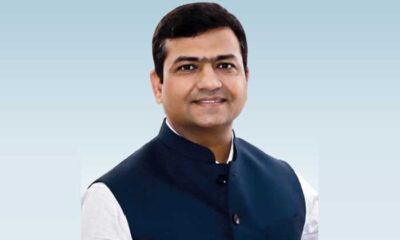
Peddapalli MP Gaddam Vamshi Krishna has urged the Union Government to specify execution timelines for major infrastructure projects worth Rs 42.10 billion in his constituency.

Published

on

By

Shares

Peddapalli MP Gaddam Vamshi Krishna has called on the Centre to provide definitive timelines for a series of sanctioned infrastructure works that he said are essential for the region’s economic progress. Speaking in the Lok Sabha, he stressed that many approved projects remain stalled without clear implementation schedules, limiting their potential impact on connectivity and employment.

A key pending work is the Peddapalli–Manuguru Railway Line, a 137 km stretch linking Peddapalli with Manuguru in Bhadradri Kothagudem district. Although the line has received required approvals and special project status, the execution schedule has not yet been announced. The project is expected to support freight efficiency, improve coal logistics, and strengthen local job creation.

Extending his appeal beyond physical infrastructure, the MP urged the Centre to consider including Peddapalli in the India Semiconductor Mission, citing the district’s industrial ecosystem, skilled workforce, and readiness to support advanced manufacturing.

By pressing for structured timelines, Krishna emphasised the need for coordinated planning and timely execution to advance the constituency’s long-term development goals.

Continue Reading

Concrete

IndiaAI, Gujarat Govt Host Regional Conclave Ahead of 2026 AI Summit

A regional pre-summit event in Gandhinagar recently gathered leaders to advance AI for good governance.

Published

on

By

Shares

The IndiaAI Mission under the Ministry of Electronics and Information Technology, along with the Government of Gujarat and IIT Gandhinagar, convened a Regional Pre-Summit Event at Mahatma Mandir, Gandhinagar. The initiative is part of the build-up to the India–AI Impact Summit 2026, scheduled for 15–20 February 2026 at Bharat Mandapam, New Delhi.

The conclave brought together senior policymakers, technology leaders, researchers and industry practitioners to examine how AI can accelerate economic, digital and social transformation across sectors. The programme focused on the overarching theme of ‘AI for Good Governance: Empowering India’s Digital Future’.

The inaugural session featured key dignitaries including Bhupendrabhai Rajnikant Patel, Chief Minister of Gujarat; Harsh Rameshbhai Sanghavi, Deputy Chief Minister of Gujarat; Arjunbhai Devabhai Modhwadia, Minister for Science & Technology, Government of Gujarat; Manoj Kumar Das, Chief Secretary, Government of Gujarat; Abhishek Singh, Additional Secretary, MeitY and Director General, NIC; and Ponugumatla Bharathi, Secretary, Department of Science & Technology, Government of Gujarat.

High-impact keynote sessions led by national and global experts from MeitY, Bhashini, Google Cloud, Microsoft, IBM Research, NVIDIA, Oracle and AWS examined themes including AI in governance, public service delivery, urban development, rural transformation, healthcare, agriculture, fintech and multilingual accessibility enabled through Bhashini.
Delegates also visited an Experience Zone curated by IndiaAI and DST Gujarat, which showcased AI solutions across governance, agriculture, health and industry.

By convening government, industry and academic stakeholders, the conclave aimed to strengthen India’s AI ecosystem through frameworks that prioritise trust, scalability and public interest. Insights generated from the event will contribute directly to the agenda and outcomes of the India–AI Impact Summit 2026. 

Continue Reading

Trending News

SUBSCRIBE TO THE NEWSLETTER


Don't miss out on valuable insights and opportunities to connect with like minded professionals.


    This will close in 0 seconds