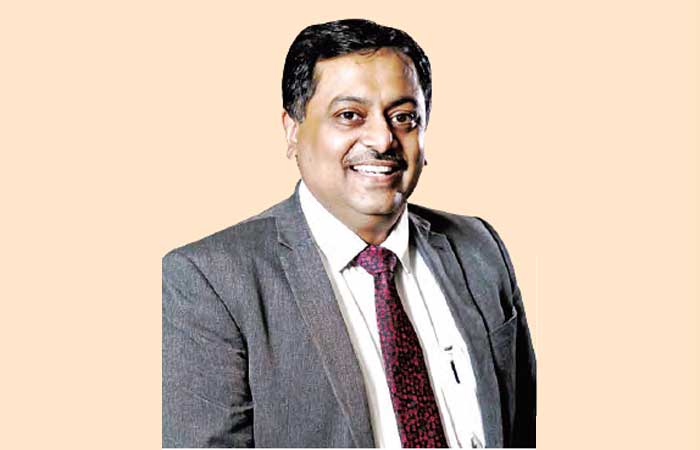
Anup Nair, Managing Director, Martin Engineering India, speaks about the world class solutions available for material transport in cement production.
Tell us about your material handling and transportation solutions.
We are a leading provider of bulk material handling solutions that are proven to achieve cleaner, safer and more productive processing. We design, manufacture, install and maintain conveyor products like belt cleaners, belt trackers, transfer point solutions, and dust management systems, as well as products like vibration solutions for hoppers and silos and air cannons that keep material flowing through preheater systems.
Martin Engineering had its inception in 1944 in the USA and has grown to become a multinational organisation with operations around the world across six continents. We deliver solutions in multiple core industries, including steel, mining, power generation, port handling, food processing and, of course, cement manufacturing.
Consistent flow of materials is a critical aspect of successful cement production, and supporting this goal are Martin® Air Cannons, used extensively throughout cement processing from preheaters to clinker coolers, and our conveyor products are used in processing raw materials from quarry to preheater.
Explain the functionality of the material handling installations in cement plants.
Cement plants are notorious for clogging problems. Accumulations in ducts, chutes and vessels often choke the movement of materials, causing bottlenecks that create expensive impediments to plant performance, process efficiency, productivity and profitability. This means build-ups need to be manually cleared with alarming regularity unless the right technology is employed to keep things flowing smoothly.
The biggest single improvement when it comes to safety and efficiency in preheater performance is the use of air cannons, employed in a number of applications in cement production, from unclogging chutes and hoppers to moving super-heated material through the cooling process.
Air cannons function by releasing a powerful shot of pressurised air from a tank through a pipe assembly to a specialised nozzle, removing any build-up of material from surfaces and directing it back into the process stream. Recent innovations in the engineering, installation, assembly and design of air cannons have been particularly effective in maintaining safe, efficient flow in preheater towers.
Before raw materials reach the cement plant, there are various challenges associated with the conveyor belts carrying material from the mines to the raw mills. Every time material transfers from one piece of equipment to the next, there is a risk of cumulative problems that need to be controlled to avoid spillage, build-up, blockage and dust. It does not take long for fugitive material to start interfering with production, from conveyor belt mistracking and seized components to structural issues and total process failure. To address these challenges, Martin Engineering has designed innovative conveyor components and solutions that can prevent fugitive dust and spillage from conveyors and transfer points.
What is the impact of your solutions on cost and production efficiency of cement plants?
Martin Engineering’s solutions are world-renowned for eliminating the problems associated with fugitive materials, and they are proven to increase efficiency, productivity, and profitability in numerous ways.
Cost savings come from reduced operational downtime, less manual maintenance and less clean-up of spillages and blockages, improvements in health and safety, reduced material wastage, reduced wear and tear on belts, idlers and motors as well as reduced energy consumption.
For example, our state-of-the-art Air Cannons bring in the same amount of blasting efficiency even with a smaller tank than a conventional air blaster.
Tell us about the role of automation and technology in building your solutions for cement plants?
Martin Engineering has long been a pioneer of innovations in automation that reduce the need for manual intervention, minimising the interaction of people and machinery whilst maximising plant uptime. This ensures convenience and peace of mind for our customers.
Martin® Air Cannons are fired remotely or automatically from the control room, using carefully timed arrays to ensure maximum removal of build-ups. The last decade in particular has seen a revolution in Air Cannon technology. One of the most effective innovations has been the patented Y-shaped assembly that allows the nozzle to be safely maintained or replaced from outside, without removing the tank or disrupting the refractory, while production continues uninterrupted. It reduces downtime associated with traditional approaches to service and replacement, which require that high-heat processes be halted.
Also, we have our N2® Remote Monitoring System, which ensures belt cleaning efficiency is monitored on a real-time basis and visible to customers on their mobile devices or desktop computers.
Before N2®, the only way for maintenance teams to identify what servicing was needed on belt cleaners was to physically go to each head pulley, taking all the necessary steps to address the hazards involved in the inspection. But with N2®, technicians only need to visit conveyors when their system shows that a belt cleaner needs attention. It’s the ideal solution, especially for large-scale cement plants which have numerous difficult-to-access belt conveyors distributed over a large production site.
Finally, we must mention our revolutionary CleanScrape® belt cleaners that provide unmatched cleaning performance and are guaranteed to last up to 4 times longer than any conventional cleaners. Featuring a series of hard-wearing tungsten carbide tips tensioned at an angle across the discharge pulley, CleanScrape® provides unparalleled cleaning at the lowest operating cost with the greatest return on investment over the life of the cleaner.
Do you customise your solutions for cement plants based on their requirements?
Yes, we do customised solutions for our cement plants based on each customer’s challenges and requirements. Our engineering technicians are specialists when it comes to identifying root causes of process blockages and buildups and are able to prescribe solutions that solve problems using proven solutions.
In order to customise air cannon installation to each individual service environment, specific air blast characteristics can be achieved by manipulating the operating pressure, tank volume, valve design, and nozzle shape. The result is the effective firing of air cannon arrays to deliver impressive material flow.
Tell us about the quality standards and need for maintenance for your solutions.
Martin has consistently set the standard regarding the quality of our manufactured products, and we are proud of our enviable reputation for producing well-made products that stand the test of time, even in the harshest production environments. Our approach ensures the reliability, durability, as well as efficiency of our products, and that approach also extends to the expertise of our dedicated service teams, who not only install and maintain our products to the highest standard but also help and advice customers on things like preventive maintenance.
What major challenges do you face?
According to our observations, most cement plants in India are in the early stages of becoming energy-efficient, dust-free and safe. So, although there are challenges in implementing some of the most modern solutions, we are on a mission to support the Indian cement industry to help bring plants up to world-class standards in terms of efficiency and productivity. As production and productivity increase, we expect to see rapid transformation and implementation of modern, high-technology, energy-efficient production methods, and we are looking forward to continuing our partnerships with key players in the sector to support them as they improve.
What are the innovations in the pipeline that the cement industry can look forward to?
Our unique Martin innovation charter sets out our aspiration to always be five years ahead of the game in terms of value-added solutions to customers. So, whilst we cannot say too much about what’s in the pipeline, we are currently trailing numerous innovations that could be transformational for our customers. In the cement industry, we already have new innovations that we encourage them to take a closer look at such as our N2® Remote Monitoring System, our SMART™ Series Nozzles for Air Cannons, and our revolutionary CleanScrape® conveyor
belt cleaner.
-Kanika Mathur



















 Concrete3 weeks ago
 Concrete3 weeks ago
 Concrete4 weeks ago
 Concrete3 weeks ago