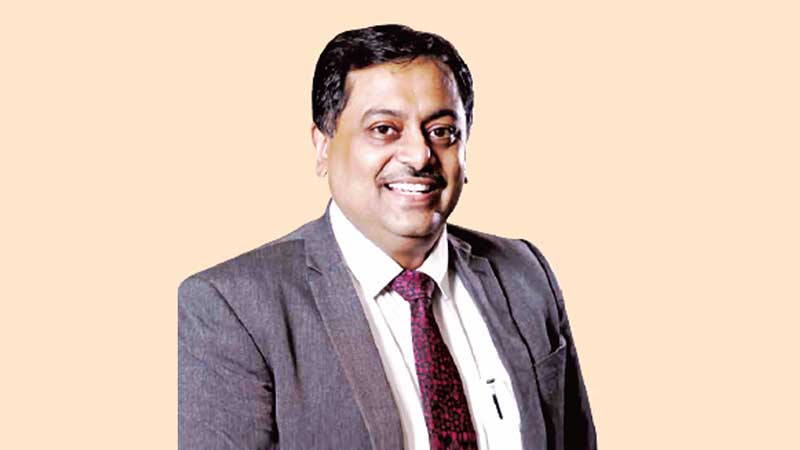
Anup Nair, Managing Director – India and South Asia, Martin Engineering, speaks about the key role their products play in making cement processes more efficient.
Tell us about the role that your products and technology play in the cement industry.
We are into bulk material handling products. In the cement industry, our products are used in two different areas – in the plants and at the mines. In the mines, there are conveyor belts that help move the bulk material and these conveyor belts need lot of maintenance. If the conveyor belt stops, the entire mine will stop. Our products improve the efficiency of the conveyors by a great extent. This is one part of our offerings.
The second one, which is a major influencer for the cement industry, is within the plant. Cement plants have kilns and preheats. A lot of material blockages happen in them. Our air cannons blast and push this material out. It helps in bringing down plant maintenance considerably. You don’t have to shut down the plant to deal with the blockages. This process is becoming more and more significant today as cement companies are using alternative fuels. So, more blasting is required.
Conventional compressors or blasting cylinders are available but compared to them, we have a greater advantage because we have the better technology. We help in reducing the carbon footprint and also give huge savings in energy. With our technology, not only is carbon footprint reduced but energy costs also come down.
Elaborate on how carbon footprint is reduced?
A conventional blasting requires a 300-litre tank, whereas our modern technology gives the same or more blasting force using a 70-litre tank. The compress is considerably reduced and this is important because compress making requires energy or electricity. When electricity or energy usage is reduced, carbon footprint is reduced, too. It can be said that one blaster reduces about 70,000 kg of carbon per year. So, a typical cement plant kiln requires about a hundred blasters. Now, you can imagine the reduction in carbon.
With such advantage of cost efficiency and reduction in carbon footprint,
shouldn’t all cement companies be looking at this product?
The cement companies are definitely looking at our product. Earlier they used to manage it manually and then they moved to traditional modes such as large tanks. Now they are turning to us for modern technology. Our products may be priced higher when compared to the conventional modes but once the traditional methods are removed and only our product is made to perform, the cost is recovered by energy saving itself. The cost of the product is realised in a year’s time. One year is the payback period.
What innovations should we expect from Martin Engineering in the near future?
At Martin Engineering, apart from the air blasters that I spoke about we also have nozzles for the cement industry. These nozzles come with a different type of technology, which gives all round blasting
inside the refractory areas. It also requires less maintenance and are much more efficient. These nozzles can also be replaced without stopping the equipment. So, it is both safe and economical for the cement manufacturer.
As far as innovations in our conveyor products are concerned, we have a remote monitoring system called N2, which enables the customer to sit anywhere in the world and oversee the progress on their mobile phone or device, like a live feed. This remote monitoring system uses the latest modern technology.
Are all these products and technologies exclusive to the cement industry?
No, we are very much present in the steel sector, too. We are also present in power plants, ports, food verticals such as sugar and several other industries. Wherever there’s a need for bulk material handling, Martin Engineering is present. And this is in India. In other countries, we are present in many applications such as quarry aggregates. In all the other sectors, too, our deliverables are focussed on cost efficiency and reduction of carbon footprint.
With regards to the cement industry in India, what kind of future do you envision over the next 10 years?
Our tagline is ‘Problem Solved Guaranteed.’ So, we are not just product sellers. We solve our customers’ problems and address their pain points. Today, the pain points are energy efficiency and carbon footprint, and we are solving them. We are looking at a long-term partnership with our customers as they will definitely require solutions that reduce costs and help them make their processes more modern and competitive. Our philosophy is well-matched with their philosophy in this regard.
We have a full-fledged plant in Pune, and we are moving ahead with ‘Make in India’ initiative.
We also have the capacity to expand in Pune. We are spreading out by adding more team members and with the help of our dealer network across the country. We are trying to be as close to our customers as possible.
-Kanishka Ramchandani
















 Concrete4 weeks ago
 Concrete2 weeks ago
 Concrete2 weeks ago
 Concrete4 weeks ago