Pankaj Kejriwal, Whole Time Director and COO, Star Cement, shares how dust pollution is a severe problem and the efforts that are required to keep dust emissions in check.
What are the key areas where dust emission is prominent in cement manufacturing?
In the cement industry, dust is emitted from mining, transportation and many processes such as crushing of limestone, clinker production and storage, cement grinding and packing and power utilities (the coal mill and the power generators).
What are the measures taken to control the dust emissions at the cement plant?
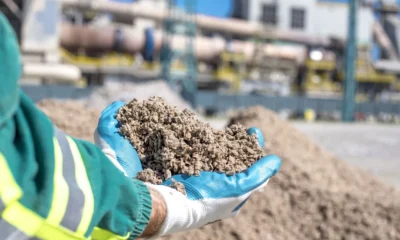
Cement industry is one of the few industries where the dust generated is a value-added raw material and hence all cement manufacturers try to arrest the dust as it has its own pay back.
Generation of dust is being reduced by modification of transfer points, installation of efficient separators, modern cyclones, etc. Dust generation during mining and transportation is being reduced by effective water / mist / fog spraying. Modern mining equipment is deployed with dedicated dust separation systems. Electric/hydraulic equipped mining machinery is also being used to minimise the dust.
The cement industry has been modernised by introducing specific dedusting equipment used in the production, transport and storage processes. The installation is equipped with specific filters (bag filters or electrostatic filters). This has reduced the flue gas emission and amount of dust released into the atmosphere. The main dedusting machine is the state-of-the-art bag filter, which is available and guarantees a maximum emission of 10 mg/Nm3.
Truck mounted road/area sweeping machines are also operated to clean the dusty area. High pressure water spray systems are used to clean the tyres of vehicles moving inside the plant to minimise the fugitive dust emission.
Tell us about the regulations and compliance issued by the government for emission of dust particles in a cement plant.
In India, regulatory bodies like the Ministry of Environment, Forest and Climate Change, the Central Pollution Control Board (CPCB) and the respective State Pollution Control Boards (SPCB) deal with environmental issues. SPCB regularly inspects the cement plants/limestone quarries to verify compliance with emission norms. CPCB also inspects the cement plants to check compliance with emission standards under environmental surveillance squad activities. Cement plants also have to comply with the charter on Corporate Responsibility for Environment Protection (CREP).
The Indian cement industry must comply with the various environmental acts and regulations notified by the Ministry of Environment and Forests (MoEF), etc., which covers different spheres of the environment, encompassing emissions of air pollutants, consumption of water, generation and discharge of trade effluents, utilisation and storage of hazardous waste, noise generation, utilisation of forest land and wildlife areas. For dust emissions, the following are applicable:
- Air (Prevention & Control of Pollution) Act, 1981
- Environment (Protection) Act, 1986 (EPA)
- The Factories Act, 1948
- The Mines Act, 1952. Mines Rule 1955 and the Metallic Ferrous Mines Regulation 1961
These Acts/Regulations, together with some of the stringent conditions that are relevant for environment protection from industrial pollution are imposed by the pollution control boards. The government has made norms stricter for the cement industry, capping the stack emissions of PM to not more than 30 milligrams per cubic metre from 200 milligrams per cubic metre earlier. The 24-hour safe limits for ambient PM 2.5 and PM 10 are 60 ug/m3 and 100 ug/m3 respectively.
Tell us about the role of dust collectors in cement production?
Dust collector systems (Bag Filters, Electrostatic Precipitator, etc.) control the dust and gases from various sources during process at various stages, which helps to provide the factory with cleaner air that can provide numerous benefits. A dust collection system works by sucking air in from a given application and processing it through a filtering system so that particulate matter can be deposited into a collection area. Then the cleaned air is either returned to the facility or exhausted to the environment.
Where is the collected dust discarded?
After dust-filled air has been captured by a dry dust collection system, dust must be separated, collected, and disposed of. The dust collector separates dust particles from the airstream and discharges cleaned air either into the atmosphere or back into the workplace. The collected dust goes back into the process system as it is a value added product to cement. Nearly 100 per cent collected dust is recycled.
What is the impact of dust emission on the environment in and around the cement plant?
Dust pollution is the introduction of chemicals, particulate matter or biological materials that cause harm or discomfort to humans or other living organisms or cause damage to the natural environment.
Dust can adversely affect living organisms. Increased concentration of cement dust pollutants causes invisible injuries like progressive decline in the physiological process such as photosynthetic ability and respiration rate.
Can dust emission be qualified as a health hazard at a cement plant?
The point source emissions from the cement industry include particulate matter and gaseous emissions. Since the cement industry deals with various size reduction operations from limestone crushing to clinker grinding, dust emissions are a major pollutant. Gaseous emissions such as sulphur dioxide (SO2), oxides of nitrogen (NOx), carbon monoxide (CO), carbon dioxide (CO2), etc., are generated during pyro processing. All of these are major health hazards at a cement plant, if not controlled and minimised.
How can automation and technology contribute towards reduction of dust emission?
It is necessarily required to put in place the latest technology, management systems and continuous online monitoring system that helps to routinely implement the activities that facilitate adherence to the emission norms prescribed under the pollution control legislation The real time data of online stack monitoring and Ambient Air Quality Management Systems (AAQMS) is published on the web for better monitoring and controlling.
Tell us about newer innovations that the cement industry is adapting to reduce the emission of dust and control the same.
Some of the sustainable new innovations for air pollution control methods followed by the Indian cement industry are:
- In bag filters, use of low air to cloth ratio and use of latest filter media/fabric in pleated/cartridge shaped filter bags. For bag filters, the use of membrane filter bags is a useful innovation.
- Installation of hybrid bag filter and electrostatic preceptors for more effective control of
dust emission.
- Substituting clinker with fly ash/blast furnace slag/limestone, which is readily available and reduces dust emissions and fuel consumed for producing clinkers.
- Using alternative fuel resources.
- Co-processing, i.e., using waste materials as fuel by burning them in the high temperature of the kilns. This also effectively disposes of solid waste.
- Installation of Waste Heat Recovery System (WHRS), in clinker production units.
-Kanika Mathur



















 Concrete3 weeks ago
 Concrete3 weeks ago
 Concrete4 weeks ago
 Concrete3 weeks ago