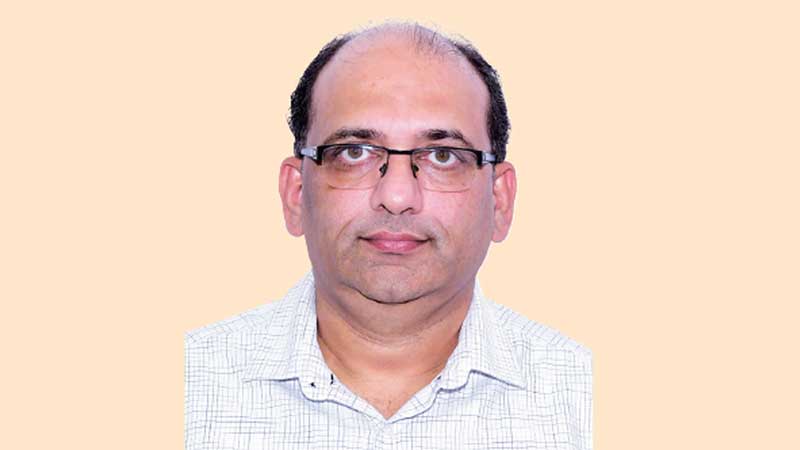
Anil Gupta, Technical Head, JK Cement Works, Nimbahera, discusses the adverse effects of dust emissions on human health and the environment and how use of advanced filtration systems, automation and other technology solutions can help reduce it.
What are the key areas where dust emission is prominent in cement manufacturing?
Cement manufacturing unit consists of various sections such as mining, crusher, raw mill, kiln, coal mill, cement mill, packing plant, etc. However, the key areas where dust emission is highly prominent are dump hoppers of limestone and additive crusher, raw material storage yards, feeding circuits of clinker and cement raw material, packing and loading area, raw mill bag house, cooler ESP, coal transport and grinding circuit, cement mills bag house and CPP stack.
What are the measures taken to control the dust emissions at a cement plant?
We have two types of dust emissions:
- Stack or vent duct: From process operation and have fixed point of release.
- Fugitive dust: Dust that is generated or emitted from open air operations or at material transport point (emissions that do not pass through as stack or vent).
To control both the types of dust emissions in a cement plant, following measures are taken:
- Installation of de-dusting bag filter.
- Installation of bag house and electro static precipitator.
- Installation of water spray system in yard area.
- Enclosure should be provided for all unloading operations, except wet materials like gypsum.
- The pathways in the coal yard for vehicle movement should be paved.
- Accumulated dust shall be removed / swept regularly and water the area after sweeping.
- Air borne fines extracted from the clinker cooler shall be separated and sent to the last possible destination directly, if possible.
Tell us about governmental regulations and compliance for dust emissions.
For achieving effective prevention and control of potential fugitive emission sources in cement manufacturing plants, specific requirements along with guidelines have been evolved by the central government. For the Indian cement industry, the Ministry of Environment Forest and Climate Change has notified the norms for reduction of dust emission from cement plants, which includes particulate matter, SOx and NOx. The notification clearly defines the limits for above mentioned emissions, particulate matter should be < 30 milligram, SOx should be
< 100 milligram, NOx should be < 1000, 800, 600 milligrams. It depends on the age of the plant or we can say that on the commissioning date of the plant.
Some relaxation is there in the SOx limit. It should be 700 and 1000 milligram with more pyretic sulphur presence in limestone deposit. In cases where SPM concentrations exceed the prescribed limit, necessary corrective measures in terms of improving the controls shall be taken and action taken records of improvements carried out be maintained.
Tell us about the role of dust collectors in cement production.
A dust collector is a system used to enhance the quality of air released from industrial processes by collecting dust and other impurities from air or gas. It is designed to handle high-volume dust loads. A dust collector system consists of a blower, dust filter, a filter-cleaning system, and a dust receptacle. It is distinguished from air purifiers, which use disposable filters to remove dust. It may be of single unit construction, or a collection of devices used to separate particulate matter from the process air. It is also used as an air pollution control device to maintain or improve air quality.
A dust collector also helps to increase productivity as when dirt, dust and debris collect on equipment, it can make its way inside, interfering with the mechanics of the equipment. This can lead to slower machines and broken equipment. Compromised machinery constantly needs attention and repairs. Dust collectors remove this risk, allowing your machinery to work at optimal performance.
Where is the collected dust discarded?
The environmental concerns related to cement production, emission and disposal of dust is becoming progressively significant. Cement kiln dust (CKD) is fine-grained, particulate material chiefly composed of oxidised, anhydrous, micron-sized particles collected from electrostatic precipitators during the high temperature production of clinker. CKD so generated is partly reused in cement plant. No dust is discarded in the environment except stack dust. However, Stack emitted dust is discarded in an environment which is under the limit of governmental norms.
What is the impact of dust emission on the environment in and around?
In the past, cement dust spread out over large areas due to wind and rain and accumulated over the soil and plants. It has the potential to affect animal and human health adversely. Dust from cement factories adversely affects the forest ecosystem, soil enzymes, fungi and bacteria population within the vicinity of cement factories. Furthermore, it was shown that plant height, phytomass, net primary productivity, chlorophyll content, metabolites and yield were reduced in response to cement dust in the polluted areas.
After the 1990s, the cement industry did a lot of investment for dust control. Several modifications have also been carried out in the existing system to make the system more efficient. This can be achieved through the use of advanced filtration systems, alternative fuels, automation and other technology solutions. It is also important to monitor and report emissions to regulatory agencies to ensure compliance with environmental regulations. No significant impact has been observed in and around the cement plant.
Can dust emission be qualified as a health hazard at a cement plant?
Yes, dust emission can be qualified as a health hazard at a cement plant. Inhalation of cement dust can cause a range of respiratory problems, including bronchitis, asthma and silicosis, a lung disease caused by inhaling crystalline silica dust. Prolonged exposure to high levels of cement dust can also increase the risk of developing lung cancer.
To minimise the health risks associated with dust emissions, cement plants are continuously implementing measures to reduce the amount of dust generated during the manufacturing process. This is achieved through the use of advanced filtration systems, automation, and other technology solutions. It is also important to provide proper personal protective equipment (PPE) to workers and to ensure that they receive adequate training on the health risks associated with working in a cement plant.
How can automation and technology help in reduction of dust emissions?
Automation and technology are contributing in reduction of dust emissions in following ways:
- Real-time monitoring and control: Automation can provide real-time monitoring of emissions, which can help to identify and address potential issues before they become major problems. This can be achieved through the use of sensors and advanced data analytics.
- Optimised process control: Advanced process control technologies can optimise the cement manufacturing process and minimise dust emissions. This technology can help operators monitor and control the process in real-time, ensuring that emissions are kept to a minimum.
- Advanced filtration and scrubbing systems: Technology can improve the efficiency of filtration and scrubbing systems, such as bag filters and electrostatic precipitators. These systems can remove particulate matter and other pollutants from the air, reducing dust emission.
- Use of drones for inspection: Drones can be used to inspect hard-to-reach areas in the plant, such as the top of the kiln or preheater tower, without risking the safety of personnel. This can help to identify areas where dust emissions are high, and take corrective actions.
- Overall, automation and technology can help reduce dust emissions in cement plants by providing real-time monitoring and control, optimising process control, improving filtration and scrubbing systems and using drones for inspection.
Tell us about newer innovations that help reduce the dust missions and control it?
The cement industry has been under increasing pressure to reduce its environmental impact, especially concerning the emission of dust and pollutants. Here are some of the newer innovations that the cement industry is adapting to reduce dust emissions and control them:
- Use of Low-NOx Burners: The use of low-NOx burners in cement kilns reduces the emission of nitrogen oxides (NOx), which are one of the major contributors to air pollution. These burners help in reducing the temperature inside the kiln, which in turn reduces the formation of NOx.
- Installation of Bag Filters: Bag filters are used to capture particulate matter emitted during the cement manufacturing process. These filters are highly efficient and can capture up to 99 per cent of the particulate matter emitted from the kiln. This reduces the emission of dust and improves the air quality around the cement plant.
- Use of Alternative Fuels: Cement manufacturers are increasingly using alternative fuels, such as waste materials, biomass, and municipal solid waste, to power their kilns. These fuels emit less carbon dioxide (CO2) and other pollutants than traditional fossil fuels.
- Automation of Process Control: Advanced process control technologies can optimise the cement manufacturing process and minimise dust emissions. This technology can help operators monitor and control the process in real-time, ensuring that emissions are kept to a minimum.
- Introduction of Green Cement: Green cement is a new type of cement that is produced using environmentally friendly manufacturing processes. It can reduce carbon emissions by up to 80 per cent compared to traditional cement. Green cement can be produced using waste materials such as fly ash and slag, and can also be made using renewable energy sources.
Overall, the cement industry is making significant strides in reducing its environmental impact, particularly concerning dust emissions. These innovations are helping to improve the sustainability of the industry and protect the health of nearby communities.
–Kanika Mathur

















 Concrete4 weeks ago
 Concrete3 weeks ago
 Concrete2 weeks ago
 Concrete4 weeks ago