

Concrete
Smooth Operations


Venkatesh Seshadri, Head – Cement Business, Fuchs Lubricants India talks about the role of your lubricants in the maintenance of cement making machinery and equipment.
Fuchs Lubricants India is a subsidiary of Fuchs Petroleum, Germany. They entered into a joint venture in 1994 and took full operational ownership in 1999. They have a manufacturing facility in Ambernath, near Mumbai, where the production capacity is 23,000 tonnes of material per annum. The specialty division of Fuchs Lubricants India takes care of the cement business. They are a small team scattered across nationally and are capable of supplying an entire range of lubricants to a cement plant – starting from crusher to packing plant and from the quarry to lorry.
Technical services are the backbone of this business. The measure maintenance prone requirement comes for open gears or the girth gear lubrication systems. Their service team is bigger than the sales team with their service engineers located across clusters in India and they keep giving services on a free of cost basis to the customers. The technical service team is experienced and equipped to do all kinds of maintenance activities related to girth gears like monitoring, repair work, alignment, grinding etc.
Fuchs Lubricants India also supplies gear oils, hydraulic oils and various kinds of synthetic oils to the cement plants. They do sampling, analysis and reporting for their machinery and equipment and give them recommendations for the oils required. They also tell their customers when the oil should be changed and how their equipment is performing.
They have total cost ownership, and are not forgetful of their customers after supplying the lubricants and oils. The company takes ownership and helps reduce their inventory and achieve optimisation in lubrication consumption. This creates a win-win situation for the customer as well as
the organistaion.
Expertise of Care
With regards to the machinery or equipment in a cement plant that is most exposed to wear and requires maximum lubrication and attention, it is the kiln and ball mill open gear. They require expertise in care to maintain them as they are difficult to handle. The value addition that Fuchs provides here is the service team availability. They are trained in Germany and are also sent to other countries to extend their expertise in training.
CEPLATTYN grade of lubricants are used for the kiln. This product was developed in 1965 and has been bettered over time. Fuchs is still recognised through this grade of lubricant and proudly so.
Largely the selection of lubricant for any machinery at a plant depends on its condition and climatic conditions, which play a very important role in the selection of the type and quality of lubricant. They also provide additional services that suit the climatic conditions, that help maintain the lubrication in machinery and also educate them on the storage of lubrication according to the conditions of the location of the plant. They also give them training to use their lubricants to their full potential.

Sustainable Efforts
Most of the lubricants that Fuchs provide are aimed to ensure maximum utilisation of the
life of the equipment and machinery. For example, if a gear oil must perform for 20,000 hours, their product extends this time duration, outperforming the promised lifetime. So, when sustainability comes into play, the idea is to have an extended life for the oil, which reduces the change intervals on a machine, thus reducing heating and power consumption of the machinery. This leads to sustainability in the cement plant through the contribution of their lubricants. They use some niche additives imported from Germany, which help enhance the lubricant performance and increase machinery and equipment life.
The cement industry is evolving and Fuchs is adapting to the changes in the industry. They are not sticking to the primitive methods of supplying the products and then selling old products. They are resilient and are adapting to the needs of their customers by developing new products every couple of years to match the speed of their upgrade. They are not restricting themselves only as lubricant suppliers, they also extend their services as a business partner to the customers where they can get value addition from their partnership. They also try to provide cost benefits of operating the plants. This is how Fuchs is collaborating and wishes to collaborate with the Indian cement industry in the future as well.
ABOUT THE AUTHOR:
Venkatesh Seshadri looks after sales at Fuchs Lubricants Ltd in the capacity of its Sales Manager.












Concrete
Ultra Concrete Age
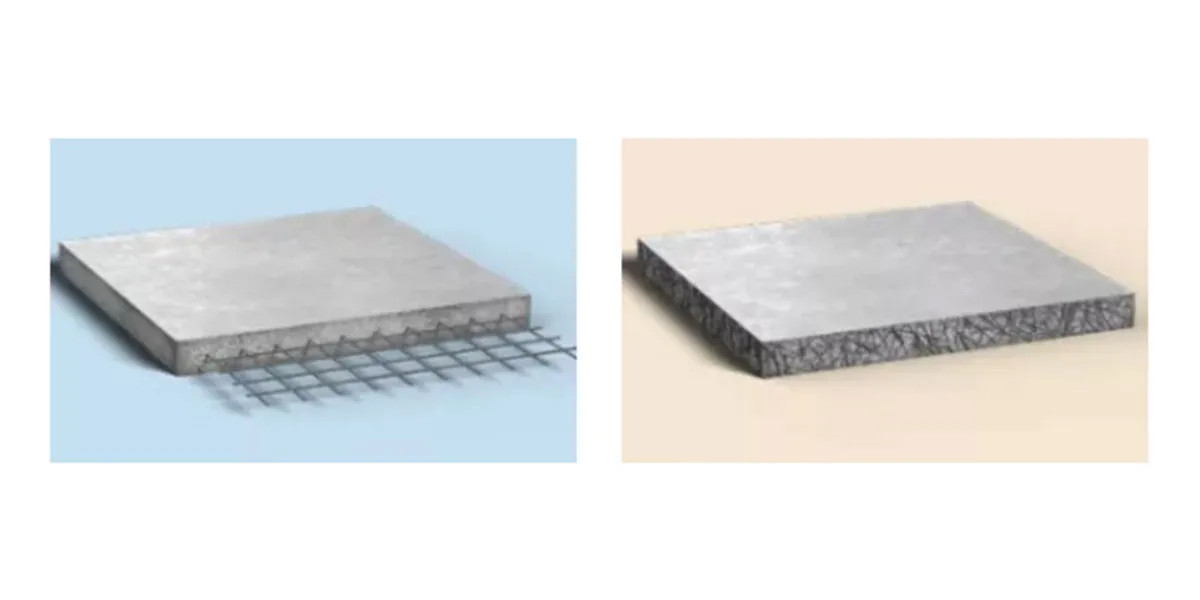
Prof. A. S. Khanna (Retd., IIT Bombay) on how Ultra-high performance concrete (UHPC) improves strength, durability and lifecycle performance.
Concrete
NCB Signs MoU With Cement Manufacturer To Boost Construction Skills
Partnership to deliver nationwide training and certification

Concrete
JSW Cement Commissions Nagaur Plant, Enters North India
New Rajasthan unit boosts capacity to 24.1 MTPA and expands reach


Ultra Concrete Age

NCB Signs MoU With Cement Manufacturer To Boost Construction Skills

JSW Cement Commissions Nagaur Plant, Enters North India

Cement Prices Likely To Rise As Petcoke Costs Increase

IIT Guwahati Develops Radiation-Resistant Cement Mortar
Ultra Concrete Age
NCB Signs MoU With Cement Manufacturer To Boost Construction Skills
JSW Cement Commissions Nagaur Plant, Enters North India
Cement Prices Likely To Rise As Petcoke Costs Increase




